
Produkt aus:
Preussen
334€
Nur noch wenige Stück verfügbar
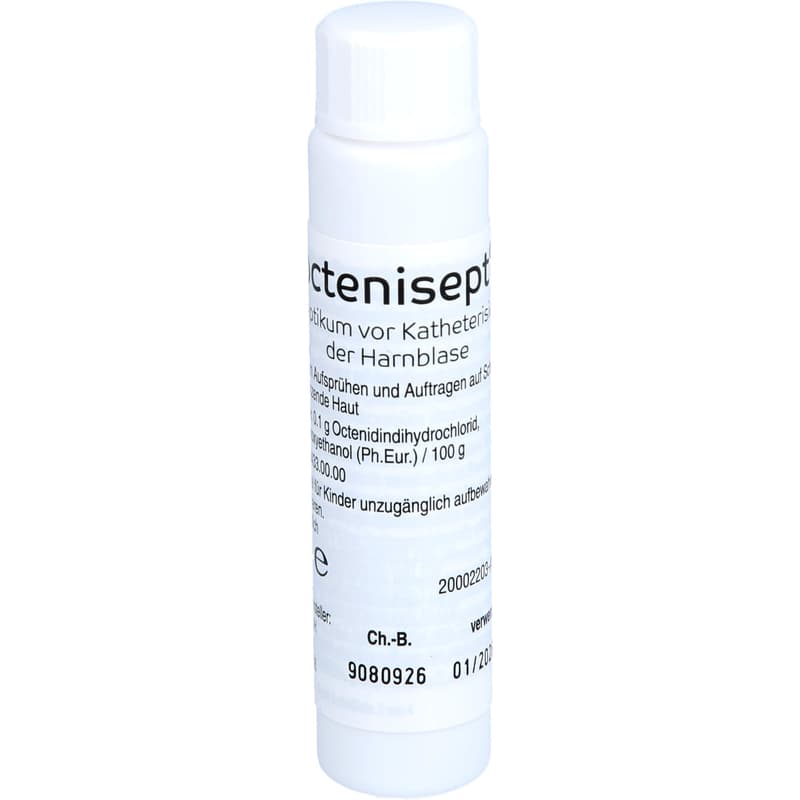
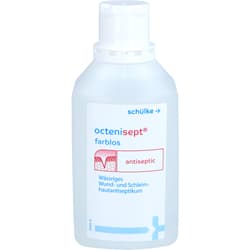
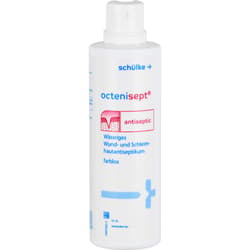
Die OCTENISEPT Lösung ist ein zuverlässiges Antiseptikum zur zeitlich begrenzten Behandlung von Schleimhäuten und angrenzender Haut. Die klare, farblose Lösung enthält die bewährten Wirkstoffe Octenidinhydrochlorid und Phenoxyethanol. Sie eignet sich ideal zur Desinfektion vor medizinischen Eingriffen wie der Katheterisierung. Das Produkt wird in einer praktischen 15-ml-Flasche geliefert und ist nach dem ersten Anbruch bis zu 3 Jahre lang haltbar.
Zu Risiken und Nebenwirkungen lesen Sie die Packungsbeilage und fragen Sie Ihre Ärztin, Ihren Arzt oder in Ihrer Apotheke.





Beschreibung
Wichtige Hinweise (Pflichtangaben)
octenisept Antiseptikum vor Katheterisierung der Harnblase, Lösung. Anwendungsgebiete: zur wiederholten, zeitlich begrenzten antiseptischen Behandlung von Schleimhaut und angrenzender Haut auch vor Katheterisierung der Harnblase.Zu Risiken und Nebenwirkungen lesen Sie die Packungsbeilage und fragen Sie Ihre Ärztin, Ihren Arzt oder in Ihrer Apotheke.
GEBRAUCHSINFORMATION: INFORMATION FÜR DEN ANWENDER
octenisept Antiseptikum vor Katheterisierung der Harnblase, Lösung zum Aufträgen auf die Schleimhaut und angrenzende Haut
Wirkstoffe: 0,1 g Octenidinhydrochlorid, 2,0 g Phenoxyethanol (Ph.Eur.) /100 g
1. WAS IST OCTENISEPT ANTISEPTIKUM VOR KATHETERISIERUNG DER HARNBLASE UND WOFÜR WIRD ES ANGEWENDET?
octenisept Antiseptikum vor Katheterisierung der Harnblase ist ein Antiseptikum zur wiederholten, zeitlich begrenzten antiseptischen Behandlung von Schleimhaut und angrenzender Haut auch vor Katheterisierung der Harnblase.
2. WAS MÜSSEN SIE VOR DER ANWENDUNG VON OCTENISEPT ANTISEPTIKUM VOR KATHETERISIERUNG DER HARNBLASE BEACHTEN?
octenisept Antiseptikum vor Katheterisierung der Harnblase darf nicht angewendet werden, wenn Sie überempfindlich (allergisch) gegenüber den arzneilich wirksamen Bestandteilen oder einen der sonstigen Bestandteile sind. Das Arzneimittel soll nicht zu Spülungen in der Bauchhöhle (z.B. intraoperativ) und der Harnblase sowie nicht am Trommelfell angewendet werden.
Besondere Vorsicht bei der Anwendung von octenisept Antiseptikum vor Katheterisierung der Harnblase ist erforderlich:
Warnhinweis: Das Arzneimittel nicht in größeren Mengen verschlucken oder in den Blutkreislauf, z.B. durch versehentliche Injektion gelangen lassen.
Schwangerschaft:
Es liegen keine Erfahrungen zur Anwendung in der Schwangerschaft vor. Tierexperimentelle Studien gaben keinen Hinweis auf teratogene oder andere embryotoxische Effekte von Octenidinhydrochlorid und Phenoxyethanol.
Stillzeit
Es liegen keine ausreichenden tierexperimentellen und klinischen Daten zur Anwendung während der Stillzeit vor. Da Octenidinhydrochlorid nicht oder nur in geringsten Mengen resorbiert wird, ist davon auszugehen, dass es nicht in die Muttermilch übergeht. Phenoxyethanol wird schnell und praktisch vollständig resorbiert und nahezu quantitativ als Oxidationsprodukt über die Nieren ausgeschieden. Eine Anreicherung in der Muttermilch ist somit unwahrscheinlich.Verkehrstüchtigkeit und das Bedienen von Maschinen
Kein Einfluss bekannt.Bei Anwendung von octenisept Antiseptikum vor Katheterisierung der Harnblase mit anderen Arzneimitteln
Bitte informieren Sie Ihren Arzt oder Apotheker, wenn Sie andere Arzneimittel anwenden bzw. vor kurzem angewendet haben, auch wenn es sich um nicht verschreibungspflichtige Arzneimittel handelt. Nicht mit Antiseptika (Desinfektionsmittel) auf PVP-lod Basis auf benachbarten Hautarealen anwenden, da es in den Grenzbereichen zu starken braunen bis violetten Verfärbungen kommen kann.3. WIE IST OCTENISEPT ANTISEPTIKUM VOR KATHETERISIERUNG DER HARNBLASE ANZUWENDEN?
Wenden Sie das Arzneimittel immer genau nach der Anweisung in dieser Packungsbeilage an. Bitte fragen Sie bei Ihrem Arzt oder Apotheker nach, wenn Sie sich nicht ganz sicher sind. Reiben Sie die zu behandelnde Fläche nacheinander mit mindestens 2 arzneimittelgetränkten Tupfern sorgfältig ab und achten Sie auf vollständige Benetzung der Fläche. Warten Sie vor weiteren Maßnahmen, wie z.B. dem Anlegen eines Wundverbandes, die Mindesteinwirkzeit von 1 bis 2 Minuten ab. Um die gewünschte Wirkung zu erreichen, sind diese Vorgaben sorgfältig einzuhalten. Da bisher nur Erfahrungen bei einer kontinuierlichen Anwendungsdauer von ca. 14 Tagen vorliegen, sollte das Arzneimittel ohne ärztliche Kontrolle nicht länger als zwei Wochen eingesetzt werden.
Wenn Sie eine größere Menge octenisept Antiseptikum vor Katheterisierung der Harnblase angewendet haben,
als Sie sollten
Erkenntnisse zu Überdosierungen liegen nicht vor. Eine Überdosierung ist jedoch bei einer topischen Zubereitung sehr unwahrscheinlich.4. WELCHE NEBENWIRKUNGEN SIND MÖGLICH?
Als subjektives Symptom kann in seltenen Fällen ein vorübergehendes Brennen auftreten. Sehr selten sind kontaktallergische Reaktionen, wie z.B. eine vorübergehende Rötung an der behandelten Stelle möglich.
| Bei der Bewertung von Nebenwirkungen werden folgende Häufigkeitsangaben zu Grunde gelegt: | |
| Sehr häufig: | mehr als 1 Behandelter von 10 |
| Häufig: | 1 bis 10 Behandelte von 100 |
| Gelegentlich: | 1 bis 10 Behandelte von 1 000 |
| Selten: | 1 bis 10 Behandelte von 10 000 |
| Sehr selten: | weniger als 1 Behandelter von 10 000 |
| Nicht bekannt: | Häufigkeit auf Grundlage der verfügbaren Daten nicht abschätzbar. |
Meldung von Nebenwirkungen
Wenn Sie Nebenwirkungen bemerken, wenden Sie sich an Ihren Arzt oder Apotheker. Dies gilt auch für Nebenwirkungen, die nicht in dieser Packungsbeilage angegeben sind. Sie können Nebenwirkungen auch direkt dem Bundesinstitut für Arzneimittel und Medizinprodukte, Abt. Pharmakovigilanz, Kurt-Georg-Kiesinger Allee 3, D-53175 Bonn, Website: www.bfarm.de anzeigen. Indem Sie Nebenwirkungen melden, können Sie dazu beitragen, dass mehr Informationen über die Sicherheit dieses Arzneimittels zur Verfügung gestellt werden.5. WIE IST OCTENISEPT ANTISEPTIKUM VOR KATHETERISIERUNG DER HARNBLASE AUFZUBEWAHREN?
Arzneimittel für Kinder unzugänglich aufbewahren. Nach Anbruch nicht länger als 3 Jahre, jedoch nicht über das auf der Verpackung angegebene Verfalldatum hinaus anwenden. Es sind keine besonderen Lagerungsbedingungen erforderlich.
6. WEITERE INFORMATIONEN
octenisept Antiseptikum vor Katheterisierung der Harnblase enthält in 100 g Lösung: Arzneilich wirksame Bestandteile: Octenidinhydrochlorid 0,1 g, Phenoxyethanol (Ph.Eur.) 2,0 g. Sonstige Bestandteile: (3-Cocosfettsäureamidopropyl)dimethylazaniumylacetat, Natrium-D-gluconat, Glycerol 85%, Natriumchlorid, Natriumhydroxid, gereinigtes Wasser.
Darreichungsform und Inhalt
octenisept Antiseptikum vor Katheterisierung der Harnblase ist eine klare, farblose Lösung und als 15 ml Flasche erhältlich.Pharmazeutischer Unternehmer und Hersteller
Schülke & Mayr GmbHD-22840 Norderstedt
Tel.+49 40 52100-0
info@schuelke.com
Diese Gebrauchsinformation wurde zuletzt überarbeitet im April 2015.
Quelle: Angaben der Packungsbeilage
Stand: 05/2018
Anwendungsgebiete: zur wiederholten, zeitlich begrenzten antiseptischen Behandlung von Schleimhaut und angrenzender Haut auch vor Katheterisierung der Harnblase.
Zusammensetzung & Allergene
Zusammensetzung
Wirkstoff: 0,1 g Octenidinhydrochlorid, 2,0 g Phenoxyethanol (Ph.Eur.) /100 g