
Max. 3 pcs
Product from:
Preussen
898€
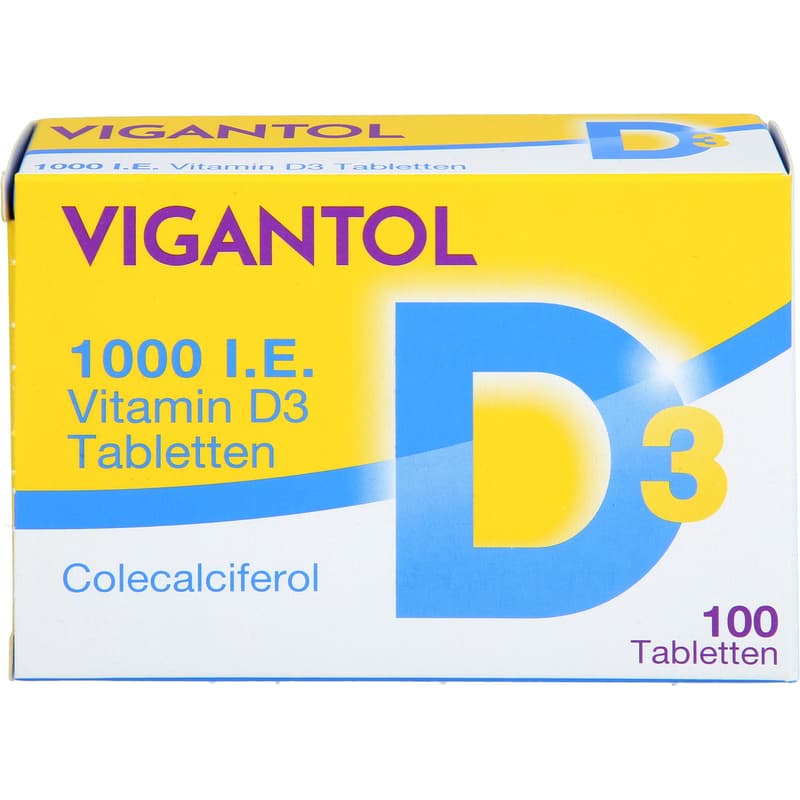
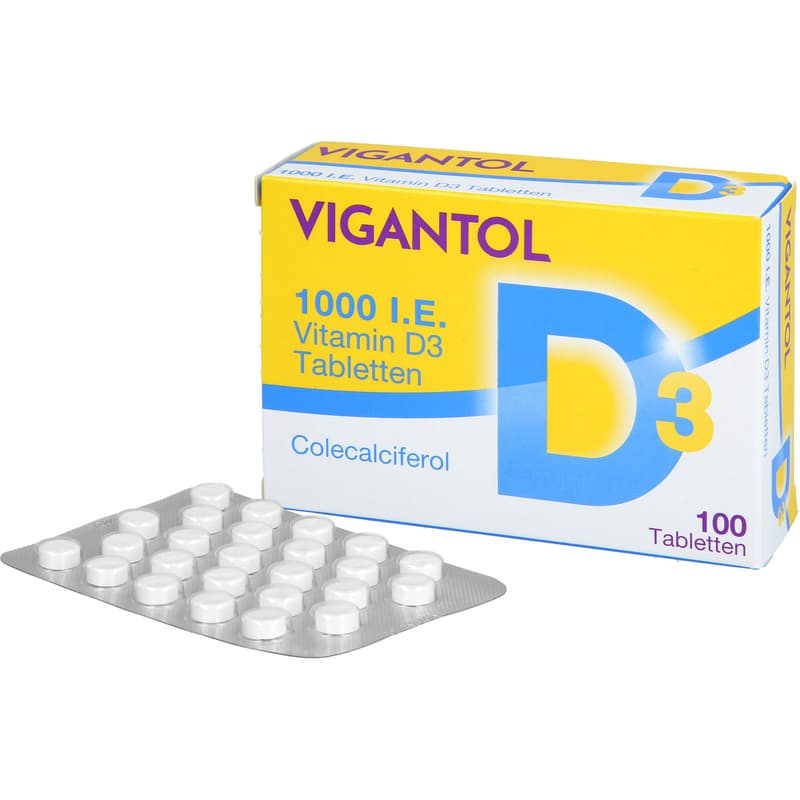
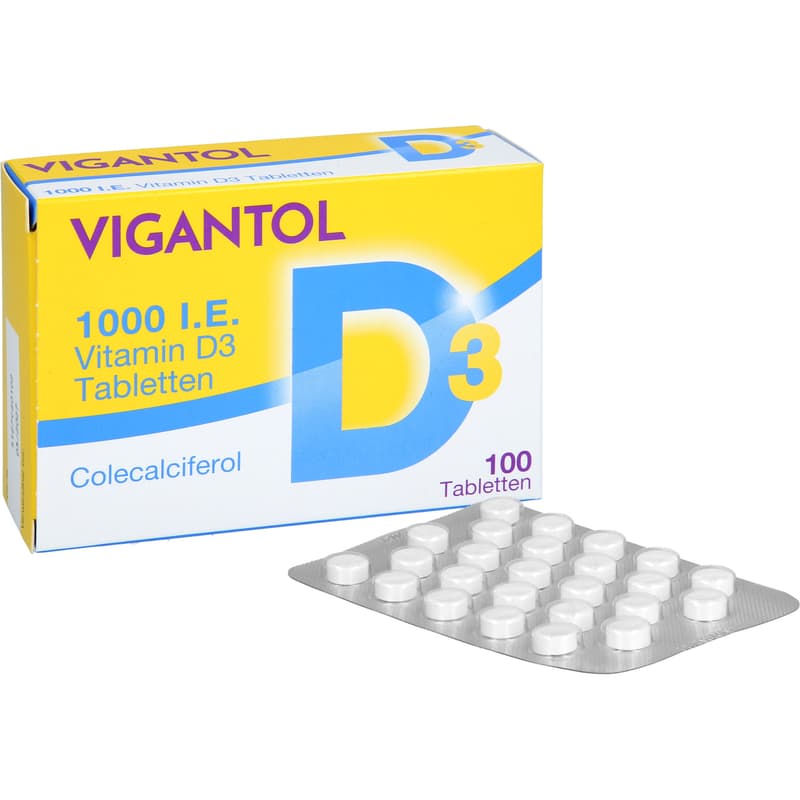
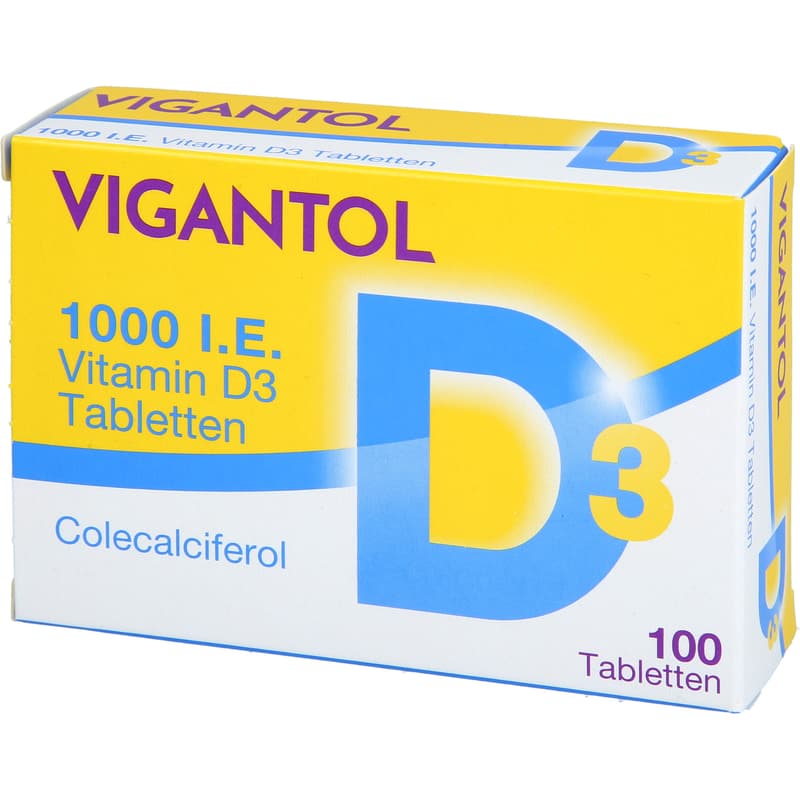
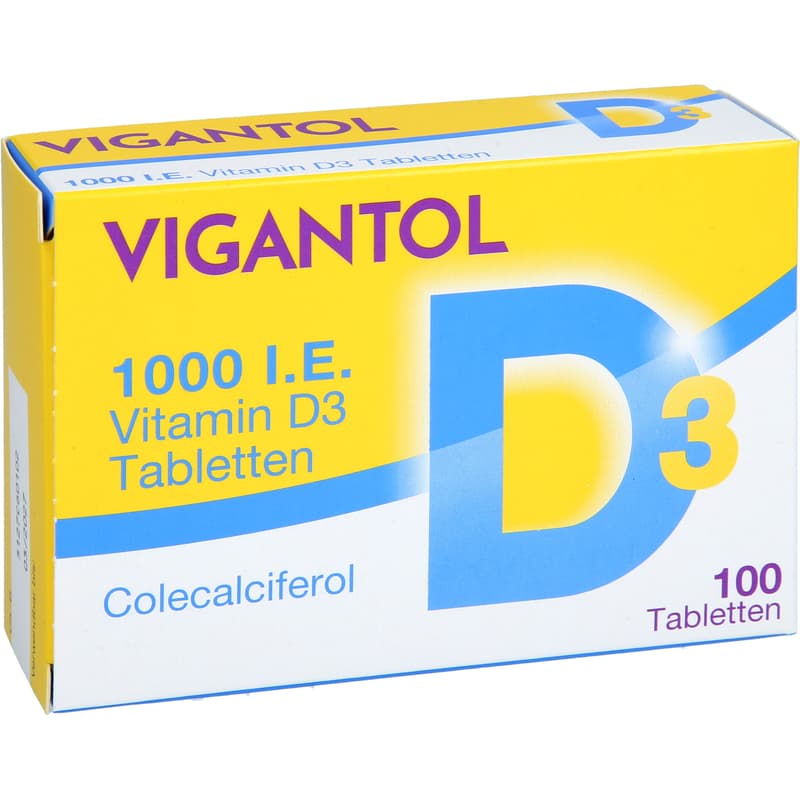
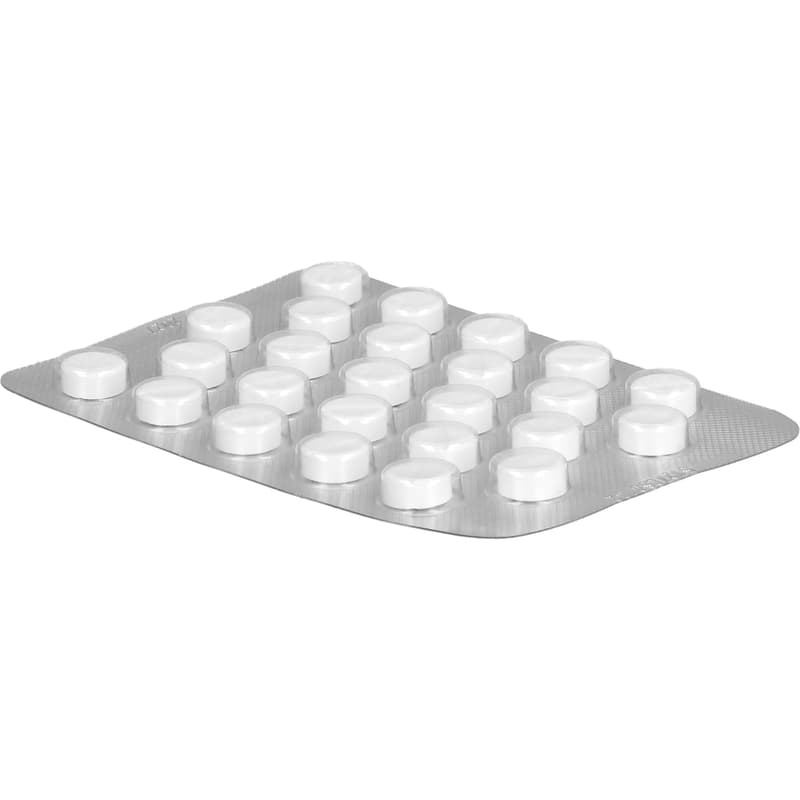
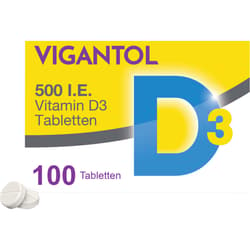
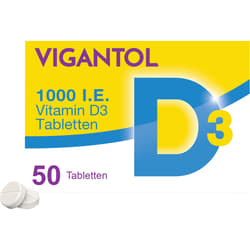
Looking to support your bone health? VIGANTOL Vitamin D3 tablets with 1,000 I.U. contain the active ingredient colecalciferol. This Austrian product is ideal for preventing rickets and osteomalacia, as well as supporting osteoporosis treatment. Suitable for infants, children, and adults, these 100 pcs feature a practical dividing score, making them very easy to split and dose as needed.
Zu Risiken und Nebenwirkungen lesen Sie die Packungsbeilage und fragen Sie Ihre Ärztin, Ihren Arzt oder in Ihrer Apotheke.

Description

You're reading an Auto-translation.
Important notes (mandatory information)
Vigantol 1000 I.U. Vitamin D3 Tablets. Active ingredient: Colecalciferol. Areas of application: for the prevention of rickets (calcification disorders of the skeleton during growth) and osteomalacia (bone softening in adults), for the prevention of rickets (calcification disorders of the skeleton during growth) in premature babies, for the prevention of a recognisable risk of vitamin D deficiency in otherwise healthy individuals without absorption disorders (disorders of the absorption of vitamin D in the intestines) in children and adults and for the supportive treatment of osteoporosis (bone loss) in adults.For risks and side effects, read the package leaflet and ask your doctor or pharmacist.
PACKAGE LEAFLET: INFORMATION FOR THE USER
Vigantol 1000 I.U. Vitamin D3 Tablets for use in infants, children and adults
Active ingredient: Colecalciferol
Vitamin supplement
Read the entire package leaflet carefully, as it contains important information for you. This medicine is available without a prescription. However, to achieve the best possible results, Vigantol 1000 I.U. must be taken as prescribed.
- Keep the package leaflet. You may want to read it again later.
- Ask your pharmacist if you need more information or advice.
- If your symptoms worsen or do not improve, you must see a doctor.
- If any of the side effects listed here affect you significantly or if you notice any side effects not listed in this leaflet, please tell your doctor or pharmacist.
- WHAT IS VIGANTOL 1000 I.U. AND WHAT IS IT USED FOR?
- WHAT SHOULD YOU CONSIDER BEFORE TAKING VIGANTOL 1000 I.U.?
- HOW SHOULD VIGANTOL 1000 I.U. BE TAKEN?
- WHAT SIDE EFFECTS ARE POSSIBLE?
- HOW SHOULD VIGANTOL 1000 I.U. BE STORED?
- FURTHER INFORMATION
Vigantol 1000 I.U. is a vitamin supplement: Vigantol 1000 I.U. contains Colecalciferol (equivalent to Vitamin D3). Vigantol 1000 I.U. is used for the prevention of rickets (calcification disorders of the skeleton during growth) and osteomalacia (bone softening in adults), for the prevention of rickets (calcification disorders of the skeleton during growth) in premature babies, for the prevention of a recognisable risk of vitamin D deficiency in otherwise healthy individuals without absorption disorders (disorders of the absorption of vitamin D in the intestines) in children and adults and for the supportive treatment of osteoporosis (bone loss) in adults.
2. WHAT SHOULD YOU CONSIDER BEFORE TAKING VIGANTOL 1000 I.U.?
Vigantol 1000 I.U. must not be taken:
- if you are hypersensitive (allergic) to Colecalciferol or any of the other ingredients of Vigantol 1000 I.U.
- if you suffer from hypercalcaemia (elevated calcium concentration in the blood) and/or
- if you have hypercalciuria (elevated calcium concentration in the urine).
- if you are prone to the formation of calcium-containing kidney stones,
- if you have impaired excretion of calcium and phosphate via the kidneys.
- if you are being treated with benzothiadiazine derivatives (medicines to promote urine output).
- in immobilised patients, as there is a risk of hypercalcaemia (elevated calcium concentration in the blood) and hypercalciuria (elevated calcium concentration in the urine) in these patients. Calcium levels in the blood and urine should be monitored in these patients.
- if you suffer from sarcoidosis, as there is a risk of increased conversion of vitamin D into its active form. In this case, your calcium levels in the blood and urine should be monitored.
- if you have pseudohypoparathyroidism (disorder of parathyroid hormone balance), as the vitamin D requirement may be reduced by the intermittent normal vitamin D sensitivity. In this case, there is a risk of long-term overdose. More easily controllable active ingredients with vitamin D activity are available for this.
Daily doses over 500 I.U./d
During long-term treatment with Vigantol 1000 I.U., calcium levels in the blood and urine should be monitored and renal function should be checked by measuring serum creatinine. This check is particularly important in elderly patients and in patients receiving concomitant treatment with cardiac glycosides (medicines to promote the function of the heart muscle) or diuretics (medicines to promote urine output). In the event of hypercalcaemia (elevated calcium concentration in the blood) or signs of impaired renal function, the dose must be reduced or treatment discontinued. It is advisable to reduce the dose or discontinue treatment if the calcium content in the urine exceeds 7.5 mmol/24 hours (300 mg/24 hours).Daily doses over 1000 I.U./d
During long-term treatment with daily doses over 1000 I.U. of vitamin D, serum calcium levels must be monitored.When taking Vigantol 1000 I.U. with other medicines
Please tell your doctor or pharmacist if you are taking/using or have recently taken/used any other medicines, even if they are non-prescription medicines.Which other medicines affect the effect of Vigantol 1000 I.U.?
Phenytoin (medicine for the treatment of epilepsy) or barbiturates (medicines for the treatment of epilepsy and sleep disorders and for anaesthesia)
They can impair the effect of vitamin D.Thiazide diuretics (medicines to promote urine output)
They can lead to hypercalcaemia (elevated calcium concentration in the blood) by reducing the excretion of calcium via the kidneys. Calcium levels in the blood and urine should therefore be monitored during long-term treatment.The concomitant administration of glucocorticoids (medicines for the treatment of certain allergic diseases)
Can impair the effect of vitamin D.Vitamin D metabolites or analogues (e.g. Calcitriol)
A combination with Vigantol 1000 I.U. is only recommended in exceptional cases. Blood calcium levels should be monitored.Rifampicin and Isoniazid (medicines for the treatment of tuberculosis)
The metabolism of vitamin D can be increased and the efficacy reduced.How do Vigantol 1000 I.U. affect the effect of other medicines?
The risk of an adverse effect when taking cardiac glycosides (medicines to promote the function of the heart muscle) may increase as a result of an increase in calcium levels in the blood during treatment with vitamin D (risk of cardiac arrhythmias). Patients should be monitored for ECG and calcium levels in the blood and urine and, if necessary, for blood drug levels. Please note that this information may also apply to medicines that have been used recently.
Pregnancy, breastfeeding and fertility
Pregnancy - Daily doses up to 500 I.U./d
No risks are known in the specified dose range to date. Long-term overdoses of vitamin D must be prevented during pregnancy, as the resulting hypercalcaemia (elevated calcium concentration in the blood) can lead to physical and mental disability and congenital heart and eye diseases in the child.Pregnancy - Daily doses over 500 I.U./d
During pregnancy, Vigantol 1000 I.U. should only be taken after strict indication and only in the dosage that is absolutely necessary to correct the deficiency. Overdoses of vitamin D during pregnancy must be prevented, as long-term hypercalcaemia (elevated calcium concentration in the blood) can lead to physical and mental disability and congenital heart and eye diseases in the child.Breastfeeding
Vitamin D and its metabolites pass into breast milk. An overdose in the infant has not been observed in this way.If you are pregnant or breastfeeding, or if you suspect you may be pregnant or are planning to become pregnant, ask your doctor or pharmacist for advice before taking this medicine.
Driving and operating machinery
No special precautions are required.Important information about certain other ingredients of Vigantol 1000 I.U.
This medicine contains sucrose. Please only take Vigantol 1000 I.U. after consulting your doctor if you are known to suffer from an intolerance to certain sugars.3. HOW SHOULD VIGANTOL 1000 I.U. BE TAKEN?
Always take Vigantol 1000 I.U. exactly as your doctor has told you. Please ask your doctor or pharmacist if you are not sure.
Unless otherwise prescribed by your doctor, the usual dose is:
- For the prevention of rickets, 1/2 tablet Vigantol 1000 I.U. daily (equivalent to 0.0125 mg or 500 I.U. vitamin D). The dosage is to be determined by the attending physician. In general, 1 tablet Vigantol 1000 I.U. daily (equivalent to 0.025 mg or 1000 I.U. vitamin D) is recommended for the prevention of rickets in premature babies.
- For the prevention of a recognisable risk of vitamin D deficiency, 1/2 tablet Vigantol 1000 I.U. daily (equivalent to 0.0125 mg or 500 I.U. vitamin D).
- For the supportive treatment of osteoporosis, 1 tablet Vigantol 1000 I.U. daily (equivalent to approx. 0.025 mg or 1000 I.U. vitamin D).
Daily doses over 500 I.U./d
During long-term treatment with Vigantol 1000 I.U., calcium levels in the blood and urine should be monitored regularly and renal function should be checked by measuring serum creatinine. If necessary, the dose should be adjusted according to the blood calcium levels.Method of administration
Infants and toddlers
Dissolve the tablet in approx. 5 - 10 ml of water on a teaspoon or in a small transparent container (e.g. a small glass). The tablet takes some time to dissolve (at least 2 minutes). Gentle back and forth movement can accelerate the disintegration. To avoid unwanted complications, such as accidental penetration of the tablet into the airways ("swallowing"), the tablet must never be given to infants and toddlers undissolved. Then give the dissolved tablet directly to the child, preferably during a meal. Adding the tablets to a bottle or food meal for infants is not recommended, as complete intake cannot be guaranteed. If the tablets are to be administered in food, they should only be added after boiling and then cooling. When using fortified food, the vitamin D content it contains must be taken into account.Adults
Take the tablets with sufficient water.Duration of use
Infants receive Vigantol 1000 I.U. from the second week of life until the end of the first year of life. Further doses of Vigantol 1000 I.U. are recommended in the second year of life, especially during the winter months. Please ask your doctor about the necessary duration of use!Please talk to your doctor or pharmacist if you have the impression that the effect of Vigantol 1000 I.U. is too strong or too weak.
If you have taken more Vigantol 1000 I.U. than you should
Daily doses up to 500 I.U./d:- Symptoms of overdose: Long-term overdose of vitamin D can lead to hypercalcaemia (elevated calcium concentration in the blood) and hypercalciuria (elevated calcium concentration in the urine). If the requirement is significantly and persistently exceeded, calcification of organs can occur.
- Therapeutic measures in the event of overdose: Symptoms of chronic overdose of vitamin D may require increased urinary excretion and the administration of glucocorticoids (medicines for the treatment of certain allergic diseases) and calcitonin (hormone for regulating calcium concentration in the blood).
Daily doses over 500 I.U./d
- Symptoms of overdose: Ergocalciferol (vitamin D2) and Colecalciferol (vitamin D3) have only a relatively narrow therapeutic range. In adults with normal parathyroid function, the threshold for vitamin D intoxication is between 40,000 and 100,000 I.U. per day for 1 to 2 months. Infants and toddlers can be sensitive to much lower doses. Therefore, vitamin D should not be taken without medical supervision. In the event of an overdose, in addition to an increase in phosphorus in the blood and urine, hypercalcaemia syndrome (elevated calcium concentration in the blood) occurs, later also calcium deposition in the tissues and especially in the kidneys (kidney stones and kidney calcification) and the vessels. The symptoms of intoxication are not very characteristic and manifest themselves in nausea, vomiting, initially often diarrhoea, later constipation, loss of appetite, fatigue, head, muscle and joint pain, muscle weakness and persistent drowsiness, azotaemia (elevated nitrogen concentration in the blood), increased thirst, increased urination and in the final phase dehydration. Typical laboratory findings are hypercalcaemia (elevated calcium concentration in the blood), hypercalciuria (elevated calcium concentration in the urine) and elevated serum levels of 25-hydroxycalciferol.
- Therapeutic measures in the event of overdose: In the event of an overdose, measures are required to treat the often long-lasting and potentially life-threatening hypercalcaemia (elevated calcium concentration in the blood). As a first measure, the vitamin D preparation must be discontinued; normalisation of hypercalcaemia (elevated calcium concentration in the blood) as a result of vitamin D intoxication takes several weeks. Depending on the extent of hypercalcaemia (elevated calcium concentration in the blood), a low-calcium or calcium-free diet, ample fluid intake, increased urinary excretion using the medicine Furosemide and the administration of glucocorticoids (medicines for the treatment of certain allergic diseases) and calcitonin (hormone for regulating calcium concentration in the blood) can be used. With sufficient renal function, infusions with isotonic saline solution (3-6 l in 24 hours) with the addition of Furosemide (medicine to increase urinary output) and possibly also 15 mg/kg body weight/hour of sodium edetate (medicine that binds calcium in the blood) under continuous calcium and ECG monitoring are quite reliable in reducing calcium levels. In the case of reduced urinary output, on the other hand, haemodialysis treatment (blood washing) with a calcium-free dialysate is indicated.
If you forget to take Vigantol 1000 I.U.
If you have taken too little Vigantol 1000 I.U. or missed a dose, please do not take double the amount of medicine next time, but continue taking it as prescribed.If you stop taking Vigantol 1000 I.U.
If treatment is interrupted or ended prematurely, your symptoms may worsen or recur. Please consult your doctor about this!If you have any further questions on the use of this medicine, ask your doctor or pharmacist.
4. WHAT SIDE EFFECTS ARE POSSIBLE?
Like all medicines, Vigantol 1000 I.U. can have side effects, although not everybody gets them. The frequency of side effects is not known, as no major clinical studies have been conducted to allow an estimate of the frequency.
Possible side effects
Metabolism and nutritional disorders
HypercalcaemiaInformation leaflet
Download the information leafletComposition & Allergens
Composition
Wirkstoff: Colecalciferol