
Max. 3 pcs
Product from:
Preussen
997€
27% of customers buy regularly
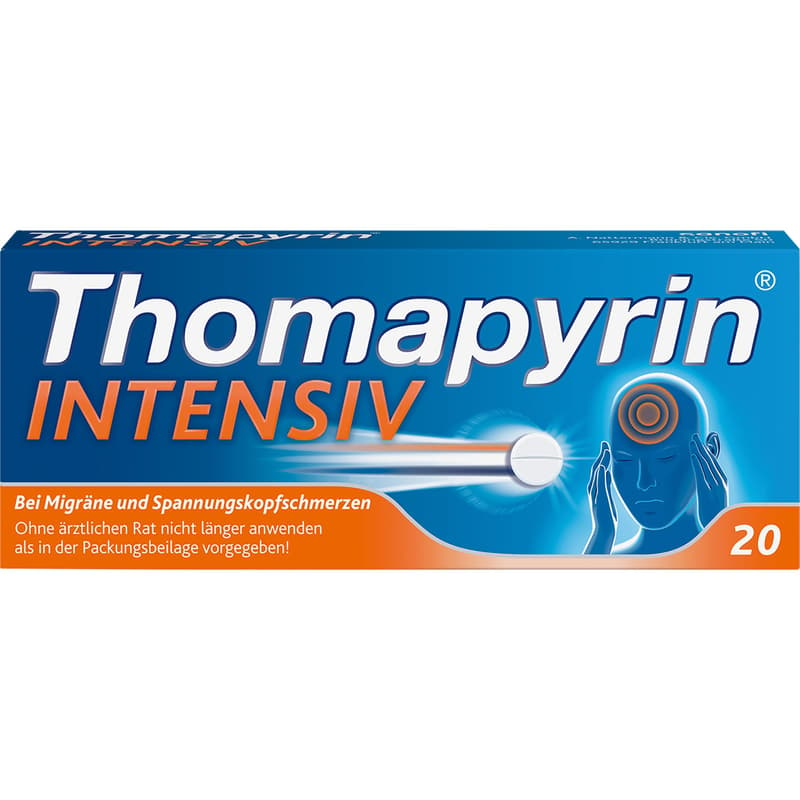
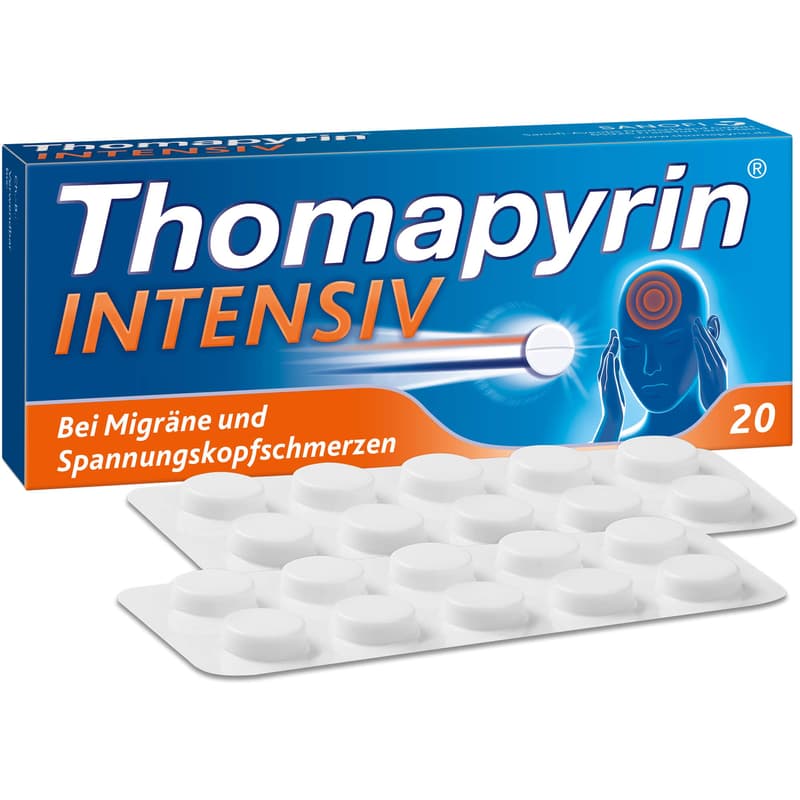
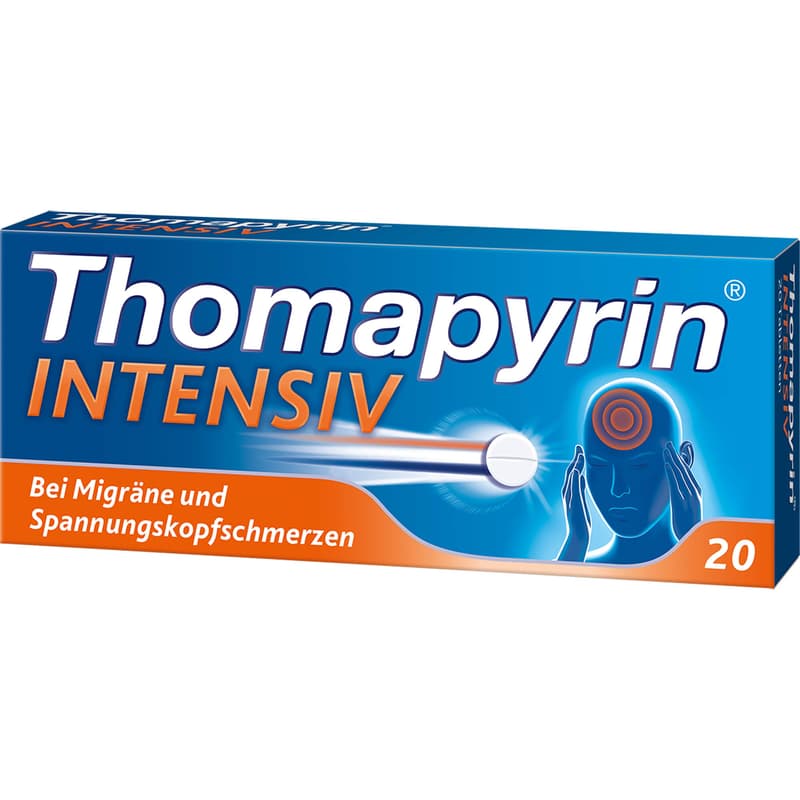
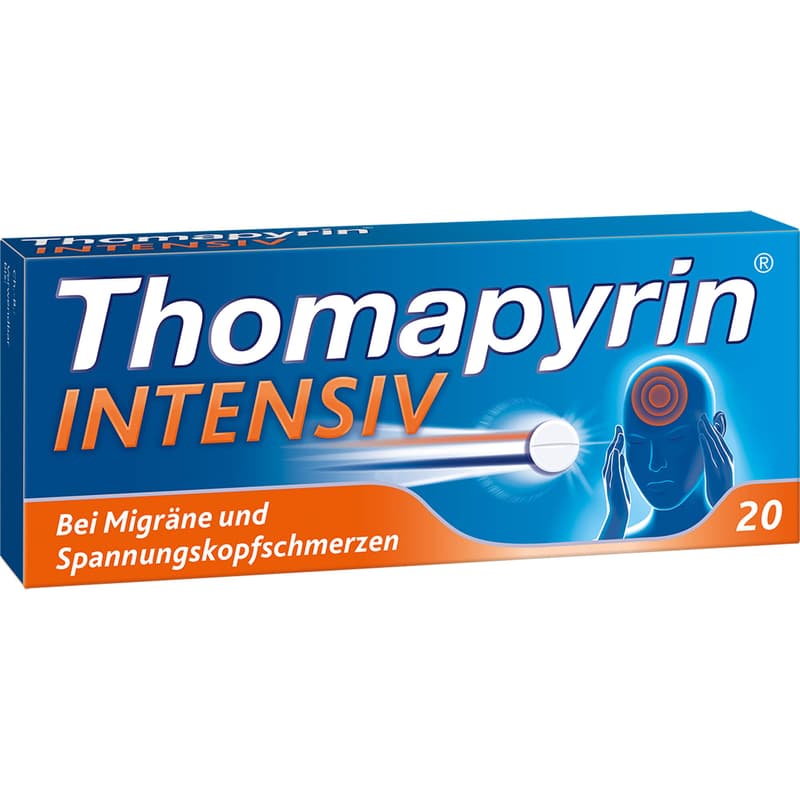
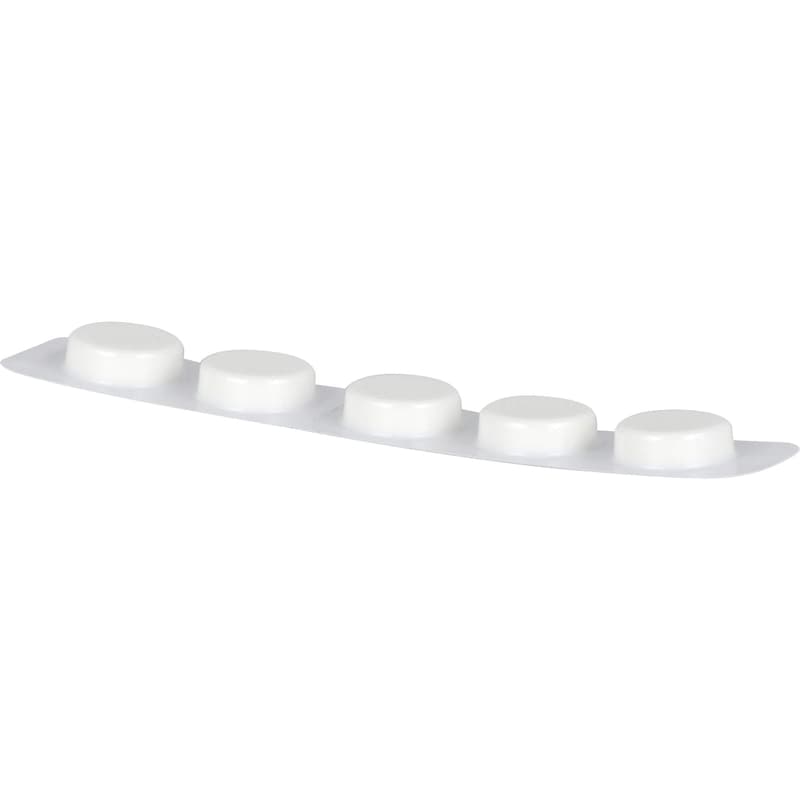
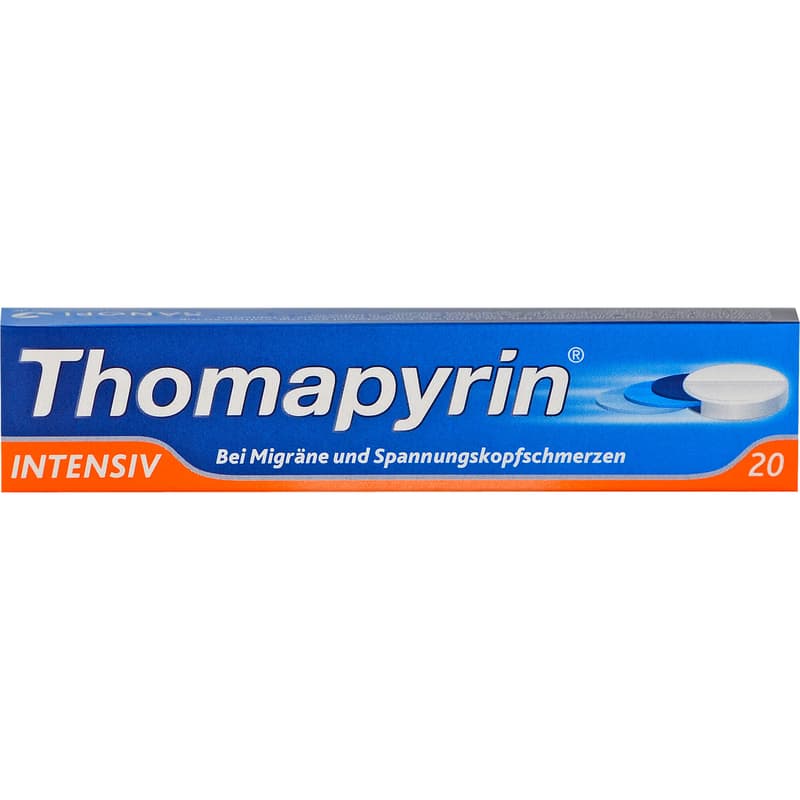
Need reliable relief from acute headaches or migraines? Thomapyrin Intensiv tablets are a trusted pain reliever designed for adults and teenagers from 12 years of age. Featuring a powerful triple-action formula of acetylsalicylic acid, paracetamol, and caffeine, they target pain effectively. Produced in France, you get 20 tablets. Please note that this medicine contains lactose.
Zu Risiken und Nebenwirkungen lesen Sie die Packungsbeilage und fragen Sie Ihre Ärztin, Ihren Arzt oder in Ihrer Apotheke.

Description

You're reading an Auto-translation.
Important notes (mandatory information)
Thomapyrin INTENSIV. Areas of application: For adults and adolescents aged 12 and over for the treatment of acute headaches (e.g. tension headaches) and migraine attacks (with and without aura). Painkillers should not be used for a long time or in high doses without consulting a doctor. Warning: Contains lactose.For risks and side effects, read the package leaflet and ask your doctor or pharmacist.
PACKAGE LEAFLET: INFORMATION FOR THE USER
Thomapyrin INTENSIV
250 mg / 250 mg / 50 mg per tablet
For adults and adolescents aged 12 and over
Active ingredients: Acetylsalicylic acid (Ph. Eur.), Paracetamol, Caffeine
Read the entire package leaflet carefully as it contains important information for you.
. Keep the package leaflet. You may want to read it again later.
. Ask your pharmacist if you need more information or advice.
. If your symptoms worsen or do not improve after 3 - 4 days, you must see a doctor.
. If any of the side effects listed here affect you significantly or if you notice any side effects not listed in this leaflet, please tell your doctor or pharmacist.
Contents of this package leaflet
1. WHAT IS THOMAPYRIN INTENSIV AND WHAT IS IT USED FOR?2. WHAT YOU NEED TO KNOW BEFORE TAKING THOMAPYRIN INTENSIV?
3. HOW TO TAKE THOMAPYRIN INTENSIV?
4. WHAT SIDE EFFECTS ARE POSSIBLE?
5. HOW TO STORE THOMAPYRIN INTENSIV?
6. FURTHER INFORMATION
1. WHAT IS THOMAPYRIN INTENSIV AND WHAT IS IT USED FOR?
THOMAPYRIN INTENSIV is an analgesic, antipyretic and anti-inflammatory drug (non-steroidal anti-inflammatory/analgesic). THOMAPYRIN INTENSIV is used: For the treatment of acute headaches (e.g. tension headaches) and migraine attacks (with and without aura) in adults and adolescents.
2. WHAT YOU NEED TO KNOW BEFORE TAKING THOMAPYRIN INTENSIV?
THOMAPYRIN INTENSIV must not be taken,
. if you are allergic (hypersensitive) to salicylates, paracetamol or any of the other ingredients of THOMAPYRIN INTENSIV
. if you have reacted to the use of salicylates or other non-steroidal anti-inflammatory drugs (certain medicines for pain, fever or inflammation) in the past with asthma attacks, nasal swelling (nasal polyps), swelling of the face, tongue, larynx (angioedema) or rash
. with stomach and intestinal ulcers
. with liver and kidney failure
. with severe, non-drug-adjustable heart muscle weakness (heart failure)
. with abnormally increased bleeding tendency
. if you are taking 15 mg or more of methotrexate per week at the same time
. in the last three months of pregnancy
. by children and adolescents under 12 years of age
. by children and adolescents with chickenpox or flu-like illnesses, as there is a risk of developing Reye's syndrome.
In cases of rare congenital intolerance to one of the excipients, THOMAPYRIN INTENSIV should not be used.
Special care must be taken when taking THOMAPYRIN INTENSIV,
. with concomitant therapy with anticoagulant drugs (e.g. coumarin derivatives, heparin), thrombolytics or certain antidepressants (selective serotonin reuptake inhibitors (SSRIs)
. with bronchial asthma, hay fever or nasal swelling (nasal polyps)
. with a hypersensitivity (e.g. skin reactions) to other anti-inflammatory drugs/antirheumatics (so-called analgesic intolerance/analgesic asthma)
. with chronic or recurrent stomach or intestinal complaints
. with a history of stomach or intestinal ulcers, gastrointestinal bleeding or perforation
. with impaired kidney function or pre-damaged kidney
. with impaired liver function (e.g. due to chronic alcohol abuse or liver inflammation)
. with glucose-6-phosphate dehydrogenase deficiency
. with Gilbert's syndrome (Meulengracht disease)
. before operations
. with hyperthyroidism (hyperthyroidism)
If the recommended dose is exceeded, liver damage may result. To prevent the risk of overdose, it should be ensured that concomitant medicinal products do not contain paracetamol. With prolonged, high-dose, non-intended use of painkillers, headaches may occur which must not be treated with increased doses of the drug. In such cases, the painkiller should not be taken again without medical advice. If taken abruptly after prolonged, high-dose, non-intended use of painkillers, headaches, fatigue, vegetative symptoms, muscle pain and nervousness may occur. These withdrawal symptoms subside within a few days. Until then, the painkiller should not be taken again and should not be taken again without medical advice. At the first signs of a hypersensitivity reaction after taking THOMAPYRIN INTENSIV, the therapy must be discontinued. Acetylsalicylic acid reduces uric acid excretion in low doses. In predisposed patients, this can under certain circumstances trigger a gout attack. THOMAPYRIN INTENSIV can mask the signs of an infection. If signs of an infection (e.g. redness, swelling, overheating, pain, fever) occur or worsen during use, a doctor should therefore be consulted immediately. Patients, especially the elderly, should report any unusual abdominal symptoms, especially at the beginning of therapy, as bleeding, ulceration and perforation in the gastrointestinal tract have been reported in connection with the use of non-steroidal anti-rheumatic drugs, which can be life-threatening. If bleeding or ulcers occur in the gastrointestinal tract, THOMAPYRIN INTENSIV must be discontinued.
Children:
THOMAPYRIN INTENSIV should only be used in children and adolescents with febrile illnesses, e.g. chickenpox, on medical advice and only if other measures do not work because of the acetylsalicylic acid content. Should persistent vomiting, headaches or impaired consciousness occur during these illnesses, this may be a sign of Reye's syndrome, a very rare but potentially life-threatening disease that requires immediate medical attention.
Taking THOMAPYRIN INTENSIV with other medicines
Acetylsalicylic acid:The acetylsalicylic acid content can increase the effects and side effects of the following active ingredients:
. anticoagulant drugs (e.g. coumarin derivatives and heparin), thrombolytics, certain antidepressants (SSRIs): increased risk of bleeding
. platelet aggregation inhibitors (drugs that inhibit the clumping and clotting of platelets), e.g. ticlopidine
. certain painkillers (so-called non-steroidal anti-rheumatic drugs, NSAIDs), corticosteroids or concomitant alcohol consumption: increased risk of gastrointestinal complaints (e.g. gastrointestinal bleeding)
. blood sugar lowering drugs
. valproic acid, methotrexate, digoxin, lithium
The acetylsalicylic acid content can weaken the effects of the following active ingredients:
. drugs for increased urine output (diuretics)
. drugs for increased uric acid excretion (certain gout drugs)
. drugs for lowering blood pressure (antihypertensives)
Paracetamol:
Concomitant use of drugs that accelerate the breakdown of paracetamol in the liver, such as barbiturate-containing sleeping pills, antiepileptics and rifampicin, can cause liver damage even with otherwise harmless doses of paracetamol; the same applies to other drugs that may damage the liver and in the case of alcohol abuse. With concomitant use of agents that lead to a slowing down of gastric emptying, the absorption and onset of action of paracetamol may be delayed. With concomitant use of agents that lead to an acceleration of gastric emptying, such as metoclopramide, the absorption and onset of action of paracetamol may be accelerated. With concomitant use of paracetamol and zidovudine, the tendency to reduce white blood cells (neutropenia) is increased. This drug should therefore only be used concomitantly with zidovudine on medical advice.
Other known effects:
. Probenecid: Reduced excretion of paracetamol, increased risk of side effects
. Cholestyramine: Reduced absorption of paracetamol
If anticoagulant drugs and paracetamol are taken together for a long period of time, medical supervision should be carried out. Taking paracetamol can affect the determination of uric acid and sugar levels in the blood.
Caffeine:
Caffeine reduces the sedative effects of numerous substances, such as barbiturates, antihistamines, etc. Caffeine increases the heart-accelerating effects of e.g. sympathomimetics, thyroxine etc. Oral contraceptives (so-called "pill"), cimetidine, fluvoxamine and disulfiram reduce the breakdown of caffeine in the liver, barbiturates and smoking accelerate it. The excretion of theophylline is reduced by caffeine. The
concomitant administration of gyrase inhibitors of the quinolone carboxylic acid type can delay the excretion of caffeine and its degradation product paraxanthine. Please inform your doctor or pharmacist if you are taking/using or have recently taken/used any other medicines, even if they are non-prescription medicines.
Taking THOMAPYRIN INTENSIV with food and drink
You should avoid drinking alcohol while taking THOMAPYRIN INTENSIV.Pregnancy, breastfeeding and fertility
If you are pregnant or breastfeeding, or if you suspect you may be pregnant or are planning to become pregnant, ask your doctor or pharmacist for advice before taking this medicine. Pregnancy THOMAPYRIN INTENSIV should not be taken during pregnancy as it may affect the pregnancy and/or the development of the unborn child. You should therefore only take THOMAPYRIN INTENSIV during the first and second trimesters of pregnancy after consulting your doctor or dentist and only at the lowest effective dose and for the shortest possible time, as there is evidence of an increased risk of miscarriage and malformations. The same applies to women who are trying to conceive. THOMAPYRIN INTENSIV must not be used in the last three months of pregnancy or during childbirth, as there is an increased risk of complications for mother and child.Note
If pregnancy is discovered while taking the preparation, the doctor must be informed.Breastfeeding
The active ingredients pass into breast milk. The condition and behaviour of the infant may be affected by caffeine taken in with breast milk. With short-term use of the recommended dose, it will usually not be necessary to interrupt breastfeeding. In the case of prolonged use or higher doses, breastfeeding should be discontinued.Fertility
Acetylsalicylic acid belongs to a group of medicines (non-steroidal anti-rheumatic drugs) that can impair female fertility. This effect is reversible after discontinuation of the drug.Driving and operating machinery
There are no known effects on the ability to drive or operate machinery as a result of taking THOMAPYIN INTENSIV. If you experience side effects such as drowsiness, visual disturbances, dizziness or balance disorders, you should not drive a vehicle or operate machinery.Important information about certain other ingredients of THOMAPYRIN INTENSIV
This medicine contains lactose. Therefore, please only take THOMAPYRIN INTENSIV after consulting your doctor if you know that you suffer from an intolerance to certain sugars.3. HOW TO TAKE THOMAPYRIN INTENSIV?
Always take THOMAPYRIN INTENSIV exactly as described in this leaflet. Please ask your doctor or pharmacist if you are not sure. Unless otherwise prescribed by your doctor, the usual dose is
| Age | Single dose | Maximum daily dose (24 hours) |
| Adults and adolescents aged 12 and over | 1 – 2 tablets (equivalent to 250 – 500 mg acetylsalicylic acid, 250 – 500 mg paracetamol and 50 – 100 mg caffeine | 6 tablets (equivalent to 1500 mg acetylsalicylic acid, 1500 mg paracetamol and 300 mg caffeine) |
The maximum daily dose (24 hours) should not be exceeded, and the time interval until the next tablet is taken should be 4 - 8 hours. THOMAPYRIN INTENSIV should not be used for more than 4 days or in higher doses without medical or dental advice. Take the tablets either dissolved in a little liquid or unchewed with plenty of liquid. Taking after meals can delay the onset of action. Please talk to your doctor or pharmacist if you have the impression that the effect of THOMAPYRIN INTENSIV is too strong or too weak.
If you have taken more THOMAPYRIN INTENSIV than you should
In the event of an overdose, nausea, vomiting, loss of appetite, pallor and abdominal pain may initially occur (1st day), but also dizziness and ringing in the ears. Despite an improvement in general well-being on the 2nd day, progressive liver damage can occur up to liver coma on the 3rd day. An overdose or prolonged, chronic use can lead to severe liver damage, CNS disorders such as headache, dizziness, vomiting, ringing in the ears, visual or hearing disturbances, as well as iron deficiency anaemia, acid-base balance disorders and kidney damage. Early symptoms of acute caffeine poisoning are usually tremors and restlessness. Symptoms of caffeine poisoning (nausea, vomiting, decreased potassium blood levels, increased blood sugar levels, central nervous system symptoms, cardiovascular reactions up to myocardial damage) may also occur if large amounts are ingested in a short period of time. Other possible symptoms of acute poisoning may include hypoglycaemia (hypoglycaemia), skin rash, gastrointestinal bleeding, hyperventilation and confusional states. In severe cases of poisoning, delirium, tremors, convulsions, respiratory distress, sweating, fluid loss, increased body temperature and coma may occur. An increased risk of poisoning, up to and including death, exists for elderly patients, children, patients with liver disease, chronic alcohol consumption or chronic malnutrition, and patients who are taking concomitant medication that can lead to liver damage. If you suspect an overdose, contact a doctor immediately - even if the symptoms subside temporarily - and do not take any further medication.If you forget to take THOMAPYRIN INTENSIV
Do not take a double dose to make up for a forgotten dose.4. WHAT SIDE EFFECTS ARE POSSIBLE?
Like all medicines, THOMAPYRIN INTENSIV can have side effects, although not everybody gets them. The following list of undesirable effects includes all known side effects under treatment with acetylsalicylic acid and paracetamol, including those under high-dose long-term therapy.
| The following categories are used to classify the frequency of side effects: | |
| Very common: | more than 1 in 10 treated |
| Common: | 1 to 10 in 100 treated |
| Uncommon: | 1 to 10 in 1,000 treated |
| Rare: | 1 to 10 in 10,000 treated |
| Very rare: | less than 1 in 10,000 treated |
| Not known: | frequency cannot be estimated from the available data. |
Blood and lymphatic system disorders
Very rare: Blood count changes (e.g. reduction in the number of blood cells)Rare to very rare: Severe bleeding, e.g. cerebral haemorrhage, which can be life-threatening in individual cases, especially in patients with untreated high blood pressure and/or concomitant treatment with anticoagulant drugs (see Chap. 2)
Not known: Bleeding such as nosebleeds, gum bleeding or skin bleeding with a possible prolongation of bleeding time. This effect can persist for 4 - 8 days after ingestion.
Immune system disorders
Rare: Hypersensitivity reactions (including anaphylactic shock, swelling of the face, tongue and larynx (angioedema), narrowing of the bronchi, drop in blood pressure, shortness of breath).Uncommon: Hypersensitivity reactions such as skin reactions (e.g. skin redness, hives).
Respiratory disorders
Very rare: Bronchospasm in patients allergic to NSAIDs.Endocrine system disorders
Very rare: decreased blood sugar levelNervous system disorders
Common: DizzinessRare: Tremor
Not known: Headache, and mental confusion, restlessness, insomnia, impaired hearing, tinnitus
Psychiatric disorders
Common: NervousnessRare: Excitation
Eye disorders
Not knownInformation leaflet
Download the information leafletComposition & Allergens
Composition
Wirkstoff: Acetylsalicylsäure (Ph