
Max. 3 pcs


Product from:
Preussen
1037€
Only 11 items left
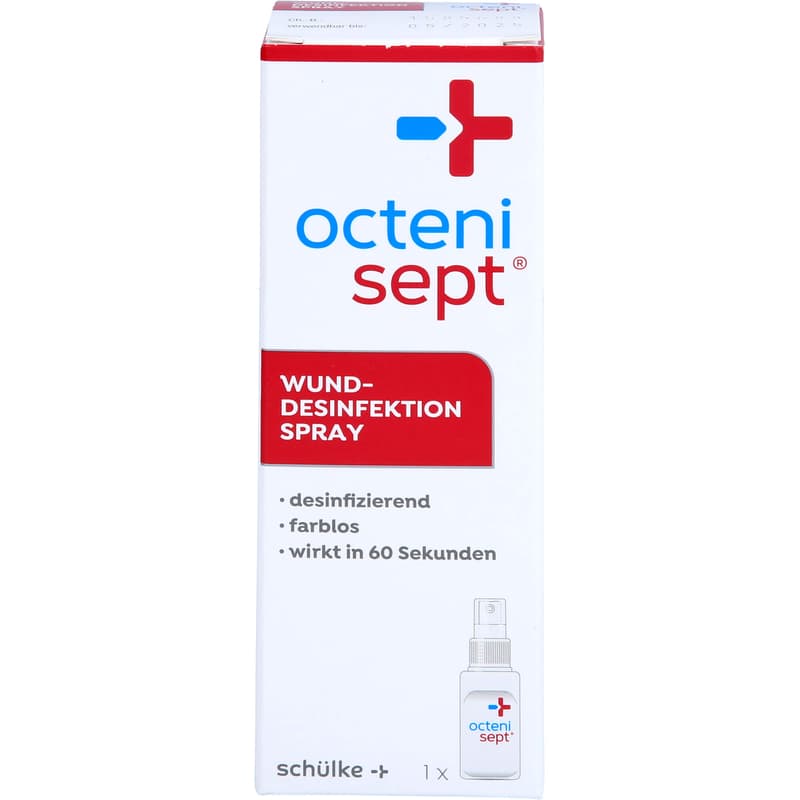
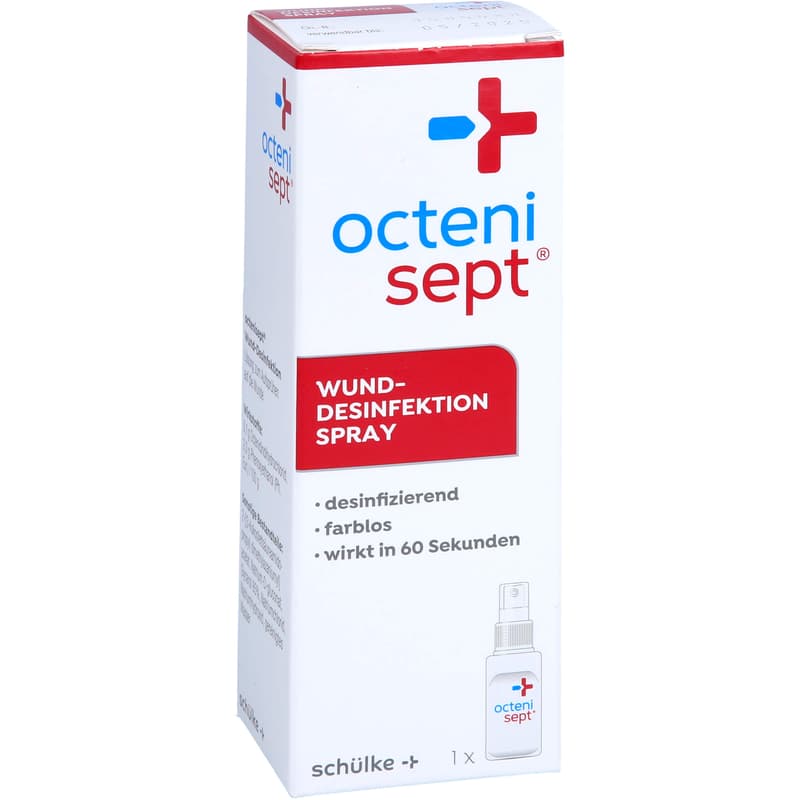
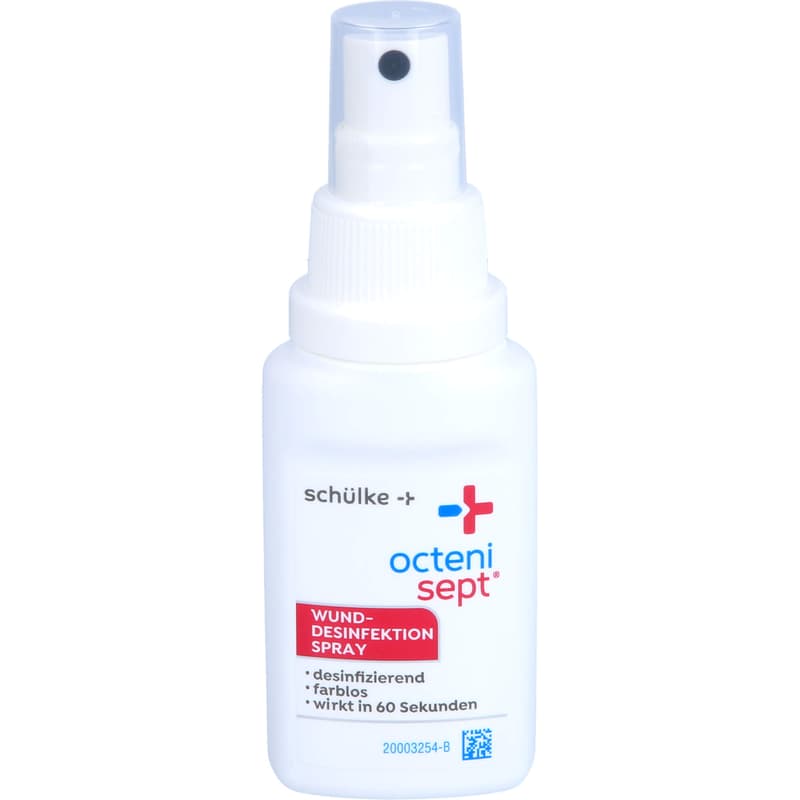
The OCTENISEPT wound disinfection solution is your reliable companion for quick, painless first aid. This colorless antiseptic is perfect for repeated, temporary wound treatment, helping to disinfect cuts and scrapes. The practical 50 ml spray bottle fits easily into any bag or first aid kit, allowing for simple and hygienic application. A true household essential for everyday care.
Zu Risiken und Nebenwirkungen lesen Sie die Packungsbeilage und fragen Sie Ihre Ärztin, Ihren Arzt oder in Ihrer Apotheke.
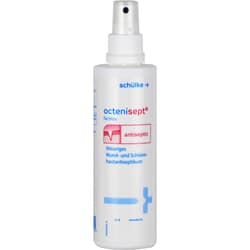
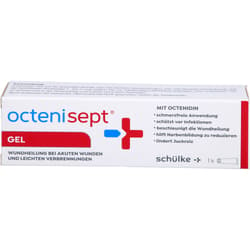
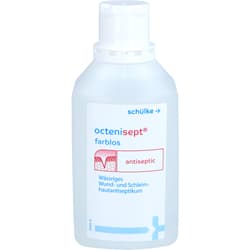
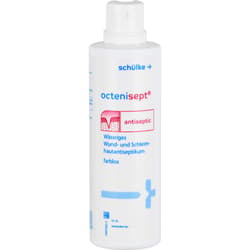
Description

You're reading an Auto-translation.
Important notes (mandatory information)
octenisept Wound Disinfection, solution. Areas of application: for repeated, time-limited supportive antiseptic wound treatment.For risks and side effects, read the package leaflet and ask your doctor or pharmacist.
PACKAGE LEAFLET: INFORMATION FOR THE USER
octenisept Wound Disinfection, antiseptic for supportive wound treatment, solution for spraying onto the wound
Active ingredients: Octenidine hydrochloride 0.1 g, phenoxyethanol (Ph. Eur.) 2.0 g
- WHAT IS OCTENISEPT WOUND DISINFECTION AND WHAT IS IT USED FOR?
- WHAT DO YOU NEED TO KNOW BEFORE USING OCTENISEPT TINCTURE FORTE COLOURLESS?
- HOW TO USE OCTENISEPT WOUND DISINFECTION?
- WHAT SIDE EFFECTS ARE POSSIBLE?
- HOW TO STORE OCTENISEPT WOUND DISINFECTION?
- FURTHER INFORMATION
octenisept Wound Disinfection is an antiseptic for repeated, time-limited supportive antiseptic wound treatment.
2. WHAT DO YOU NEED TO KNOW BEFORE USING OCTENISEPT WOUND DISINFECTION?
octenisept Wound Disinfection must not be used if you are hypersensitive (allergic) to the active ingredients or any of the other ingredients. The medicinal product should not be used for rinsing the abdominal cavity (e.g. intraoperatively) and the bladder, nor should it be used on the eardrum.
Special care must be taken when using octenisept Wound Disinfection
Do not swallow the medicinal product in large quantities or allow it to enter the bloodstream, e.g. through accidental injection. Warning: To prevent possible tissue damage, ensure that the preparation is not injected into the tissue under pressure. In the case of wound cavities, drainage must be ensured at all times (e.g. drainage, flap).Pregnancy
There is no experience with use during pregnancy. Animal studies have shown no evidence of teratogenic or other embryotoxic effects of octenidine hydrochloride and phenoxyethanol.Breastfeeding
There are no sufficient animal or clinical data on use during breastfeeding. Since octenidine hydrochloride is not or only minimally absorbed, it can be assumed that it does not pass into breast milk. Phenoxyethanol is rapidly and almost completely absorbed and excreted almost quantitatively as an oxidation product via the kidneys. Accumulation in breast milk is therefore unlikely.Driving and using machines
No influence known.When using octenisept with other medicines
Please inform your doctor or pharmacist if you are taking or have recently taken any other medicines, even if they are non-prescription medicines. Do not use with PVP-iodine-based antiseptics (disinfectants) on adjacent skin areas, as this can lead to severe brown to violet discolouration in the border areas.3. HOW TO USE OCTENISEPT WOUND DISINFECTION?
Always use the medicinal product exactly as described in this leaflet. Please ask your doctor or pharmacist if you are not sure. Spray the area to be treated carefully with the medicinal product. The wound must be completely wetted. Wait at least 1 to 2 minutes before taking any further measures, such as applying a wound dressing. These instructions must be carefully followed to achieve the desired effect. Since experience is only available for a continuous period of use of 14 days, the medicinal product should not be used for longer than 2 weeks without medical supervision.
If you have used more octenisept Wound Disinfection than you should
There is no knowledge of overdosage. However, overdose is very unlikely with a topical preparation.4. WHAT SIDE EFFECTS ARE POSSIBLE?
As a subjective symptom, a temporary burning sensation may occur in rare cases. Contact allergic reactions, such as temporary redness at the treated site, are very rare.
| The following categories are used as a basis for the frequency of side effects: | |
| Very common: | more than 1 in 10 treated persons |
| Common: | 1 to 10 in 100 treated persons |
| Uncommon: | 1 to 10 in 1,000 treated persons |
| Rare: | 1 to 10 in 10,000 treated persons |
| Very rare: | less than 1 in 10,000 treated persons |
| Not known: | frequency cannot be estimated from the available data. |
Reporting of side effects
If you get any side effects, talk to your doctor or pharmacist. This also applies to side effects not listed in this leaflet. You can also report side effects directly to the Federal Institute for Drugs and Medical Devices, Department of Pharmacovigilance, Kurt-Georg-Kiesinger Allee 3, D-53175 Bonn, website: www.bfarm.de. By reporting side effects, you can help provide more information on the safety of this medicine.5. HOW TO STORE OCTENISEPT WOUND DISINFECTION?
Keep out of reach of children. Do not use the medicinal product for more than 3 years after opening, but not beyond the expiry date stated on the packaging. No special storage conditions are required.
6. FURTHER INFORMATION
octenisept Wound Disinfection contains the following in 100 g solution: Active ingredients: octenidine hydrochloride 0.1 g, phenoxyethanol (Ph. Eur.) 2.0 g. Other ingredients: (3-coconut fatty acid amide propyl)-dimethylazaniumylacetate, sodium D-gluconate, glycerol 85%, sodium chloride, sodium hydroxide, purified water.
Pharmaceutical entrepreneur and manufacturer
Schülke & Mayr GmbH22840 Norderstedt
info@schuelke.com
Tel.: +49 (0) 52100-0
This leaflet was last revised in April 2015.
Source: Package leaflet information
Status: 10/2017
Areas of application: for repeated, time-limited supportive antiseptic wound treatment.
Information leaflet
Download the information leafletComposition & Allergens
Composition
Wirkstoff: Octenidinhydrochlorid 0,1 g, Phenoxyethanol (Ph