
Max. 3 pcs
Product from:
Preussen
299€
Only a few items left
25% of customers buy regularly
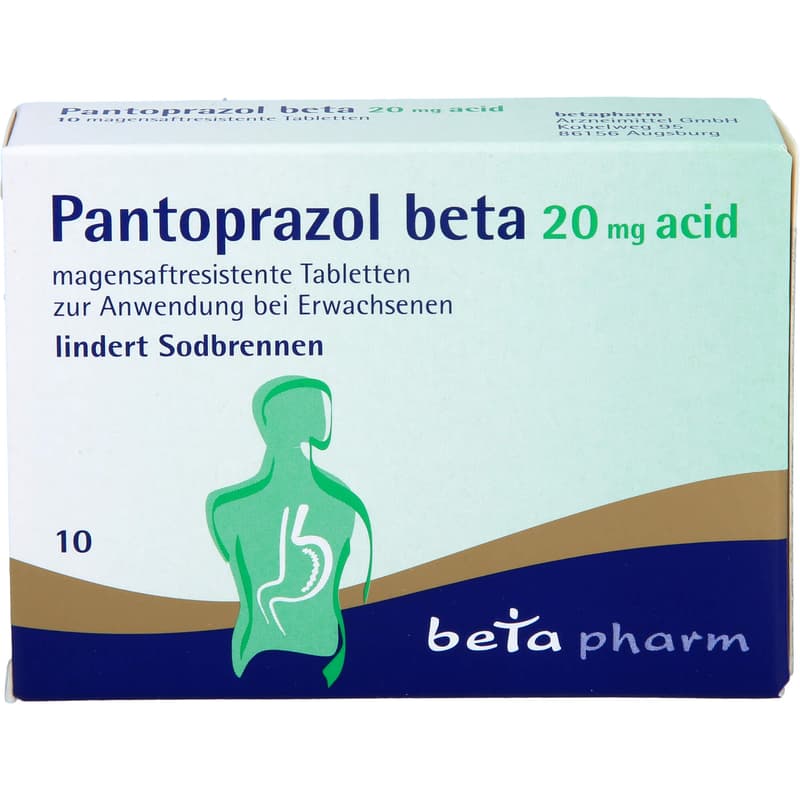
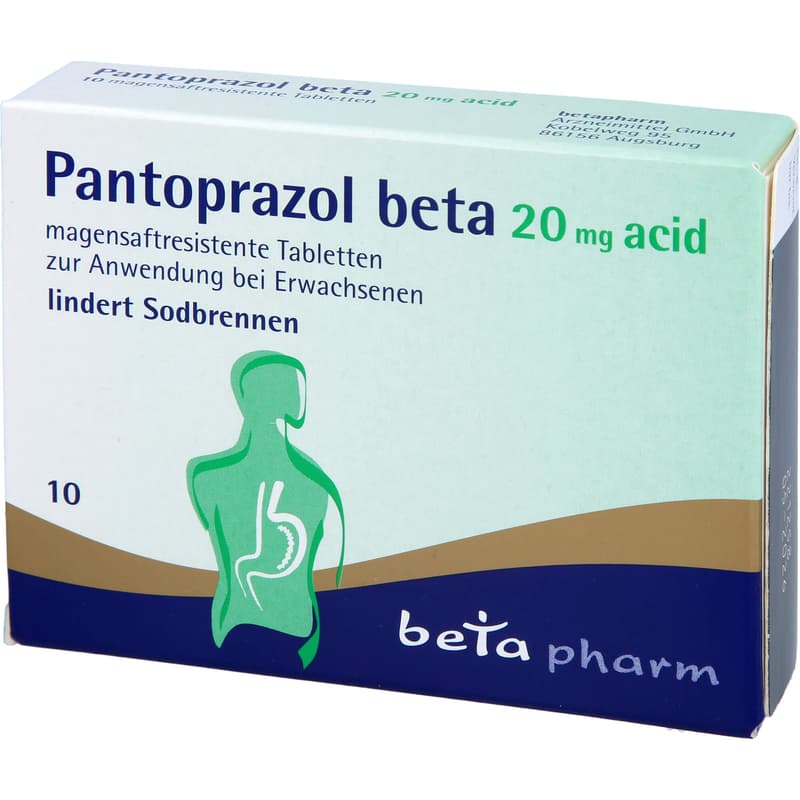
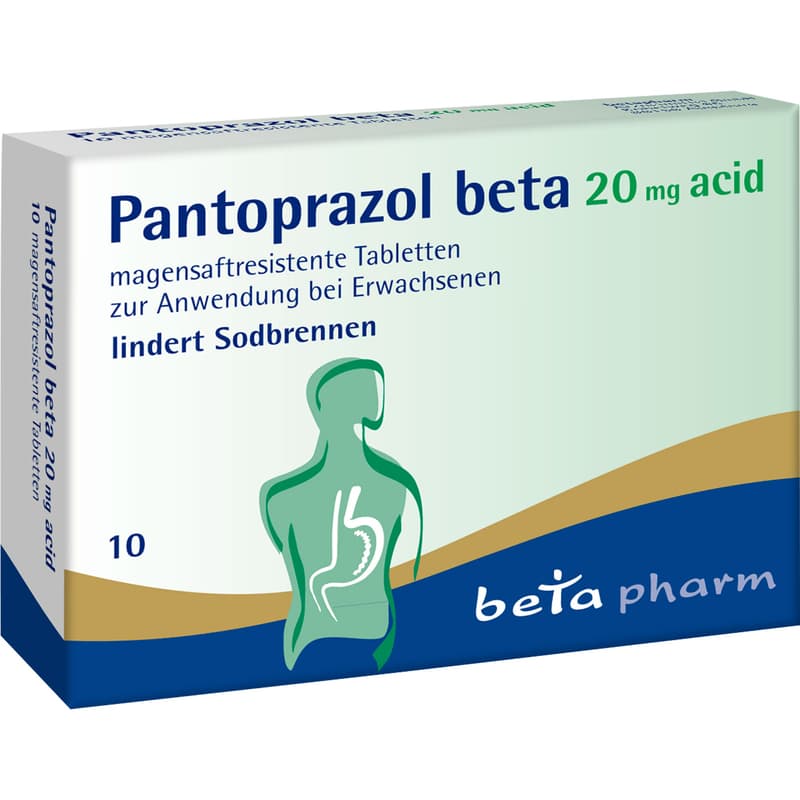
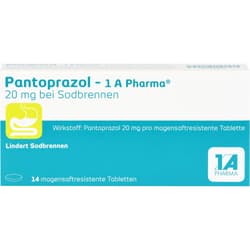
Looking for reliable relief from heartburn? PANTOPRAZOL beta 20 mg acid gastro-resistant tablets are designed for the short-term treatment of reflux symptoms and acid regurgitation in adults. You get 10 tablets, each with 20 mg of active pantoprazole to help reduce stomach acid. Simply take one tablet daily before a meal with water without chewing it.
Zu Risiken und Nebenwirkungen lesen Sie die Packungsbeilage und fragen Sie Ihre Ärztin, Ihren Arzt oder in Ihrer Apotheke.


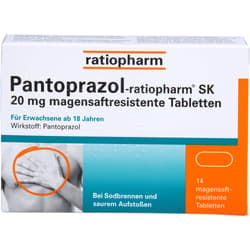
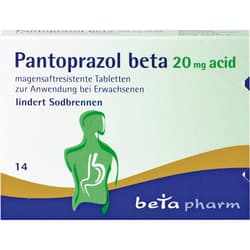
Description

You're reading an Auto-translation.
Important notes (mandatory information)
Pantoprazole beta 20 mg acid-resistant tablets. Areas of application: for the short-term treatment of reflux symptoms (e.g. heartburn, acid regurgitation) in adults.For risks and side effects, read the package leaflet and consult your doctor or pharmacist.
PACKAGE LEAFLET: INFORMATION FOR THE USER
Pantoprazole beta 20 mg acid-resistant tablets for use in adults
Read the entire package leaflet carefully before you start taking this medicine, because it contains important information. Always take this medicine exactly as described in this leaflet or exactly as directed by your doctor or pharmacist.
- Keep the package leaflet. You may need to read it again later.
- Ask your pharmacist if you need more information or advice.
- If you experience any side effects, talk to your doctor or pharmacist. This also applies to side effects not listed in this leaflet. See section 4.
- If you do not feel better or if you feel worse after 2 weeks, contact your doctor.
- You should not take Pantoprazole beta acid for longer than 4 weeks without consulting your doctor.
What this leaflet contains
- WHAT IS PANTOPRAZOLE BETA ACID AND WHAT IS IT USED FOR?
- WHAT SHOULD YOU CONSIDER BEFORE TAKING PANTOPRAZOLE BETA ACID?
- HOW TO TAKE PANTOPRAZOLE BETA ACID?
- WHAT SIDE EFFECTS ARE POSSIBLE?
- HOW TO STORE PANTOPRAZOLE BETA ACID?
- CONTENTS OF THE PACK AND OTHER INFORMATION
Pantoprazole beta acid contains the active ingredient pantoprazole, which blocks a type of pump that produces stomach acid. As a result, the amount of acid in the stomach is reduced. Pantoprazole beta acid is used for the short-term treatment of reflux symptoms (e.g. heartburn, acid regurgitation) in adults. Reflux is the backflow of stomach acid into the oesophagus, which can become painfully inflamed. This can cause symptoms such as a painful burning sensation in the chest that rises up to the throat (heartburn) and a sour taste in the mouth (acid reflux). Your symptoms of reflux and heartburn can be relieved after just one day of treatment with Pantoprazole beta acid, but this medicine does not have to provide immediate relief. It may be necessary to take the tablets for 2-3 consecutive days to relieve symptoms. If you do not feel better or if you feel worse after 2 weeks, contact your doctor.
2. WHAT SHOULD YOU CONSIDER BEFORE TAKING PANTOPRAZOLE BETA ACID?
Pantoprazole beta acid must not be taken:
- if you are allergic to pantoprazole or any of the other ingredients of this medicine listed in section 6.
- if you are taking HIV protease inhibitors such as atazanavir or nelfinavir (to treat HIV infection). See "Taking Pantoprazole beta acid with other medicines".
Warnings and precautions
Please talk to your doctor or pharmacist before taking Pantoprazole beta acid:- if you have had to undergo treatment for heartburn or indigestion for 4 weeks or longer.
- if you are over 55 years of age and take over-the-counter indigestion remedies daily.
- if you are over 55 years of age and have new or recently changed symptoms.
- if you have had a stomach ulcer or stomach surgery in the past.
- if you have liver problems or jaundice (yellowing of the skin or eyes).
- if you see your doctor regularly for severe or serious medical conditions.
- if you are scheduled to have an endoscopy or a breath test called a 13C-urea breath test.
- if you have ever had skin reactions as a result of treatment with a medicine similar to Pantoprazole beta acid, which also reduces stomach acid.
- if you are scheduled for a specific blood test (chromogranin A).
- Ask your doctor for specific advice if you are taking HIV protease inhibitors such as atazanavir or nelfinavir (to treat HIV infection) at the same time as Pantoprazole.
Long-term use of Pantoprazole beta acid carries additional risks, such as:
- Reduced absorption of vitamin B12 and vitamin B12 deficiency if your vitamin B12 levels are already low.
- Hip, wrist or spine fractures, especially if you are already at risk of osteoporosis or if you are taking corticosteroids (which can increase the risk of osteoporosis).
- Decreased magnesium levels in the blood (possible symptoms: fatigue (fatigue), muscle twitches, disorientation, cramps, dizziness, rapid heartbeat). Low magnesium levels can also lead to a decrease in potassium or calcium levels in the blood. Talk to your doctor if you have been taking this medicine for more than 4 weeks. Your doctor will then decide whether your magnesium levels should be checked regularly with blood tests.
- unintentional weight loss (not due to a diet or exercise program).
- Vomiting, especially if it is repeated.
- Vomiting blood; this may look like dark coffee grounds in the vomit.
- Blood in the stool, which may appear black or tarry.
- Difficulty swallowing or pain when swallowing.
- Paleness and weakness (anaemia).
- Chest pain.
- Stomach pain.
- severe and/or persistent diarrhoea, as this medicine has been associated with a slight increase in infectious diarrhoea.
- If you develop a skin rash, especially in areas exposed to the sun, tell your doctor immediately as you may need to stop taking Pantoprazole beta acid. Do not forget to mention other harmful effects such as joint pain. Your doctor may order some tests.
Children and adolescents
Pantoprazole beta acid should not be taken by children and adolescents under 18 years of age, as there is insufficient safety information for this younger age group.Taking Pantoprazole beta acid with other medicines
Tell your doctor or pharmacist if you are taking, have recently taken or plan to take any other medicines. Pantoprazole beta acid can affect the effectiveness of other medicines. This applies in particular to medicines containing one of the following active ingredients:- HIV protease inhibitors such as atazanavir or nelfinavir (to treat HIV infection). If you are taking HIV protease inhibitors, you must not use Pantoprazole beta acid. See "Pantoprazole beta acid must not be taken".
- Ketoconazole (used for fungal infections).
- Warfarin or phenprocoumon (used to thin the blood and prevent clots). Additional blood tests may be necessary.
- Methotrexate (used to treat rheumatoid arthritis, psoriasis and cancer) – if you are taking methotrexate, your doctor may temporarily stop treatment with Pantoprazole beta acid, as pantoprazole can increase the blood level of methotrexate.
Pregnancy, breastfeeding and fertility
You should not take this medicine if you are pregnant or breastfeeding. If you are pregnant or breastfeeding, or if you think you may be pregnant or are planning to become pregnant, ask your doctor or pharmacist for advice before taking this medicine.Driving and using machines
If side effects such as dizziness or visual disturbances occur, you should not drive or operate machinery.Pantoprazole beta acid contains lactose
Please do not take Pantoprazole beta acid until you have consulted your doctor if you know that you have an intolerance to sugars.3. HOW TO TAKE PANTOPRAZOLE BETA ACID?
Always take this medicine exactly as described in this leaflet or exactly as directed by your doctor or pharmacist. Check with your doctor or pharmacist if you are not sure. The recommended dose is one tablet daily. Do not exceed this recommended daily dose of 20 mg pantoprazole. Take this medicine for at least 2-3 consecutive days. Stop taking Pantoprazole beta acid when you are completely free of symptoms. Your symptoms of acid regurgitation and heartburn can be relieved after just one day of treatment with Pantoprazole beta acid, but this medicine does not have to provide immediate relief. If you do not notice an improvement in your symptoms after 2 weeks of continuous use of this medicine, contact your doctor. Do not take Pantoprazole beta acid for longer than 4 weeks without seeing your doctor. Take the tablet at the same time each day before a meal. Swallow the tablet whole with some water. Do not chew or break the tablet.
If you have taken more Pantoprazole beta acid than you should
Tell your doctor or pharmacist if you have taken more than the recommended dosage. If possible, take the medicine and this leaflet with you.If you forget to take Pantoprazole beta acid
Do not take a double dose to make up for a forgotten dose. Simply take your normal dose at the next scheduled time.If you have any further questions about taking this medicine, ask your doctor or pharmacist.
4. WHAT SIDE EFFECTS ARE POSSIBLE?
Like all medicines, this medicine can cause side effects, although not everybody gets them. Tell your doctor immediately, or go to the emergency room of the nearest hospital, if you experience any of the following serious side effects. Do not take any more tablets and take this leaflet and/or the tablets with you.
Serious hypersensitivity reactions (rare: may affect up to 1 in 1,000 people)
Hypersensitivity reactions, so-called anaphylactic reactions, anaphylactic shock and angioedema. Typical symptoms are: swelling of the face, lips, mouth, tongue and/or throat, which may lead to difficulty swallowing or breathing, hives (hives), severe dizziness with very rapid heartbeat and heavy sweating.Serious skin reactions (
Frequency not known
Frequency not estimable from the available data):Skin rash with swelling, blistering or peeling of the skin, skin erosions and slight bleeding from the eyes, nose, mouth or genitals and rapid deterioration of the general condition or skin rash when exposed to sunlight.
Other serious reactions (Frequency not known)
Yellowing of the skin and eyes (due to severe liver damage) or kidney problems such as painful urination and lower back pain with fever.Other side effects include
Common side effects (may affect up to 1 in 10 people)
Benign gastric polyps.Uncommon side effects (may affect up to 1 in 100 people)
Headache, dizziness, diarrhoea, nausea, vomiting, flatulence, constipation, dry mouth, pain and discomfort in the upper abdomen, skin rash or hives, itching, weakness, fatigue or general malaise, sleep disturbances, increased liver enzymes in blood tests, hip, wrist or spine fractures.Rare side effects (may affect up to 1 in 1,000 people)
Disturbance or complete loss of taste, visual disturbances such as blurred vision, joint pain, muscle pain, weight fluctuations, fever, swelling of the limbs, depression, increased bilirubin and fat levels in the blood (detectable in blood tests), enlargement of the male breast, high fever and a severe decrease in circulating granular white blood cells (seen in blood tests).Frequency not known
Hallucinations, confusion (especially in patients with a history of these symptoms), decreased sodium levels in the blood, decreased magnesium levels in the blood; rash, possibly associated with joint pain, feeling of tingling, prickling, tingling, burning or numbness, colitis causing persistent watery diarrhoea.Reporting of side effects
If you experience any side effects, talk to your doctor or pharmacist. This also applies to side effects not listed in this leaflet. You can also report side effects directly to the Federal Institute for Drugs and Medical Devices, Dept. Pharmacovigilance, Kurt-Georg-Kiesinger-Allee 3, 53175 Bonn, website: www.bfarm.de. By reporting side effects, you can help provide more information about the safety of this medicine.5. HOW TO STORE PANTOPRAZOLE BETA ACID?
Keep this medicine out of the reach of children. Do not use this medicine after the expiry date which is stated on the container and carton. The expiry date refers to the last day of the month indicated.
Storage conditions
Do not store above 30°C. Store in the original package.Do not dispose of medicines in wastewater or household waste. Ask your pharmacist how to dispose of the medicine when you stop using it. In this way, you help to protect the environment.
6. CONTENTS OF THE PACK AND OTHER INFORMATION
What Pantoprazole beta acid contains
The active substance is pantoprazole. 1 acid-resistant tablet contains 20 mg pantoprazole (as pantoprazole sodium 1.5 H2O). The other ingredients are: Microcrystalline cellulose (E 460i), lactose monohydrate, croscarmellose sodium, highly dispersed silicon dioxide (E 551), magnesium stearate (Ph.Eur.) [vegetable], poly(vinyl alcohol), titanium dioxide (E 171), macrogol 3350, iron(III) hydroxide-oxide x H2O (E 172), quinoline yellow (aluminium salt) (E 104), methacrylic acid-ethyl acrylate copolymer (1:1) (Ph.Eur.) (MW: 250,000), sodium dodecyl sulfate, polysorbate 80 [vegetable] (E 433), triethyl citrate (E 1505), talc (E 553b).What Pantoprazole beta acid looks like and contents of the pack
Yellow to ochre, oval, biconvex tablets. Packs of 7, 10 and 14 acid-resistant tablets. Not all pack sizes may be marketed.Pharmaceutical entrepreneur and manufacturer
betapharm Arzneimittel GmbHKobelweg 95
86156 Augsburg
Phone 0821 748810
Fax 0821 74881420
This leaflet was last revised in September 2019.
Source: Package leaflet information
Status: 11/2021
Areas of application: for the short-term treatment of reflux symptoms (e.g. heartburn, acid regurgitation) in adults.