
Product from:
Preussen
1078€
Only a few items left
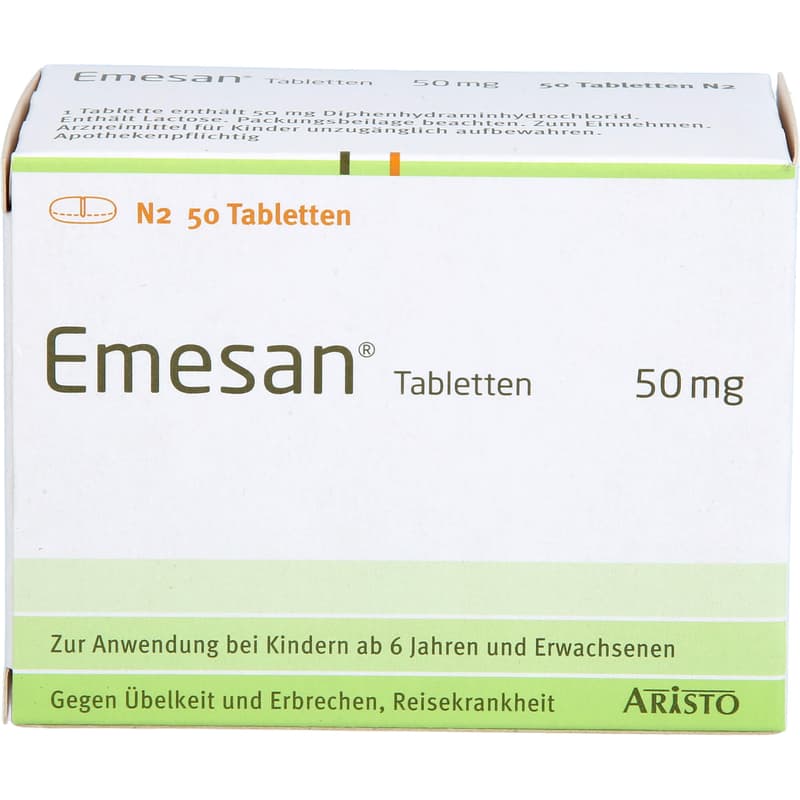
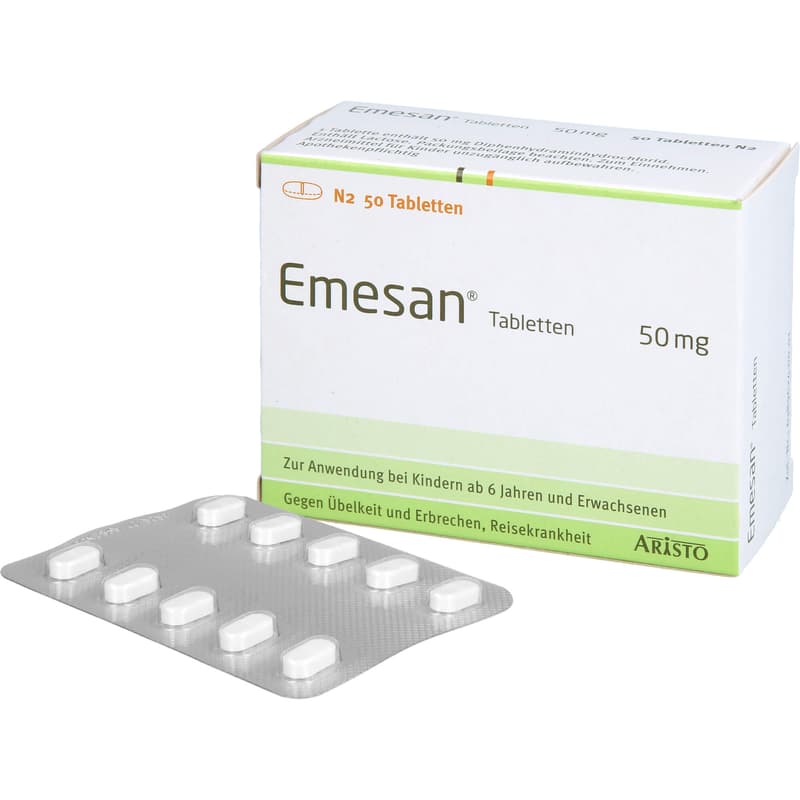
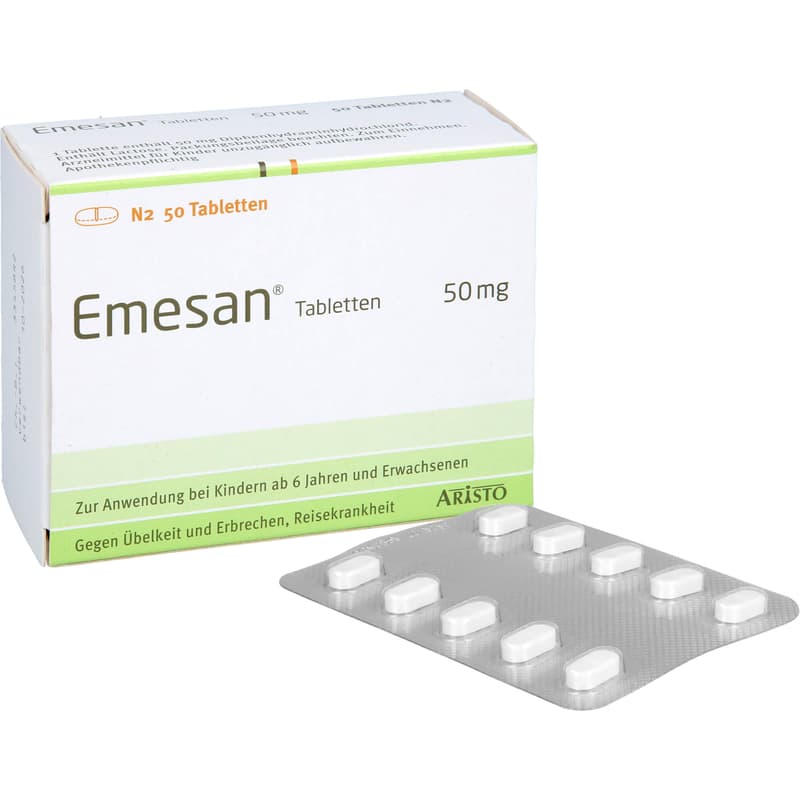
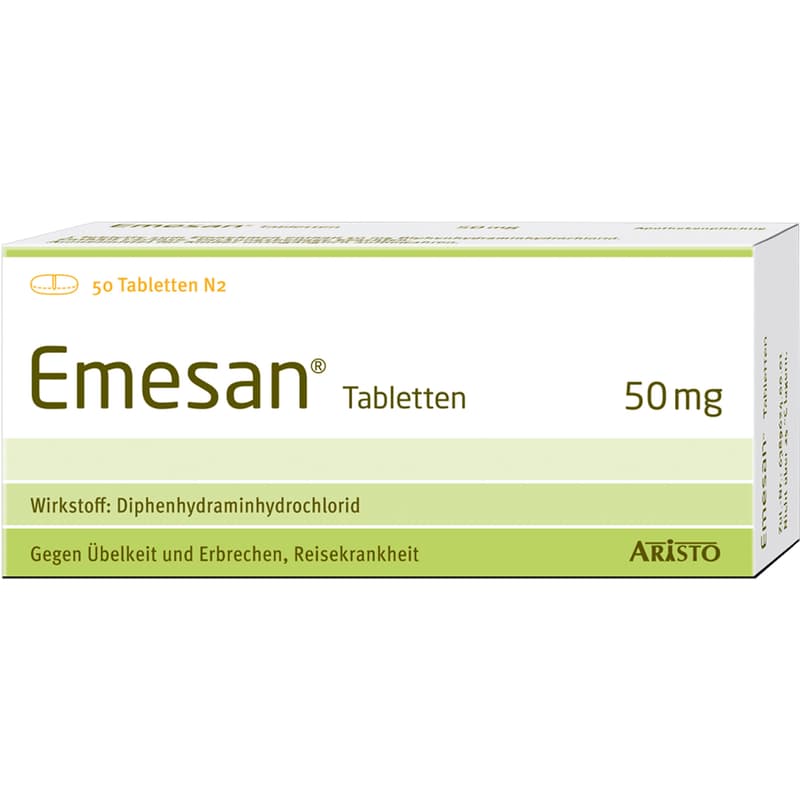
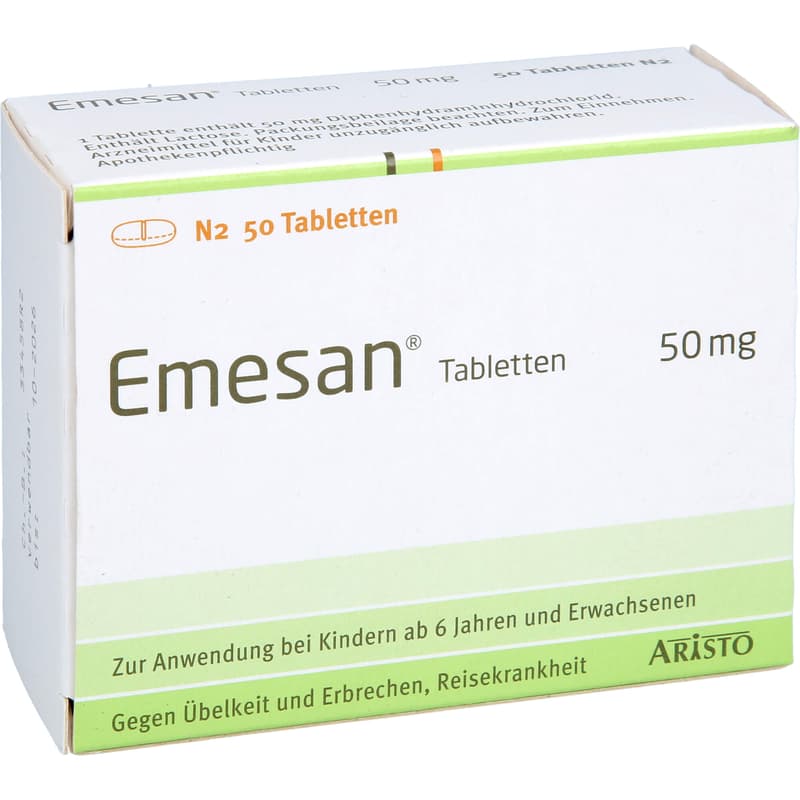
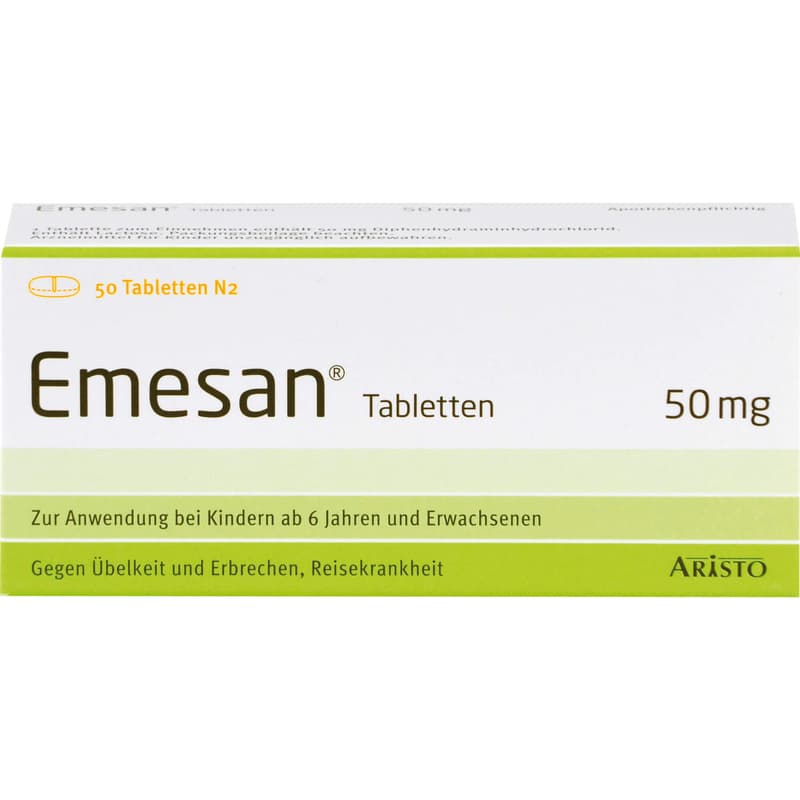
EMESAN tablets are your reliable companion to prevent and treat nausea and vomiting, especially during motion sickness. Each tablet contains 50 mg of the active ingredient diphenhydramine hydrochloride. Suitable for adults and children aged 6 and over, these tablets feature a convenient score line for easy dosing. This pack contains 50 tablets, making it a practical addition to your medicine cabinet.
Zu Risiken und Nebenwirkungen lesen Sie die Packungsbeilage und fragen Sie Ihre Ärztin, Ihren Arzt oder in Ihrer Apotheke.




Description

You're reading an Auto-translation.
Important notes (mandatory information)
Emesan Tablets 50 mg. Active ingredient: Diphenhydramine hydrochloride. Areas of application: for the prevention and symptomatic treatment of nausea and vomiting of various causes, especially in the case of travel sickness. Warning: This medicine contains lactose.For risks and side effects, read the package leaflet and consult your doctor or pharmacist.
INSTRUCTIONS FOR USE: INFORMATION FOR THE USER
Emesan Tablets 50 mg, for use in children aged 6 and over and adults
Active ingredient: Diphenhydramine hydrochloride
Read the entire package leaflet carefully before you start taking this medicine, as it contains important information. Always take this medicine exactly as described in this package leaflet or exactly as directed by your doctor or pharmacist.
- Keep the package leaflet. You may want to read it again later.
- Ask your pharmacist if you need more information or advice.
- If you experience any side effects, talk to your doctor or pharmacist. This also applies to side effects not listed in this package leaflet. See section 4.
- If you do not feel better or even worse, talk to your doctor.
What this package leaflet contains
- WHAT ARE EMESAN TABLETS AND WHAT ARE THEY USED FOR?
- WHAT SHOULD YOU CONSIDER BEFORE TAKING EMESAN TABLETS?
- HOW TO TAKE EMESAN TABLETS?
- WHAT SIDE EFFECTS ARE POSSIBLE?
- HOW TO STORE EMESAN TABLETS?
- CONTENTS OF THE PACK AND OTHER INFORMATION
Emesan Tablets are an anti-nausea and vomiting agent from the group of H1 antihistamines. Emesan Tablets are used for the prevention and symptomatic treatment of nausea and vomiting of various causes, especially in the case of travel sickness. If you do not feel better or even worse, talk to your doctor.
2. WHAT SHOULD YOU CONSIDER BEFORE TAKING EMESAN TABLETS?
Emesan Tablets must not be taken:
- if you are allergic to diphenhydramine hydrochloride, other antihistamines or any of the other ingredients of this medicine listed in section 6,
- in acute asthma,
- in glaucoma (narrow-angle glaucoma),
- in certain tumours of the adrenal medulla (phaeochromocytoma),
- in enlargement of the prostate gland with residual urine formation,
- in epilepsy,
- in potassium or magnesium deficiency,
- in slowed heart rate (bradycardia),
- in certain heart conditions (congenital QT syndrome or other clinically significant heart damage, especially coronary artery disease, conduction disorders, arrhythmias),
- in concomitant use of medicines that also prolong the so-called QT interval on the ECG or lead to hypokalaemia (see under "Taking Emesan Tablets with other medicines"),
- in concomitant use of alcohol or so-called "MAO inhibitors" (medicines for the treatment of depression),
- in children under 6 years of age and
- during pregnancy and breastfeeding.
Warnings and precautions
Please talk to your doctor or pharmacist before taking Emesan Tablets. Special care is needed when taking Emesan Tablets if you suffer from any of the following conditions:- impaired liver function,
- impaired kidney function,
- chronic lung diseases or asthma,
- certain gastric motility disorders (pyloric stenosis or achalasia of the cardia).
Children under 6 years of age
Due to the high active ingredient content, Emesan Tablets are not suitable for children under 6 years of age. Medicines with a lower active ingredient content are available for this purpose.Taking Emesan Tablets with other medicines
Tell your doctor or pharmacist if you are taking/using, have recently taken/used or intend to take/use any other medicines. Diphenhydramine hydrochloride must not be given together with so-called "MAO inhibitors" (certain medicines for the treatment of depression). The concomitant administration of Emesan Tablets with other medicines containing diphenhydramine, including those applied externally, should be avoided. Concomitant use with other centrally depressant medicines such as sleeping pills, sedatives, pain relievers or anaesthetics, anxiolytics (anxiolytics), medicines for the treatment of depression or medicines for the treatment of seizures (antiepileptics) can lead to a mutual potentiation of effects. The so-called "anticholinergic" effect of diphenhydramine can be potentiated by drugs with similar effects such as atropine, biperiden, tricyclic antidepressants (certain medicines for depression) or monoamine oxidase inhibitors. Increased intraocular pressure, urinary retention or potentially life-threatening intestinal paralysis may occur. The use of diphenhydramine together with blood pressure lowering medicines can lead to increased fatigue. Concomitant use with medicines that also prolong the so-called QT interval on the ECG, e.g. medicines for heart rhythm disorders (antiarrhythmics class IA or III), certain antibiotics (e.g. erythromycin), cisapride, antimalarials, medicines for allergies or gastrointestinal ulcers (antihistamines), medicines for the treatment of special mental illnesses (neuroleptics), or lead to a potassium deficiency (e.g. certain diuretics), should be avoided. Diphenhydramine may falsify test results in allergy tests and should therefore not be used for at least 3 days beforehand.Taking Emesan Tablets with food, drink and alcohol
Do not drink alcohol during treatment with Emesan Tablets, as this may alter and potentiate the effects of diphenhydramine in an unpredictable manner.Pregnancy and breastfeeding
If you are pregnant or breastfeeding, or if you suspect you may be pregnant or are planning to become pregnant, ask your doctor or pharmacist for advice before taking this medicine. The active ingredient diphenhydramine hydrochloride (contained in Emesan Tablets) must not be used during pregnancy and breastfeeding.Driving and operating machinery
The active ingredient diphenhydramine hydrochloride (contained in Emesan Tablets) can also affect responsiveness to such an extent that the ability to actively participate in road traffic or to operate machinery is impaired, even when used as intended. Therefore, no vehicles should be driven or dangerous machinery operated. Even on the following day, residual fatigue and impaired responsiveness or reduced concentration may still have a negative effect on driving ability or the ability to work with machinery, especially after insufficient sleep or in combination with alcohol.Emesan Tablets contain lactose
This medicine contains lactose. Therefore, please only take Emesan Tablets after consulting your doctor if you are known to suffer from an intolerance to certain sugars.3. HOW TO TAKE EMESAN TABLETS?
Always take this medicine exactly as described in this package leaflet or exactly as agreed with your doctor or pharmacist. Check with your doctor or pharmacist if you are not sure. The recommended dose is: Adults: Single dose 1 tablet (equivalent to 50 mg diphenhydramine hydrochloride), maximum daily total dose 3 tablets (equivalent to 150 mg diphenhydramine hydrochloride), Children over 12 years and adolescents: Single dose 1 tablet (equivalent to 50 mg diphenhydramine hydrochloride), maximum daily total dose 2 tablets (equivalent to 100 mg diphenhydramine hydrochloride), Children aged 6-12 years: Single dose ½ tablet (equivalent to 25 mg diphenhydramine hydrochloride), maximum daily total dose 1 tablet (equivalent to 50 mg diphenhydramine hydrochloride). Special patient groups: Patients with impaired liver or kidney function should receive lower doses. In elderly or debilitated patients, who may be particularly sensitive, it is also recommended to adjust the dose if necessary. To prevent nausea and vomiting, the lowest single dose per day should be taken initially according to age. If acute symptoms occur, the dose can be increased to the maximum daily dose according to age, with a time interval of at least 4 - 6 hours between the individual doses.
Method of administration
Take the tablets unchewed with liquid (e.g. ½ glass of water) and swallow the tablet quickly. This avoids the development of the product-specific taste in the mouth. To prevent travel sickness, the tablets should be taken at least 30 minutes before the start of the journey.Duration of use
The duration of treatment with Emesan Tablets should be as short as possible. If the symptoms persist, please consult a doctor immediately. Please talk to your doctor or pharmacist if you have the impression that the effect of Emesan Tablets is too strong or too weak.If you have taken more Emesan Tablets than you should
Overdoses of diphenhydramine can be dangerous - especially for children and toddlers. For this reason, a doctor should be informed immediately if an overdose or poisoning is suspected (e.g. emergency call for poisoning)! Overdoses of diphenhydramine manifest themselves primarily depending on the amount ingested - by disturbances of the central nervous system (confusion, states of excitement up to seizures, clouding of consciousness up to coma, respiratory disorders up to respiratory arrest) and of the cardiovascular system up to cardiac arrest. Especially in children, the excitatory CNS effects may be in the foreground. In addition, increased muscle reflexes, fever, dry mucous membranes, visual disturbances, constipation and disturbances of urinary excretion may occur. Rhabdomyolysis (severe muscle damage) has also been observed.If you have any further questions on the use of this medicine, ask your doctor or pharmacist.
4. WHAT SIDE EFFECTS ARE POSSIBLE?
Like all medicines, this medicine can have side effects, although not everybody gets them. The following categories are used for the frequency of side effects
| The following categories are used for the frequency of side effects: | |
| Very common: | more than 1 in 10 treated |
| Common: | 1 to 10 in 100 treated |
| Uncommon: | 1 to 10 in 1,000 treated |
| Rare: | 1 to 10 in 10,000 treated |
| Very rare: | less than 1 in 10,000 treated |
| Not known: | frequency cannot be estimated from the available data. |
The following side effects are to be expected especially at the beginning of treatment: The most frequently reported side effects are drowsiness, dizziness and difficulty concentrating during the following day, especially after insufficient sleep, as well as dizziness and muscle weakness. Other common side effects include headache, gastrointestinal complaints such as nausea, vomiting or diarrhoea, and so-called "anticholinergic effects" such as dry mouth, constipation, heartburn, visual disturbances or difficulty urinating. Certain heart rhythm disturbances (prolongation of the QT interval on the ECG) may occur during treatment with Emesan Tablets. Hypersensitivity reactions, increased sensitivity of the skin to light, changes in the blood count, increased intraocular pressure, jaundice (cholestatic jaundice) and so-called "paradoxical reactions" such as restlessness, nervousness, agitation, anxiety, trembling or sleep disturbances have also been reported. In the case of non-intended, long-term use of the active ingredient diphenhydramine hydrochloride (contained in Emesan Tablets), the development of drug dependence cannot be ruled out. For this reason, the need for further treatment should be critically reviewed after two weeks of use at the latest.
| The following categories are used for the frequency of side effects: | |
| Very common: | more than 1 in 10 treated |
| Common: | 1 to 10 in 100 treated |
| Uncommon: | 1 to 10 in 1,000 treated |
| Rare: | 1 to 10 in 10,000 treated |
| Very rare: | less than 1 in 10,000 treated |
| Not known: | frequency cannot be estimated from the available data. |
5. HOW TO STORE EMESAN TABLETS?
Keep this medicine out of the reach of children. Do not use this medicine after the expiry date which is stated on the blister and carton after "Use by". The expiry date refers to the last day of the month. Storage conditions: Do not store above +25°C. Do not dispose of medicines in wastewater. Ask your pharmacist how to dispose of the medicine when you stop using it. In this way, you help to protect the environment.
6. CONTENTS OF THE PACK AND OTHER INFORMATION
What Emesan Tablets contain: The active ingredient is: Diphenhydramine hydrochloride. 1 tablet contains 50 mg diphenhydramine hydrochloride. The other ingredients are: Magnesium stearate (Ph.Eur.), calcium hydrogen phosphate dihydrate, lactose monohydrate, microcrystalline cellulose, sodium carboxymethyl starch (type A) (Ph.Eur.), highly dispersed silicon dioxide.
What Emesan Tablets look like and contents of the pack
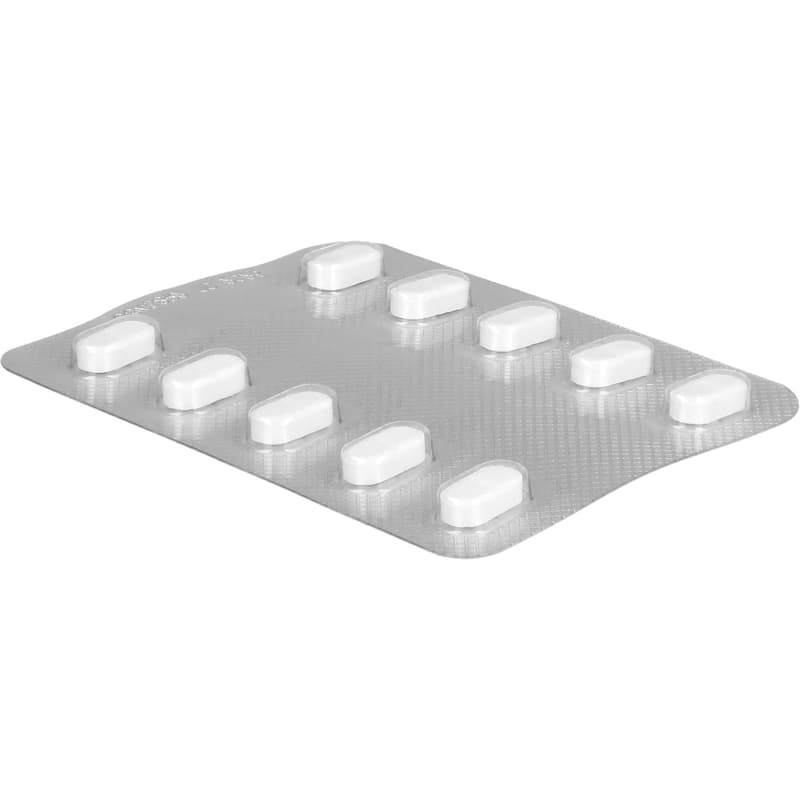
Emesan Tablets are white, oblong tablets with a break notch. Emesan Tablets are available in original packs of 10 tablets, 20 tablets and 50 tablets.Pharmaceutical entrepreneur and manufacturer
Aristo Pharma GmbHWallenroder Str. 8-10
13435 Berlin
Tel.: + 49 30 71094-4200
Fax: +49 30 71094-4250
This leaflet was last revised in June 2013.
Source: Information from the package leaflet
Status: 05/2017
Active ingredient: Diphenhydramine hydrochloride. Areas of application: for the prevention and symptomatic treatment of nausea and vomiting of various causes, especially in the case of travel sickness. Warning: This medicine contains lactose.
Information leaflet
Download the information leafletComposition & Allergens
Composition
Wirkstoff: Diphenhydraminhydrochlorid