

Produkt aus:
Preussen
919€
Nur noch wenige Stück verfügbar
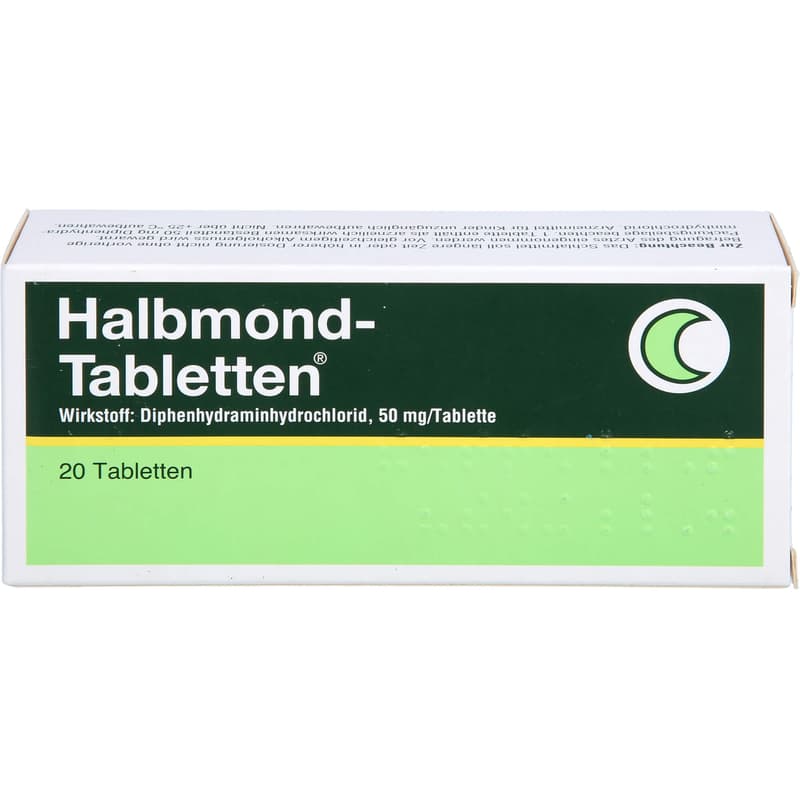
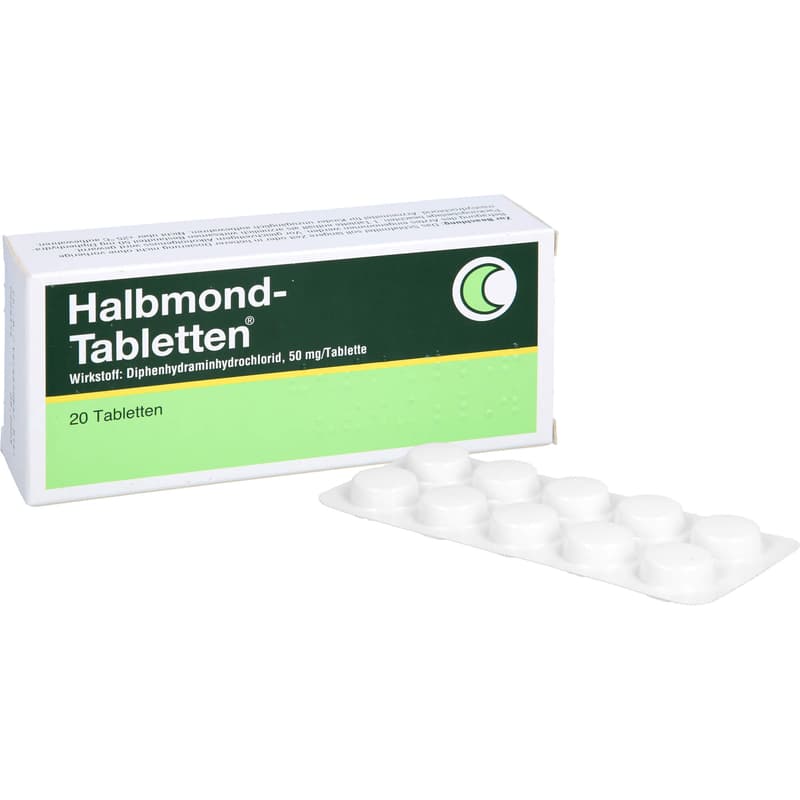
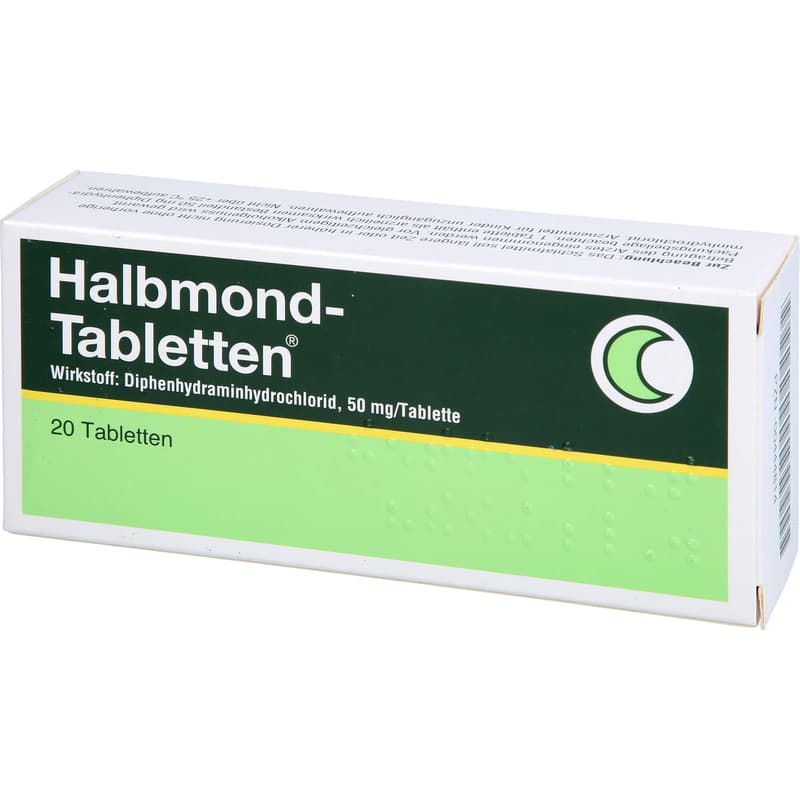
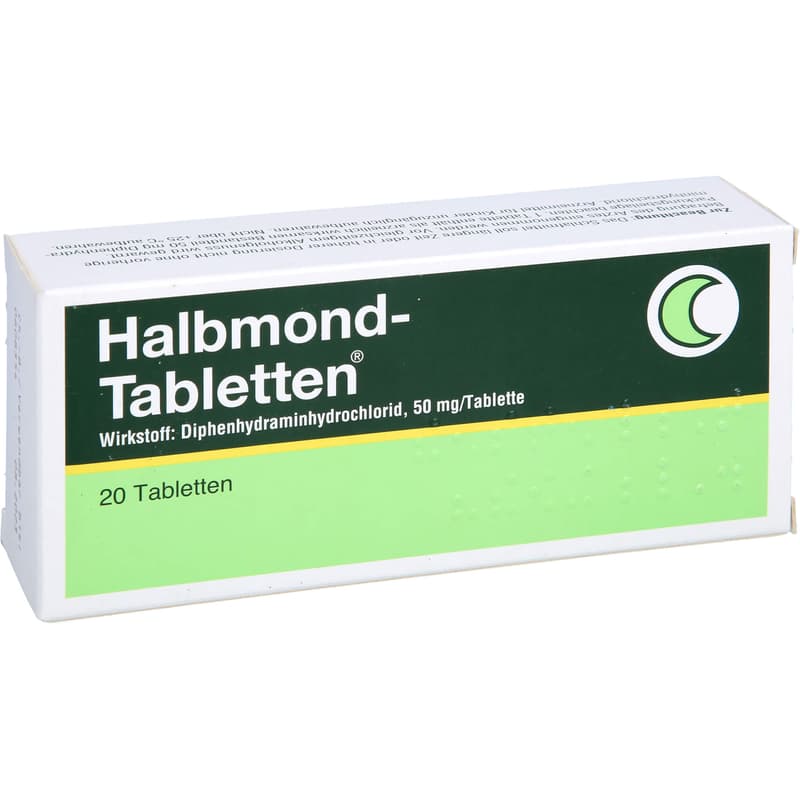
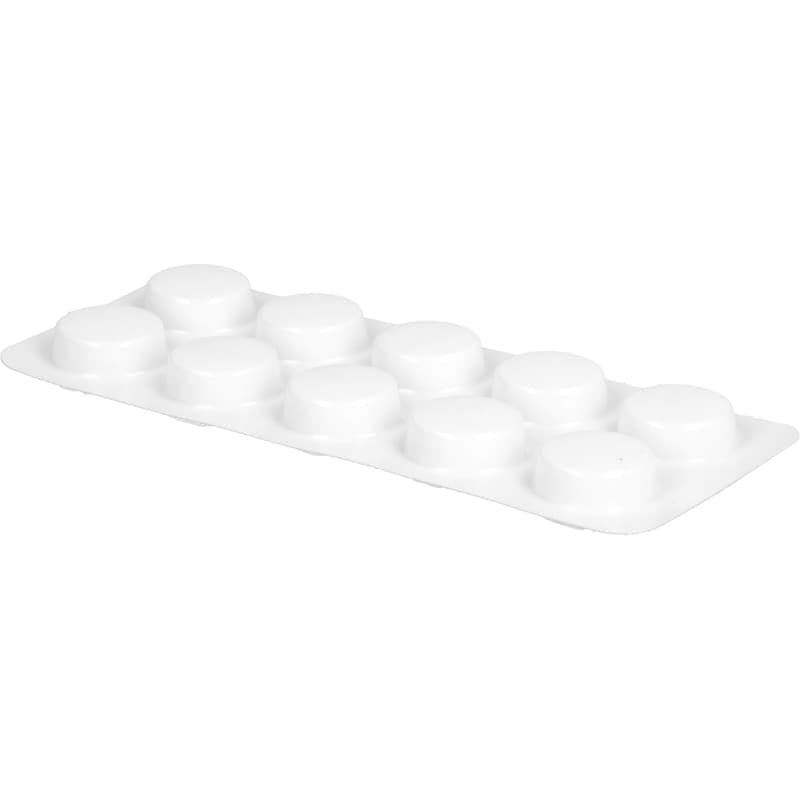
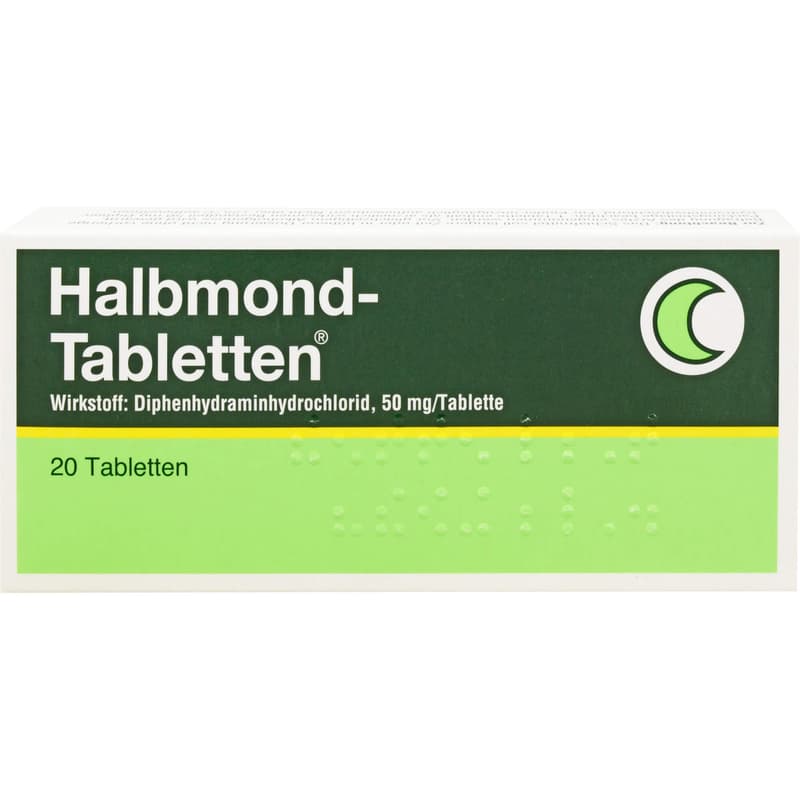
Die HALBMOND Tabletten sind ein bewährtes Schlafmittel zur effektiven Kurzzeitbehandlung von akuten Schlafstörungen. Jede der runden, weißen Tabletten enthält 50 mg des Wirkstoffs Diphenhydraminhydrochlorid, der Ihnen hilft, leichter zur Ruhe zu finden. Die praktische Packung enthält genau 20 Tabletten, die Sie idealerweise 30 Minuten vor dem Schlafengehen mit etwas Wasser einnehmen.
Zu Risiken und Nebenwirkungen lesen Sie die Packungsbeilage und fragen Sie Ihre Ärztin, Ihren Arzt oder in Ihrer Apotheke!



Beschreibung
Wichtige Hinweise (Pflichtangaben)
Halbmond-Tabletten, 50 mg Wirkstoff: Diphenhydraminhydrochlorid. Anwendungsgebiete: zur Kurzzeitbehandlung von Schlafstörungen.Zu Risiken und Nebenwirkungen lesen Sie die Packungsbeilage und fragen Sie Ihre Ärztin, Ihren Arzt oder in Ihrer Apotheke!
Gebrauchsinformation: Information für den Anwender
Halbmond-Tabletten, 50 mg
Wirkstoff: Diphenhydraminhydrochlorid
Lesen Sie die gesamte Packungsbeilage sorgfältig durch, bevor Sie mit der Einnahme dieses Arzneimittels beginnen, denn sie enthält wichtige Informationen. Nehmen Sie dieses Arzneimittel immer genau wie in dieser Packungsbeilage beschrieben bzw. genau nach Anweisung Ihres Arztes oder Apothekers ein.
- Heben Sie die Packungsbeilage auf. Vielleicht möchten Sie diese später nochmals lesen.
- Fragen Sie Ihren Apotheker, wenn Sie weitere Informationen oder einen Rat benötigen.
- Wenn Sie Nebenwirkungen bemerken, wenden Sie sich an Ihren Arzt oder Apotheker. Dies gilt auch für Nebenwirkungen, die nicht in dieser Packungsbeilage angegeben sind. Siehe Abschnitt 4.
- Wenn Sie sich nach wenigen Tagen nicht besser oder gar schlechter fühlen, wenden Sie sich an Ihren Arzt.
Was in dieser Packungsbeilage steht
1. WAS SIND HALBMOND-TABLETTEN UND WOFÜR WERDEN SIE ANGEWENDET?
2. WAS SOLLTEN SIE VOR DER EINNAHME VON HALBMOND-TABLETTEN BEACHTEN?
3. WIE SIND HALBMOND-TABLETTEN EINZUNEHMEN?
4. WELCHE NEBENWIRKUNGEN SIND MÖGLICH?
5. WIE SIND HALBMOND-TABLETTEN AUFZUBEWAHREN?
6. INHALT DER PACKUNG UND WEITERE INFORMATIONEN
1. WAS SIND HALBMOND-TABLETTEN UND WOFÜR WERDEN SIE ANGEWENDET?
Halbmond-Tabletten ist ein Schlafmittel aus der Gruppe der Antihistaminika .
Halbmond-Tabletten werden angewendet zur Kurzzeitbehandlung von Schlafstörungen.
Beruhigungs-/Schlafmittel sollten nur bei Schlafstörungen von klinisch bedeutsamem Schweregrad angewendet werden.
2. WAS SOLLTEN SIE VOR DER EINNAHME VON HALBMOND-TABLETTEN BEACHTEN?
Halbmond-Tabletten dürfen nicht eingenommen werden
- wenn Sie allergisch gegen den Wirkstoff Diphenhydraminhydrochlorid, gegen andere Antihistaminika oder einen der in Abschnitt 6. genannten sonstigen Bestandteile dieses Arzneimittels sind.- bei akutem Asthma.
- bei grünem Star (Engwinkelglaukom).
- bei bestimmten Geschwülsten des Nebennierenmarks (Phäochromocytom).
- bei Vergrößerung der Vorsteherdrüse mit Restharnbildung.
- bei Epilepsie.
- bei Kalium- oder Magnesiummangel.
- bei verlangsamtem Herzschlag (Bradykardie).
- bei bestimmten Herzerkrankungen (angeborenes aT-Syndrom oder anderen klinisch bedeutsamen Herzschäden, insbesondere Durchblutungsstörungen der Herzkranzgefäße, Erregungsleitungsstörungen, Arrhythmien).
- bei gleichzeitiger Anwendung von Arzneimitteln, die ebenfalls das so genannte QT-lntervall im EKG verlängern oder zu einer Hypokaliämie führen (siehe unter "Bei Einnahme von Halbmond-Tabletten mit anderen Arzneimitteln").
- bei gleichzeitiger Einnahme von Alkohol oder so genannten "MAO-Hemmern" (Mittel zur Behandlung von Depressionen).
- während der Schwangerschaft oder Stillzeit.
- Kinder und Jugendliche unter 18 Jahren sollen Halbmond-Tabletten nicht erhalten.
Warnhinweise und Vorsichtsmaßnahmen
Bitte sprechen Sie mit Ihrem Arzt oder Apotheker, bevor Sie Halbmond-Tabletten einnehmen.
Besondere Vorsicht bei der Einnahme von Halbmond-Tabletten ist erforderlich wenn Sie unter einer der folgenden Erkrankungen leiden:
- eingeschränkte Leberfunktion
- chronische Lungenerkrankungen oder Asthma
- bestimmte Magenfunktionsstörungen (Pylorusstenose oder Achalasie der Kardia).
Nach wiederholter Einnahme von Schlafmitteln über einen längeren Zeitraum kann es zu einem Verlust an Wirksamkeit (Toleranz) kommen.
Wie auch bei anderen Schlafmitteln kann die Einnahme von Halbmond-Tabletten zur Entwicklung von körperlicher und seelischer Abhängigkeit führen. Das Risiko einer Abhängigkeit steigt mit der Dosis und der Dauer der Behandlung. Auch bei Patienten mit Alkohol-, Arzneimittel- oder Drogenabhängigkeit in der Vorgeschichte ist dieses Risiko erhöht.
Beim Beenden einer Behandlung mit Halbmond-Tabletten können durch plötzliches Absetzen Schlafstörungen vorübergehend wieder auftreten. Deshalb wird empfohlen, die Behandlung ggf. durch schrittweise Verringerung der Dosis zu beenden.
Einnahme von Halbmond-Tabletten mit anderen Arzneimitteln
Informieren Sie Ihren Arzt oder Apotheker, wenn Sie andere Arzneimittel einnehmen/anwenden, kürzlich andere Arzneimittel eingenommen/angewendet haben oder beabsichtigen andere Arzneimittel einzunehmen/anzuwenden.
Diphenhydraminhydrochlorid darf nicht zusammen mit so genannten "MAO-Hemmern" (bestimmte Mittel zur Behandlung von Depressionen) gegeben werden.
Die gleichzeitige Einnahme von Halbmond-Tabletten mit anderen Medikamenten, die ebenfalls Diphenhydramin enthalten, einschließlich von solchen, die äußerlich angewendet werden, ist zu vermeiden.
Die gleichzeitige Anwendung mit anderen zentral dämpfenden Arzneimitteln wie Schlaf-, Beruhigungs-, Schmerz- oder Narkosemittel, angstlösende Mittel (Anxiolytika), Arzneimittel zur Behandlung von Depressionen oder Mittel zur Behandlung von Anfallsleiden (Antiepileptika) kann zu einer gegenseitigen Verstärkung führen.
Die so genannte "anticholinerge" Wirkung von Diphenhydramin kann durch Arzneistoffe mit ähnlicher Wirkung wie Atropin, Biperiden, trizyklischen Antidepressiva oder Monoaminoxidase-Hemmern verstärkt werden. Es können eine Erhöhung des Augeninnendruckes, Harnverhalt oder eine u. U. lebensbedrohliche Darmlähmung auftreten.
Die Anwendung von Diphenhydramin zusammen mit blutdrucksenkenden Arzneimitteln kann zu verstärkter Müdigkeit führen.
Die gleichzeitige Anwendung mit Arzneimitteln, die ebenfalls das so genannte QT-Intervall im EKG verlängern, z. B. Mittel gegen Herzrhythmusstörungen (Antiarrhythmika Klasse IA oder III), bestimmte Antibiotika (z. B. Erythromycin), Cisaprid, Malaria-Mittel, Mittel gegen Allergien bzw. Magen-/Darmgeschwüre (Antihistaminika) oder Mittel zur Behandlung spezieller geistig-seelischer Erkrankungen (Neuroleptika) oder zu einem Kaliummangel führen können (z. B. bestimmte harntreibende Mittel) ist zu vermeiden.
Diphenhydramin kann bei Allergie-Tests möglicherweise die Testergebnisse verfälschen und sollte deshalb mindestens 3 Tage vorher nicht mehr angewendet werden.
Einnahme von Halbmond-Tabletten zusammen mit Nahrungsmitteln, Getränken und Alkohol
Während der Behandlung mit Halbmond-Tabletten darf kein Alkohol getrunken werden, da hierdurch die Wirkung von Diphenhydramin in nicht vorhersehbarer Weise verändert und verstärkt wird.
Schwangerschaft und Stillzeit
Wenn Sie schwanger sind oder stillen, oder wenn Sie vermuten, schwanger zu sein oder beabsichtigen, schwanger zu werden, fragen Sie vor der Einnahme dieses Arzneimittels Ihren Arzt oder Apotheker um Rat. Halbmond-Tabletten dürfen während Schwangerschaft und Stillzeit nicht eingenommen werden.
Verkehrstüchtigkeit und Fähigkeit zum Bedienen von Maschinen
Nach Einnahme von Halbmond-Tabletten dürfen keine Fahrzeuge geführt oder gefährliche Maschinen bedient werden. Auch am Folgetag können sich Restmüdigkeit und beeinträchtigtes Reaktionsvermögen noch nachteilig auf die Fahrtüchtigkeit oder die Fähigkeit zum Arbeiten mit Maschinen auswirken, vor allem nach unzureichender Schlafdauer.
3. WIE SIND HALBMOND-TABLETTEN EINZUNEHMEN?
Nehmen Sie dieses Arzneimittel immer genau wie in dieser Packungsbeilage beschrieben bzw. genau nach der mit Ihrem Arzt oder Apotheker getroffenen Absprache ein. Fragen Sie bei Ihrem Arzt oder Apotheker nach, wenn Sie sich nicht sicher sind.
Falls vom Arzt nicht anders verordnet, beträgt die übliche Dosis für Erwachsene 1 Tablette (entsprechend 50 mg Diphenhydraminhydrochlorid). Diese Dosis sollte nicht überschritten werden.
Patienten mit eingeschränkter Leber- oder Nierenfunktion sollten niedrigere Dosen erhalten.
Auch bei älteren oder geschwächten Patienten, die u. U. besonders empfindlich reagieren, wird empfohlen, die Dosis erforderlichenfalls anzupassen.
Kinder und Jugendliche unter 18 Jahren sollen nicht mit Halbmond-Tabletten behandelt werden.
Art der Anwendung
Tabletten zum Einnehmen
Wie und wann sollten Sie Halbmond-Tabletten einnehmen?
Die Tabletten werden abends 30 Minuten vor dem Schlafengehen mit etwas Flüssigkeit (Wasser) eingenommen. Anschließend sollte eine ausreichende Schlafdauer (7 -8 Stunden) gewährleistet sein. Die Dauer der Behandlung sollte so kurz wie möglich ein. Sie sollte im Allgemeinen nur wenige Tage betragen und 2 Wochen nicht überschreiten. Bei fortbestehenden Schlafstörungen suchen Sie bitte einen Arzt auf!
Wenn Sie eine größere Menge von Halbmond-Tabletten eingenommen haben, als Sie sollten
Überdosierungen mit Diphenhydramin können gefährlich sein - insbesondere für Kinder und Kleinkinder. Aus diesem Grunde ist bei Verdacht einer Überdosierung oder Vergiftung sofort ein Arzt zu informieren (z. B. Vergiftungsnotruf). Überdosierungen mit Diphenhydramin äußern sich in erster Linie, abhängig von der aufgenommenen Menge, durch Störungen des Zentralnervensystems (Verwirrung, Erregungszustände bis hin zu Krampfanfällen, Bewusstseinseintrübung bis hin zum Koma, Atemstörungen bis Atemstillstand) und des Herz-Kreislauf-Systems. Außerdem können gesteigerte Muskelreflexe, Fieber, trockene Schleimhäute, Sehstörungen, Verstopfung und Störungen der Harnausscheidung auftreten. Auch Rhabdomyolysen (schwere Muskelschädigungen) sind beobachtet worden.
Wenn Sie die Einnahme von Halbmond-Tabletten vergessen haben
Nehmen Sie nicht die doppelte Menge ein, wenn Sie die vorherige Einnahme vergessen haben.
Wenn Sie weitere Fragen zur Einnahme dieses Arzneimittels haben, wenden Sie sich an Ihren Arzt oder Apotheker.
4. WELCHE NEBENWIRKUNGEN SIND MÖGLICH?
Wie alle Arzneimittel können auch Halbmond-Tabletten Nebenwirkungen haben, die aber nicht bei jedem auftreten müssen.
| Bei den Häufigkeitsangaben zu Nebenwirkungen Werden folgende Kategorien zugrunde gelegt: | |
| Sehr häufig: | mehr als 1 Behandelter von 10 |
| Häufig: | 1 bis 10 Behandelte von 100 |
| Gelegentlich: | 1 bis 10 Behandelte von 1 000 |
| Selten: | 1 bis 10 Behandelte von 10 000 |
| Sehr selten: | weniger als 1 Behandelter von 10 000 |
| Nicht bekannt: | Häufigkeit auf Grundlage der verfügbaren Daten nicht abschätzbar. |
Sollten Sie die folgenden Nebenwirkungen bei sich beobachten, besprechen Sie dies bitte mit Ihrem Arzt, der dann festlegt wie weiter zu verfahren ist.
Mit folgenden Nebenwirkungen ist besonders zu Beginn der Behandlung zu rechnen:
Die am häufigsten berichteten Nebenwirkungen sind Schläfrigkeit, Benommenheit und Konzentrationsstörungen während des Folgetages, insbesondere nach unzureichender Schlafdauer, sowie Schwindel und Muskelschwäche. Weitere häufiger auftretende Nebenwirkungen sind Kopfschmerzen, Magen-Darm-Beschwerden wie Übelkeit, Erbrechen oder Durchfall und so genannte "anticholinerge Effekte" wie Mundtrockenheit, Verstopfung, Sodbrennen, Sehstörungen oder Beschwerden beim Wasserlassen.
Während der Behandlung mit Halbmond-Tabletten können bestimmte Herzrhythmusstörungen auftreten (Verlängerung des OT-Intervalls im EKG). Außerdem ist über Überempfindlichkeitsreaktionen, erhöhte Lichtempfindlichkeit der Haut, Änderungen des Blutbildes, Erhöhung des Augeninnendruckes, Gelbsucht (cholestatischer Ikterus) und so genannte "paradoxe Reaktionen" wie Ruhelosigkeit, Nervosität, Erregung, Angstzustände, Zittern oder Schlafstörungen berichtet worden.
Meldung von Nebenwirkungen
Wenn Sie Nebenwirkungen bemerken, wenden Sie sich an Ihren Arzt oder Apotheker. Dies gilt auch für Nebenwirkungen, die nicht in dieser Packungsbeilage angegeben sind. Sie können Nebenwirkungen auch direkt dem
Bundesinstitut für Arzneimittel und Medizinprodukte
Abt. Pharmakovigilanz
Kurt-Georg-Kiesinger Allee 3
D-53175 Bonn
Website: www.bfarm.de
anzeigen. Indem Sie Nebenwirkungen melden, können Sie dazu beitragen, dass mehr Informationen über die Sicherheit dieses Arzneimittels zur Verfügung gestellt werden.
5. WIE SIND HALBMOND-TABLETTEN AUFZUBEWAHREN?
Bewahren Sie dieses Arzneimittel für Kinder unzugänglich auf. Sie dürfen das Arzneimittel nach dem auf der Durchdrückpackung bzw. dem Umkarton angegebenen Verfalldatum nicht mehr verwenden. Das Verfalldatum bezieht sich auf den letzten Tag des angegebenen Monats.
Aufbewahrungsbedingungen: Nicht über 25°C lagern!
Entsorgen Sie Arzneimittel nicht im Haushaltsabfall. Fragen Sie Ihren Apotheker, wie das Arzneimittel zu entsorgen ist, wenn Sie es nicht mehr verwenden. Sie tragen damit zum Schutz der Umwelt bei.
6. INHALT DER PACKUNG UND WEITERE INFORMATIONEN
Was Halbmond-Tabletten enthalten
Der Wirkstoff ist: Diphenhydraminhydrochlorid. 1 Tablette enthält 50 mg Diphenhydraminhydrochlorid.
Die sonstigen Bestandteile sind: Mikrokristalline Cellulose, Cellulosegranulat, Cellulosepulver, Kartoffelstärke, Magnesiumstearat (Ph.Eur.), Talkum, hochdisperses Siliciumdioxid.
Wie Halbmond-Tabletten aussehen und Inhalt der Packung
Runde, weiße, beiderseits gewölbte Tabletten mit der Abbildung eines Halbmondes auf der einen und der Prägung "HALBMOND" sowie einer Teilungskerbe auf der anderen Seite.
Halbmond-Tabletten sind in Packungen mit 10 und 20 Tabletten erhältlich.
Pharmazeutischer Unternehmer und Hersteller
CHEPLAPHARM Arzneimittel GmbH
Bahnhofstraße 1 a
17498 Mesekenhagen
Diese Gebrauchsinformation wurde zuletzt überarbeitet im November 2013.
Quelle: Angaben der Packungsbeilage
Stand: 11/2015
Wirkstoff: Diphenhydraminhydrochlorid. Anwendungsgebiete: zur Kurzzeitbehandlung von Schlafstörungen.
Info-Broschüre
Info-Broschüre herunterladenZusammensetzung & Allergene
Zusammensetzung
Wirkstoff: Diphenhydraminhydrochlorid