

Produkt aus:
Preussen
750€
Nur noch wenige Stück verfügbar
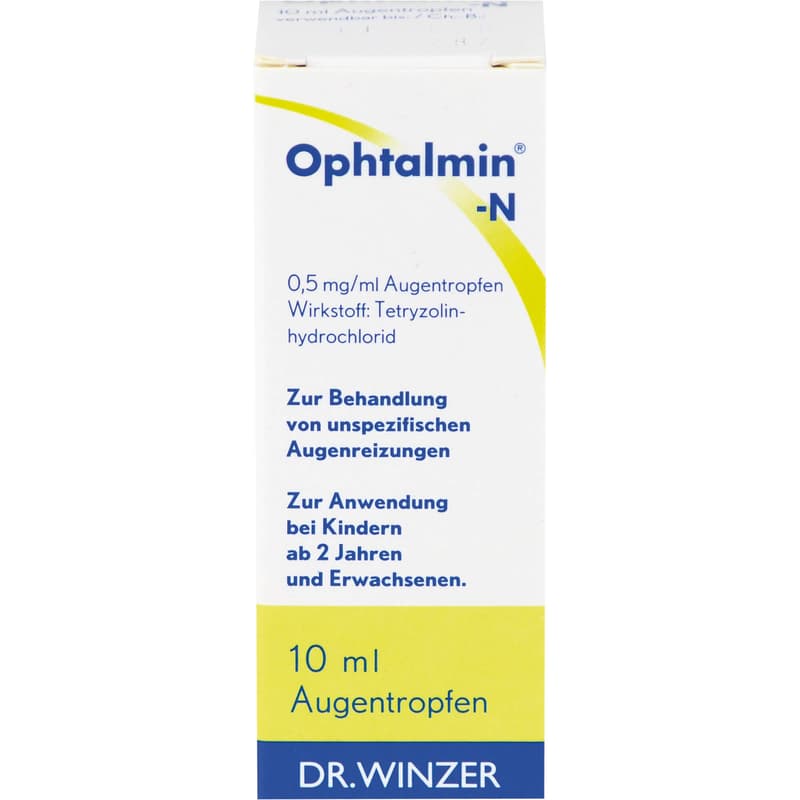
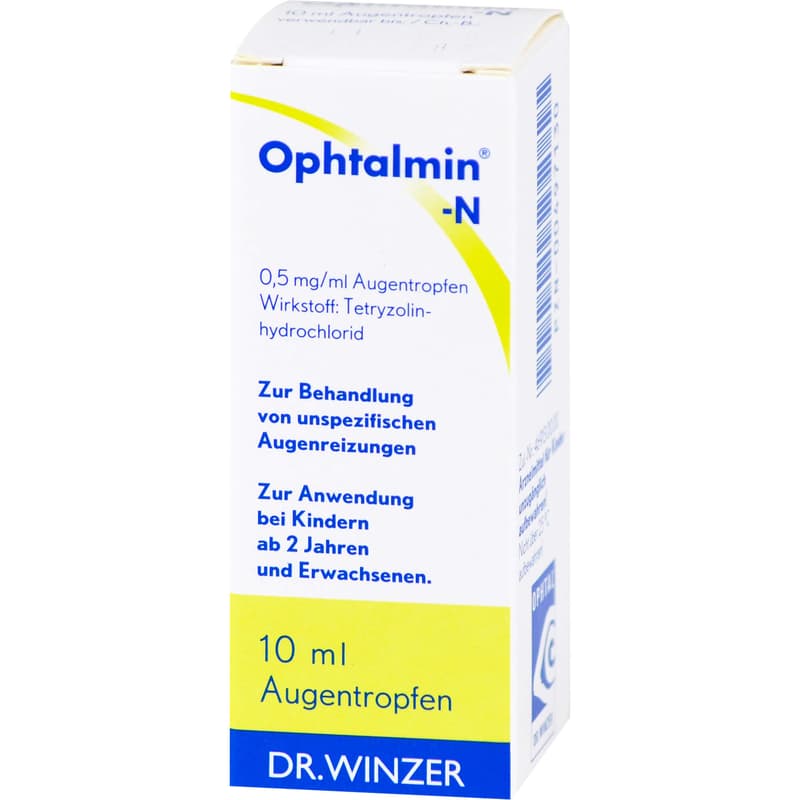
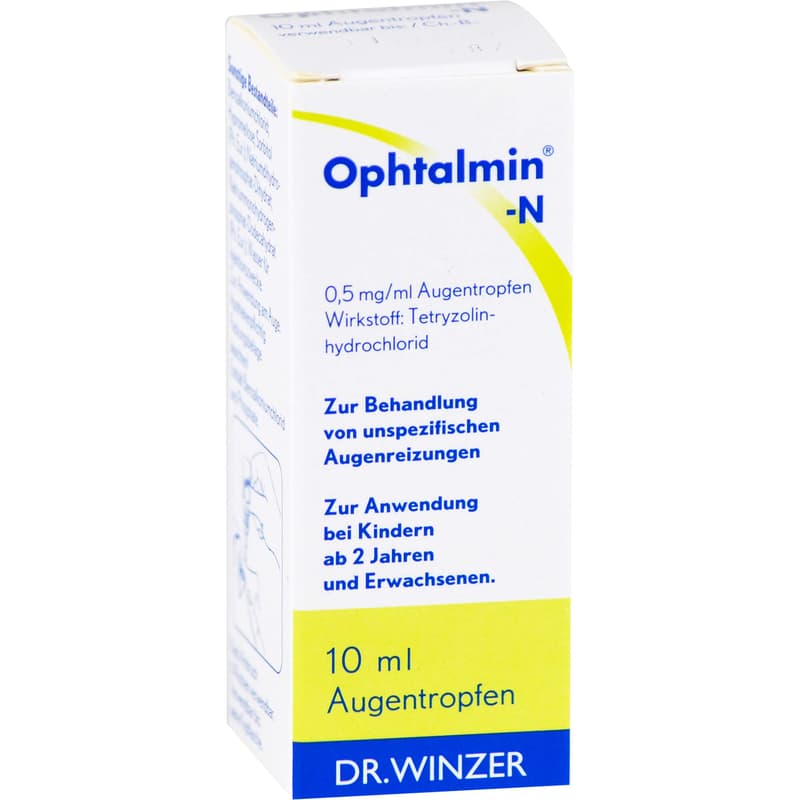
Die OPHTALMIN-N Augentropfen mit dem Wirkstoff Tetryzolinhydrochlorid lindern schnell lästige Augenreizungen, die durch Rauch, Wind, Chlorwasser oder Licht verursacht werden. Auch bei allergischen Entzündungen wie Heuschnupfen helfen sie zuverlässig. Die praktische 10-ml-Flasche ist ideal für Erwachsene und Kinder ab 2 Jahren geeignet. Nach dem ersten Anbruch ist das Arzneimittel noch 6 Wochen lang verwendbar.
Zu Risiken und Nebenwirkungen lesen Sie die Packungsbeilage und fragen Sie Ihre Ärztin, Ihren Arzt oder in Ihrer Apotheke.




Beschreibung
Wichtige Hinweise (Pflichtangaben)
Ophtalmin-N 0,5 mg/ml Augentropfen. Wirkstoff: Tetryzolinhydrochlorid. Anwendungsgebiete: Augenreizungen, z.B. durch Rauch, Wind, gechlortes Wasser und Licht und allergischen Entzündungen des Auges, z.B. Heufieber und Blütenstaubüberempfindlichkeit.Zu Risiken und Nebenwirkungen lesen Sie die Packungsbeilage und fragen Sie Ihre Ärztin, Ihren Arzt oder in Ihrer Apotheke.
GEBRAUCHSINFORMATION: INFORMATION FÜR DEN ANWENDER
Ophtalmin-N 0,5 mg/ml Augentropfen, zur Anwendung bei Kindern ab 2 Jahren und Erwachsenen
Wirkstoff: Tetryzolinhydrochlorid
Lesen Sie die gesamte Packungsbeilage sorgfältig durch, bevor Sie mit der Anwendung dieses Arzneimittels beginnen, denn sie enthält wichtige Informationen. Wenden Sie dieses Arzneimittel immer genau wie in dieser Packungsbeilage beschrieben bzw. genau nach Anweisung Ihres Arztes oder Apothekers an.
- Heben Sie die Packungsbeilage auf. Vielleicht möchten Sie diese später nochmals lesen.
- Fragen Sie Ihren Apotheker, wenn Sie weitere Informationen oder einen Rat benötigen.
- Wenn Sie Nebenwirkungen bemerken, wenden Sie sich an Ihren Arzt oder Apotheker. Dies gilt auch für Nebenwirkungen, die nicht in dieser Packungsbeilage angegeben sind. Siehe Abschnitt 4.
- Wenn Sie sich nicht besser oder gar schlechter fühlen, wenden Sie sich an Ihren Arzt.
Was in dieser Packungsbeilage steht
- WAS IST OPHTALMIN-N UND WOFÜR WIRD ES ANGEWENDET?
- WAS SOLLTEN SIE VOR DER ANWENDUNG VON OPHTALMIN-N BEACHTEN?
- WIE IST OPHTALMIN-N ANZUWENDEN?
- WELCHE NEBENWIRKUNGEN SIND MÖGLICH?
- WIE IST OPHTALMIN-N AUFZUBEWAHREN?
- INHALT DER PACKUNG UND WEITERE INFORMATIONEN
Ophtalmin-N ist ein Arzneimittel zur Beeinflussung des Organnervensystems (vegetatives Nervensystem) aus der Arzneigruppe der alpha-Sympathomimetika. Ophtalmin-N wird angewendet bei: Augenreizungen, z.B. durch Rauch, Wind, gechlortes Wasser und Licht und allergischen Entzündungen des Auges, z.B. Heufieber und Blütenstaubüberempfindlichkeit.
2. WAS SOLLTEN SIE VOR DER ANWENDUNG VON OPHTALMIN-N BEACHTEN?
Ophtalmin-N darf nicht angewendet werden bei:
- Engwinkelglaukom,
- Überempfindlichkeit gegenüber Tetryzolinhydrochlorid, dem Wirkstoff von Ophtalmin-N, oder einem der in Abschnitt 6 genannten sonstigen Bestandteile,
- Kindern unter 2 Jahren.
Sie dürfen Ophtalmin-N erst nach Rücksprache mit Ihrem Arzt anwenden bei:
- schweren Herz-Kreislauf-Erkrankungen (z. B. koronarer Herzkrankheit, Bluthochdruck oder Phäochromozytom),
- Stoffwechselstörungen, z. B. Überfunktion der Schilddrüse (Hyperthyreose) oder Zuckerkrankheit (Diabetes mellitus)
- Behandlung mit blutdrucksteigernden Medikamenten (z. B. MAO-Hemmern)
- trockener Nasenschleimhautentzündung (Rhinitis sicca)
- Keratoconjunctivitis sicca (sog. trockenes Auge) sowie
- Glaukom.
Hinweis
Ophtalmin-N ist nicht zur Behandlung des sogenannten »Trockenen Auges" (Keratoconjunctivitis sicca) geeignet. Erklärungen: Das Glaukom ist eine Erkrankung, bei der es zu einem erhöhten Augeninnendruck kommt (sog. grüner Star). Wenn die Erkrankung durch eine Verengung der Augenkammerwinkel verursacht wird, spricht man von einem Engwinkelglaukom. Die koronare Herzkrankheit wird durch Verengung der Blutgefäße des Herzens ausgelöst. Dies kann zu Herzschwäche (Herzinsuffizienz), Störungen des Herzschlags (Herzrhythmusstörungen), anfallsweisen Schmerzen (Angina pectoris) und Untergang von Herzgewebe (Herzinfarkt) führen. Ein Phäochromozytom ist ein meist gutartiger Tumor vor allem des Nebennierenmarks, der Stoffe abgibt, die zu zeitweise sehr hohem Bluthochdruck führen.Warnhinweise und Vorsichtsmaßnahmen
Beachten Sie bitte, dass eine Augenreizung oder Augenrötung häufig ein Zeichen für eine ernste Augenerkrankung ist und Sie daher einen Augenarzt befragen sollten. Suchen Sie sofort den nächst erreichbaren Augenarzt auf, wenn- die Augenrötung akut oder einseitig auftritt,
- zu Ihren jetzigen Beschwerden Augen- oder Kopfschmerzen hinzukommen,
- Sie eine Sehverschlechterung oder fliegende Punkte vor den Augen bemerken!
Welche Vorsichtsmaßnahmen müssen beachtet werden?
Ophtalmin-N darf nicht geschluckt werden und ist deshalb für Kinder unerreichbar aufzubewahren.
Hinweise für Kontaktlinsenträger
Bei einer Bindehautentzündung ist grundsätzlich das Tragen einer Brille vorteilhafter, als die Verwendung von Kontaktlinsen, da das Auge gereizt ist. Wenn Sie trotz der Beschwerden Kontaktlinsen tragen wollen, so sollten Sie harte und weiche Linsen vor der Anwendung der Ophtalmin-N entfernen und frühestens 15 Minuten nach dem Eintropfen wieder einsetzen. Für Träger weicher Kontaktlinsen ist zu beachten, dass sich das in Ophtalmin-N enthaltene Konservierungsmittel Benzalkoniumchlorid in diesen Linsen anreichern und sie verfärben kann.Kinder
Ophtalmin-N darf nicht bei Kindern unter 2 Jahren angewendet werden. Langfristige Anwendung und Überdosierung, vor allem bei Kindern, sind zu vermeiden. Die Anwendung bei Kindern und bei höherer Dosierung darf daher nur unter ärztlicher Kontrolle erfolgen. Um eine mögliche Aufnahme von Ophtalmin-N im gesamten Körper, insbesondere bei Kindern, zu vermeiden, sollten nach dem Eintropfen für 2-3 Minuten die Tränenkanäle mit den Fingerspitzen abgedrückt werden.Bei Anwendung von Ophtalmin-N zusammen mit anderen Arzneimitteln
Bitte informieren Sie Ihren Arzt oder Apotheker, wenn Sie andere Arzneimittel einnehmen/anwenden bzw. vor kurzem eingenommen/angewendet haben, auch wenn es sich um nicht verschreibungspflichtige Arzneimittel handelt. Die blutdrucksteigernde Wirkung von MAO-Hemmern und trizyklischen Antidepressiva (Arzneistoffe zur Behandlung einer krankhaften Verstimmung [Depression]) kann verstärkt werden. Beachten Sie bitte, dass diese Angaben auch für vor kurzem angewandte Arzneimittel gelten können. Falls Sie zusätzlich andere Augentropfen/Augensalben anwenden, sollte zwischen diesen ein zeitlicher Abstand von ca. 5 Minuten eingehalten werden.Schwangerschaft und Stillzeit
Ophtalmin-N darf in Schwangerschaft und Stillzeit nicht angewendet werden.Verkehrstüchtigkeit und Fähigkeit zum Bedienen von Maschinen
Es ist unwahrscheinlich, dass die leichte vorübergehende Irritation, die nach Anwendung von Ophtalmin-N auftreten kann, zu einer stärkeren Beeinträchtigung der Sicht führt. Sollte es zu einer kurzzeitigen Beeinträchtigung der Sicht kommen, sollten Sie warten, bis diese vorüber ist, bevor Sie am Straßenverkehr teilnehmen oder Maschinen bedienen.Ophtalmin-N enthält Benzalkoniumchlorid
Das Konservierungsmittel Benzalkoniumchlorid kann Reizungen am Auge hervorrufen. Vermeiden Sie den Kontakt mit weichen Kontaktlinsen. Benzalkoniumchlorid kann zur Verfärbung weicher Kontaktlinsen führen. Kontaktlinsen müssen Sie vor der Anwendung entfernen und dürfen diese frühestens 15 Minuten nach der Anwendung wieder einsetzen.3. WIE IST OPHTALMIN-N ANZUWENDEN?
Wenden Sie Ophtalmin-N immer genau nach der Anweisung in dieser Packungsbeilage an. Bitte fragen Sie bei Ihrem Arzt oder Apotheker nach, wenn Sie sich nicht ganz sicher sind. Die folgenden Angaben gelten, soweit Ihnen Ihr Arzt Ophtalmin-N nicht anders verordnet hat: Zur Anwendung am Auge. Tropfen Sie 2- bis 3-mal täglich 1 Tropfen Ophtalmin-N je Auge bei leicht zurückgelegtem Kopf in den Bindehautsack ein, ohne mit der Behältnisöffnung das Auge oder andere Oberflächen zu berühren. Eine Anwendung über mehr als 5 Tage darf nur unter ärztlicher Kontrolle erfolgen.
Wenn Sie eine größere Menge von Ophtalmin-N angewendet haben,
als Sie sollten
Zeichen einer Überdosierung am Auge sind weite Pupillen. Eventuell treten in milder Form Zeichen wie bei einem Verschlucken von Ophtalmin-N auf (s. auch 4. "Welche Nebenwirkungen sind möglich?"). Bei Verschlucken der Flüssigkeit können folgende Krankheitszeichen auftreten: Übelkeit, Zyanose (bläuliche Haut durch verminderten Sauerstoffgehalt des Blutes), Fieber, Krämpfe, erhöhter und unregelmäßiger Herzschlag, Herzstillstand, Bluthochdruck, Lungenödem (vermehrtes Gewebswasser in der Lunge), Atemstörungen und psychische Störungen, unter Umständen auch Hemmungen zentralnervöser Funktionen mit Schläfrigkeit, Erniedrigung der Körpertemperatur, zu langsamer Herzschlag, schockähnlicher Blutdruckabfall, Atemstillstand und Koma (tiefe Bewusstlosigkeit). Bei Kleinkindern kann es zu zentralnervösen Störungen, Verminderung der Atmung und Kreislaufzusammenbruch kommen. Rufen Sie bei Auftreten dieser Krankheitszeichen den nächst erreichbaren Arzt zu Hilfe! Mögliche ärztliche Gegenmaßnahmen sind Gabe medizinischer Kohle, Magenspülung und Sauerstoffbeatmung. Vasopressoren (Arzneimittel zur Blutdrucksteigerung) dürfen nicht gegeben werden. Gegebenenfalls sind Fieber und Krämpfe zu behandeln. Bei Auftreten anticholinerger Symptome ist ein Gegenmittel, z. B. Physostigmin, zu verabreichen.4. WELCHE NEBENWIRKUNGEN SIND MÖGLICH?
Wie alle Arzneimittel kann auch dieses Arzneimittel Nebenwirkungen haben, die aber nicht 6ei jedem auftreten müssen.
Bei den Häufigkeitsangaben zu Nebenwirkungen werden folgende Kategorien zugrunde gelegt
| Bei den Häufigkeitsangaben zu Nebenwirkungen Werden folgende Kategorien zugrunde gelegt: | |
| Sehr häufig: | mehr als 1 Behandelter von 10 |
| Häufig: | 1 bis 10 Behandelte von 100 |
| Gelegentlich: | 1 bis 10 Behandelte von 1 000 |
| Selten: | 1 bis 10 Behandelte von 10 000 |
| Sehr selten: | weniger als 1 Behandelter von 10 000 |
| Nicht bekannt: | Häufigkeit auf Grundlage der verfügbaren Daten nicht abschätzbar. |
Bindehautreizung (Augenrötung mit Tränen und Lichtscheu) sowie gelegentlich verschwommenes Sehen und Blendung durch erweiterte Pupillen (Mydriasis). Häufig kommt es zu einem Übertritt von Ophtalmin-N in den Körperkreislauf, was zu Herzklopfen, Kopfschmerzen, Zittern besonders an den Händen (Tremor), Schwäche, Schwitzen und Blutdruckanstieg führen kann. Sehr selten wurde nach langfristiger Anwendung über eine Verhornung der Augenbindehaut mit Verschluss der Tränenpünktchen und Tränenträufeln berichtet. In sehr seltenen Fällen entwickelten Patienten mit ausgeprägten Hornhautdefekten unter der Therapie mit phosphathaltigen Augentropfen Trübungen der Hornhaut durch die Bildung von Kalziumphosphat.
Meldung von Nebenwirkungen
Wenn Sie Nebenwirkungen bemerken, wenden Sie sich an Ihren Arzt oder Apotheker. Dies gilt auch für Nebenwirkungen, die nicht in dieser Packungsbeilage angegeben sind. Sie können Nebenwirkungen auch direkt dem Bundesinstitut für Arzneimittel und Medizinprodukte, Abt. Pharmakovigilanz, Kurt-Georg-Kiesinger Allee 3, D-53175 Bonn, Website: www.bfarm.de anzeigen. Indem Sie Nebenwirkungen melden, können Sie dazu beitragen, dass mehr Informationen über die Sicherheit dieses Arzneimittels zur Verfügung gestellt werden.Welche Gegenmaßnahmen sind bei Nebenwirkungen zu ergreifen?
Bitte wenden Sie Ophtalmin-N nicht mehr an und sprechen Sie mit Ihrem Arzt über die weitere Behandlung.
5. WIE IST OPHTALMIN-N AUFZUBEWAHREN?
Das Arzneimittel darf nach Ablauf des Verfallsdatums nicht mehr verwendet werden (siehe Faltschachtel und Etikett). Das Verfalldatum bezieht sich auf den letzten Tag des Monats. Die Augentropfen sind nach Anbruch 6 Wochen verwendbar. Nicht über 25°C aufbewahren! Arzneimittel für Kinder unzugänglich aufbewahren! Das Arzneimittel soll nicht im Abwasser entsorgt werden. Fragen Sie Ihren Apotheker wie das Arzneimittel zu entsorgen ist, wenn Sie es nicht mehr benötigen. Diese Maßnahme hilft die Umwelt zu schützen.
6. INHALT DER PACKUNG UND WEITERE INFORMATIONEN
Was Ophtalmin-N enthält
Der Wirkstoff ist: Tetryzolinhydrochlorid. 1 ml Lösung enthält 0,50 mg Tetryzolinhydrochlorid. Die sonstigen Bestandteile sind: Benzalkoniumchlorid; Sorbitol (Ph.Eur.); Natriumdihydrogenphosphat-Dihydrat; Natriummonohydrogenphosphat-Dodecahydrat (Ph. Eur.); Hypromellose; Wasser für Injektionszwecke.Darreichungsform und Inhalt
Packung mit 10 ml und 3 x 10 ml Augentropfen je Flasche.Pharmazeutischer Unternehmer und Hersteller
Dr. Winzer Pharma GmbHBrunsbütteler Damm 165-173
13581 Berlin
Tel: 0800 - 090 94 90 - 90
Fax: 0800 - 090 94 90 - 88
Email: service@drwinzer.de
Diese Gebrauchsinformation wurde zuletzt überarbeitet im Mai 2014.
Quelle: Angaben der Packungsbeilage
Stand: 02/2017
Wirkstoff: Tetryzolinhydrochlorid. Anwendungsgebiete: Augenreizungen, z.B. durch Rauch, Wind, gechlortes Wasser und Licht und allergischen Entzündungen des Auges, z.B. Heufieber und Blütenstaubüberempfindlichkeit.
Info-Broschüre
Info-Broschüre herunterladenZusammensetzung & Allergene
Zusammensetzung
Wirkstoff: Tetryzolinhydrochlorid