




Product from:
Preussen
4590€
Only a few items left
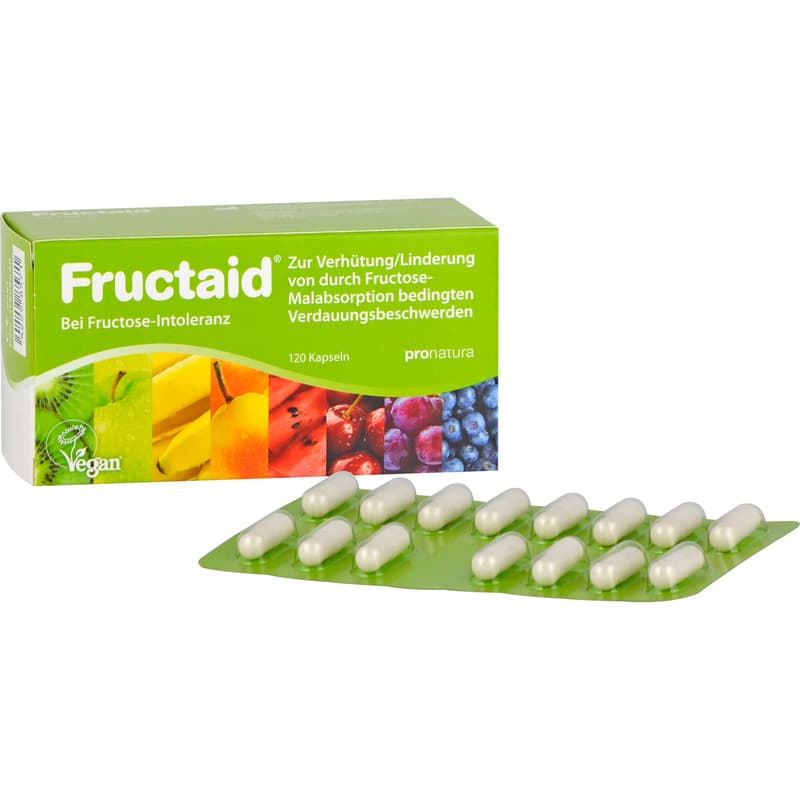
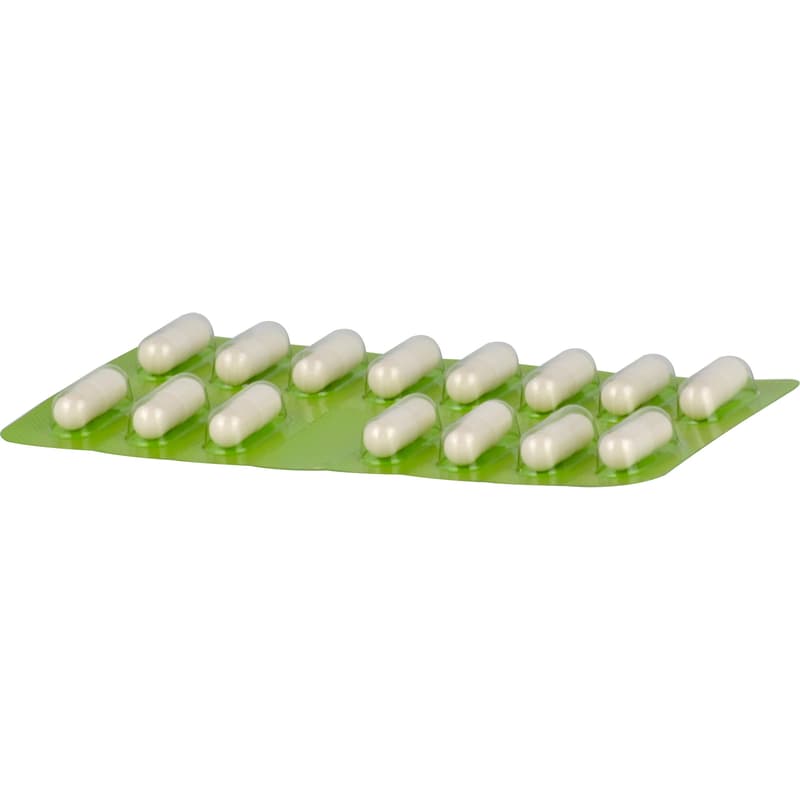
FRUCTAID capsules are your reliable companion for managing fructose intolerance. The active microbial enzyme glucose isomerase efficiently converts fructose into easily absorbable glucose in the small intestine, helping to prevent digestive discomfort like bloating or abdominal pain. These plant-based capsules come in a practical 120-piece pack, making them easy to take right before enjoying your meals.








Description

You're reading an Auto-translation.
Product features
Fructaid for fructose intoleranceFor the prevention/relief of digestive problems caused by fructose malabsorption
This information for use contains
- General information on fructose intolerance
- Information on Fructaid
- Fructose sources
- Warnings
1.1 What is fructose?
Fructose is the fruit sugar naturally found in fruits and many vegetables. It is a simple sugar (monosaccharide). Fructose is also a component of sucrose (normal household sugar). This is a disaccharide in which fructose is bound to the simple sugar glucose (dextrose). Since only simple sugars can be absorbed in the small intestine and utilized by the body, ingested sucrose is broken down into fructose and glucose by an endogenous enzyme in the small intestine. Fructose has the highest sweetness of all sugars and is therefore used as a sweetener in industrially produced foods. Thus, many foods that you would not expect to contain fructose do.
1.2 What is fructose intolerance?
In medicine, a distinction is primarily made between the widespread fructose intolerance, which is based on insufficient absorption of fructose in the small intestine (so-called intestinal fructose intolerance), and the very rare hereditary fructose intolerance. In the common fructose intolerance based on insufficient absorption, fructose consumed with food is not absorbed (taken up) in the small intestine and enters the large intestine. This is why it is also referred to as fructose malabsorption. In the large intestine, the fructose is fermented by the intestinal bacteria with gas formation and can also cause increased water inflow. This leads to digestive problems in those affected after consuming fructose-containing foods, such as abdominal pain, colic, flatulence, a feeling of fullness, increased urge to defecate or diarrhea, and is colloquially also referred to as fructose intolerance. Due to the similarity of the symptoms, it is not uncommon for it to be confused with irritable bowel syndrome (irritable colon). Fructose intolerance caused by malabsorbed fructose is widespread. Its exact causes are unknown and it can occur at any age for no apparent reason. However, it is known that it often occurs together with lactose intolerance. Many people who are affected therefore tolerate both lactose and fructose poorly. In hereditary fructose intolerance, a very rare metabolic disorder (incidence approx. 1: 20,000) occurs that already appears in infancy. In those affected, fructose is normally absorbed in the small intestine, but there is a lack of an enzyme in the liver, so that the absorbed fructose cannot be properly metabolized. Fructaid is not intended for use in hereditary fructose intolerance.
1.3 How can fructose intolerance be determined?
1.3.1 Intestinal fructose intolerance
To diagnose intestinal fructose intolerance caused by fructose malabsorption, a fructose tolerance test can be performed with subsequent measurement of the hydrogen concentration in the exhaled air (H2 breath test). You are given fructose dissolved in water to drink on an empty stomach, and a breath sample is then taken at regular intervals.
1.3.2 Hereditary fructose intolerance
The very rare hereditary fructose intolerance (see also section 1.2) can be diagnosed via a blood sample using a human genetic examination.
2. Information on Fructaid
2.1 How does Fructaid work?
The glucose isomerase enzyme contained in Fructaid converts fructose into glucose (dextrose), which can be easily absorbed in the small intestine. The enzyme itself is neither absorbed from the small intestine nor does it affect the organism. The effect of glucose isomerase takes place exclusively in the food pulp. Therefore, undesirable effects are not to be feared even with regular and long-term consumption.
2.2 Where does the glucose isomerase contained in Fructaid come from?
The glucose isomerase enzyme contained in Fructaid is not of animal origin. It is produced exclusively with the help of bacteria, i.e. it is of microbial origin.
2.3 Where is the glucose isomerase released?
After consumption, the capsule (not animal) dissolves in the stomach and releases the glucose isomerase pellets it contains. These are coated with a protective coating against stomach acid and enter the small intestine with the food pulp. There, the glucose isomerase is released and can convert fructose present in the food pulp into glucose.
2.4 How is Fructaid used?
Take 1 - 4 capsules with liquid a few minutes before consuming fructose-containing foods up to 4 times a day. Alternatively, you can also open the capsules and take the pellets they contain unchewed with liquid immediately before the fructose-containing meal. To do this, simply squeeze the capsule lightly and pull the two halves of the capsule apart at the same time. Children from a height of 100 cm, but not more than 10 capsules or their contents per day. You should test individually which amount of Fructaid is sufficient for you. This depends in particular on your personal sensitivity to fructose as well as the fructose content and composition of the food or drink consumed.
2.5 What ingredients does Fructaid contain?
Cellulose, hypromellose, glucose isomerase, methacrylic acid-ethyl acrylate copolymer-(1:1)-dispersion 30%, talcum, hydroxypropylmethylcellulose, trehalose*, triethyl citrate.
*Trehalose is a glucose source
3. Fructose sources
Examples of frequently consumed fructose-containing foods:- Baked goods and confectionery
- Spreads, such as honey, jams and preserves
- Soft drinks, such as lemonades
- Fruits (fresh)
- Fruits (dried)
- Fruit yogurts
- Fruit compote
- Fruit preserves
- Fruit quark
- Fruit juices and nectars
- Semolina porridge with fruit
- Muesli and cereal mixes with dried fruit
- Muesli bars
- Red fruit jelly
- Ice cream
- Fructaid is not intended for people with hereditary fructose intolerance.
- Diabetics must calculate the fructose content of the respective food or drink as glucose when using Fructaid and may only use Fructaid under medical supervision.
- Fructaid must not be taken if you are known to be hypersensitive to any of the ingredients.
- Use by pregnant women, nursing mothers and children only after consulting a doctor.
- Do not use after the expiry date (see imprint on folding box and blister).
- Keep out of reach of children.
Source: Information from the package insert
Status: 10/2023