

Produkt aus:
Preussen
Ausverkauft.Ähnliche Artikel aus dieser Kategorie anzeigen »
Informiert mich per Mail, wenn das Produkt wieder auf Lager ist
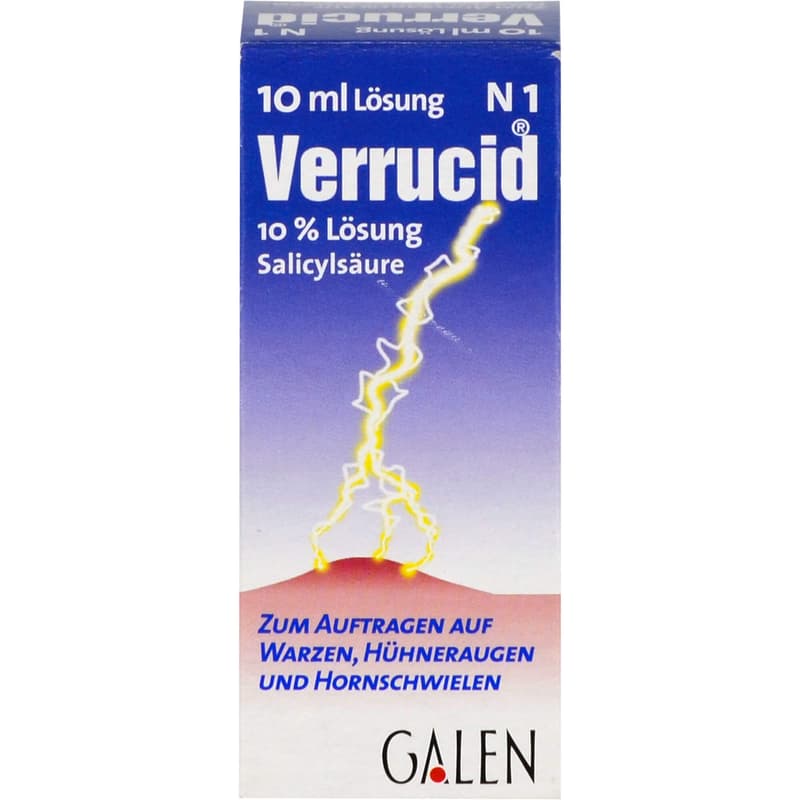
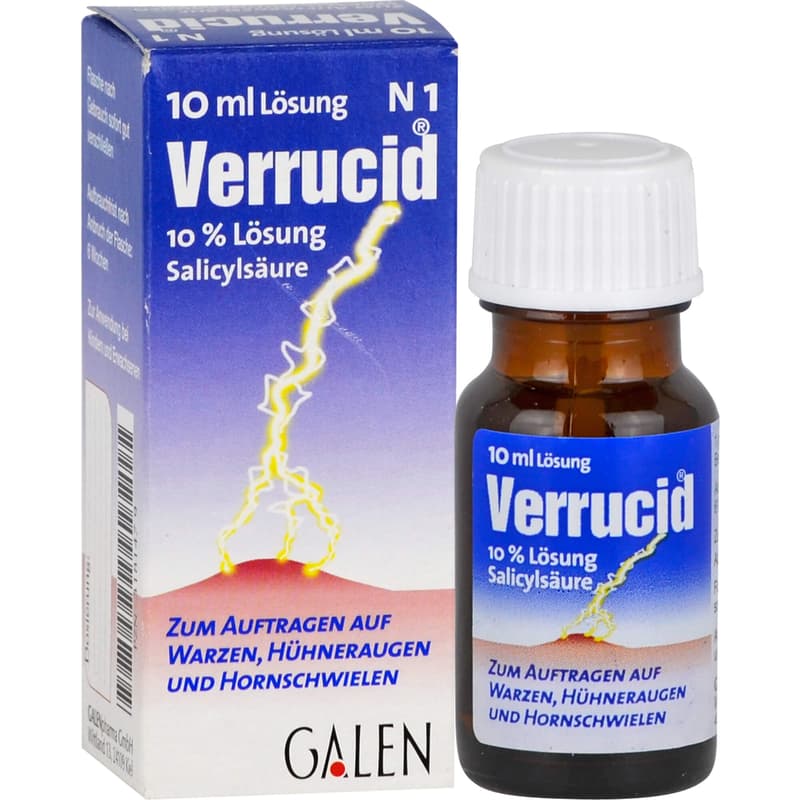
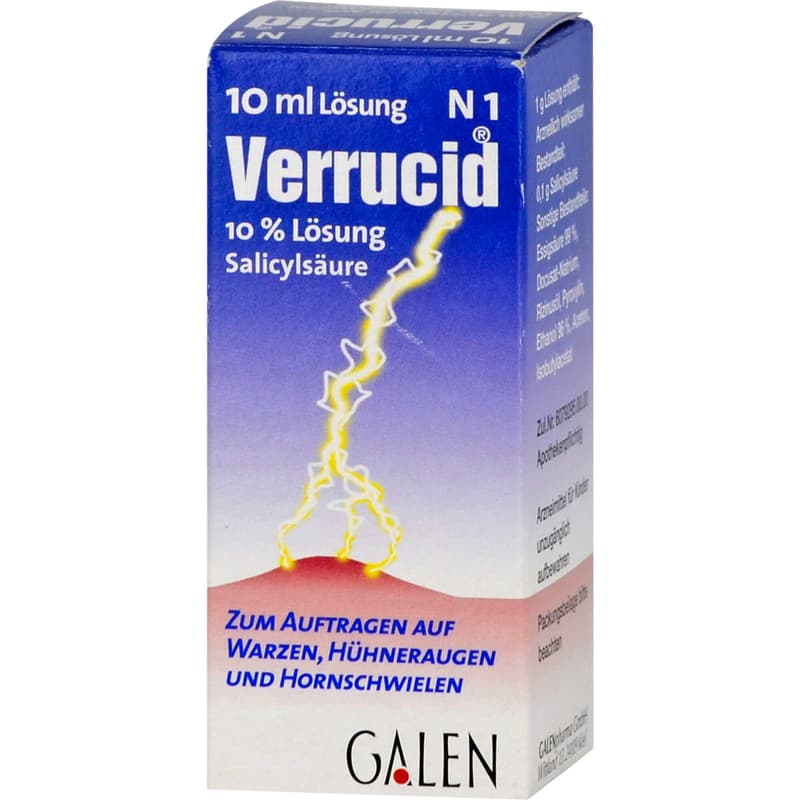
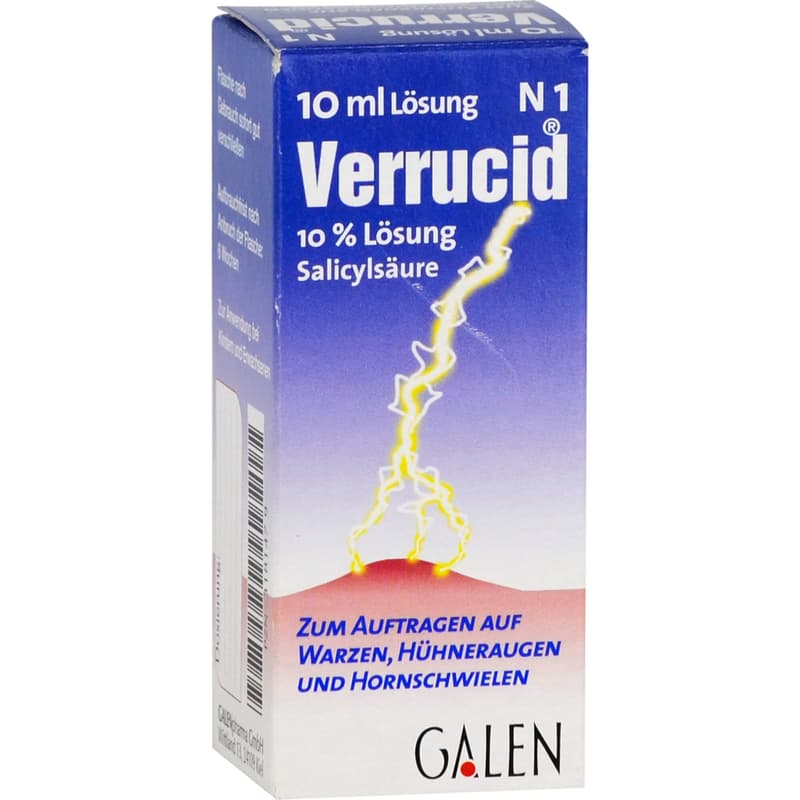
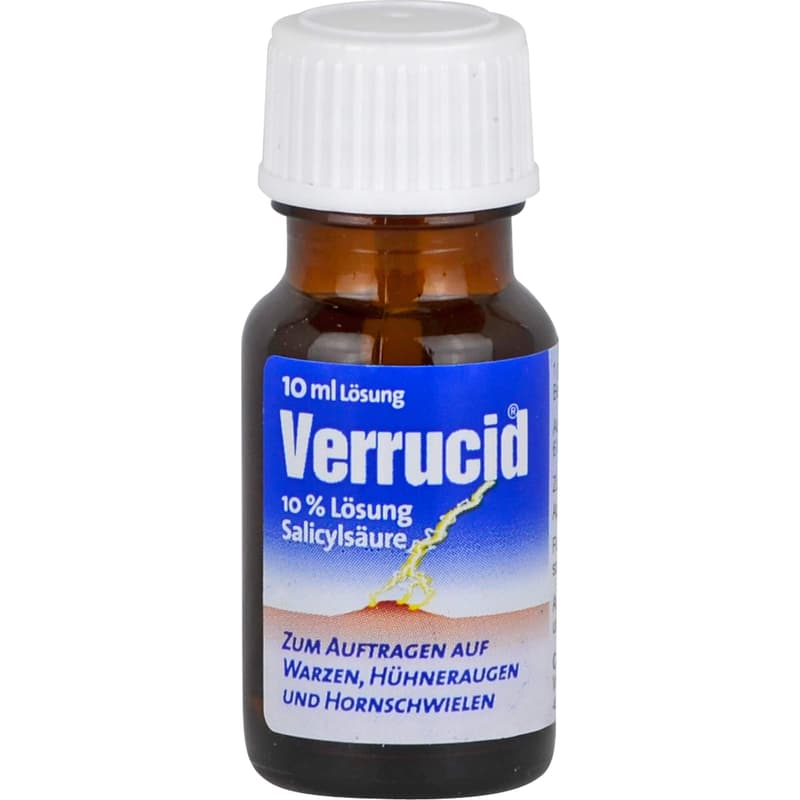
VERRUCID Lösung ist ein bewährtes Arzneimittel mit 10% Salicylsäure, ideal zur äußerlichen Anwendung bei Verhornungsstörungen wie Warzen, Hühneraugen und Schwielen. Die 10 ml Lösung wird einfach auf die betroffenen Hautstellen aufgetragen und wirkt als Peelingmittel. Beachten Sie die Packungsbeilage für eine sichere und effektive Anwendung, um Ihre Haut wieder geschmeidig zu machen.
Zu Risiken und Nebenwirkungen lesen Sie die Packungsbeilage und fragen Sie Ihre Ärztin, Ihren Arzt oder in Ihrer Apotheke.






Beschreibung
Wichtige Hinweise (Pflichtangaben)
Verrucid 10 % Lösung. Wirkstoff: Salicylsäure. Anwendungsgebiete: äußerlich auf der Haut als Schälmittel bei Verhornungsstörungen durch Warzen sowie bei Hühneraugen und Hornschwielen.Zu Risiken und Nebenwirkungen lesen Sie die Packungsbeilage und fragen Sie Ihre Ärztin, Ihren Arzt oder in Ihrer Apotheke.
GEBRAUCHSINFORMATION: INFORMATION FÜR DEN ANWENDER
Verrucid 10 % Lösung, zur Anwendung bei Kindern und Erwachsenen
Wirkstoff: Salicylsäure
Lesen Sie die gesamte Packungsbeilage sorgfältig durch, denn sie enthält wichtige Informationen für Sie. Dieses Arzneimittel ist ohne Verschreibung erhältlich. Um einen bestmöglichen Behandlungserfolg zu erzielen, muss Verrucid jedoch vorschriftsmäßig angewendet werden.
- Heben Sie die Packungsbeilage auf. Vielleicht möchten Sie diese später nochmals lesen.
- Fragen Sie Ihren Apotheker, wenn Sie weitere Informationen oder einen Rat benötigen.
- Wenn sich Ihre Symptome verschlimmern oder nach 6 Wochen keine Besserung ein–tritt, müssen Sie auf jeden Fall einen Arzt aufsuchen.
- Wenn eine der aufgeführten Nebenwirkungen Sie erheblich beeinträchtigt oder Sie Nebenwirkungen bemerken, die nicht in dieser Gebrauchsinformation angegeben sind, informieren Sie bitte Ihren Arzt oder Apotheker.
Diese Packungsbeilage beinhaltet
- WAS IST VERRUCID UND WOFÜR WIRD ES ANGEWENDET?
- WAS MÜSSEN SIE VOR DER ANWENDUNG VON VERRUCID BEACHTEN?
- WIE IST VERRUCID ANZUWENDEN?
- WELCHE NEBENWIRKUNGEN SIND MÖGLICH?
- WIE IST VERRUCID AUFZUBEWAHREN?
- WEITERE INFORMATIONEN
Verrucid ist eine 10 %ige Lösung von Salicylsäure in einem organischen Lösungsmittelgemisch, welche äußerlich auf der Haut als Schälmittel bei Verhornungsstörungen durch Warzen sowie bei Hühneraugen und Hornschwielen angewendet wird.
2. WAS MÜSSEN SIE VOR DER ANWENDUNG VON VERRUCID BEACHTEN?
Verrucid darf nicht angewendet werden:
- bei Überempfindlichkeit gegen Salicylsäure, Salicylate oder andere Bestandteile des Arzneimittels.
- Verrucid sollte nicht angewendet werden bei Säuglingen und bei Patienten mit Niereninsuffizienz.
- Verrucid darf nicht mit Schleimhäuten in Berührung kommen, insbesondere ist ein Kontakt mit den Augen zu vermeiden.
Bei der Anwendung von Verrucid mit anderen Arzneimitteln
Bitte informieren Sie Ihren Arzt oder Apotheker, wenn Sie andere Arzneimittel einnehmen/anwenden bzw. vor kurzem eingenommen/angewendet haben, auch wenn es sich um nicht verschreibungspflichtige Arzneimittel handelt. Salicylsäure kann das Eindringen anderer lokal aufgetragener Arzneimittel in die Haut verstärken. In die Blutbahn aufgenommene Salicylsäure kann schädliche Auswirkungen von Methotrexat erhöhen und die blutzuckersenkende Wirkung von Sulfonylharnstoffen verstärken.Bei Anwendung von Verrucid zusammen mit Nahrungsmitteln und Getränken
Während der Anwendung von Verrucid sollten Sie nicht gleichzeitig essen oder trinken.Schwangerschaft und Stillzeit
Fragen Sie vor der Anwendung von allen Arzneimitteln Ihren Arzt oder Apotheker um Rat. Verrucid sollte in der Schwangerschaft nicht angewendet werden, ausgenommen an einer Fläche kleiner als 5 cm2. Es sollte ferner nicht an der Brust von stillenden Müttern angewendet werden.Verkehrstüchtigkeit und das Bedienen von Maschinen
Keine Beeinträchtigung.3. WIE IST VERRUCID ANZUWENDEN?
Wenden Sie Verrucid immer genau nach der Anweisung in dieser Packungsbeilage an. Bitte fragen Sie bei Ihrem Arzt oder Apotheker nach, wenn Sie sich nicht ganz sicher sind. Falls vom Arzt nicht anders verordnet wird, ist die übliche Dosis: Verrucid wird zweimal täglich auf die zu behandelnden Hautbereiche aufgetragen. Die Lösung wird mit dem am Flaschenverschluss angebrachten Pinsel auf Warzen, Hühneraugen und Hornschwielen aufgetragen. Verrucid ist täglich anzuwenden. Vor jedem neuen Aufträgen von Verrucid sollte der vorhandene Pyroxylinfilm entfernt werden. Verrucid wirkt nur äußerlich und darf nicht eingenommen werden. Bei der Applikation von Verrucid ist darauf zu achten, dass die Lösung nicht auf die gesunde Haut fließt. Nach erfolgreicher Therapie sollte noch 1 Woche lang weiterbehandelt werden. Die durchschnittliche Anwendungsdauer beträgt 6 Wochen. Die Erfahrung bei Kindern ist begrenzt. Aus Sicherheitsgründen sollte daher die maximale Tagesdosis von 1 ml Lösung nicht überschritten und die Gesamtanwendungsdauer auf maximal 6 Wochen beschränkt werden. Bitte sprechen Sie mit Ihrem Arzt oder Apotheker, wenn Sie den Eindruck haben, dass die Wirkung von Verrucid zu stark oder zu schwach ist.
Wenn Sie eine größere Menge Verrucid angewendet haben,
als Sie sollten
Als Gegenmaßnahme empfiehlt sich, das überschüssig applizierte Arzneimittel sofort mit warmem Wasser wegzuspülen.Wenn Sie die Anwendung von Verrucid vergessen haben
Applizieren Sie nicht die doppelte Dosis, sondern setzen Sie die Behandlung, wie vorgesehen, fort.Wenn Sie die Anwendung von Verrucid abbrechen
Bei vorzeitigem Absetzen des Arzneimittels kann die Verhornungsstörung weiterhin bestehen bleiben.Wenn Sie weitere Fragen zur Anwendung des Arzneimittels haben, fragen Sie Ihren Arzt oder Apotheker.
4. WELCHE NEBENWIRKUNGEN SIND MÖGLICH?
Wie alle Arzneimittel kann Verrucid Nebenwirkungen haben, die aber nicht bei jedem Behandelten auftreten müssen.
Bei den Häufigkeitsangaben zu Nebenwirkungen werden folgende Kategorien zugrunde gelegt
| Bei den Häufigkeitsangaben zu Nebenwirkungen Werden folgende Kategorien zugrunde gelegt: | |
| Sehr häufig: | mehr als 1 Behandelter von 10 |
| Häufig: | 1 bis 10 Behandelte von 100 |
| Gelegentlich: | 1 bis 10 Behandelte von 1 000 |
| Selten: | 1 bis 10 Behandelte von 10 000 |
| Sehr selten: | weniger als 1 Behandelter von 10 000 |
| Nicht bekannt: | Häufigkeit auf Grundlage der verfügbaren Daten nicht abschätzbar. |
Bedeutsame Nebenwirkungen oder Zeichen, auf die Sie achten sollten, und Maßnahmen,
wenn Sie betroffen sind
Wenn Sie von einer der nachfolgend genannten Nebenwirkungen betroffen sind setzen Sie Verrucid ab und suchen Sie Ihren Arzt möglichst umgehend auf. Nach dem Aufträgen kann es gelegentlich zu lokaler Reizung, meistens leichtem Brennen, und in Einzelfällen zu Kontaktallergie kommen. Informieren Sie bitte Ihren Arzt oder Apotheker, wenn eine der aufgeführten Nebenwirkungen Sie erheblich beeinträchtigt oder Sie Nebenwirkungen bemerken, die nicht in dieser Gebrauchsinformation angegeben sind.5. WIE IST VERRUCID AUFZUBEWAHREN?
Arzneimittel für Kinder unzugänglich aufbewahren. Sie dürfen das Arzneimittel nach dem auf der Faltschachtel und auf dem Etikett der Flasche nach «verwendbar bis« angegebenen Verfalldatum nicht mehr verwenden. Das Verfalldatum bezieht sich auf den letzten Tag des Monats. Aufbewahrungsbedingungen: Die Flasche sollte immer gut verschlossen aufbewahrt werden. Das Lösungsmittel ist leichtflüchtig und entflammbar. Hinweis auf Haltbarkeit nach Anbruch oder Zubereitung: Nach Anbruch des Behältnisses ist das Arzneimittel bei vorschriftsmäßigem Gebrauch in der Regel 6 Wochen haltbar. Sie sollten Verrucid nicht verwenden, wenn durch Stehen lassen der offenen Flasche das flüchtige Lösungsmittel weitgehend verdunstet ist. Das Arzneimittel darf nicht im Abwasser oder Haushaltsabfall entsorgt werden. Fragen Sie Ihren Apotheker wie das Arzneimittel zu entsorgen ist, wenn Sie es nicht mehr benötigen. Diese Maßnahme hilft die Umwelt zu schützen.
6. WEITERE INFORMATIONEN
Was Verrucid enthält
Der Wirkstoff ist Salicylsäure. Die sonstigen Bestandteile sind: Essigsäure 99 %, Docusat-Natrium, Rizinusöl, Pyroxylin, Ethanol 96 %, Aceton, Isobutylacetat.Wie Verrucid aussieht und Inhalt der Packung
Verrucid ist eine farblose bis hellgelbe Lösung mit stechendem Geruch nach Essigsäure. Eine Packung enthält eine Flasche mit 10 ml Lösung (N1).Pharmazeutischer Unternehmer
GALENpharma GmbHWittland 13
24109 Kiel
Postfach 3764
24036 Kiel
Hersteller
Paul W. Beyvers GmbHSchaffhausenerstraße 26-34,
12099 Berlin (Tempelhof)
Diese Gebrauchsinformation wurde zuletzt überarbeitet im Juli 2011.
Quelle: Angaben der Packungsbeilage
Stand: 10/2016
Wirkstoff: Salicylsäure. Anwendungsgebiete: äußerlich auf der Haut als Schälmittel bei Verhornungsstörungen durch Warzen sowie bei Hühneraugen und Hornschwielen.
Info-Broschüre
Info-Broschüre herunterladenZusammensetzung & Allergene
Zusammensetzung
Wirkstoff: Salicylsäure