

Produkt aus:
Preussen
6099€
Nur noch wenige Stück verfügbar
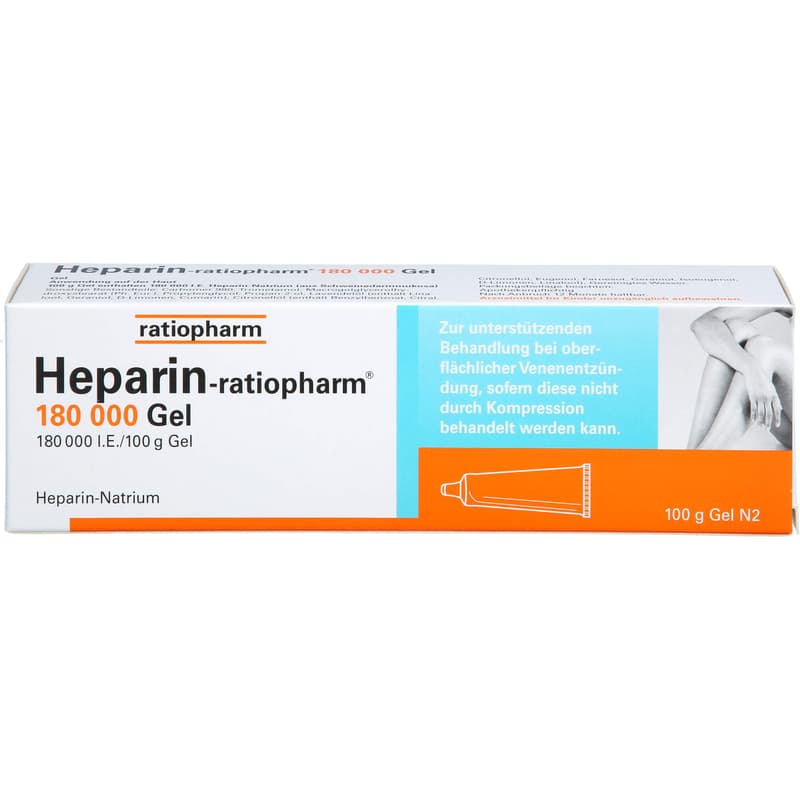
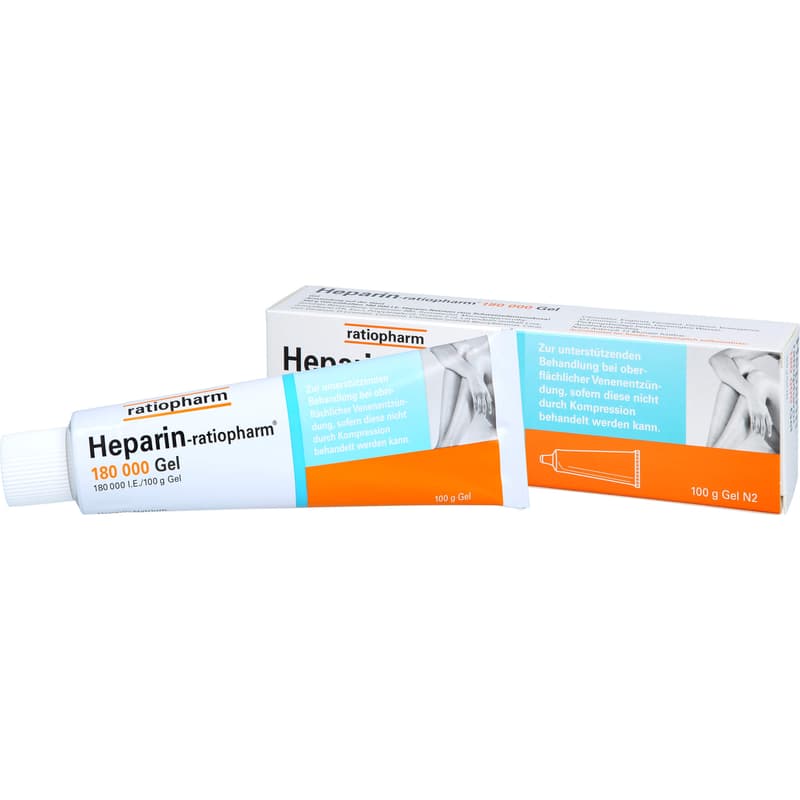
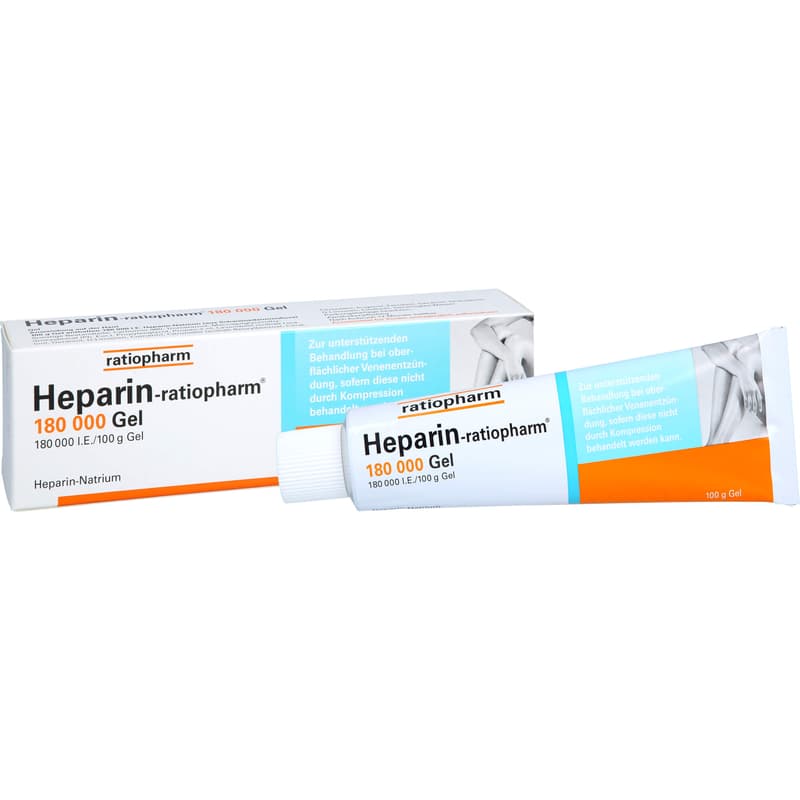
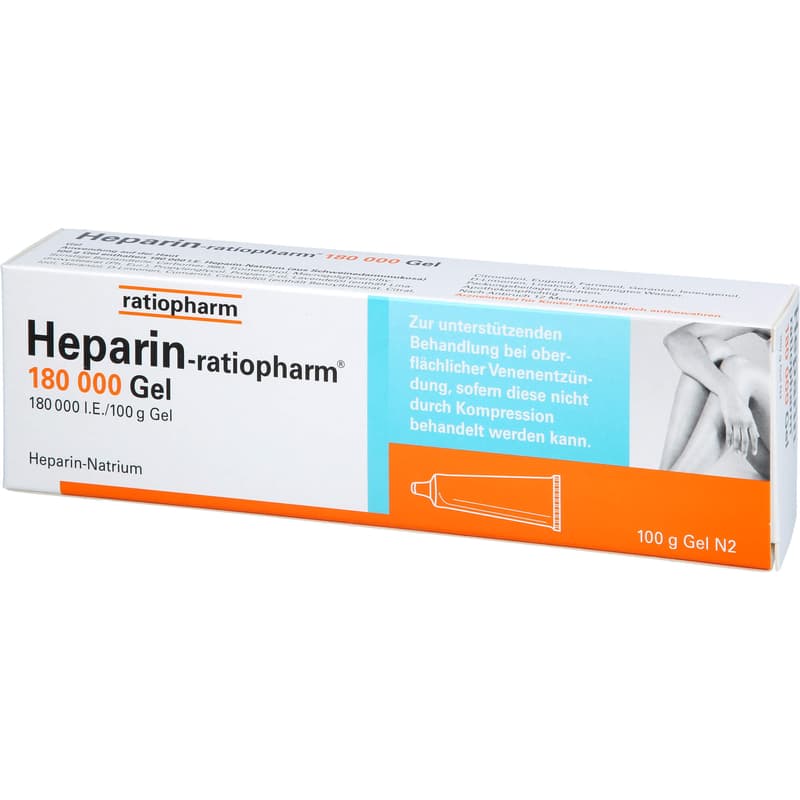
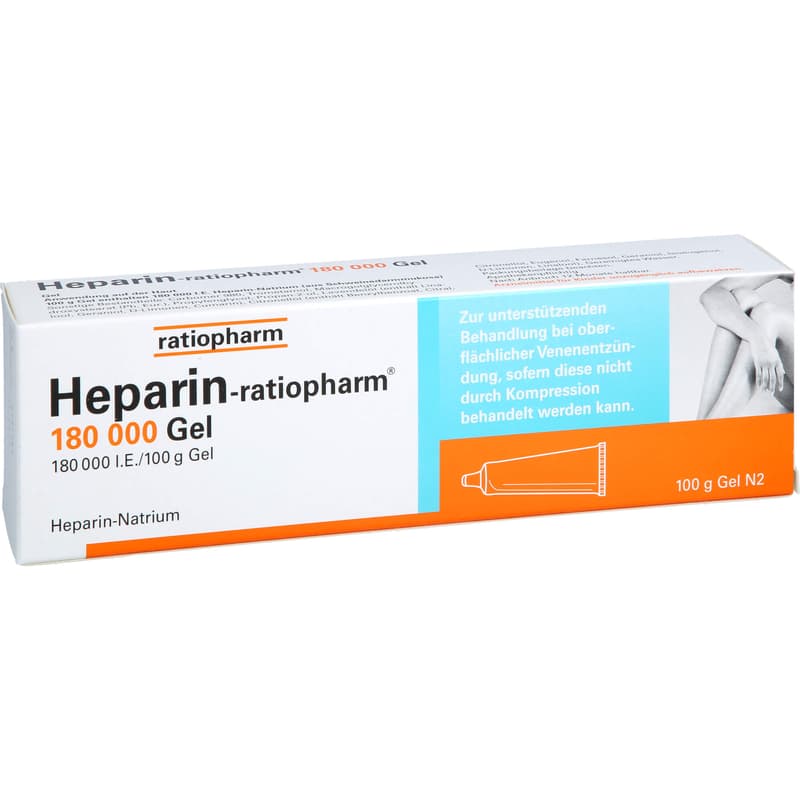
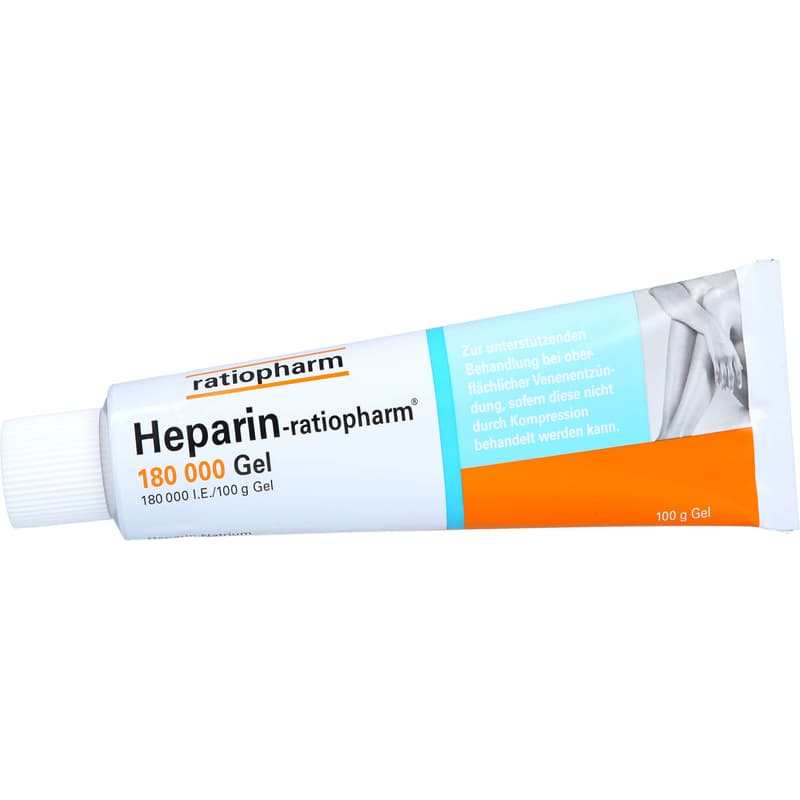
Das HEPARIN-RATIOPHARM 180.000 I.E. Gel ist Ihr zuverlässiger Begleiter bei oberflächlichen Venenentzündungen, wenn eine Kompressionstherapie von außen nicht möglich ist. Mit dem bewährten Wirkstoff Heparin-Natrium unterstützt dieses klare, farblose Gel die Heilung effektiv. Tragen Sie die 100 g einfach zwei- bis dreimal täglich dünn auf die betroffenen Stellen auf, ganz ohne Einmassieren.
Zu Risiken und Nebenwirkungen lesen Sie die Packungsbeilage und fragen Sie Ihre Ärztin, Ihren Arzt oder in Ihrer Apotheke.
Ähnliche Produkte
Weitere Produkte dieser Marke
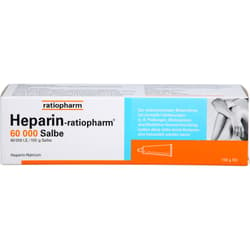
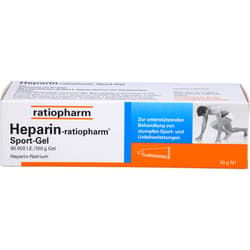
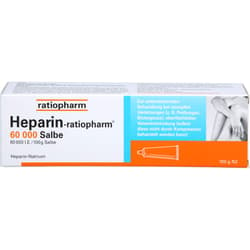
Beschreibung
Wichtige Hinweise (Pflichtangaben)
Heparin-ratiopharm 180.000 Gel. Wirkstoff: Heparin-Natrium. Anwendungsgebiete: zur unterstützenden Behandlung bei oberflächlicher Venenentzündung, sofern diese nicht durch Druck von Außen (Kompression) behandelt werden kann. Warnhinweis: Enthält Propylenglycol und Macrogolglycerolhydroxystearat.Zu Risiken und Nebenwirkungen lesen Sie die Packungsbeilage und fragen Sie Ihre Ärztin, Ihren Arzt oder in Ihrer Apotheke.
GEBRAUCHSINFORMATION: INFORMATION FÜR DEN ANWENDER
Heparin-ratiopharm 180.000 Gel
Wirkstoff: Heparin-Natrium 180.000 I.E./100 g Gel
Lesen Sie die gesamte Packungsbeilage sorgfältig durch, bevor Sie mit der Anwendung dieses Arzneimittels beginnen, denn sie enthält wichtige Informationen. Wenden Sie dieses Arzneimittel immer genau wie in dieser Packungsbeilage beschrieben bzw. genau nach Anweisung Ihres Arztes oder Apothekers an.
- Heben Sie die Packungsbeilage auf. Vielleicht möchten Sie diese später nochmals lesen.
- Fragen Sie Ihren Apotheker, wenn Sie weitere Informationen oder einen Rat benötigen.
- Wenn Sie Nebenwirkungen bemerken, wenden Sie sich an Ihren Arzt oder Apotheker. Dies gilt auch für Nebenwirkungen, die nicht in dieser Packungsbeilage angegeben sind. Siehe Abschnitt 4.
- Wenn Sie sich nach 10 Tagen nicht besser oder gar schlechter fühlen, wenden Sie sich an Ihren Arzt.
Was in dieser Packungsbeilage steht
- WAS IST HEPARIN-RATIOPHARM 180.000 GEL UND WOFÜR WIRD ES ANGEWENDET?
- WAS SOLLTEN SIE VOR DER ANWENDUNG VON HEPARIN-RATIOPHARM 180.000 GEL BEACHTEN?
- WIE IST HEPARIN-RATIOPHARM 180.000 GEL ANZUWENDEN?
- WELCHE NEBENWIRKUNGEN SIND MÖGLICH?
- WIE IST HEPARIN-RATIOPHARM 180.000 GEL AUFZUBEWAHREN?
- INHALT DER PACKUNG UND WEITERE INFORMATIONEN
Heparin-ratiopharm 180.000 Gel ist ein Arzneimittel mit einer hemmenden Wirkung auf die Blutgerinnung. Heparin-ratiopharm 180.000 Gel wird angewendet zur unterstützenden Behandlung bei oberflächlicher Venenentzündung, sofern diese nicht durch Druck von Außen (Kompression) behandelt werden kann. Vorrangige Behandlungsmaßnahme bei der oberflächlichen Venenentzündung der unteren Extremitäten ist die Kompressionsbehandlung.
2. WAS SOLLTEN SIE VOR DER ANWENDUNG VON HEPARIN-RATIOPHARM 180.000 GEL BEACHTEN?
Heparin-ratiopharm 180.000 Gel darf nicht angewendet werden:
- wenn Sie allergisch gegen Heparin oder einen der in Abschnitt 6. genannten sonstigen Bestandteile dieses Arzneimittels sind.
- wenn bei Ihnen ein akuter oder aus der Vorgeschichte bekannter allergischer Abfall der Zahl der Blutplättchen (Thrombozytopenie Typ II) durch Heparin vorliegt.
Warnhinweise und Vorsichtsmaßnahmen
Bitte sprechen Sie mit Ihrem Arzt oder Apotheker, bevor Sie Heparin-ratiopharm 180.000 Gel anwenden. Heparin-ratiopharm 180.000 Gel soll aufgrund seines Alkoholgehaltes nicht auf Schleimhäute, offene oder entzündete Hautstellen (z.B. Sonnenbrand) aufgetragen werden oder mit den Augen in Berührung kommen, da ein brennendes Gefühl entstehen kann. Bei örtlich angewendetem Heparin ist eine Aufnahme von Heparin durch die gesunde Haut beschrieben. Daher muss beim Auftreten von neuen Symptomen, die auf eine Thrombose oder Lungenembolie hindeuten können, wie:- Schwellung und Wärmegefühl im betroffenen Körperteil,
- gerötete und gespannte Haut, eventuell Blaufärbung,
- Spannungsgefühl und Schmerzen in Fuß, Wade und Kniekehle (Linderung bei Hochlagerung),
- plötzliche Luftnot, Brustschmerzen und Schwäche/Kollaps,
Anwendung von Heparin-ratiopharm 180.
000 Gel zusammen mit anderen Arzneimitteln
Informieren Sie Ihren Arzt oder Apotheker, wenn Sie andere Arzneimittel einnehmen/anwenden, kürzlich andere Arzneimittel eingenommen/angewendet haben oder beabsichtigen andere Arzneimittel einzunehmen/anzuwenden. Wechselwirkungen mit anderen Arzneimitteln sind bei örtlicher (lokaler) Anwendung Heparin-haltiger Arzneimittel auf der Haut nicht bekannt.Schwangerschaft und Stillzeit
Wenn Sie schwanger sind oder stillen, oder wenn Sie vermuten, schwanger zu sein oder beabsichtigen, schwanger zu werden, fragen Sie vor der Anwendung dieses Arzneimittels Ihren Arzt oder Apotheker um Rat. Bisherige Erfahrungen mit der lokalen (örtlichen) Anwendung von Heparin auf der Haut bei Schwangeren und Stillenden haben keine Anhaltspunkte für schädigende Wirkungen ergeben. Heparin passiert nicht die Plazenta und kann somit nicht in das Blut des ungeborenen Kindes übergehen. Heparin tritt auch nicht in die Muttermilch über. Bei sehr hohen Dosen von mehr als 180.000 I.E. Heparin/100 g kann es zu erhöhter Blutungsneigung kommen. Unter der Geburt ist eine bestimmte Form der Anästhesie (epidurale Anästhesie) verboten, wenn Schwangere mit Heparin oder anderen Arzneimitteln, die die Blutgerinnung hemmen, behandelt werden.Verkehrstüchtigkeit und Fähigkeit zum Bedienen von Maschinen
Es sind keine Auswirkungen auf die Verkehrstüchtigkeit und das Bedienen von Maschinen bekannt.Heparin-ratiopharm 180.
000 Gel enthält Propylenglycol und Macrogolglycerolhydroxystearat
Propylenglycol kann Hautreizungen hervorrufen. Macrogolglycerolhydroxystearat kann Hautreizungen hervorrufen.3. WIE IST HEPARIN-RATIOPHARM 180.000 GEL ANZUWENDEN?
Wenden Sie dieses Arzneimittel immer genau wie in dieser Packungsbeilage beschrieben bzw. genau nach der mit Ihrem Arzt oder Apotheker getroffenen Absprache an. Fragen Sie bei Ihrem Arzt oder Apotheker nach, wenn Sie sich nicht sicher sind. Falls vom Arzt nicht anders verordnet, beträgt die empfohlene Dosis: Tragen Sie Heparin-ratiopharm 180.000 Gel 2- bis 3-mal täglich gleichmäßig auf das Erkrankungsgebiet auf. Tragen Sie das Gel dünn auf die zu behandelnde Körperpartie auf und verteilen es gleichmäßig. Hinweis: Bei Venenentzündungen Heparin-ratiopharm 180.000 Gel nicht einmassieren.
Art der Anwendung
Anwendung auf der Haut.Dauer der Anwendung
Die Anwendung von Heparin-ratiopharm 180.000 Gel sollte so lange fortgeführt werden, bis die Beschwerden abgeklungen sind. In der Regel ist bei oberflächlicher Venenentzündung eine Zeit von 1 - 2 Wochen ausreichend. Sollten sich nach einer 14-tägigen regelmäßigen Anwendung von Heparin-ratiopharm 180.000 Gel die Beschwerden nicht gebessert haben oder sollten nach Abschluss der Behandlung erneut Beschwerden auftreten, suchen Sie bitte Ihren Arzt auf.Wenn Sie weitere Fragen zur Anwendung dieses Arzneimittels haben, wenden Sie sich an Ihren Arzt oder Apotheker.
4. WELCHE NEBENWIRKUNGEN SIND MÖGLICH?
Wie alle Arzneimittel kann auch dieses Arzneimittel Nebenwirkungen haben, die aber nicht bei jedem auftreten müssen.
| Bei der Bewertung von Nebenwirkungen werden folgende Häufigkeitsangaben zu Grunde gelegt: | |
| Sehr häufig: | mehr als 1 Behandelter von 10 |
| Häufig: | 1 bis 10 Behandelte von 100 |
| Gelegentlich: | 1 bis 10 Behandelte von 1 000 |
| Selten: | 1 bis 10 Behandelte von 10 000 |
| Sehr selten: | weniger als 1 Behandelter von 10 000 |
| Nicht bekannt: | Häufigkeit auf Grundlage der verfügbaren Daten nicht abschätzbar. |
Haut
Allergische Reaktionen auf Heparin wurden bisher nur sehr selten beobachtet. In Einzelfällen können bei der Anwendung von Heparin-ratiopharm 180.000 Gel Überempfindlichkeitsreaktionen, wie Rötung der Haut und Juckreiz auftreten, die nach Absetzen des Präparates in der Regel rasch abklingen. In einem Einzelfall entwickelte sich bei einer als Grunderkrankung vorliegenden Polycythaemia vera (eine mit verstärkter Blutzellbildung einhergehende Erkrankung) nach lokaler Anwendung eines Heparin-Gels ein fleckiger, papulöser Hautausschlag mit Einblutungen.Blut und blutbildendes System
Bei der Anwendung von Heparin-ratiopharm 180.000 Gel kann eine vorliegende Blutungsneigung zunehmen; vorhandene Blutergüsse (Hämatome) können sich verstärken. Nicht bekannt: Ein Abfall der Zahl der Blutplättchen (Heparin-induzierte Thrombozytopenie Typ II) durch Heparin (Verminderung der Zahl der Blutplättchen < 100.000/µl oder ein schneller Abfall der Blutplättchenzahl auf < 50 % des Ausgangswertes, mit arteriellen und venösen Thrombosen oder Embolien, die tödlich verlaufen können), ist bei Anwendung auf der Haut bisher nicht berichtet worden. Da aber die Aufnahme von Heparin durch die gesunde Haut beschrieben wurde, kann dieses Risiko nicht mit Sicherheit ausgeschlossen werden. Eine erhöhte Aufmerksamkeit ist daher angezeigt (siehe 2. "Was sollten Sie vor der Anwendung von Heparin-ratiopharm 180.000 Gel beachten?"). Aus der Anwendung von Heparin, das als Spritze verabreicht wird, ist bekannt, dass bei Patienten ohne vorbestehende Überempfindlichkeit gegen Heparin der Abfall der Zahl der Blutplättchen in der Regel 6 - 14 Tage nach Behandlungsbeginn eintritt. Bei Patienten mit Überempfindlichkeit gegen Heparin tritt dieser Abfall unter Umständen innerhalb von Stunden auf.Gegenmaßnahmen
Sollte eine der genannten möglichen Nebenwirkungen auftreten, unterbrechen Sie die Behandlung und suchen Sie Ihren Arzt auf.Meldung von Nebenwirkungen
Wenn Sie Nebenwirkungen bemerken, wenden Sie sich an Ihren Arzt oder Apotheker. Dies gilt auch für Nebenwirkungen, die nicht in dieser Packungsbeilage angegeben sind. Sie können Nebenwirkungen auch direkt dem Bundesinstitut für Arzneimittel und Medizinprodukte, Abt. Pharmakovigilanz, Kurt-Georg-Kiesinger-Allee 3, D-53175 Bonn, Website: www.bfarm.de anzeigen. Indem Sie Nebenwirkungen melden, können Sie dazu beitragen, dass mehr Informationen über die Sicherheit dieses Arzneimittels zur Verfügung gestellt werden.5. WIE IST HEPARIN-RATIOPHARM 180.000 GEL AUFZUBEWAHREN?
Bewahren Sie dieses Arzneimittel für Kinder unzugänglich auf. Sie dürfen dieses Arzneimittel nach dem auf dem Umkarton und der Tube nach "Verwendbar bis" angegebenen Verfalldatum nicht mehr verwenden. Das Verfalldatum bezieht sich auf den letzten Tag des angegebenen Monats. Für dieses Arzneimittel sind keine besonderen Lagerungsbedingungen erforderlich. Haltbarkeit nach Anbruch der Tube: 1 Jahr.
6. INHALT DER PACKUNG UND WEITERE INFORMATIONEN
Was Heparin-ratiopharm 180.
000 Gel enthält
Der Wirkstoff ist: Heparin-Natrium. 100 g Gel enthalten 180.000 I.E. Heparin-Natrium (aus Schweinedarmmukosa). Die sonstigen Bestandteile sind: Carbomer 980, Trometamol, Macrogolglycerolhydroxystearat (Ph.Eur.), Propylenglycol, Propan-2-ol (Ph.Eur.), Lavendelöl, Citronellöl, Gereinigtes Wasser.Wie Heparin-ratiopharm 180.
000 Gel aussieht und Inhalt der Packung
Klares bis leicht trübes, farbloses bis leicht gelbliches Gel. Heparin-ratiopharm 180.000 Gel ist in Packungen mit 100 g und 150 g Gel erhältlich.Pharmazeutischer Unternehmer
ratiopharm GmbHGraf-Arco-Str. 3
89079 Ulm
Hersteller
Merckle GmbHLudwig-Merckle-Str. 3
89143 Blaubeuren
Diese Gebrauchsinformation wurde zuletzt überarbeitet im Dezember 2015.
Quelle: Angaben der Packungsbeilage
Stand: 02/2018
Wirkstoff: Heparin-Natrium. Anwendungsgebiete: zur unterstützenden Behandlung bei oberflächlicher Venenentzündung, sofern diese nicht durch Druck von Außen (Kompression) behandelt werden kann. Warnhinweis: Enthält Propylenglycol und Macrogolglycerolhydroxystearat.
Info-Broschüre
Info-Broschüre herunterladenZusammensetzung & Allergene
Zusammensetzung
Wirkstoff: Heparin-Natrium