
Product from:
Preussen
3891€
Only a few items left
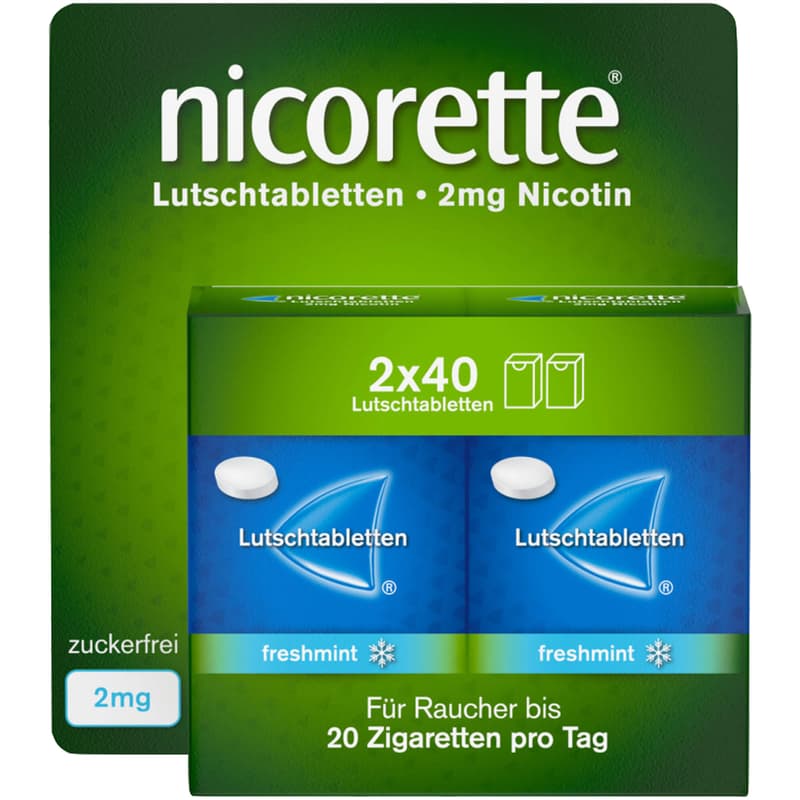
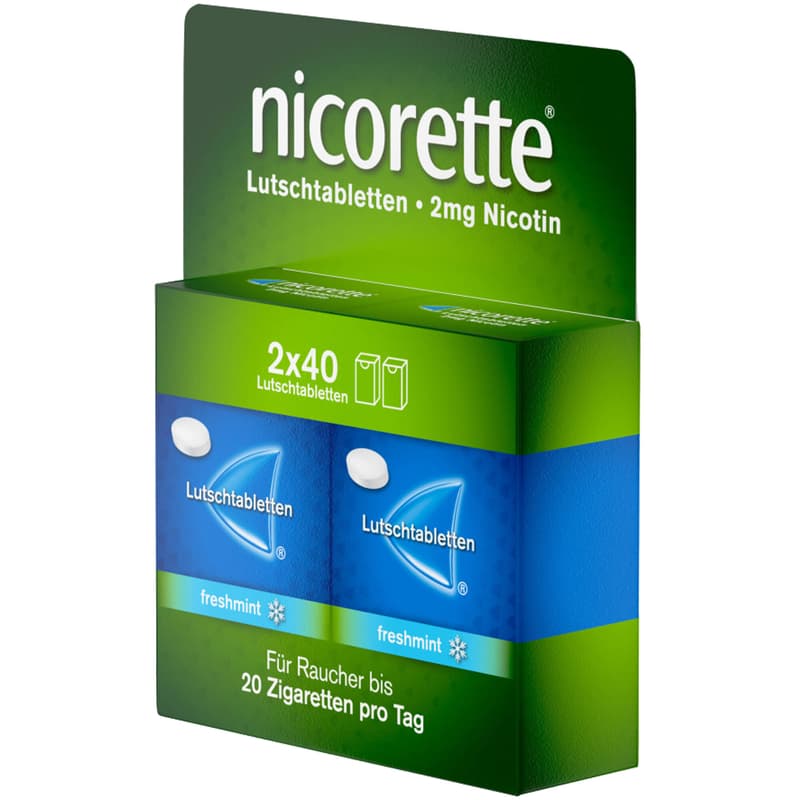
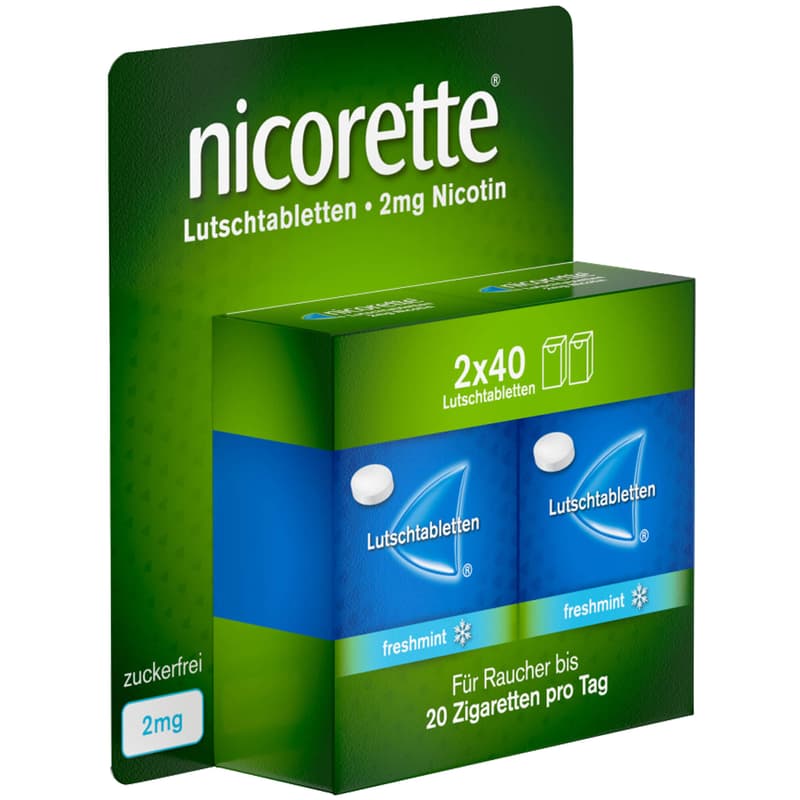
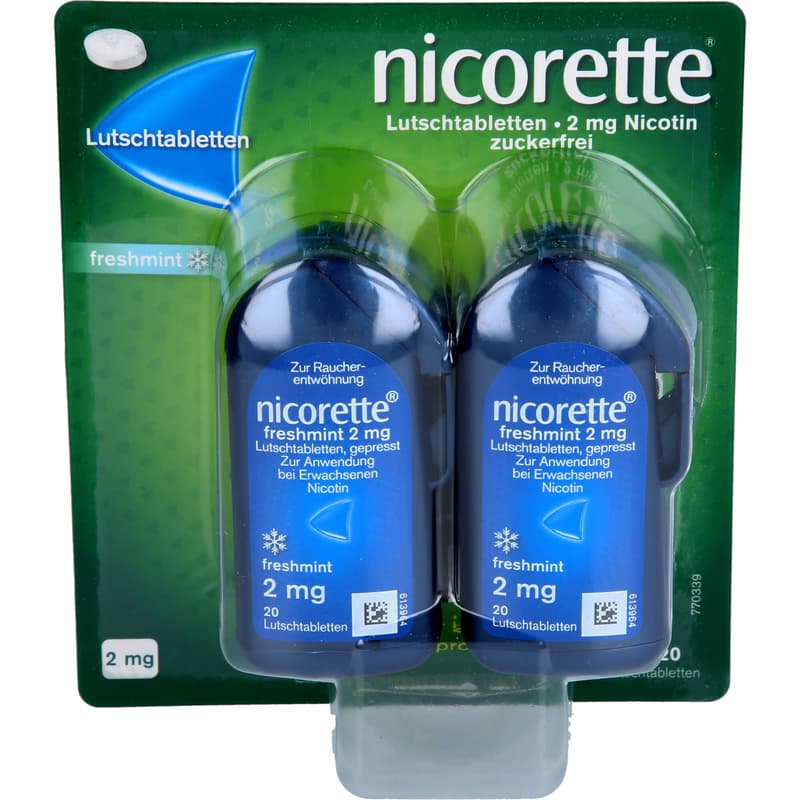
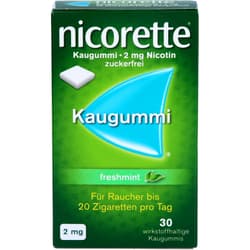
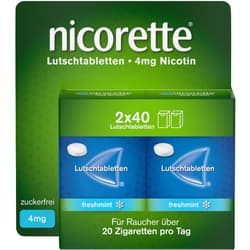
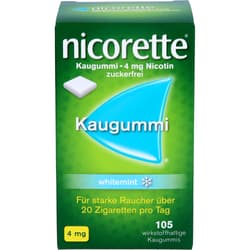
These sugar-free freshmint lozenges from NICORETTE help you on your journey to quit smoking. Each pressed lozenge contains 2 mg of nicotine to relieve cravings and withdrawal symptoms, making them ideal for smokers with lower tobacco dependency. They dissolve easily in the mouth with a refreshing mint flavor. This pack contains 80 pieces of German origin.
Zu Risiken und Nebenwirkungen lesen Sie die Packungsbeilage und fragen Sie Ihre Ärztin, Ihren Arzt oder in Ihrer Apotheke.



Description
You're reading an Auto-translation.
Important notes (mandatory information)
Nicorette freshmint 2 mg lozenges, compressed. Active ingredient: Nicotine (as nicotine resinate). Areas of application: for the relief of withdrawal symptoms and reduction of cravings for nicotine.For risks and side effects, read the package leaflet and consult your doctor or pharmacist.
PACKAGE LEAFLET: INFORMATION FOR THE USER
Nicorette freshmint 2 mg
Lozenges, compressed
For use in adults
Nicotine
Read the entire package leaflet carefully before you start using this medicine, because it contains important information. Always use this medicine exactly as described in this package leaflet or exactly as your doctor or pharmacist has told you.
- Keep the package leaflet. You may want to read it again later.
- Ask your pharmacist if you need more information or advice.
- If you get any side effects, talk to your doctor or pharmacist. This also applies to side effects not listed in this package leaflet. See section 4.
- You are advised to talk to a doctor or pharmacist if you are still having difficulty quitting smoking without the support of Nicorette lozenges after 9 months.
This package leaflet contains
- WHAT ARE NICORETTE LOZENGES AND WHAT ARE THEY USED FOR?
- WHAT SHOULD YOU CONSIDER BEFORE USING NICORETTE LOZENGES?
- HOW ARE NICORETTE LOZENGES TO BE USED?
- WHAT SIDE EFFECTS ARE POSSIBLE?
- HOW SHOULD NICORETTE LOZENGES BE STORED?
- CONTENTS OF THE PACK AND FURTHER INFORMATION
This medicine is used to relieve withdrawal symptoms and reduce cravings for nicotine. Both can occur when you try to quit smoking altogether or initially try to reduce the number of cigarettes you smoke. The treatment is intended for adult smokers aged 18 and over. Nicorette 2 mg lozenges are suitable for smokers with a low nicotine dependence, e.g. smokers who smoke their first cigarette more than 30 minutes after waking up or smoke less than 20 cigarettes per day. This medicine can help you quit smoking immediately or smoke less before quitting altogether. If you think you can quit smoking right away, you should do so. However, if you think this is too big a step, you may want to start by reducing the number of cigarettes you smoke before quitting altogether. For more details, see section 3 "How to use Nicorette lozenges?". Nicorette lozenges relieve nicotine withdrawal symptoms including cravings, i.e. the discomfort that occurs when you stop smoking. When your body suddenly stops receiving nicotine from tobacco, you may experience unpleasant sensations known as withdrawal symptoms. These include irritability, anger, depressed mood, anxiety, restlessness, difficulty concentrating, increased appetite or weight gain, cravings, waking up at night or sleep disturbances. The nicotine in Nicorette lozenges can help relieve or completely prevent these unpleasant sensations and cravings. To increase your chances of quitting smoking, you should seek additional advice and support.
2. WHAT SHOULD YOU CONSIDER BEFORE USING NICORETTE LOZENGES?
Nicorette lozenges must not be used,
- if you are allergic to nicotine or any of the other ingredients of this medicine listed in section 6.
- if you are under 12 years old.
- if you have never smoked.
Warnings and precautions
Please talk to your doctor if you have any of the following conditions.You may be able to use Nicorette lozenges, but you should talk to your doctor first,
- if you have recently had a heart attack or stroke.
- if you have chest pain (unstable angina pectoris) or angina pectoris at rest.
- if you have a heart condition that affects your heart rate or heart rhythm (arrhythmia).
- if you have high blood pressure that is not adequately controlled by medication.
- if you have ever had allergic reactions with swelling of the lips, face and throat (angioedema) or itchy rash (urticaria). Using nicotine replacement therapy can sometimes trigger such reactions.
- if you have severe or moderate liver disease
- if you have severe kidney disease
- if you have diabetes
- if your thyroid gland is overactive
- if you have a tumor of the adrenal gland (pheochromocytoma)
- if you have a stomach or duodenal ulcer
- if you have inflammation of the esophagus (esophagitis)
Children
Nicotine doses that are tolerated by adult smokers can cause severe poisoning in children, which can be fatal. Therefore, Nicorette lozenges must be kept out of the reach of children at all times.Use of Nicorette lozenges
together with other medicines Tell your doctor or pharmacist if you are taking/using, have recently taken/used or plan to take/use any other medicines.This is especially important if you are taking medicines that contain any of the following active ingredients:
- Theophylline for the treatment of asthma
- Tacrine for Alzheimer's disease
- Clozapine for schizophrenia
- Ropinirole for the treatment of Parkinson's disease
Use of Nicorette lozenges with food and drink
You must not eat or drink while using the lozenges.Pregnancy and breast-feeding
It is very important to stop smoking during pregnancy, as smoking can lead to low growth of your baby. It can also lead to premature birth or stillbirth. It is best if you can stop smoking without using nicotine-containing medicines. If you cannot do this, you should only use Nicorette lozenges after consulting the healthcare professional who is monitoring your pregnancy, with your family doctor or with a doctor at a center that specializes in supporting people who want to quit smoking. Nicorette lozenges should be avoided during breastfeeding as nicotine passes into breast milk and can affect your baby. If your doctor has recommended that you use Nicorette lozenges, you should use the lozenge immediately after breastfeeding and not in the last two hours before breastfeeding. Smoking increases the risk of infertility in women and men. It is not known what effect nicotine has on fertility.Driving and using machines
No effects on driving and using machines have been observed.3. HOW ARE NICORETTE LOZENGES TO BE USED?
Always use this medicine exactly as described in this package leaflet or exactly as your doctor or pharmacist has told you. Check with your doctor or pharmacist if you are not sure.
The instructions for using Nicorette lozenges depend on whether you
(a) quit smoking immediately(b) gradually quit smoking Adults aged 18 and over
(a) Smoking cessation with immediate cessation of smoking
The aim is to quit smoking immediately and use the lozenge to reduce cravings.- Start by using 8 to 12 lozenges per day. Whenever you feel the urge to smoke, you should put a lozenge in your mouth and let it dissolve.
- Continue using the lozenges for up to 6 weeks and then gradually reduce the number of lozenges you use per day.
- Once you only need 1 or 2 lozenges per day, you should stop using them altogether. You may still experience a strong craving for a cigarette from time to time. If this happens, you can use a lozenge again.
(b) Smoking reduction followed by smoking cessation
The aim is to gradually replace some of your cigarettes with a lozenge. Once this has been achieved, you can then give up your cigarettes altogether with the help of the lozenges. Finally, you also stop using the lozenges. If you experience a strong craving for a cigarette, use a Nicorette lozenge instead of a cigarette to satisfy your craving. Reduce the number of cigarettes you smoke per day as much as possible. If you have not been able to reduce the number of cigarettes you smoke per day after 6 weeks, talk to your doctor or pharmacist. Once you feel able to do so, you should stop smoking altogether. Follow the instructions for immediate smoking cessation above. Do this as soon as possible. If your attempt to quit smoking completely has not been successful within 6 months of starting to use this medicine, talk to your doctor or pharmacist.Do not exceed the stated dose. Follow the instructions carefully and do not use more than 15 lozenges in one day (24 hours).
Children and adolescents
Adolescents aged 12 to 17: Nicorette lozenges may only be used on a doctor's prescription.Children under 12 years of age: Children under 12 years of age must not use this medicine.
This medicine is for use in the oral cavity. It is placed in the mouth, where it dissolves and releases nicotine, which is absorbed by the body through the oral mucosa. Place a lozenge in your mouth and move it from one side of the oral cavity to the other from time to time until it has completely dissolved. This usually takes less than 20 minutes. You must not chew or swallow the lozenge whole. You must not eat or drink while you have a lozenge in your mouth. Do not use more than 15 lozenges per day. If you feel that you need the medicine for more than 9 months in total, you should seek advice from a doctor or pharmacist.
If you are tempted to start smoking again Talk to your doctor or pharmacist if you:
- are concerned that you may start smoking again.
- have difficulty giving up using the lozenges altogether.
If you have used more Nicorette lozenges than you should
Nicotine overdose can occur if you smoke and use Nicorette lozenges at the same time. If a child has used Nicorette lozenges or if you have used more Nicorette lozenges than you should, contact your doctor immediately or go to the nearest hospital. Nicotine doses that are tolerated by adult smokers can cause severe poisoning in children, which can be fatal. Signs of overdose include feeling sick (nausea), vomiting, increased salivation, abdominal pain, diarrhea, sweating, headache, dizziness, hearing disturbances and severe weakness. At high doses, this can lead to a drop in blood pressure, weak and irregular pulse, difficulty breathing, extreme tiredness, circulatory collapse and generalized seizures.If you have any further questions on the use of this medicine, ask your doctor or pharmacist.
4. WHAT SIDE EFFECTS ARE POSSIBLE?
Like all medicines, this medicine can cause side effects, although not everybody gets them.
Effects associated with smoking cessation (nicotine withdrawal)
Some of the side effects you may experience when you quit smoking may be withdrawal symptoms due to the decrease in nicotine intake.These side effects include:
- Irritability, aggression, impatience or frustration
- Anxiety, restlessness or difficulty concentrating
- Waking up at night or sleep disturbances
- Increased appetite or weight gain
- Depressed mood
- Strong cravings
- Slow heart rate
- Bleeding gums or mouth ulcers
- Dizziness or light-headedness
- Cough, sore throat, blocked or runny nose
- Constipation
(Not known: frequency cannot be estimated from the available data):
- Hives (a skin condition characterized by itchy, raised or red patches)
- Swelling of the face, tongue or throat
- Difficulty breathing
- Difficulty swallowing
Other possible side effects
Very common (may affect more than 1 in 10 people):- Cough
- Headache
- Hiccups
- Nausea (feeling sick)
- Irritation of the throat, mouth or tongue
- Local effects such as burning, inflammation of the oral mucosa, taste disturbances
- Feeling cold, feeling hot, tingling of the skin
- Dry mouth or increased salivation
- Digestive problems
- Pain or discomfort in the abdomen
- Vomiting, flatulence, diarrhea
- Heartburn
- Exhaustion
- Hypersensitivity (allergy)
- Effects on the nose such as congestion and sneezing
- Wheezing (bronchospasm), shortness of breath (dyspnoea), tightness in the throat
- Redness of the skin or excessive sweating
- Oral effects such as tingling in the mouth, inflammation of the tongue, mouth ulcers, peeling of the oral mucosa or voice disturbance, pain in the mouth and throat, belching
- Palpitations, rapid heartbeat, high blood pressure
- Hives and/or itching or redness of the skin
- Abnormal dreams
- Chest discomfort and pain
- Weakness, malaise
- Difficulty swallowing, reduced sensitivity to pain in the mouth
- rapid and irregular heartbeat, which can be treated with appropriate medication
- Gagging
- Blurred vision, increased tear production,
- dry throat, gastrointestinal discomfort, sore lips
Reporting of side effects
If you get any side effects, talk to your doctor or pharmacist. This also applies to side effects not listed in this package leaflet. You can also report side effects directly to the Federal Institute for Drugs and Medical Devices, Dept. of Pharmacovigilance, Kurt-Georg-Kiesinger Allee 3, D-53175 Bonn, website: www.bfarm.de. By reporting side effects, you can help provide more information on the safety of this medicine.5. HOW SHOULD NICORETTE LOZENGES BE STORED?
Keep this medicine out of the reach of children.
- Do not use this medicine after the expiry date which is stated on the container and carton. The expiry date refers to the last day of the month.
- Store in the original container to protect the contents from moisture.
- Do not use the container for other purposes, as it may contain tablet dust residue, which can form a fine film on objects in the container.
- Do not dispose of medicines in wastewater or household waste. Ask your pharmacist how to dispose of the medicine when you stop using it. You help to protect the environment.
What Nicorette lozenges contain
The active substance is nicotine (as nicotine resinate). Each lozenge contains 2 mg of nicotine. The other ingredients are: Tablet core: mannitol (Ph. Eur.), xanthan gum, peppermint flavor (contains gum arabic, peppermint, menthol and eucalyptus flavor), sodium carbonate, sucralose (E955), acesulfame potassium (E950), magnesium stearate (Ph. Eur.) [vegetable] Film coating: hypromellose (E464), peppermint flavor (contains peppermint, menthol and eucalyptus flavor), titanium dioxide (E171), sucralose (E955), hypromellose, microcrystalline cellulose, muscovite, coated with titanium dioxide (E171), acesulfame potassium (E950Information leaflet
Download the information leafletComposition & Allergens
Composition
Wirkstoff: Nicotin (als Nicotinresinat)