

Product from:
Preussen
3997€
Only a few items left
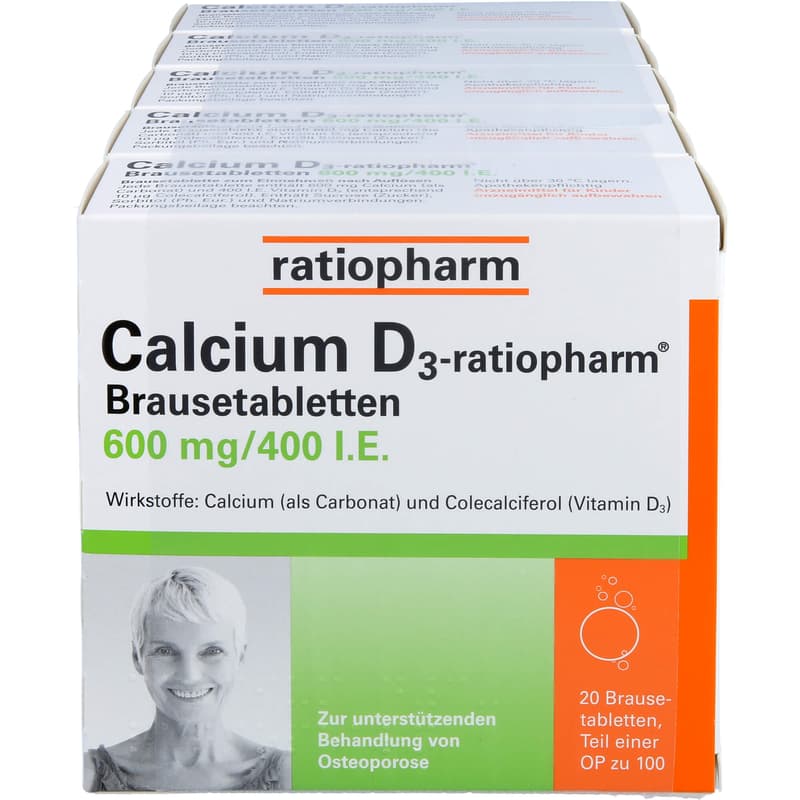
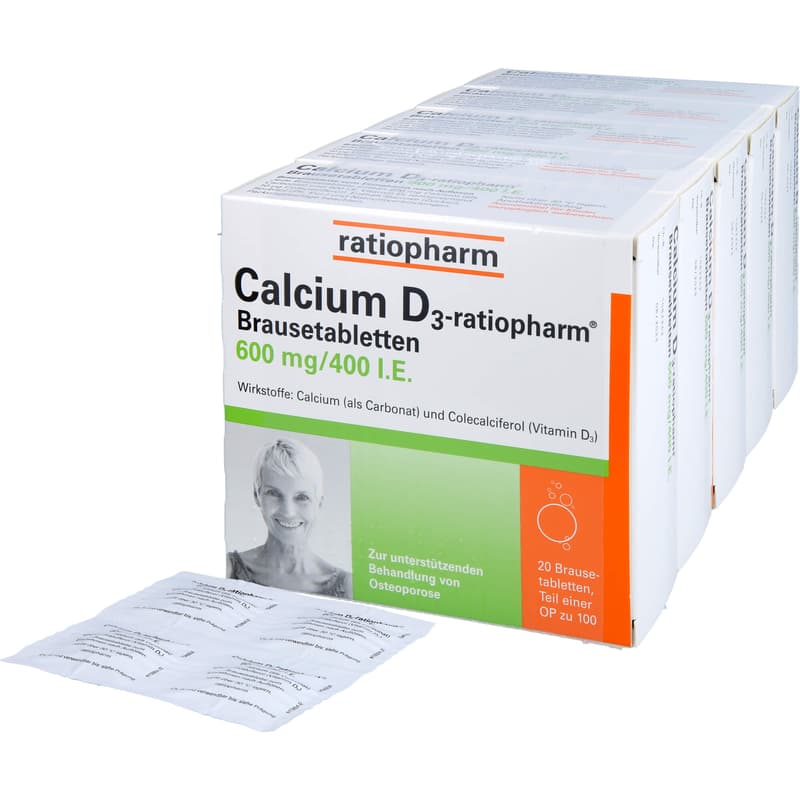
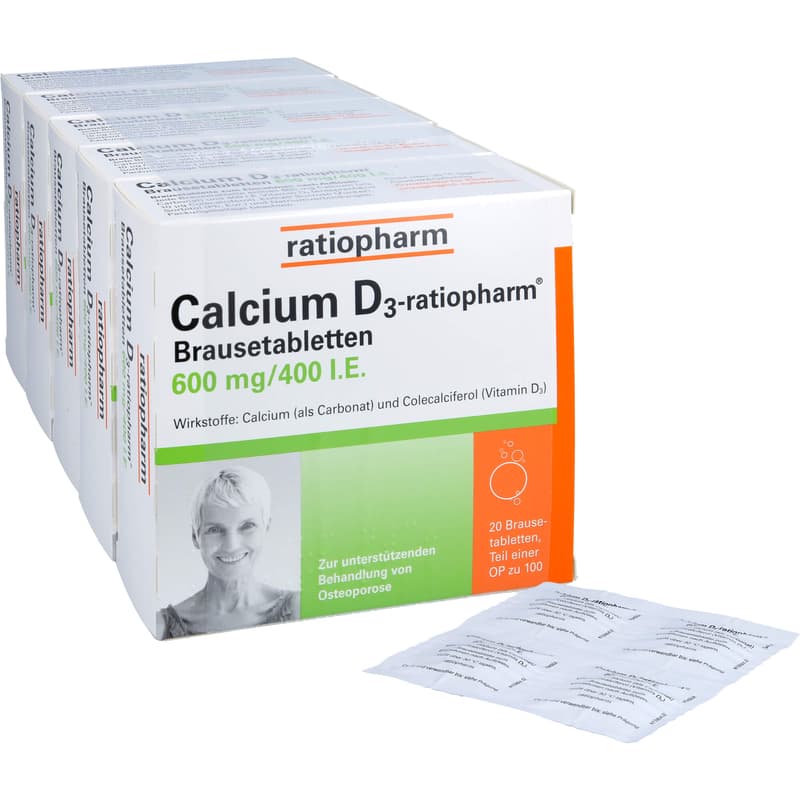
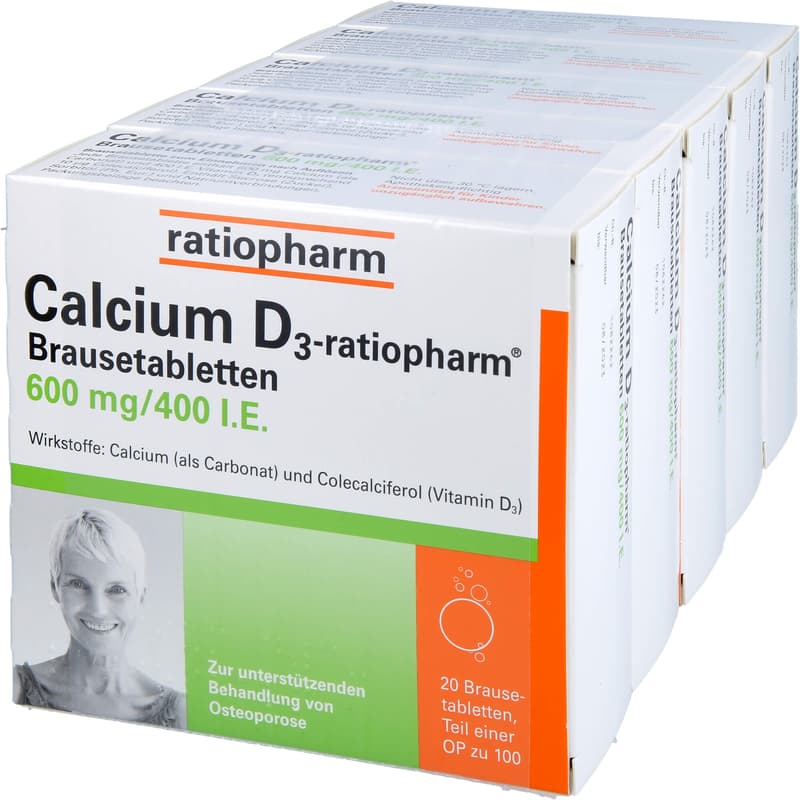
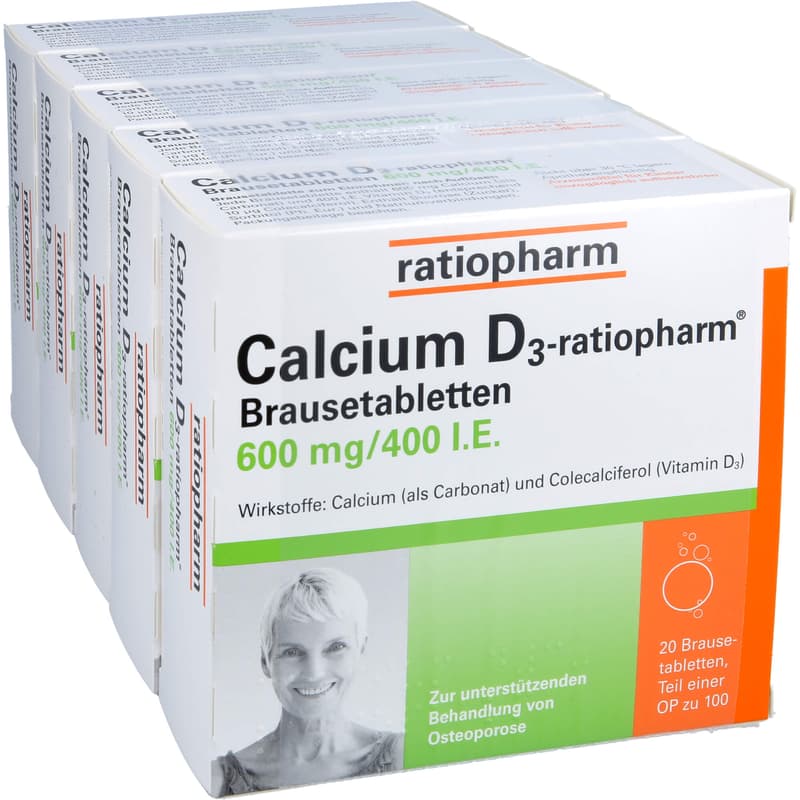
These Calcium D3-ratiopharm effervescent tablets are designed to support you in case of proven calcium and vitamin D3 deficiency, and as a supportive treatment for osteoporosis. Each easy-to-dissolve round white tablet provides 600 mg of calcium and 400 I.U. of vitamin D3. This convenient pack contains 100 tablets to help maintain your daily wellness routine.
Zu Risiken und Nebenwirkungen lesen Sie die Packungsbeilage und fragen Sie Ihre Ärztin, Ihren Arzt oder in Ihrer Apotheke!








Description

You're reading an Auto-translation.
Important notes (mandatory information)
Calcium D3-ratiopharm 600 mg/400 I.U. effervescent tablets. Areas of application: for proven calcium and vitamin D3 deficiency as well as for the supportive treatment of osteoporosis.For risks and side effects, read the package leaflet and consult your doctor or pharmacist!
PACKAGE LEAFLET: INFORMATION FOR THE USER
Calcium D3-ratiopharm 600 mg/400 I.U. effervescent tablets
Active ingredients: calcium (as carbonate) and colecalciferol (vitamin D3)
Read the entire package leaflet carefully before you start using this medicine, because it contains important information. Always use this medicine exactly as described in this package leaflet or exactly as directed by your doctor or pharmacist.
- Keep the package leaflet. You may want to read it again later.
- Ask your pharmacist if you need more information or advice.
- If you experience any side effects, talk to your doctor or pharmacist. This also applies to side effects not listed in this package leaflet. See section 4.
- If you do not feel better or if you feel worse, contact your doctor.
What this package leaflet contains
- WHAT IS CALCIUM D3-RATIOPHARM AND WHAT IS IT USED FOR?
- WHAT SHOULD YOU CONSIDER BEFORE USING CALCIUM D3-RATIOPHARM?
- HOW IS CALCIUM D3-RATIOPHARM USED?
- WHAT SIDE EFFECTS ARE POSSIBLE?
- HOW SHOULD CALCIUM D3-RATIOPHARM BE STORED?
- CONTENTS OF THE PACK AND OTHER INFORMATION
Calcium D3-ratiopharm is a calcium-vitamin D3 preparation. Calcium D3-ratiopharm is used for proven calcium and vitamin D3 deficiency as well as for the supportive treatment of osteoporosis.
2. WHAT SHOULD YOU CONSIDER BEFORE USING CALCIUM D3-RATIOPHARM?
Calcium D3-ratiopharm must not be used:
- if you are allergic to calcium carbonate, colecalciferol (vitamin D3) or any of the other ingredients of this medicine listed in section 6.
- if you suffer from diseases that result in an increased calcium level in the blood (hypercalcemia) or increased calcium excretion in the urine (hypercalciuria).
- if you suffer from kidney stones.
- if you suffer from vitamin D overdose (hypervitaminosis D).
Warnings and precautions
Please talk to your doctor or pharmacist before using Calcium D3-ratiopharm. If you use Calcium D3-ratiopharm for a longer period of time, the calcium level in your blood should be monitored. Kidney function should be monitored by measuring serum creatinine. Monitoring is particularly important in elderly patients and patients who are simultaneously treated with medicines to promote the function of the heart muscle (cardiac glycosides) or diuretics (diuretics) (see "Using Calcium D3-ratiopharm with other medicines"). This also applies to patients with a pronounced tendency to form stones. If increased calcium concentrations in the blood or signs of impaired kidney function occur, the dose should be reduced or treatment discontinued. If you suffer from impaired kidney function, vitamin D should be used with caution and under monitoring of calcium and phosphate levels. The risk of soft tissue calcification must be taken into account. Colecalciferol is not metabolised by patients with severe renal impairment. Therefore, these patients should receive other vitamin D preparations (see "Calcium D3-ratiopharm must not be used"). Calcium D3-ratiopharm should only be prescribed with caution to patients suffering from sarcoidosis (Boeck's disease) due to the risk of increased conversion of vitamin D into its active form. The calcium level in serum and urine should be monitored in these patients. Calcium D3-ratiopharm should only be taken with caution by patients suffering from osteoporosis due to prolonged immobilisation of limbs (immobilisation osteoporosis), as they have an increased risk of developing increased calcium concentrations in the blood. If other vitamin D preparations are used at the same time, the dose of 400 I.U. vitamin D per tablet administered with Calcium D3-ratiopharm should be taken into account. Additional doses of calcium or vitamin D should only be taken under close medical supervision. In these cases, regular monitoring of calcium levels in serum and urine is required. Before taking Calcium D3-ratiopharm, the calcium and alkali intake from other sources (e.g. food, fortified foods or other medicines) should be considered. If high doses of calcium are given together with alkaline agents (such as carbonates), this can lead to milk-alkali syndrome (Burnett syndrome). Milk-alkali syndrome is a calcium metabolism disorder with an increase in blood calcium levels. It can be triggered by the intake of very large amounts of milk and/or calcium carbonate from other sources or by excessive use of antacids (medicines for stomach hyperacidity). This can lead to side effects such as an increase in blood calcium levels (hypercalcemia), metabolic alkalosis (increased blood pH due to metabolism), kidney failure and soft tissue calcification (see section 4). Therefore, regular medical monitoring of calcium levels in the blood is necessary.Children
This medicine is not intended for use in children.Using Calcium D3-ratiopharm with other medicines
Tell your doctor or pharmacist if you are taking/using, have recently taken/used or intend to take/use any other medicines. If diuretics of the thiazide type are used at the same time, there is an increased risk of increased calcium concentrations in the blood, as they reduce the urinary excretion of calcium. In this case, the serum calcium level should be checked regularly. The simultaneous use of systemic corticosteroids may necessitate an increased dose of Calcium D3-ratiopharm, as corticosteroids reduce the absorption of calcium in the intestine. Concomitant treatment with ion exchange resins such as colestyramine (a medicine used, among other things, to lower blood lipids) or laxatives such as paraffin oil can reduce the absorption of vitamin D from the gastrointestinal tract. The absorption and thus also the effectiveness of orally taken antibiotics (tetracyclines) can be reduced by the simultaneous intake of calcium carbonate. For this reason, tetracycline-containing medicines should be taken at least 2 hours before or 4 - 6 hours after taking calcium. In the case of concomitant treatment with medicines to promote the function of the heart muscle (cardiac glycosides), their toxicity can be increased by an increase in the calcium concentration in the blood. For this reason, such patients must be monitored with regard to electrocardiogram (ECG) and serum calcium levels. In the case of concomitant treatment with bisphosphonate or sodium fluoride preparations, these should be taken at least 3 hours before Calcium D3-ratiopharm due to the risk of impaired absorption from the gastrointestinal tract.Using Calcium D3-ratiopharm with food and drink
Oxalic acid (contained in spinach or rhubarb) and phytic acid (contained in wholemeal products) can reduce calcium absorption by forming insoluble compounds with calcium ions. Therefore, you should not take calcium-containing medicines for 2 hours after consuming foods with a high content of oxalic or phytic acid.Pregnancy and
breastfeeding
If you are pregnant or breastfeeding, or if you suspect you may be pregnant or are planning to become pregnant, ask your doctor or pharmacist for advice before using this medicine.Pregnancy
Calcium D3-ratiopharm can be used during pregnancy in case of calcium and vitamin D deficiency. However, the daily intake should not exceed 1500 mg calcium and 600 I.U. vitamin D. Therefore, only 1 effervescent tablet of Calcium D3-ratiopharm should be used daily during pregnancy. Overdoses of calcium and vitamin D must be avoided in pregnant women, as persistently elevated calcium concentrations in the blood have been associated with harmful effects on the developing foetus. There is no evidence that vitamin D has a harmful effect on the foetus in humans at the usual treatment doses.Breastfeeding
Calcium D3-ratiopharm can be used during breastfeeding. Calcium and vitamin D pass into breast milk. This should be taken into account if the child receives additional doses of vitamin D.Driving and using machines
There are no data on the influence of this medicine on driving ability. However, an influence is unlikely.Calcium D3-ratiopharm contains sucrose, sorbitol and sodium
This medicine contains sucrose (sugar) and sorbitol. Therefore, please only use Calcium D3-ratiopharm after consulting your doctor if you are known to suffer from an intolerance to certain sugars. One effervescent tablet contains 2.26 mmol (equivalent to 52 mg) sodium. If you are on a low-salt diet, you should take this into account.3. HOW IS CALCIUM D3-RATIOPHARM USED?
Always use this medicine exactly as described in this package leaflet or exactly as agreed with your doctor or pharmacist. Check with your doctor or pharmacist if you are not sure. Unless otherwise prescribed by your doctor, the recommended dose is 1 effervescent tablet twice a day (equivalent to 1200 mg calcium and 800 I.U. vitamin D3) for adults, including the elderly.
Dosage in case of liver dysfunction
No dose adjustment is required.Dosage in case of renal dysfunction
Calcium D3-ratiopharm must not be taken by patients with severe renal impairment.Method of application
The effervescent tablet is dissolved in 1 glass of water and drunk immediately.Duration of use
The duration of use is determined by the doctor. Please follow your doctor's instructions.Please talk to your doctor or pharmacist if you have the impression that the effect of Calcium D3-ratiopharm is too strong or too weak.
If you have used more Calcium D3-ratiopharm than you should
An overdose can lead to nausea, vomiting, pathological thirst or constipation. If an overdose is suspected, please inform your doctor immediately. He/she can take the necessary measures if necessary.If you forget to use Calcium D3-ratiopharm
Do not use twice the amount if you have forgotten to use the previous application. If you forget to use Calcium D3-ratiopharm once, use the preparation as usual the next day - never use twice the amount.If you stop using Calcium D3-ratiopharm
If you wish to interrupt or prematurely terminate treatment, e.g. because the side effects you experience seem too severe, please talk to your doctor beforehand.If you have any further questions on the use of this medicine, ask your doctor or pharmacist.
4. WHAT SIDE EFFECTS ARE POSSIBLE?
Like all medicines, this medicine can cause side effects, although not everybody gets them.
Uncommon (may affect up to 1 in 100 people):
- Increased calcium blood level (hypercalcemia), increased calcium excretion in urine (hypercalciuria).
- Constipation, flatulence, nausea, gastrointestinal pain, diarrhoea
- Skin itching (pruritus), skin rash, hives (urticaria)
- If you have impaired kidney function, you may be at risk of increased phosphate levels in the blood, kidney stone formation and increased calcium levels in the kidneys.
- Calcium metabolism disorder (milk-alkali syndrome) with an increase in blood calcium levels (hypercalcemia), undersaturation of the blood (metabolic alkalosis), kidney failure and soft tissue calcification.
Reporting of side effects
If you experience any side effects, talk to your doctor or pharmacist. This also applies to side effects not listed in this package leaflet. You can also report side effects directly to the Federal Institute for Drugs and Medical Devices, Dept. of Pharmacovigilance, Kurt-Georg-Kiesinger Allee 3, D-53175 Bonn, website: www.bfarm.de. By reporting side effects, you can help provide more information about the safety of this medicine.5. HOW SHOULD CALCIUM D3-RATIOPHARM BE STORED?
Keep this medicine out of the reach of children. Do not use this medicine after the expiry date which is stated on the carton and the tablet tube or the foil strip after "Use by". The expiry date refers to the last day of the month indicated. Do not store above 30°C. Tablet tube additionally: Keep the tablet tube tightly closed in order to protect the contents from moisture. Do not dispose of medicines in wastewater. Ask your pharmacist how to dispose of the medicine when you stop using it. In this way, you help to protect the environment.
6. CONTENTS OF THE PACK AND OTHER INFORMATION
What Calcium D3-ratiopharm contains
The active ingredients are calcium (as carbonate) and colecalciferol (vitamin D3). Each effervescent tablet contains 600 mg calcium (as carbonate) and 400 I.U. vitamin D3 (equivalent to 10 µg colecalciferol). The other ingredients are: citric acid, malic acid, sodium hydrogen carbonate, sodium cyclamate, lemon flavour (contains: lemon oil, mannitol (Ph.Eur.), sorbitol (Ph.Eur.), dextrin, D-glucono-1,5-lactone, gum arabic), sodium carbonate, maltodextrin, saccharin sodium, sodium ascorbate, all-rac-alpha-tocopherol, modified starch, sucrose, medium-chain triglycerides, highly dispersed silicon dioxide. One effervescent tablet contains carbohydrates equivalent to < 0.01 BE.What Calcium D3-ratiopharm looks like and contents of the pack
White, round, smooth effervescent tablet. Calcium D3-ratiopharm is available in packs of 20, 40 and 100 effervescent tablets. Not all pack sizes may be marketed.Pharmaceutical entrepreneur
ratiopharm GmbHGraf-Arco-Straße 3
89079 Ulm
Manufacturer
Merckle GmbHLudwig-Merckle-Straße 3
89143 Blaubeuren
This leaflet was last revised in July 2017.
Source: Information from the package leaflet
Status: 07/2020
Areas of application: for proven calcium and vitamin D3 deficiency as well as for the supportive treatment of osteoporosis.
Information leaflet
Download the information leafletComposition & Allergens
Composition
Wirkstoff: Calcium (als Carbonat) und Colecalciferol (Vitamin D3)