
What is Tahini? Make your own sesame paste & use it
Whether velvety hummus, nutty salad dressing, or moist baked goods: Tahini is the undisputed star of Middle Eastern cuisine. Discover here how this aromatic sesame paste is made, the difference between light and dark varieties, and how you can whip up your own fresh tahini in just a few minutes.
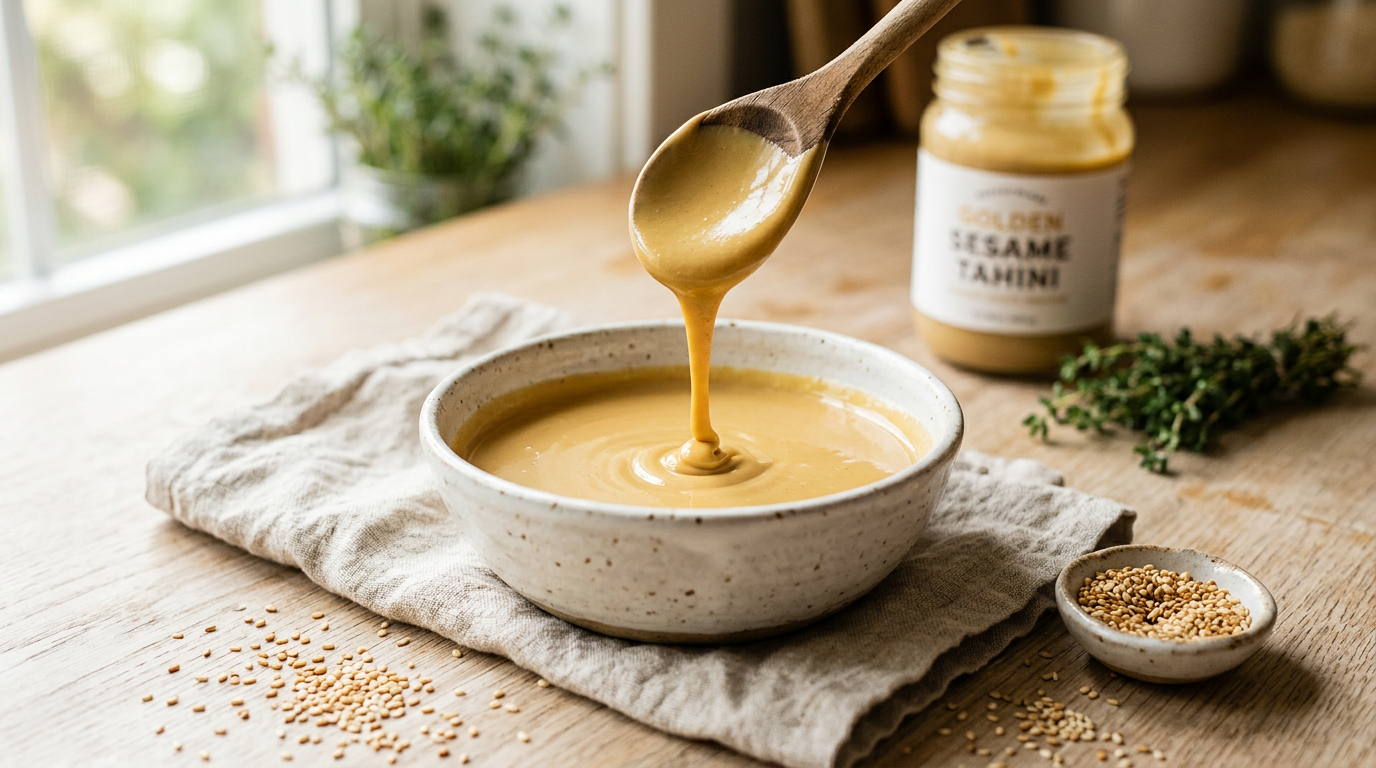
Creamy, nutty, and rich in valuable nutrients: Fresh tahini adds unmistakable depth to dips, bowls, and marinades.
Open sesame: The aromatic heart of the Levant
Anyone who has ever strolled through a bazaar in Tel Aviv, Beirut, or Istanbul knows this warm scent of toasted sesame. Tahini, also known as Tahina in Arabic or Tchina in Hebrew, literally translates simply to 'ground'. Yet behind this humble name lies one of the most fascinating culinary staples in the world.
At its core, real tahini consists of a single ingredient: the finest sesame seeds. These little powerhouses are among humanity's oldest oilseed crops and were already cultivated in Mesopotamia more than 4,000 years ago. When the ripe seed pods burst open, the seeds are harvested, gently cleaned, dried, and ground into a silky paste in heavy stone mills using traditional methods. Through friction, the sesame's natural oils are released and combine with the finely ground solids to form a thick emulsion.
In Middle Eastern and Mediterranean cuisine, tahini is not an occasional bread spread, but an everyday foundation. Whether as the binding element in the world-famous chickpea classic hummus, in the smoky aubergine dip baba ganoush, or simply whisked with a little lemon juice, garlic, and ice-cold water into a velvety tarator sauce: tahini lends dishes that nutty, pleasantly tart balance we love so much about Middle Eastern cuisine. Discover top-quality varieties for your pantry in our category for nut butters and spreads at Knuspr.
Good to know: Tahini is naturally purely plant-based, gluten-free, and packed with valuable nutrients. Sesame boasts an impressive content of plant protein, unsaturated fatty acids, as well as minerals such as calcium, iron, and magnesium.
Light or dark: Sesame paste 101
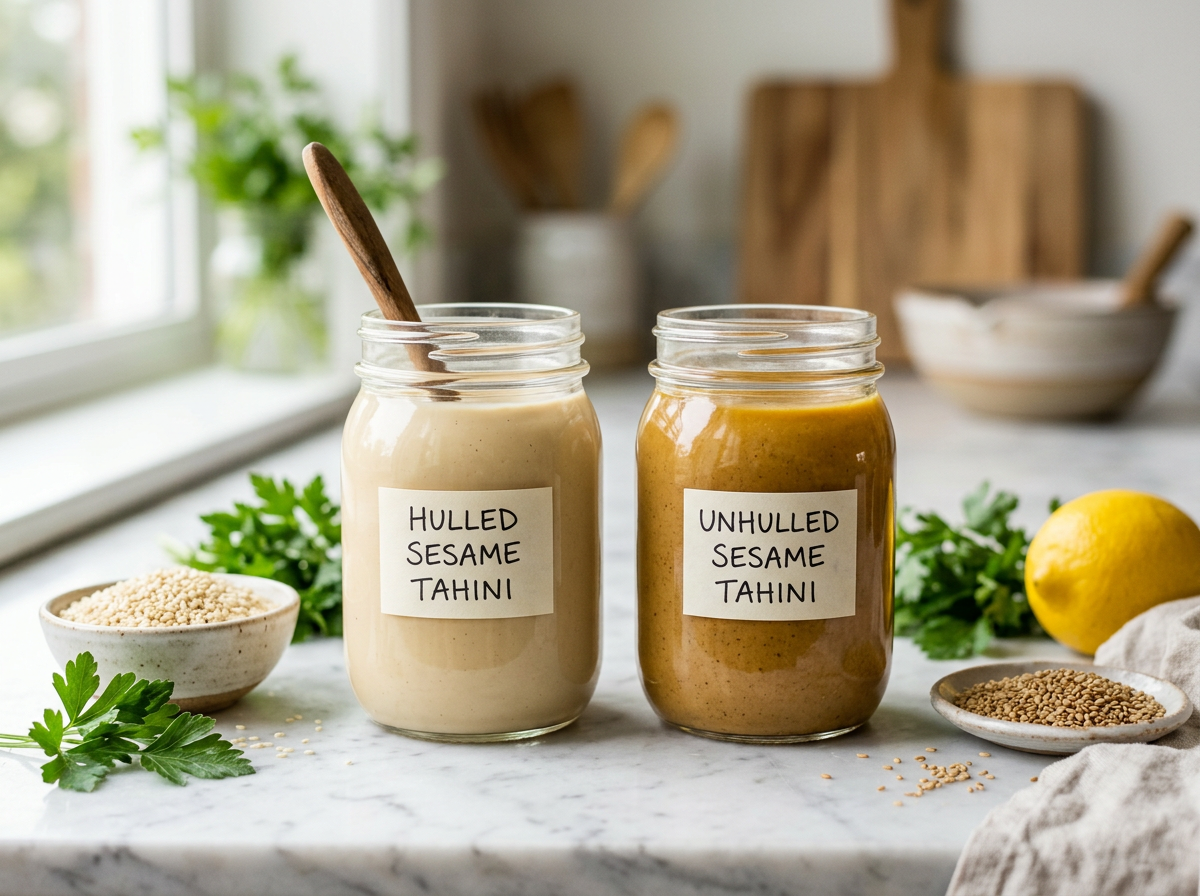
When you stand in front of the shelf or browse through the selection, you will quickly notice: not all tahini is created equal. The colour palette ranges from light ivory to warm sand brown all the way to deep, dark shades. The difference lies primarily in the hull and the roasting process of the sesame seeds.
Light tahini (hulled sesame)
For white tahini, the sesame seeds are hulled before grinding. This removes the paste's astringent tannins and bitter compounds. The result is a velvety-smooth, light beige cream with a delicate, buttery-nutty aroma. Light tahini, such as the popular Koro Weißes Bio Tahini, is the traditional choice for fluffy hummus, delicate salad dressings, and sweet desserts.
Dark tahini (unhulled sesame)
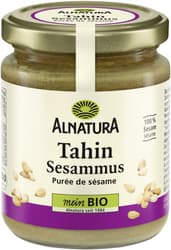
Dark tahini is ground from unhulled sesame seeds. Because the nutrient-rich hull is retained, this variety contains a particularly high amount of fibre and minerals. In terms of taste, dark tahini, such as Alnatura Bio Tahin Sesammus, is noticeably bolder, earthy, and has a distinctly tart bitter note. It is ideal for rustic marinades, dark sauces, and warming stews.

Straight from the pan: How to make tahini in a flash
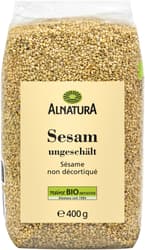
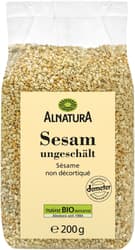
While Knuspr offers wonderful ready-made jars, making fresh sesame paste yourself has a charm all of its own. All you need are two basic ingredients: 250 g of high-quality sesame seeds, such as Alnatura BIO hulled sesame seeds, and 2 to 3 tablespoons of a mild cooking oil from our Oils category.
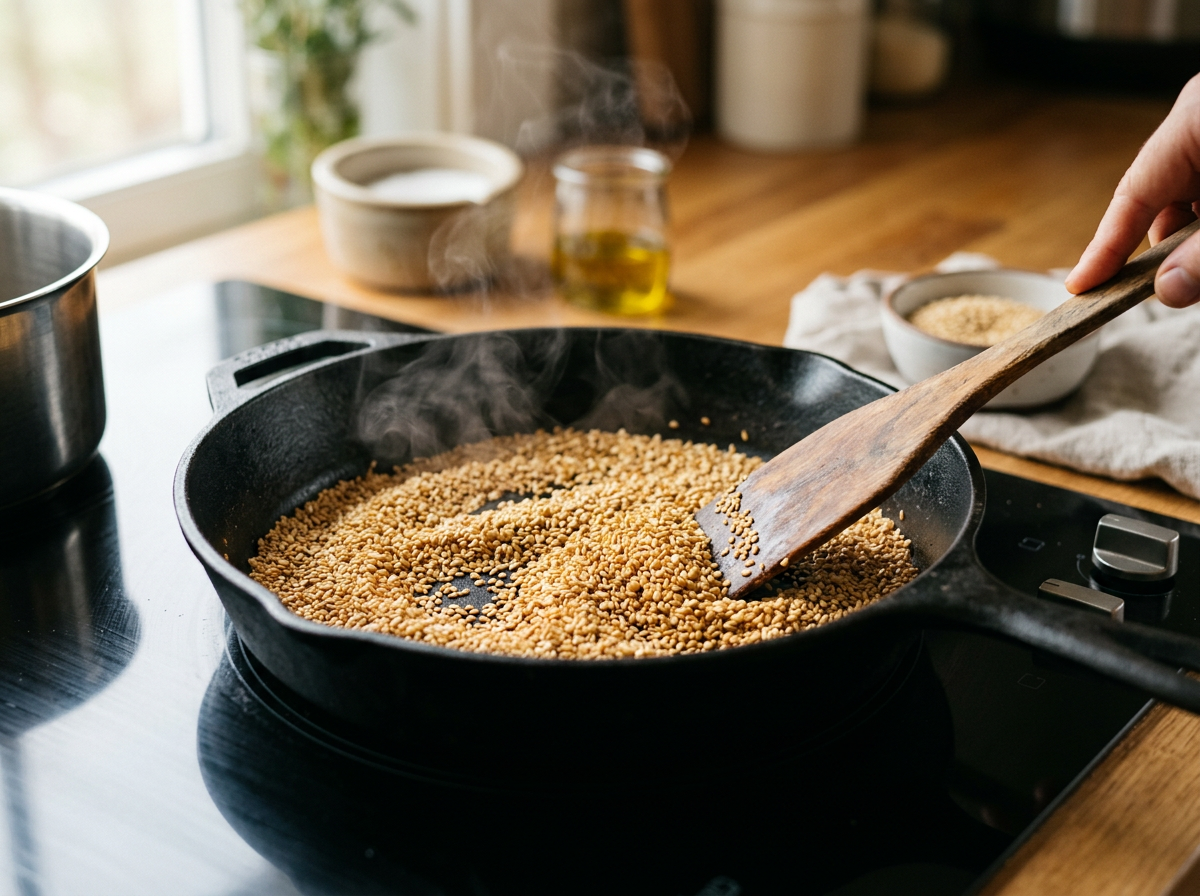
Toast gently, do not burn
Place the sesame seeds without any oil in a wide, uncoated pan over medium heat. Stir continuously with a wooden spoon or swirl the pan. As soon as the seeds become fragrant and take on a very delicate, light golden tint, remove them from the heat immediately. Caution: Sesame seeds burn in a flash and then taste bitter.
Allow to cool completely
Immediately pour the hot seeds onto a flat plate or baking sheet. Let them cool for about 10 to 15 minutes. If the seeds are added to the blender while still too hot, the released oil can overheat and the tahini will lose its delicate nutty freshness.
Grind patiently in a high-speed blender
Place the cooled seeds into a blender or food processor. Grind them initially on medium speed. First, a fine powder forms, then a crumbly mass. Scrape down the sides occasionally with a spatula. After 2 to 3 minutes, the natural sesame oil is released and the consistency gradually becomes paste-like.
Refine with a little oil and emulsify
Now add 1 to 2 tablespoons of neutral cooking oil or mild virgin sesame oil along with a tiny pinch of sea salt. Blend everything again on high speed for 60 to 90 seconds until a velvety, pourable cream forms. Pour into a clean jar rinsed with hot water and seal.
Pro tip for a velvety consistency
A standard immersion blender often struggles with dry sesame seeds. A narrow blending container with high wattage works best. If the mixture gets stuck in the blender, simply add a little more oil, one tablespoon at a time, until the blades catch again.
Hummus, Baba Ganoush & Co.: The Secret of the Perfect Emulsion
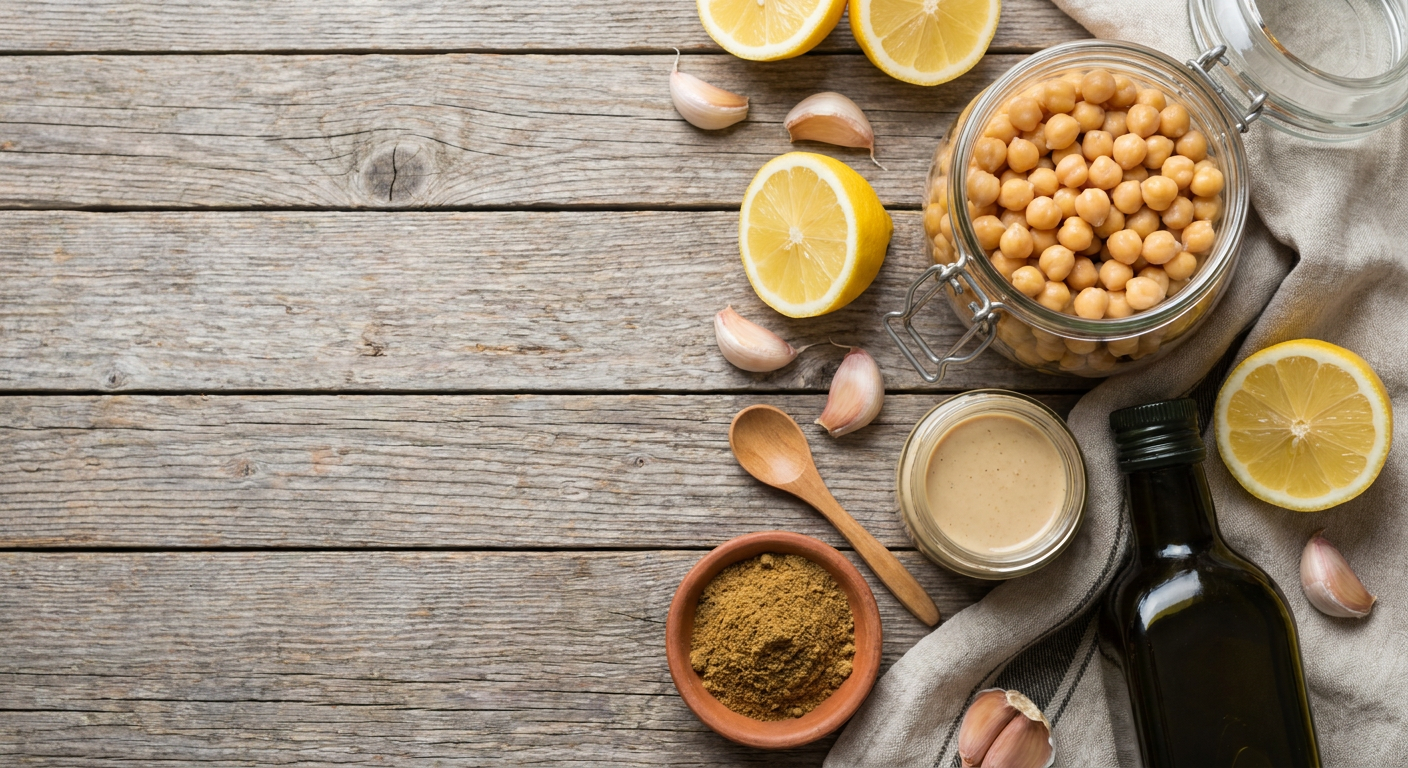
Without good tahini, hummus is strictly speaking nothing more than seasoned chickpea mash. It is the sesame paste that gives the dip that silky, almost mousse-like texture and deep melt for which Middle Eastern cuisine is famous. But many home cooks know the phenomenon: you mix tahini with lemon juice, and suddenly the mixture seizes into a firm, dull lump.
Don't panic, that's pure food chemistry. The proteins and carbohydrates in sesame seeds greedily absorb liquid. The secret lies in pushing past this point: if you keep stirring persistently and add ice-cold water tablespoon by tablespoon, the mixture suddenly transforms. It turns snow-white, fluffy, and creamy like whipped cream. Only then are the puréed chickpeas, such as our tender Kitchin Chickpeas, folded in.
The Golden Formula
For one can of chickpeas (approx. 240 g drained weight), use at least 80 to 100 g of tahini. Don't shy away from the amount: only a high proportion of tahini delivers that authentic Levantine flavour.
Ice Water as a Texture Booster
When blending tahini and lemon juice, add 2 to 3 ice cubes or 4 tablespoons of ice-cold water. The chilling stabilises the fat emulsion and makes the dip heavenly airy.
Gently Taming Garlic
First purée the garlic clove in fresh lemon juice and let it infuse for 5 minutes. The acidity breaks down the harsh sulphur compounds and prevents an unpleasant burning sensation.