
Max. 3 pcs




Product from:
Preussen
1597€
Only 15 items left
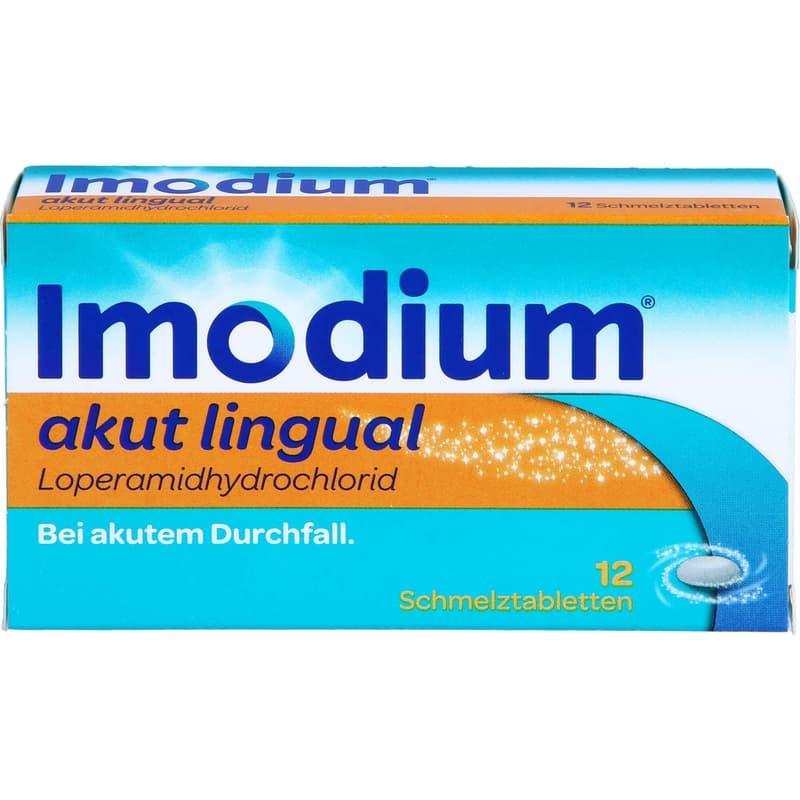
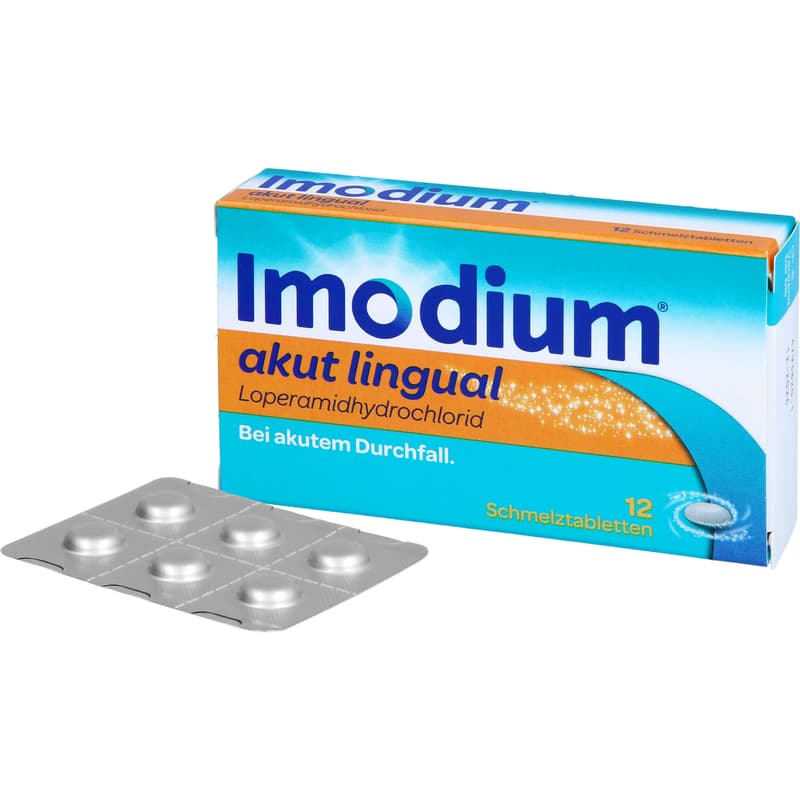
IMODIUM acute lingual orodispersible tablets are your quick solution for acute diarrhoea. These convenient tablets, containing Loperamide hydrochloride, dissolve instantly on your tongue without needing water, making them perfect for on-the-go relief. Designed for adolescents aged 12 and over and adults, they provide symptomatic treatment. Each pack contains 12 pieces. Please note they contain aspartame, sodium, and benzyl alcohol.
Zu Risiken und Nebenwirkungen lesen Sie die Packungsbeilage und fragen Sie Ihre Ärztin, Ihren Arzt oder in Ihrer Apotheke.






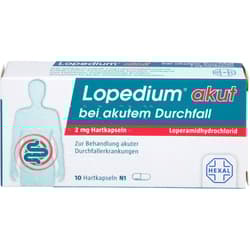
Description

You're reading an Auto-translation.
Important notes (mandatory information)
Imodium akut lingual 2 mg orodispersible tablets. Active ingredient: Loperamide hydrochloride. Areas of application: for the symptomatic treatment of acute diarrhoea in adolescents aged 12 and over and adults, if no causal therapy is available. Warning: Contains aspartame, sodium and benzyl alcohol.For risks and side effects, read the package leaflet and consult your doctor or pharmacist.
PACKAGE LEAFLET: INFORMATION FOR THE USER
Imodium akut lingual 2 mg orodispersible tablets for use in adolescents aged 12 and over and adults
Active ingredient: Loperamide hydrochloride
Read the entire package leaflet carefully before you start using this medicine, because it contains important information. Always take this medicine exactly as described in this leaflet or exactly as your doctor or pharmacist has told you.
- Keep the package leaflet. You may need to read it again later.
- Ask your pharmacist if you need more information or advice.
- If you get any side effects, talk to your doctor or pharmacist. This also applies to side effects not listed in this leaflet. See section 4.
- If you do not feel better or if you feel worse after 2 days, contact your doctor.
What this leaflet contains
- WHAT IS IMODIUM AKUT LINGUAL AND WHAT IS IT USED FOR?
- WHAT SHOULD YOU BE AWARE OF BEFORE TAKING IMODIUM AKUT LINGUAL?
- HOW TO TAKE IMODIUM AKUT LINGUAL?
- WHAT SIDE EFFECTS ARE POSSIBLE?
- HOW TO STORE IMODIUM AKUT LINGUAL?
- CONTENTS OF THE PACK AND OTHER INFORMATION
Imodium akut lingual contains the active ingredient loperamide hydrochloride. Loperamide hydrochloride is an antidiarrhoeal agent. For the symptomatic treatment of acute diarrhoea in adolescents aged 12 and over and adults, if no causal therapy is available. Treatment with loperamide for more than 2 days should only be carried out under medical supervision and with monitoring of the course of the disease.
2. WHAT SHOULD YOU BE AWARE OF BEFORE TAKING IMODIUM AKUT LINGUAL?
Imodium akut lingual must not be taken:
- if you are allergic to loperamide hydrochloride, benzyl alcohol, levomenthol or any of the other ingredients of this medicine listed in section 6.
- by children under 12 years of age (see also "What should be considered in children?").
- if you suffer from conditions in which a slowing down of bowel activity should be avoided, e.g. abdominal distension, constipation and intestinal obstruction. Imodium akut lingual must be discontinued immediately if constipation, abdominal distension or intestinal obstruction (ileus) occurs.
- if you suffer from diarrhoea accompanied by fever and/or bloody stools.
- if you suffer from diarrhoea that occurs during or after taking antibiotics.
- if you suffer from chronic diarrhoeal diseases (these diseases should only be treated with loperamide hydrochloride under medical supervision).
- if you suffer from an acute attack of ulcerative colitis (ulcerative inflammation of the colon).
What should be considered in children?
Children under 2 years of age must not be treated with loperamide-containing medicines. Children between 2 and 12 years of age must only be treated with loperamide-containing medicines under medical supervision. Due to the high active ingredient content, Imodium akut lingual is not suitable for acute diarrhoea in this age group. Other dosage forms are available for this purpose under medical supervision.
Warnings and precautions
Please talk to your doctor or pharmacist before taking Imodium akut lingual:- if you have AIDS and want to take Imodium akut lingual for acute diarrhoea. You should stop taking Imodium akut lingual for acute diarrhoea at the first sign of abdominal distension and see your doctor. There have been isolated reports of constipation with an increased risk of severe inflammatory dilatation of the colon (toxic megacolon) in AIDS patients. These patients suffered from infectious inflammation of the colon (colitis) caused by viral and bacterial pathogens and were treated with loperamide hydrochloride.
- if you have liver disease.
Taking Imodium akut lingual with other medicines
Tell your doctor or pharmacist if you are taking/using, have recently taken/used or intend to take/use any other medicines. Please talk to your doctor especially if you have to take one or more of the following active ingredients regularly or occasionally:- Ritonavir (a medicine to treat HIV infection).
- Itraconazole, ketoconazole (medicines to treat fungal infections).
- Quinidine (a medicine to treat heart rhythm disorders).
- Gemfibrozil (a medicine to treat high blood fats).
- Desmopressin (a medicine to treat increased urination).
Pregnancy and
breast-feeding
If you are pregnant or breast-feeding, or if you suspect you may be pregnant or are planning to have a baby, ask your doctor or pharmacist for advice before taking this medicine.Pregnancy
Although no clear evidence of a harmful effect on the foetus has been found in a limited number of women (approx. 800) who took the active ingredient of Imodium akut lingual during pregnancy, you should not take Imodium akut lingual during pregnancy.Breast-feeding
As small amounts of the active ingredient of Imodium akut lingual can pass into breast milk, you should not take Imodium akut lingual during breast-feeding.Driving and using machines
Diarrhoea or taking Imodium akut lingual can cause dizziness, tiredness and drowsiness. Therefore, caution is advised when driving or operating machinery.Imodium akut lingual contains aspartame, sodium and benzyl alcohol
This medicine contains 0.75 mg aspartame per orodispersible tablet corresponding to 5 mg/g. Aspartame is a source of phenylalanine. It can be harmful if you have phenylketonuria (PKU), a rare inherited disorder in which phenylalanine accumulates because the body cannot break it down properly. This medicine contains less than 1 mmol sodium (23 mg) per orodispersible tablet, i.e. it is essentially "sodium-free". This medicine contains 0.00066 mg benzyl alcohol per orodispersible tablet. If you are pregnant or breast-feeding, or if you have liver or kidney disease, ask your doctor or pharmacist for advice, as large amounts of benzyl alcohol can accumulate in your body and cause side effects (so-called "metabolic acidosis").3. HOW TO TAKE IMODIUM AKUT LINGUAL?
Always take this medicine exactly as described in this leaflet or exactly as agreed with your doctor or pharmacist. Check with your doctor or pharmacist if you are not sure.
The recommended dose is
| Age | Initial dose | Repeat dose | Maximum daily dose |
| Adolescents aged 12 and over | 1 orodispersible tablet (= 2 mg loperamide hydrochloride) | 1 orodispersible tablet (= 2 mg loperamide hydrochloride) | 4 orodispersible tablets (= 8 mg loperamide hydrochloride) |
| Adults | 2 orodispersible tablets (= 4 mg loperamide hydrochloride) | 1 orodispersible tablet (= 2 mg loperamide hydrochloride) | 6 orodispersible tablets (= 12 mg loperamide hydrochloride) |
The initial dose is taken at the start of treatment for acute diarrhoea. Thereafter, the repeat dose should be taken after each unformed stool. The recommended maximum daily dose must not be exceeded.
Children under 12 years of age
Imodium akut lingual is not suitable for children under 12 years of age due to the high active ingredient content. Other dosage forms are available for this purpose under medical supervision.Method of administration
Imodium akut lingual is placed on the tongue. The orodispersible tablet dissolves immediately on the tongue and is swallowed with the saliva. No further fluid intake is necessary.Duration of use
Do not take Imodium akut lingual for more than 2 days without medical advice. If diarrhoea persists after 2 days of treatment with Imodium akut lingual, Imodium akut lingual must be discontinued and a doctor consulted. Treatment with loperamide-containing medicines for more than 2 days should only be carried out under medical supervision and with monitoring of the course of the disease.Please talk to your doctor or pharmacist if you have the impression that the effect of Imodium akut lingual is too strong or too weak.
If you have taken more Imodium akut lingual than you should
See a doctor as soon as possible, especially if you experience the following symptoms:- Stiffness of the body, coordination disorders, drowsiness, constriction of the pupils, muscle stiffness, weak breathing.
- increased heart rate, irregular heartbeat, changes in your heartbeat (these symptoms can potentially have serious, life-threatening consequences).
- Constipation, intestinal obstruction, difficulty urinating.
Instructions for the doctor
Signs of loperamide hydrochloride overdose may also occur after a relative overdose due to impaired liver function. Treatment depends on the overdose symptoms and the clinical picture. ECG monitoring for QT interval prolongation should be performed under medical supervision. If CNS symptoms occur after overdose, the opioid antagonist naloxone can be used as an antidote on a trial basis. Since loperamide has a longer duration of action than naloxone, repeated administration of naloxone may be indicated. The patient should therefore be closely monitored for at least 48 hours to detect possible (re-)occurrence of overdose symptoms.If you forget to take Imodium akut lingual
Do not take a double dose to make up for a forgotten dose.If you have any further questions on the use of this medicine, ask your doctor or pharmacist.
4. WHAT SIDE EFFECTS ARE POSSIBLE?
Like all medicines, this medicine can cause side effects, although not everybody gets them. If any of these side effects occur, stop taking the medicine and seek medical help immediately
Not known (frequency cannot be estimated from the available data)
Upper abdominal pain, abdominal pain radiating to the back, tenderness to the touch of the abdomen, fever, rapid pulse, nausea, vomiting, which may be symptoms of inflammation of the pancreas (acute pancreatitis).Possible side effects
The most commonly reported adverse reactions in clinical studies were constipation, flatulence, headache, nausea and dizziness. The following side effects have been observed in clinical studies and after marketing
Common (may affect up to 1 in 10 people):- Constipation, nausea, flatulence
- Dizziness, headache
- Drowsiness
- Pain and discomfort in the gastrointestinal tract, dry mouth
- Pain in the upper abdomen, vomiting
- Indigestion
- Skin rash
- Abdominal distension
- Hypersensitivity reactions, anaphylactic reactions (including anaphylactic shock), anaphylactoid reactions
- Unconsciousness, stiffness of the body, clouded consciousness, increased muscle tension, coordination disorders
- Constriction of the pupils
- Intestinal obstruction (ileus, including paralytic ileus), dilatation of the colon (megacolon, including toxic megacolon), pain on the surface of the tongue
- Blistering skin diseases (including Stevens-Johnson syndrome, toxic epidermal necrolysis and erythema multiforme), swelling of the skin or mucous membranes due to fluid accumulation in the tissue (angioedema), hives, itching
- Urinary retention
- Fatigue
Reporting of side effects
If you get any side effects, talk to your doctor or pharmacist. This also applies to side effects not listed in this leaflet. You can also report side effects directly to the Federal Institute for Drugs and Medical Devices, Dept. of Pharmacovigilance, Kurt-Georg-Kiesinger-Allee 3, D-53175 Bonn, website: www.bfarm.de. By reporting side effects, you can help provide more information on the safety of this medicine.5. HOW TO STORE IMODIUM AKUT LINGUAL?
Keep this medicine out of the reach of children. Do not use this medicine after the expiry date which is stated on the carton and blister. The expiry date refers to the last day of the stated month. Store in the original package to protect from moisture. Medicines should be disposed of in accordance with local requirements. Ask your pharmacist how to dispose of the medicine when you no longer use it. This will help to protect the environment.
6. CONTENTS OF THE PACK AND OTHER INFORMATION
What Imodium akut lingual contains
The active ingredient is: Loperamide hydrochloride. One orodispersible tablet contains 2 mg loperamide hydrochloride. The other ingredients are: Gelatin, mannitol (Ph. Eur.), aspartame, sodium hydrogen carbonate, peppermint flavour (contains benzyl alcohol and levomenthol). This medicine is lactose- and gluten-free.What Imodium akut lingual looks like and contents of the pack
Imodium akut lingual are round, white orodispersible tablets. Imodium akut lingual is packed in PET/PVC/PA/Al blisters and is available in packs of 6, 10 and 12 orodispersible tablets. Not all pack sizes may be marketed. To remove the orodispersible tablet, completely remove the foil strip on the back of the blister. Do not push the orodispersible tablet through the blister, as it may be damaged.Marketing Authorisation Holder and Manufacturer
Johnson & Johnson GmbHJohnson & Johnson Platz 2
41470 Neuss
Tel.: 00800 260 260 00 (toll-free)
www.jjconsumer-contact.eu
Manufacturer
Janssen-Cilag S.p.A.Via C. Janssen
04100 Borgo S. Michele (LT)
Italy
JNTL Consumer Health (France) SAS
Domaine de Maigremont
27100 Val-de-Reuil
France
This leaflet was last revised in September 2022.
Source: Package leaflet information
Status: 11/2023
Active ingredient: Loperamide hydrochloride. Areas of application: for the symptomatic treatment of acute diarrhoea in adolescents aged 12 and over and adults, if no causal therapy is available. Warning: Contains aspartame, sodium and benzyl alcohol.
Information leaflet
Download the information leafletComposition & Allergens
Composition
Wirkstoff: Loperamidhydrochlorid