
Bayerischer Kartoffelsalat vs. Mayo-Kartoffelsalat: Der große Vergleich
Ob beim sommerlichen Grillfest im Garten, zur zünftigen Brotzeit im Biergarten oder traditionsreich am Heiligabend: Kaum ein Gericht weckt so viele Kindheitserinnerungen und leidenschaftliche Diskussionen wie die Frage nach dem perfekten Kartoffelsalat.
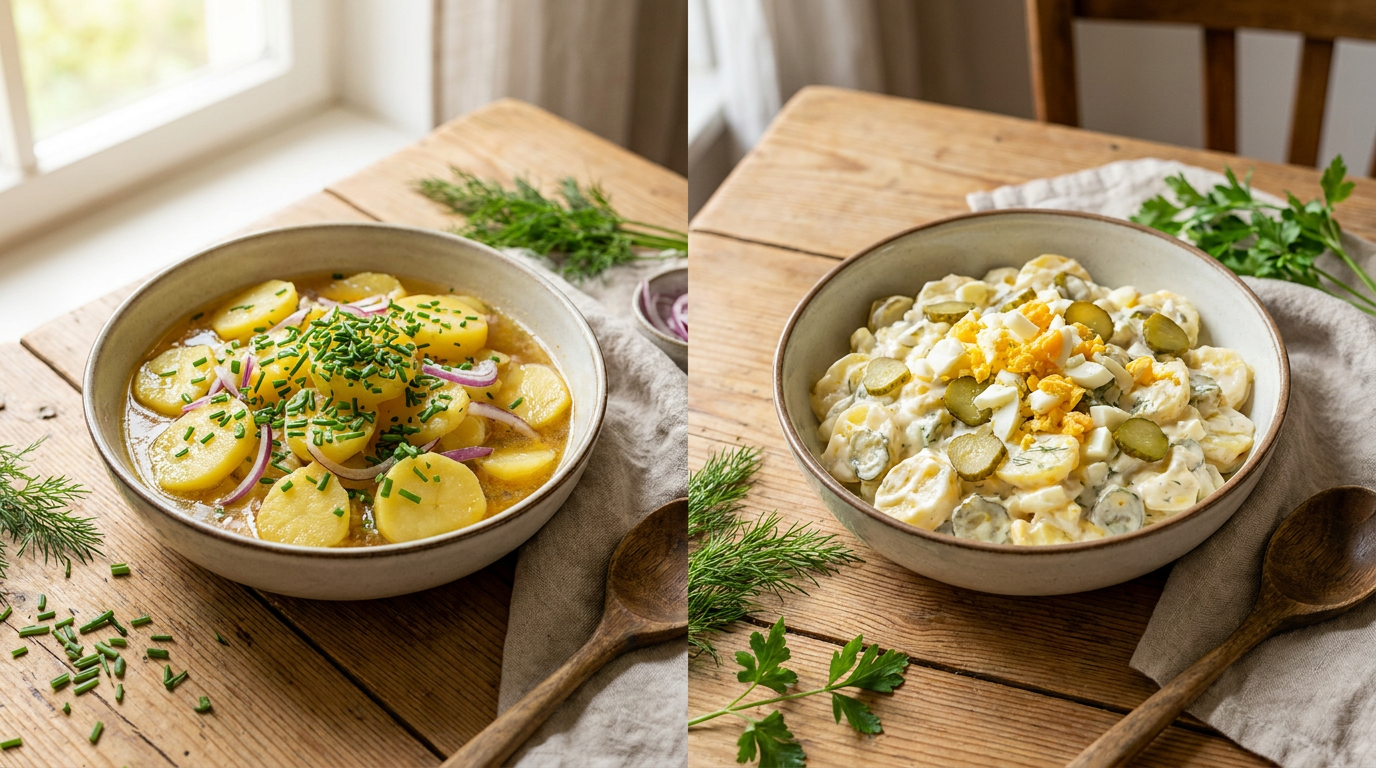
Während im Süden der Republik ein echter bayerischer Kartoffelsalat stets mit heißer Brühe, Essig, Zwiebeln und feinem Öl angemacht wird, schwört der Norden und Westen auf die herrlich samtige Cremigkeit von Mayonnaise, knackigen Gewürzgurken und gekochten Eiern. Beide Spielarten haben ihre unbestrittenen Vorzüge, ihre festen Rituale und ihre ganz eigene Magie. In diesem ausführlichen Guide werfen wir einen genauen Blick auf die Zubereitungsgeheimnisse, die ideale Kartoffelwahl und die besten Speisenbegleiter für jedes Rezept.
Der bayerische Klassiker: Brühe, Schmalz und das Geheimnis der Sämigkeit
Im Freistaat Bayern und im gesamten süddeutschen Raum gilt eine goldene Küchenregel: Ein echter Kartoffelsalat braucht keine schwere Mayonnaise, um vollkommen cremig und unwiderstehlich saftig zu werden. Das Zauberwort der bayerischen Wirtshauskultur lautet Schlotzigkeit.
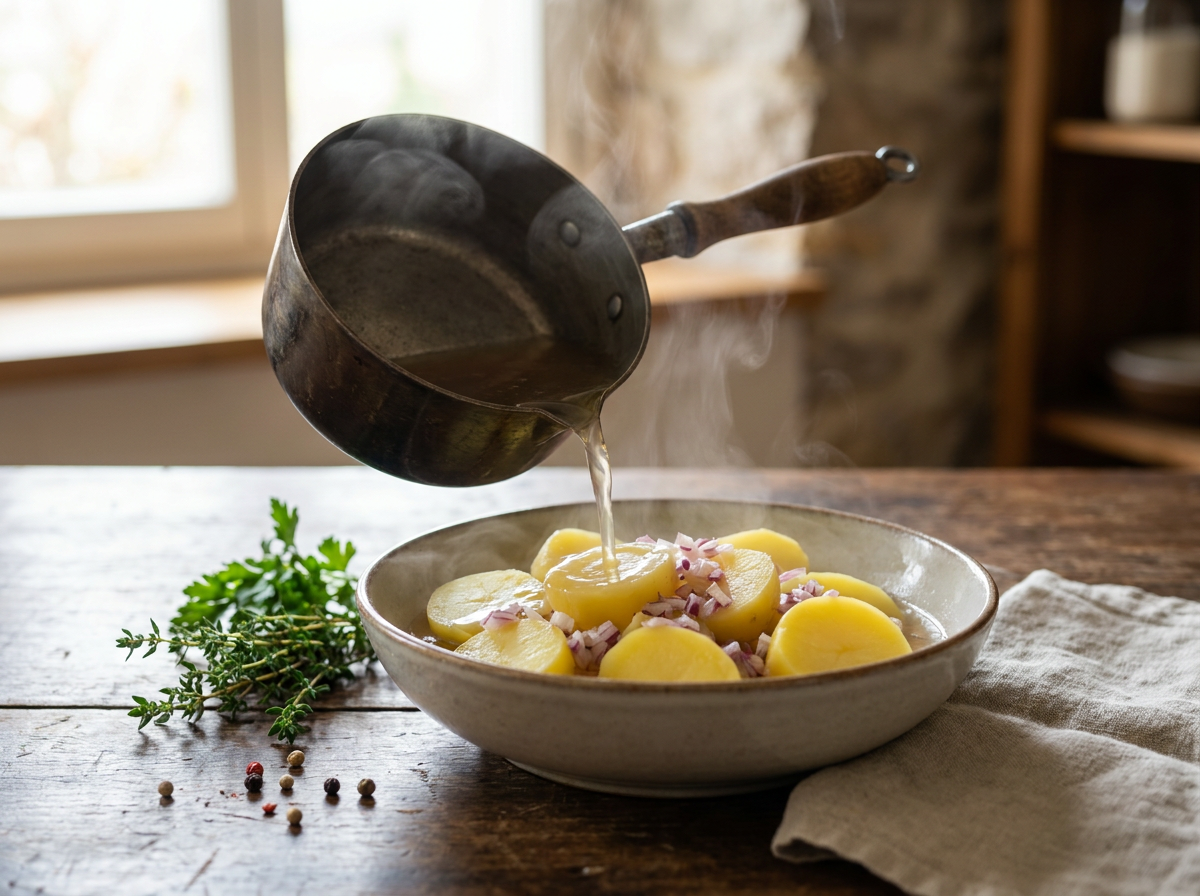
Die legendäre Konsistenz entsteht durch eine feine chemische Reaktion beim Anmachen: Frisch gekochte festkochende Kartoffeln werden noch dampfend heiß gepellt und in dünne Scheiben geschnitten. Direkt danach trifft siedend heiße kräftige Rinder- oder Gemüsebrühe auf die warmen Knollen.
Weil die Stärkekörner der Kartoffel im warmen Zustand geöffnet sind, saugen sie die würzige Brühe zusammen mit feinem Essig, Salz, Pfeffer und einer Prise Zucker wie ein Schwamm auf. Zusammen mit der austretenden Stärke bildet sich eine natürliche, samtig glänzende Emulsion.
- Das Brühe-Geheimnis: Eine kräftig eingekochte Rinderkraftbrühe oder dunkle Gemüsebrühe verleiht dem Salat tiefen Umami-Geschmack ganz ohne künstliche Aromen.
- Zwiebeln richtig verarbeiten: Fein gewürfelte Zwiebeln werden am besten kurz in der heißen Brühe blanchiert. Das nimmt ihnen die bittere Schärfe und verhindert, dass der Salat nach wenigen Stunden säuerlich gärt.
- Der bayerische Senf-Touch: Ein Teelöffel mittelscharfer oder bayerischer Senf bindet die Flüssigkeit zusätzlich und rundet das Säurespiel harmonisch ab.
Der norddeutsche Mayo-Favorit: Cremig, gehaltvoll und voller Crunch
Nordöstlich der Mainlinie gehört ein Kartoffelsalat mit samtiger Mayonnaise zum unverrückbaren kulinarischen Kulturgut. Was diesen Klassiker so beliebt macht, ist das harmonische Zusammenspiel aus reichhaltiger Sauce und knackigen Einlagen.
Anders als in der bayerischen Variante müssen die Kartoffeln hier vor dem Vermengen vollständig abkühlen. Würde man die Delikatess-Mayonnaise auf die heißen Kartoffeln geben, würde das Fett der Emulsion schmelzen und sich unschön am Schüsselboden absetzen.
Für den unverwechselbaren Geschmack sorgt die Balance: Die Reichhaltigkeit der Mayonnaise wird durch die feine Säure von Gurkenwasser und einem Spritzer mildem Apfelessig aufgefrischt. Knackige Gewürzgurkenwürfel, hartgekochte Eier und feingehackte Zwiebeln verleihen dem Salat eine herrliche Textur.
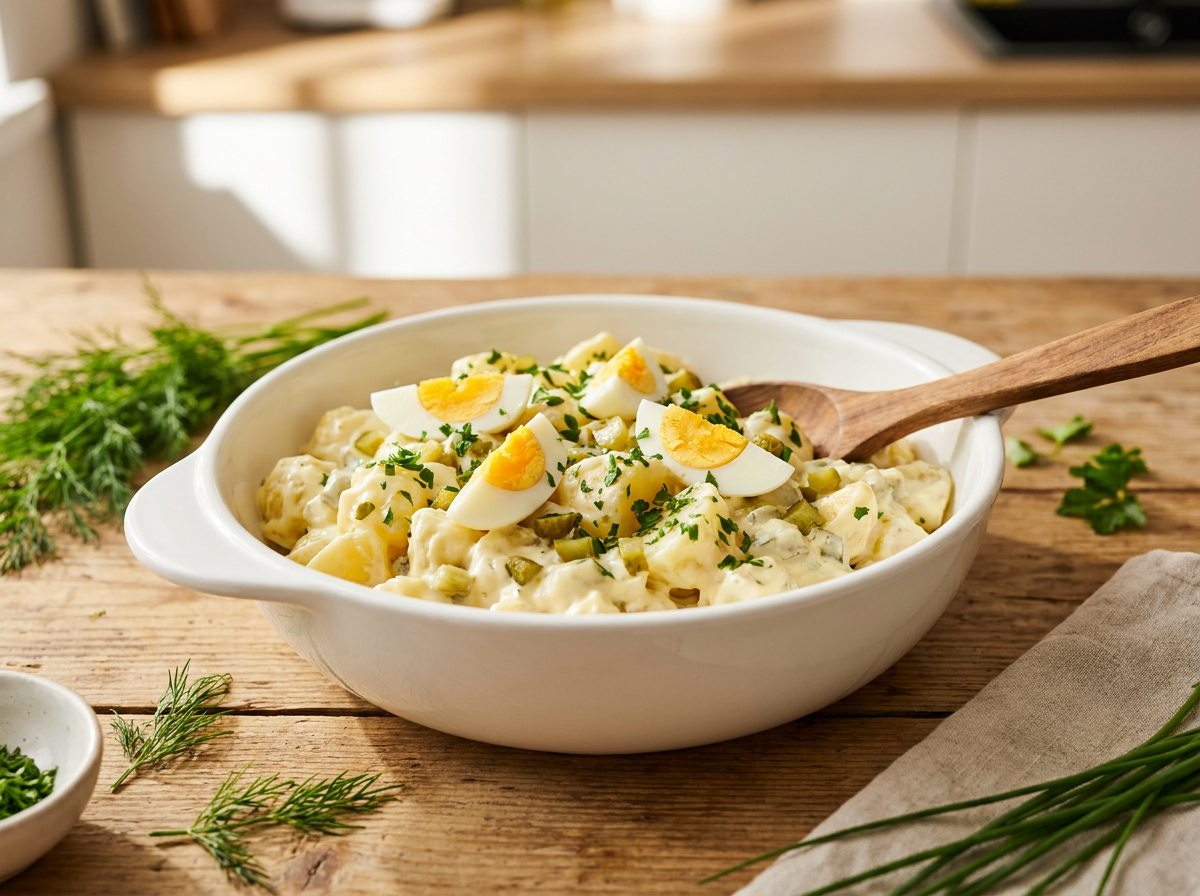
Fein gewürfelte Cornichons und Gewürzgurken sorgen für den perfekten Kontrast zu den weichen, saftigen Kartoffelscheiben.
Einige Esslöffel des aromatischen Aufgusses aus dem Gurkenglas machen das Dressing flüssiger und verleihen eine feine Kräuternote.
Gekochte Eierwürfel bringen Cremigkeit und Farbe ins Spiel, während frische Petersilie für eine feine Frische sorgt.
Direkter Vergleich: Zutaten, Nährwerte und Zubereitung im Duell
Welcher Salat passt besser zu deinen Ernährungsgewohnheiten, deinem Menüplan oder deiner nächsten Feier? Die Gegenüberstellung zeigt alle wesentlichen Unterschiede auf einen Blick:
| Eigenschaft | Bayerischer Kartoffelsalat | Mayonnaise-Kartoffelsalat |
|---|---|---|
| Flüssige Basis | Kräftige Rinder- oder Gemüsebrühe | Delikatess-Mayonnaise oder Remoulade |
| Kartoffeltemperatur | Warm verarbeitet (saugt Brühe auf) | Vollständig abgekühlt (schützt Emulsion) |
| Öl & Säure | Pflanzenöl, Weißweinessig, Apfelessig | Mayonnaise, Gurkenwasser, Zitronensaft |
| Typische Einlagen | Zwiebeln, frischer Schnittlauch, evtl. Speck | Gewürzgurken, gekochte Eier, Petersilie |
| Kalorien & Fettgehalt | Leichter (ca. 110 bis 140 kcal pro 100 g) | Reichhaltiger (ca. 190 bis 250 kcal pro 100 g) |
| Konsistenz | Schlotzig, saftig, glänzend | Dickcremig, samtig, stückig mit Crunch |
| Haltbarkeit im Sommer | Ungekühlter standfester auf Gartenfesten | Erfordert durchgehend lückenlose Kühlung |
Ideal für warmes Sommerwetter, ausgiebige Biergarten-Brotzeiten, Grillpartys im Freien und als elegante, säuerlich-frische Beilage zu deftigen Braten, Schnitzeln und Backhendl.
Unverzichtbar für gemütliche Feiern in der kalten Jahreszeit, den klassischen Heiligabend mit Wiener Würstchen oder als herzhafte Beilage zu kurzgebratenen Frikadellen und Fischgerichten.
Die Kartoffelfrage: Festkochend vs. Vorwiegend Festkochend
Der größte Feind eines gelungenen Kartoffelsalats ist die falsche Knolle. Wer zu mehligkochenden Sorten greift, erhält statt appetitlicher Scheiben schnell ein unansehnliches Kartoffelpüree.
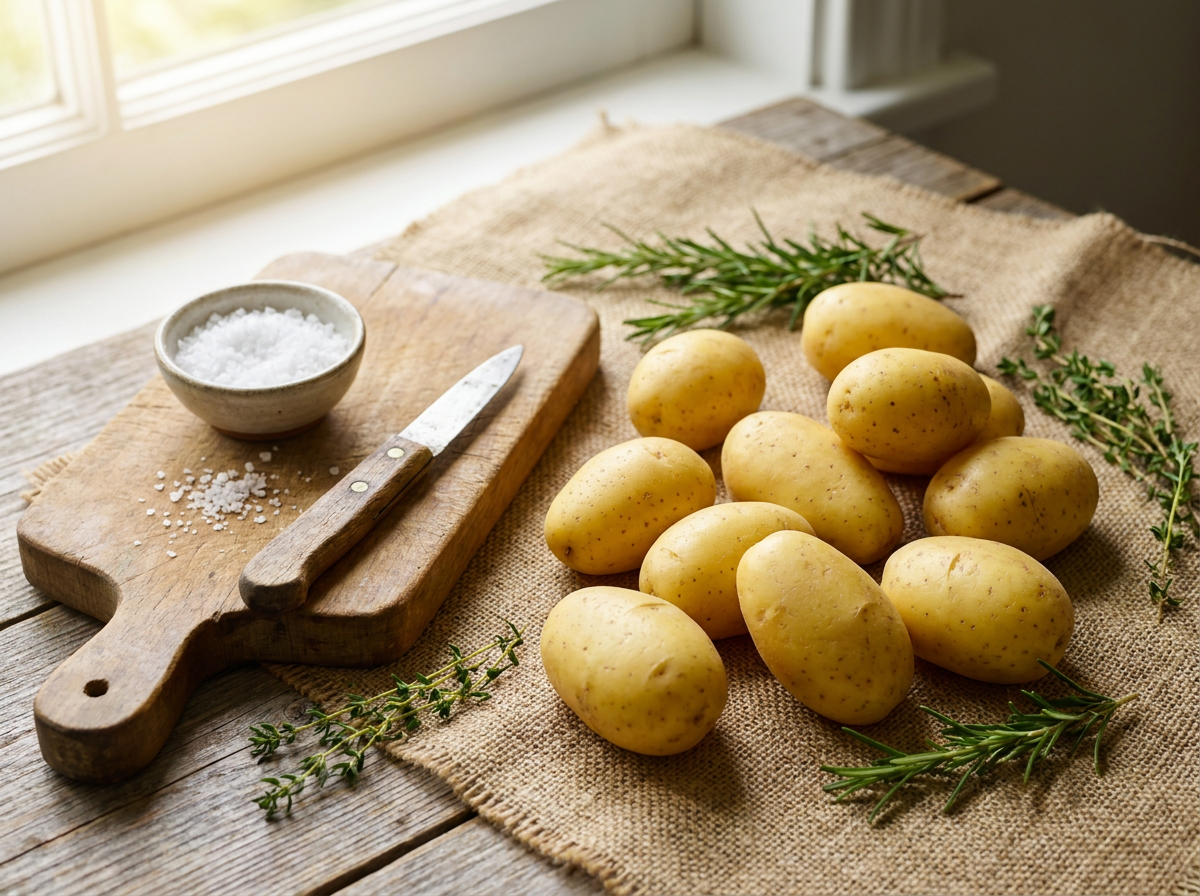
Für beide Salatvarianten sind ausschließlich festkochende Kartoffeln (Kochtyp A) oder hochwertige vorwiegend festkochende Knollen die richtige Wahl. Beliebte Sorten wie Sieglinde, Linda, Ditta, Annabelle oder Bernina zeichnen sich durch einen niedrigen Stärkegehalt von etwa 11 bis 13 Prozent und eine feste Zellstruktur aus.
Sie behalten auch nach dem Kochen und vorsichtigen Wenden ihre Form, nehmen aber gleichzeitig ausreichend Feuchtigkeit und Gewürze auf.