
Fregola Sarda: The Sardinian Pasta Specialty at a Glance
Do you already know the small pasta specialty that looks like golden-yellow pearls and tastes like the warm Sardinian sun? Fregola Sarda takes you straight to the dreamy coasts of Southern Italy with its nutty roasted aroma and hearty bite. Whether in creamy pasta dishes, hearty vegetable stews, or fresh Mediterranean summer salads, this unique toasted pasta is a wonderful discovery for anyone looking to experience Italian pasta in a new way. At Knuspr, you'll learn all about the fascinating history, the different grain sizes, and the best preparation methods for your perfect pasta meal at home.
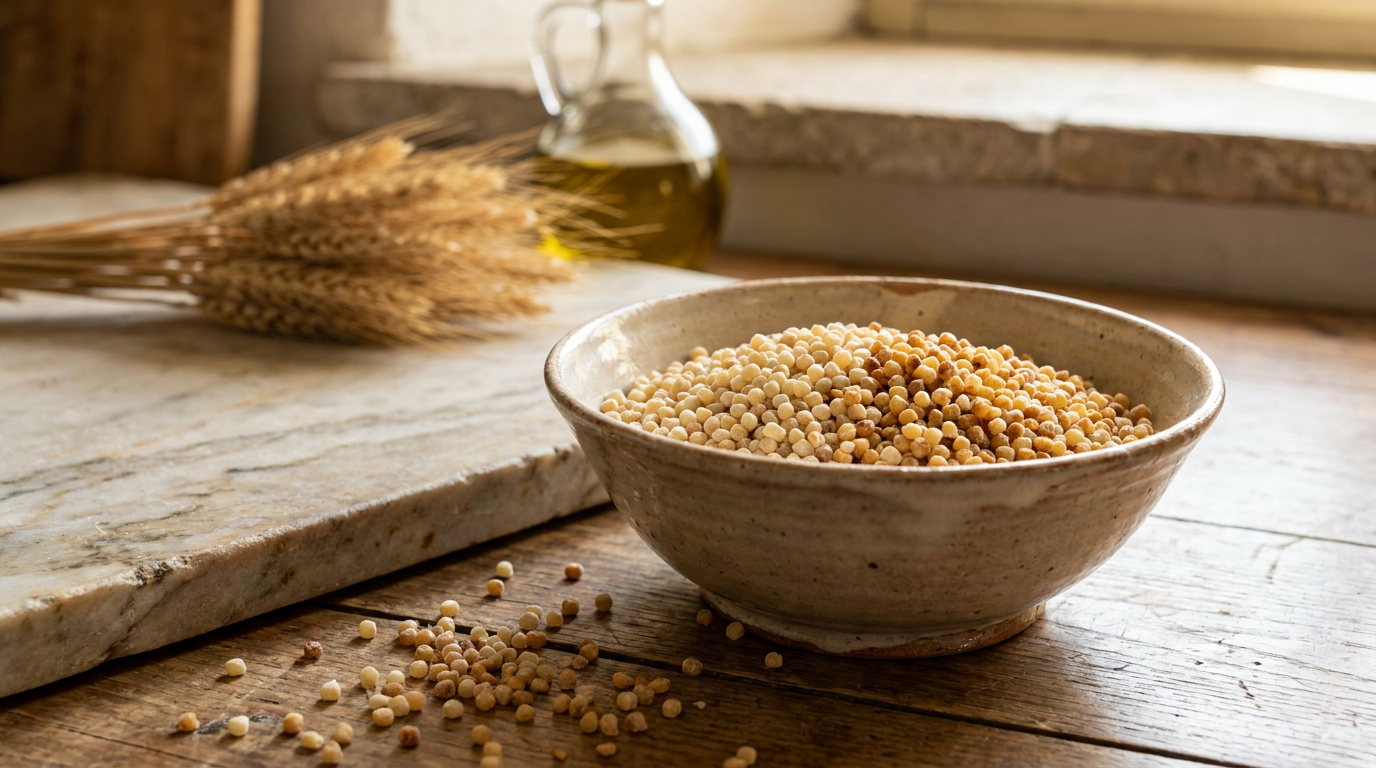
Sardinia's culinary treasure: History, production and origin of Fregola Sarda
The Mediterranean island of Sardinia preserves one of the most fascinating and oldest pasta traditions in all of Italy. Anyone seeing Fregola Sarda (often called Fregula in Sardinian) for the first time rarely thinks immediately of classic Italian pasta, as the small spheres strongly resemble North African couscous or fine pebbles.
The term Fregola derives from the Latin verb fricare, which translates to rub or rub together. This describes precisely the centuries-old artisanal production method, which historically was mainly maintained by the women of the Sardinian region of Campidano and passed down from generation to generation.
In traditional production, the finest durum wheat semolina (semola di grano duro) is placed into a shallow, glazed terracotta bowl known in Sardinia as scivedda (or scuffedda). Adding lukewarm salted water, the semolina is rubbed using circular, even hand movements until small, uniform dough pearls form.
Afterwards, the freshly formed dough spheres are dried in the fresh sea air and then toasted in the oven. Culinary historians attribute the emergence of Fregola to the intense maritime trade between Sardinia and North Africa in the 10th and 11th centuries. Here, Arab knowledge of granular couscous blended harmoniously with Italian durum wheat culture.
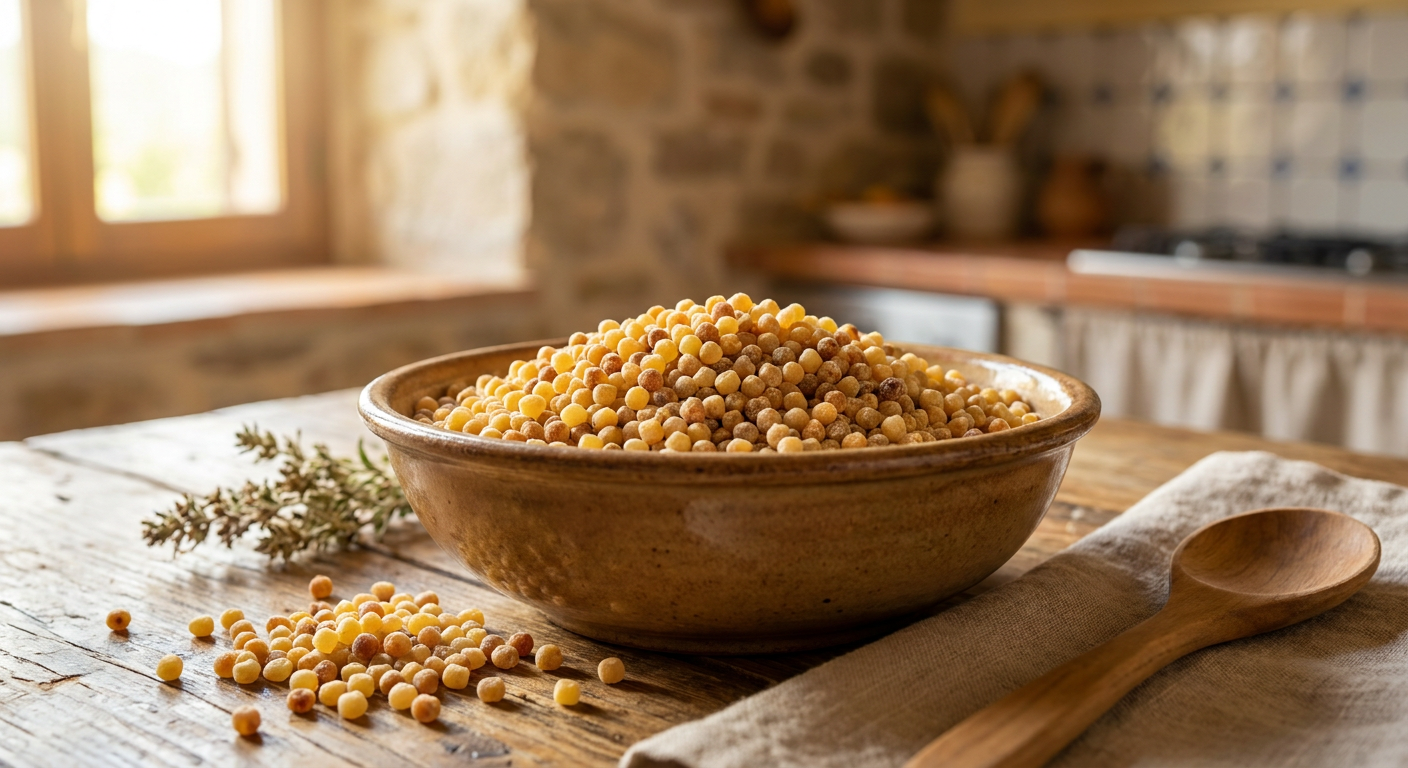
The three traditional grain sizes of Fregola Sarda
- Fregola Fina (small, approx. 1.5–2 mm): Very fine pearls, ideal as an addition to clear fish broths, light soups or creamy vegetable stews.
- Fregola Media (medium, approx. 2–3 mm): The most versatile all-round size. Perfect for clam dishes, tomato sauces and risotto-style preparations.
- Fregola Grande (large, approx. 3–4 mm): Hearty pearls with a distinct bite, fantastic for cold summer salads, baked dishes and rustic braised meat.
The Secret of Roasting: Flavor, Nutty Aroma and Texture
The key difference between ordinary durum wheat pasta and authentic Fregola Sarda lies in the thermal refinement process. Only traditional roasting in a wood-fired oven (tostatura) brings the complex aromas of the small semolina pearls to life.
Due to the uneven exposure to heat in the oven, the pearls do not change color uniformly, but take on shades ranging from pale ivory to sunny golden yellow and deep chestnut brown. This natural play of colors gives every plate a beautiful rustic aesthetic.
The roasted aromas are reminiscent of freshly baked bread crust, toasted almonds, and fine grain. This earthy flavor pairs outstandingly well with sweet tomato sauce, fresh sea flavor, and fruity olive oil.
Roasting seals the starch structure on the surface. This prevents starch from washing out during cooking. Even with longer cooking times, the fregola stays wonderfully firm and retains its characteristic al dente bite.
Product Guide & Home Storage
When your package of Fregola Sarda arrives at your doorstep with Knuspr, it is best stored in a cool, dry place away from direct sunlight. In a well-sealed storage jar, the dry pasta will easily stay fresh for many months. Thanks to its firm texture, fregola is also ideal for meal prep, as cooked leftovers do not go soggy in the fridge.
How to cook Fregola Sarda? The two best cooking methods in detail
In fine Mediterranean cuisine, Fregola Sarda impresses with amazing flexibility. Depending on whether you want to conjure up a fresh pasta salad or a creamy main dish, choose between the classic boiling water method and the flavor-packed risotto method.
Classic cooking in salted water
This method corresponds to cooking conventional pasta and is ideal for cold pasta salads, casseroles or as an addition to fresh soups.
- Bring plenty of water to a rolling boil in a sufficiently large pot (approx. 1 liter of water per 100 g of pasta) and generously add sea salt.
- Add the Fregola Sarda to the boiling water and let it cook uncovered over medium heat for about 10 to 12 minutes.
- Stir occasionally at first so that the little balls do not stick to the bottom of the pot.
- Drain the pasta through a fine sieve and immediately drizzle with a little fine olive oil so that the grains do not stick together.
The risotto method (Fregolata / Risottata)
The traditional Sardinian way of preparation. As it cooks down, the pasta deeply absorbs the flavors of broth, herbs, and wine.
- Sauté finely diced shallots and a little garlic in high-quality olive oil over gentle heat until translucent.
- Add the uncooked Fregola Sarda and dry-toast for 1–2 minutes until a nutty aroma arises.
- Deglaze with a splash of dry Italian white wine and allow the liquid to cook away completely while stirring.
- Gradually add hot vegetable, fish, or poultry broth and let everything simmer gently for about 12 to 15 minutes, stirring frequently.
- Remove the pot from the heat, stir in grated Pecorino, and serve the dish rich and creamy.
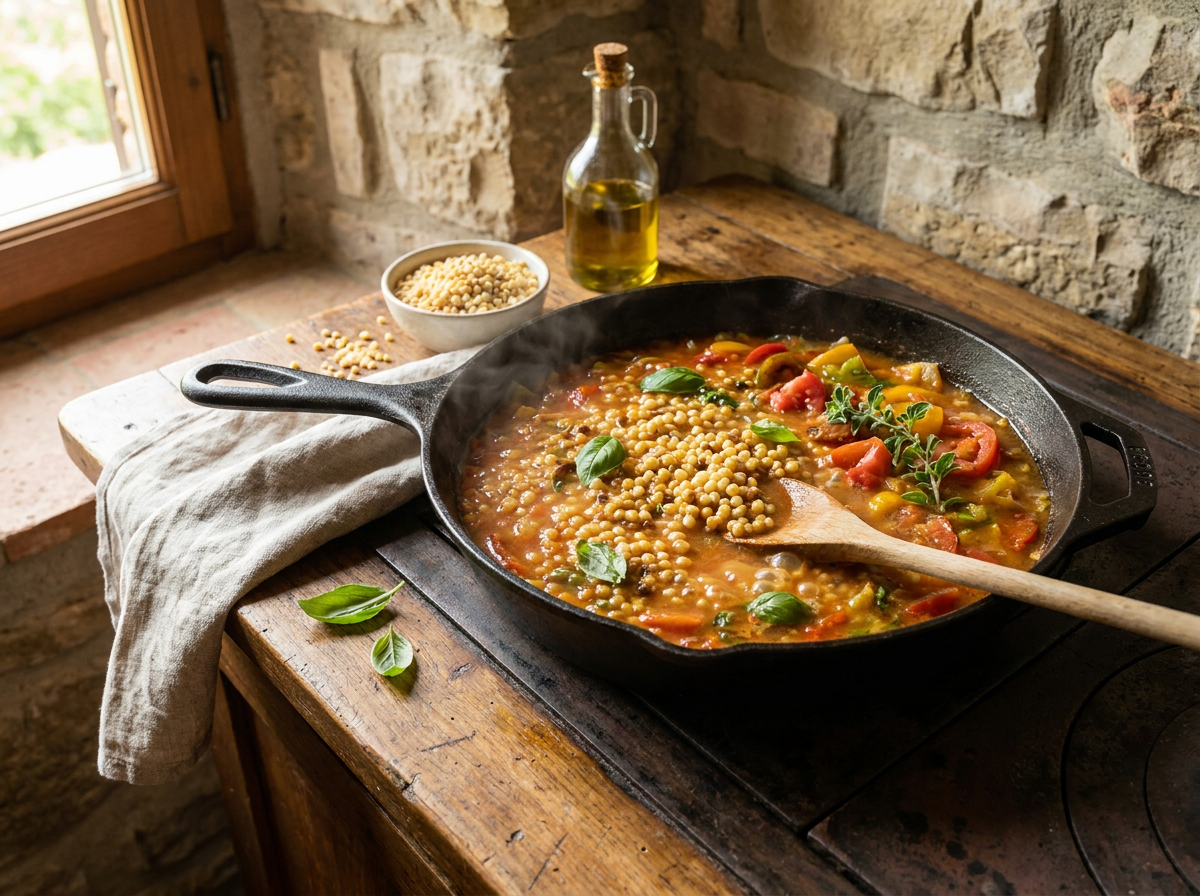
Classic and modern recipes with Fregola Sarda
Whether refined with fresh seafood or rustically combined with crunchy market vegetables, Fregola Sarda shines in traditional recipes as well as in modern creations.
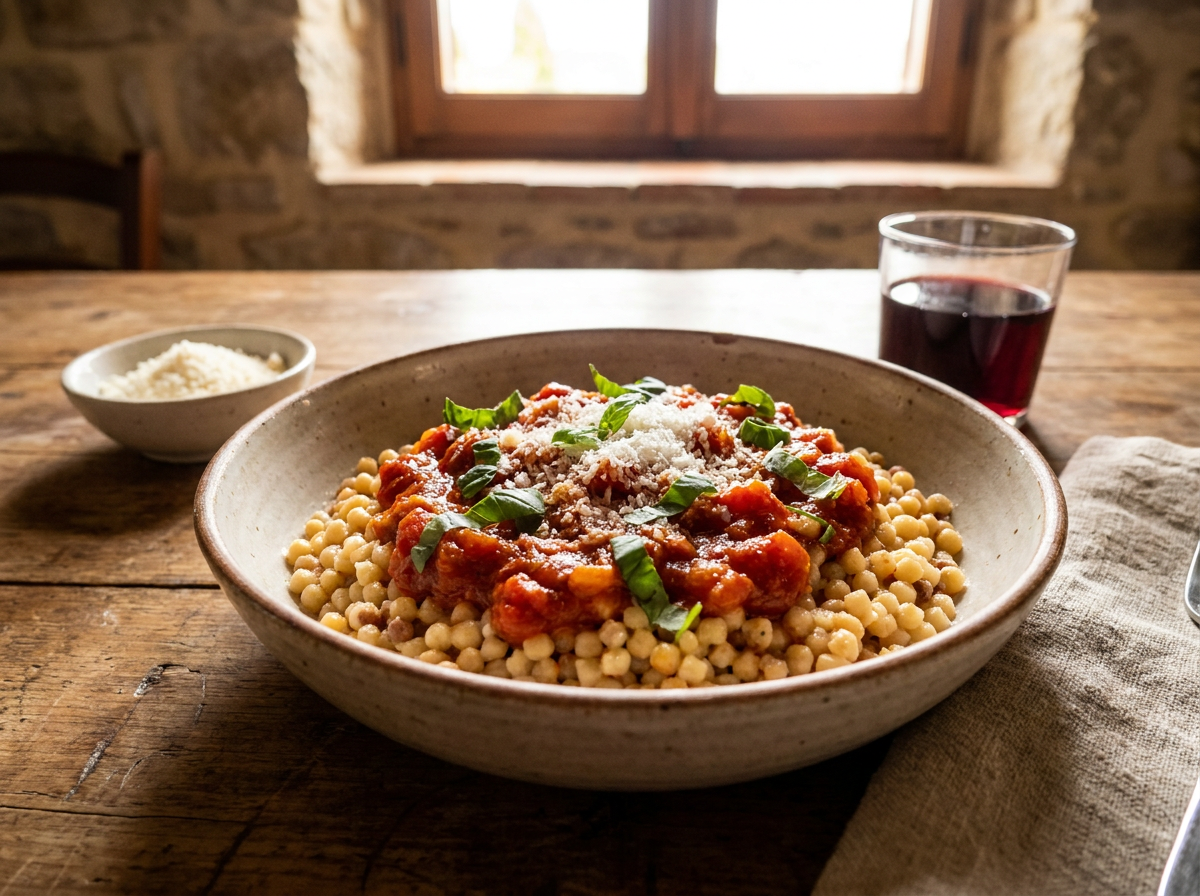
Fregola con le Arselle (Sardinian clam pasta)
The undisputed culinary flagship of the coastal city of Cagliari. Fresh clams are sautéed with plenty of garlic, fresh flat-leaf parsley, fine olive oil and dry white wine. The Fregola Sarda cooks directly in the fresh seafood clam broth, fully absorbing its salty, aromatic flavour. A pinch of chili provides a pleasantly warming spiciness.
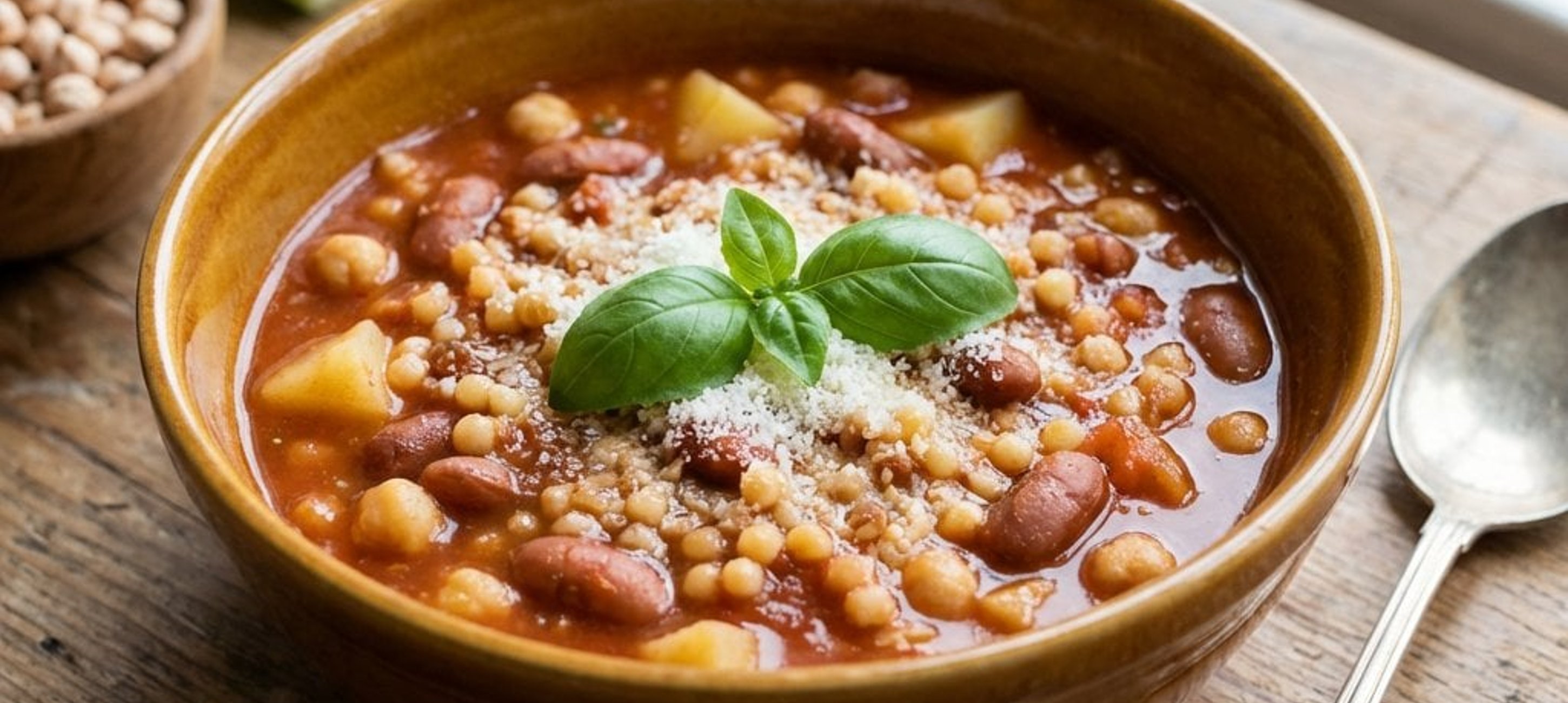
Sardinian Minestrone with Fregola & Pecorino
In the mountainous interior regions of Sardinia, hearty soups made from seasonal vegetable garden produce are appreciated. Borlotti beans, chickpeas, sweet fennel, flavorful fava beans and waxy potatoes form the base. Shortly before serving, Fregola Sarda is added, and the minestrone is topped off with a layer of freshly grated Pecorino. Check out the fool-proof recipe for Sardinian Minestrone at Knuspr Chef.