
Crispy Potato Pancakes: Grandma's Simple Basic Recipe
Fried to a golden brown, with wonderfully jagged, crispy edges and a tender centre: potato pancakes evoke the fondest childhood memories. With Grandma's tried-and-tested kitchen tips, you can effortlessly make this traditional potato pancake recipe right on your own stove.
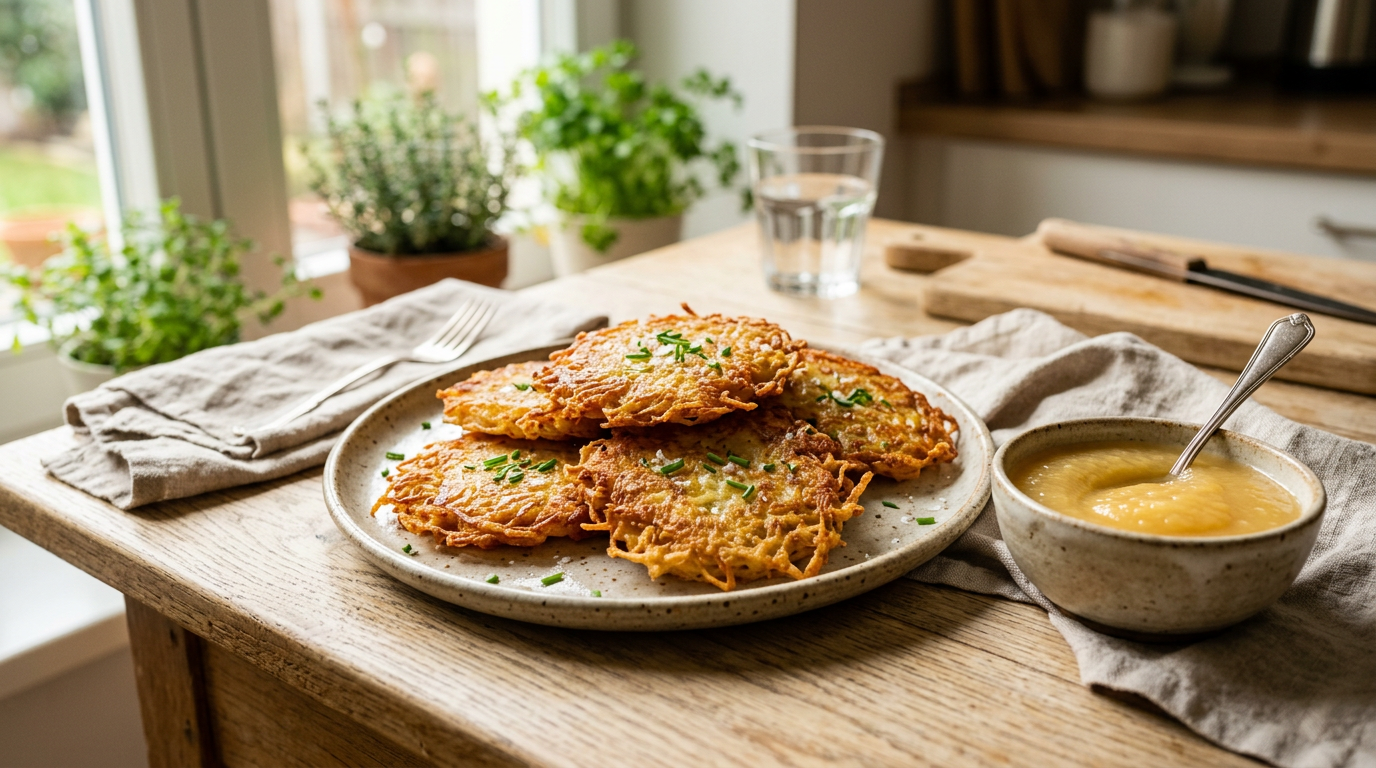
The Incomparable Aroma of Home and a Sizzling Pan
When the enticing aroma of freshly fried potatoes and delicate onions wafts through the home, the family usually gathers around the kitchen table all on their own. Potato pancakes, regionally also affectionately called Reibekuchen, Reiberdatschi, Klicker, or Kartoffelpfannkuchen, are the epitome of German comfort food. On the outside, they must be sizzlingly crisp, while soft inside and brimming with honest potato flavor. Yet, as simple as the few ingredients may sound: almost everyone has stood in front of a frying pan at some point, frustrated by soggy, grey, or grease-soaked patties.
Grandma knew exactly what mattered. In her kitchen, there were neither artificial additives nor mysterious ready-made mixes. Her secret lay in a handful of basic physical rules that conjure pure magic from humble crops. In this detailed guide, you will learn everything you need to know for perfect potato pancakes: from the optimal potato variety to the essential squeezing out of the starch, right through to the ideal frying temperature. Take the grater out of the cupboard, tie on your apron, and look forward to a feast straight out of Grandma's cast-iron pan.
The Right Potato: Why Starch Determines Crispiness
The foundation of every outstanding potato pancake is the raw potato. If you grab blindly from the shelf here, you risk a disappointing result even before making the first cut. Not every variety behaves the same when grated and fried.
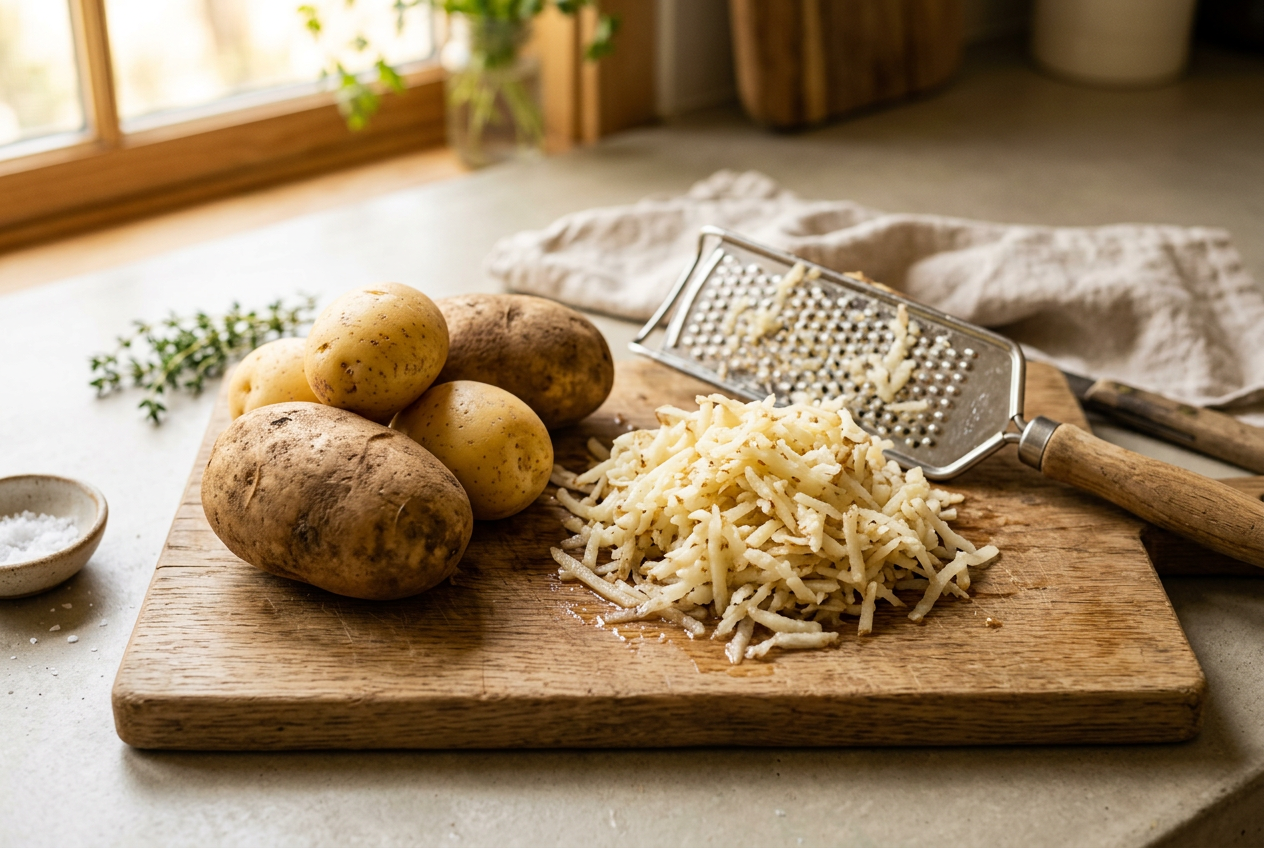
The biggest difference lies in the ratio of starch to water. Potatoes in stores are divided into three categories: waxy, mostly waxy, and floury. For the original potato pancake recipe, mostly waxy potatoes or floury varieties are the undisputed favourites.
Floury potatoes have a particularly high starch content of around 15 to 17 percent. This natural starch acts like a biological glue. It binds the mixture completely on its own without you having to stir in huge amounts of flour, which would otherwise make the pancake doughy and heavy. At the same time, the surface starch ensures rapid caramelisation upon contact with hot fat, creating the coveted golden, crispy crust.
Mostly waxy potatoes offer a wonderful middle ground: they bring enough inherent starch with them, but retain a noticeable fibrous texture when grated. This gives the potato pancakes those wonderfully frayed, rustic edges that crisp up exceptionally well in the pan. You should avoid purely waxy potatoes, as they contain too much excess water. At Knuspr, you will find farm-fresh potatoes directly from regional producers.


 Potatoes waxy, in net
Grate, Squeeze, Save the Starch: The 3 Golden Steps
Preparing the batter determines victory or defeat in the pan. With three proven steps, you can turn simple grated potatoes into the perfect potato pancake mixture that won't absorb unnecessary fat when frying.
Coarse Grater and Onion Protection
Use the medium to coarse side of a box grater. Grate a fresh yellow onion alternating directly with the potatoes. The released onion juice stops the oxidation of the potato cells and reliably prevents the batter from turning grey.
Squeezing in a Tea Towel
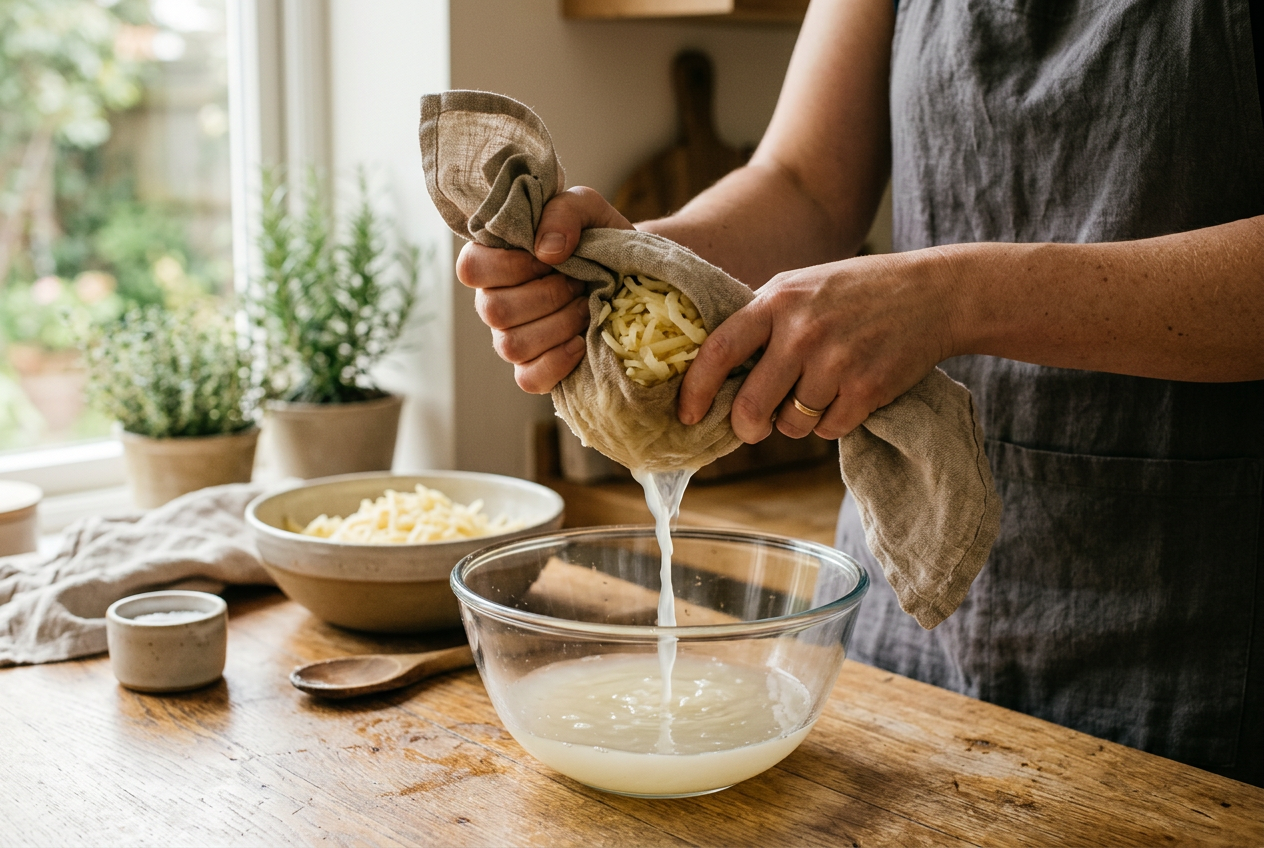
Water is the crust's biggest enemy. Place the grated potatoes into a clean linen or cotton tea towel and wring it out vigorously over a bowl with both hands. The drier the mixture, the crispier the edges will fry.
Recovering the Settled Starch
Let the squeezed potato water sit undisturbed for five minutes. A snow-white layer of pure native potato starch will settle at the bottom of the bowl. Carefully pour off the brown water and add this natural starch back into the batter.

Clarified Butter or Rapeseed Oil: The Physics of Perfect Frying
Even the best batter fails if the conditions in the pan are not right. The interplay between fat type, heat level, and oil depth determines whether your potato pancakes turn out golden brown and crispy or greasy on the palate.
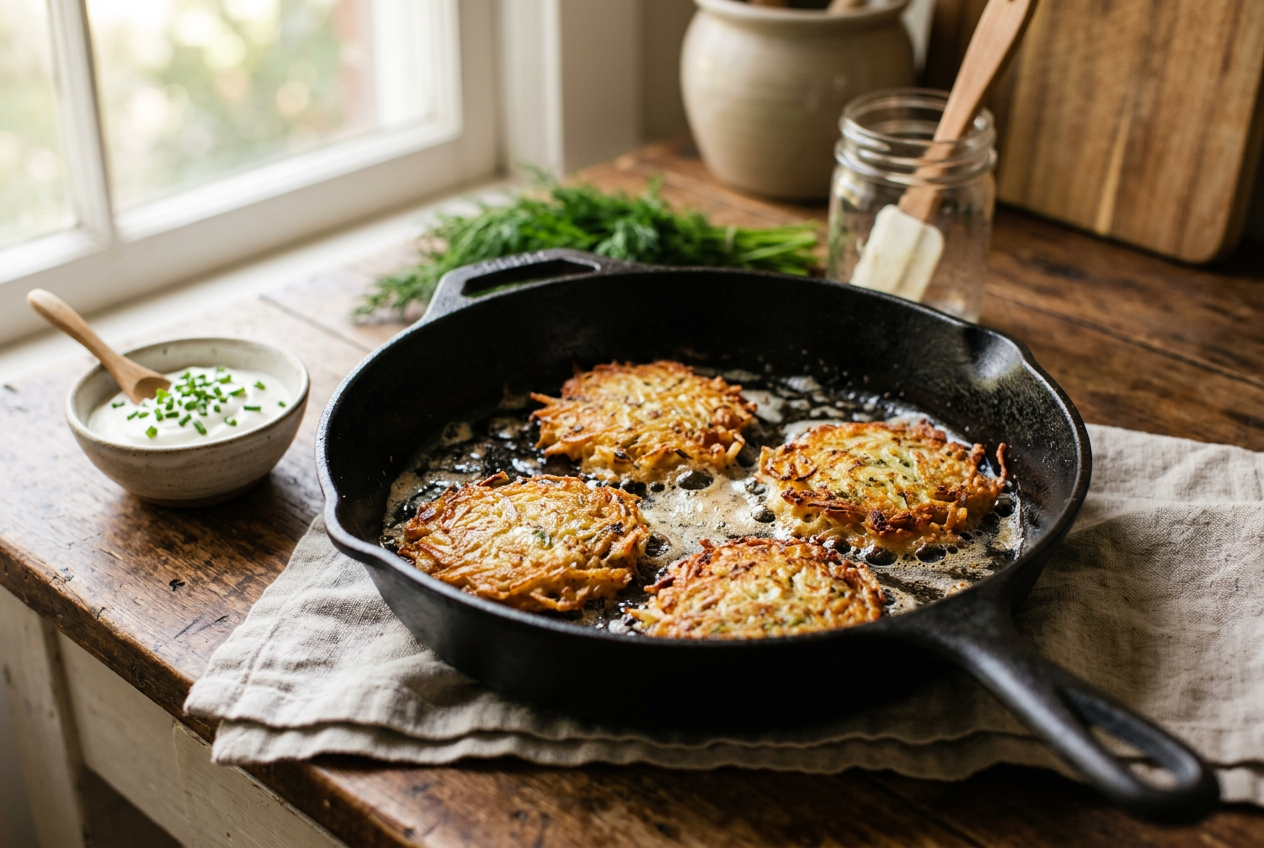
The choice of frying fat is essential for a traditional potato pancake recipe. Never use regular butter or cold-pressed olive oil. Both fats contain water as well as proteins that quickly burn at high temperatures and turn bitter.
The ultimate choice for genuine, grandma-style flavor is pure clarified butter or ghee. It has a smoke point of over 200 degrees Celsius and gives the pancakes an incomparably rich, buttery melt. If you prefer a more neutral or entirely plant-based option, go for refined rapeseed oil or fine sunflower oil. You can find a fine selection of heat-resistant oils and frying fats at Knuspr.
Potato pancakes must be shallow-fried: the bottom of the pan should always be covered with about five millimeters of hot fat. This ensures the heat instantly envelops the pancake from all sides. The proteins and starch coagulate immediately and form a barrier that keeps the fat from penetrating the interior. Never stack cooked pancakes; instead, keep them warm on a wire rack in the oven at 75 degrees.