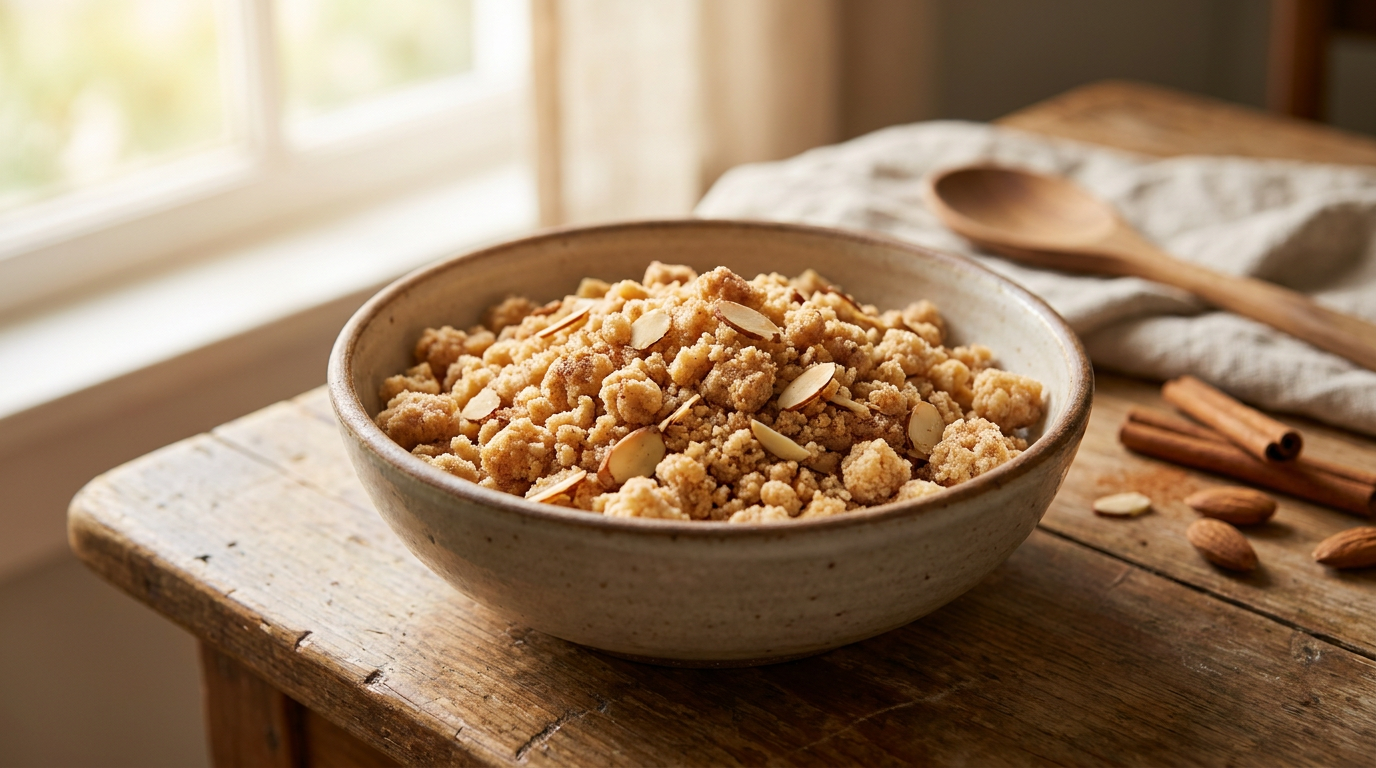
Pflaumenkuchen mit Streusel vom Blech
Wenn der Spätsommer die Obstgärten in sattes Violett taucht und der Duft von warmem Hefeteig, Zimt und geschmolzener Butter durch die Wohnung zieht, gibt es genau ein Gebäck, das alle an den Kaffeetisch lockt: Ein backfrischer Pflaumenkuchen mit Streusel vom Blech.
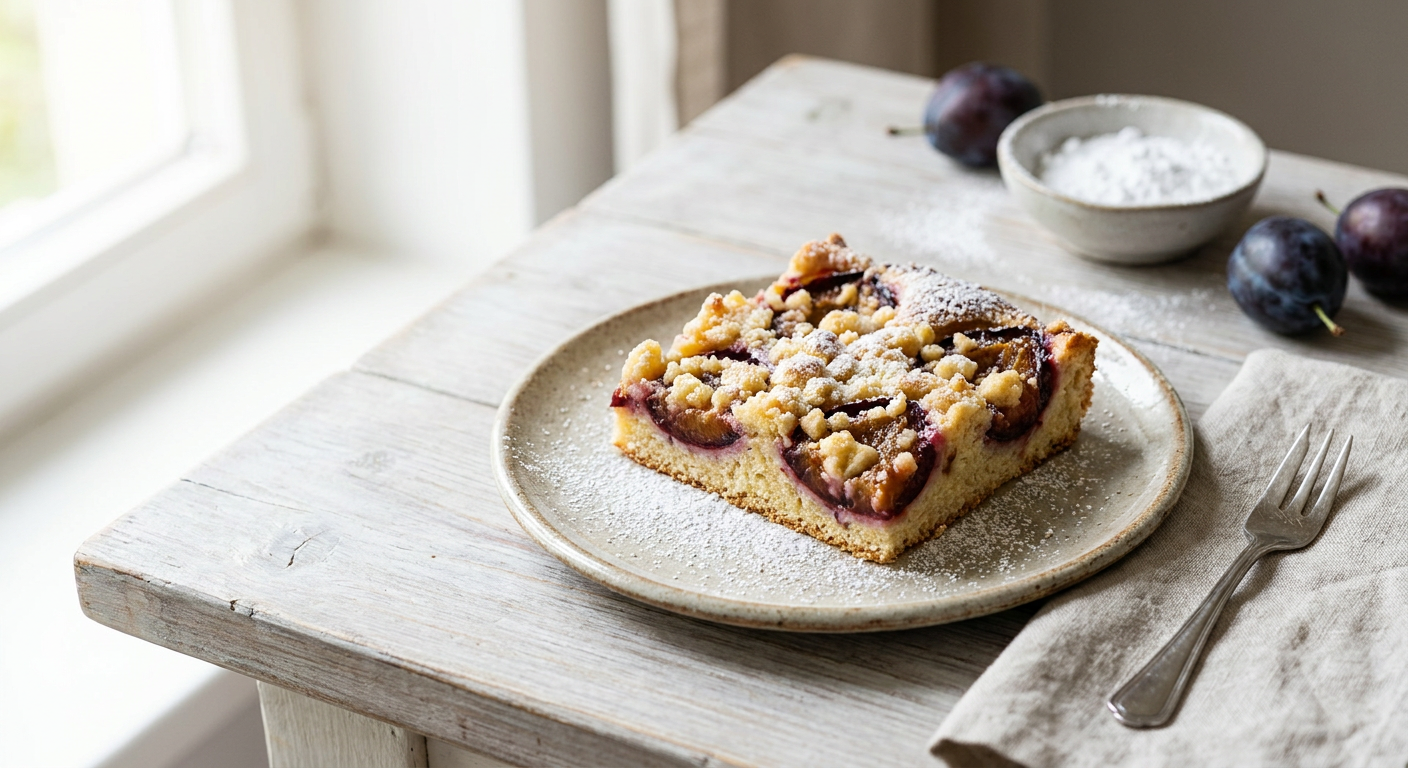
Der Duft von karamellisiertem Fruchtsaft, der sich mit feinstem Butterstreusel und fluffigem Hefegebäck verbindet, weckt pure Kindheitserinnerungen. Doch wer schon einmal vor einem durchweichten Kuchenboden stand oder harte Streusel beklagen musste, weiß: Die scheinbar einfache Kunst des Pflaumenkuchens steckt im Detail. In diesem umfassenden Guide erfährst du alles über die richtige Fruchtwahl, das Geheimnis eines standfesten Hefe-Fundaments und die goldene Formel für unverschämt knusprige Butterstreusel.
Spätsommer auf dem Blech: Warum die richtige Frucht alles entscheidet
Auf dem Wochenmarkt oder in der Obstabteilung scheint die Auswahl riesig, doch beim traditionellen Pflaumenkuchen mit Streusel gibt es einen klaren Favoriten unter den Steinfrüchten. Wer Pflaumen und Zwetschgen gleichsetzt, erlebt im Ofen oft eine wässrige Überraschung.
Pflaumen sind rundlich, herrlich saftig und besitzen ein weiches, süßes Fruchtfleisch. Genau diese Saftfülle ist beim Backen jedoch die größte Hürde: Pflaumen geben im Ofen enorme Mengen Wasser ab, wodurch der Teigboden aufweicht und die Streusel matschig werden können.
Die echte Zwetschge hingegen ist die längliche Unterart der Pflaume. Ihr Fleisch ist spürbar fester, besitzt eine feine, aromatische Säure und vor allem einen deutlich geringeren Wasseranteil. Beim Backen behält sie ihre Form und lässt sich zudem mühelos entsteinen.
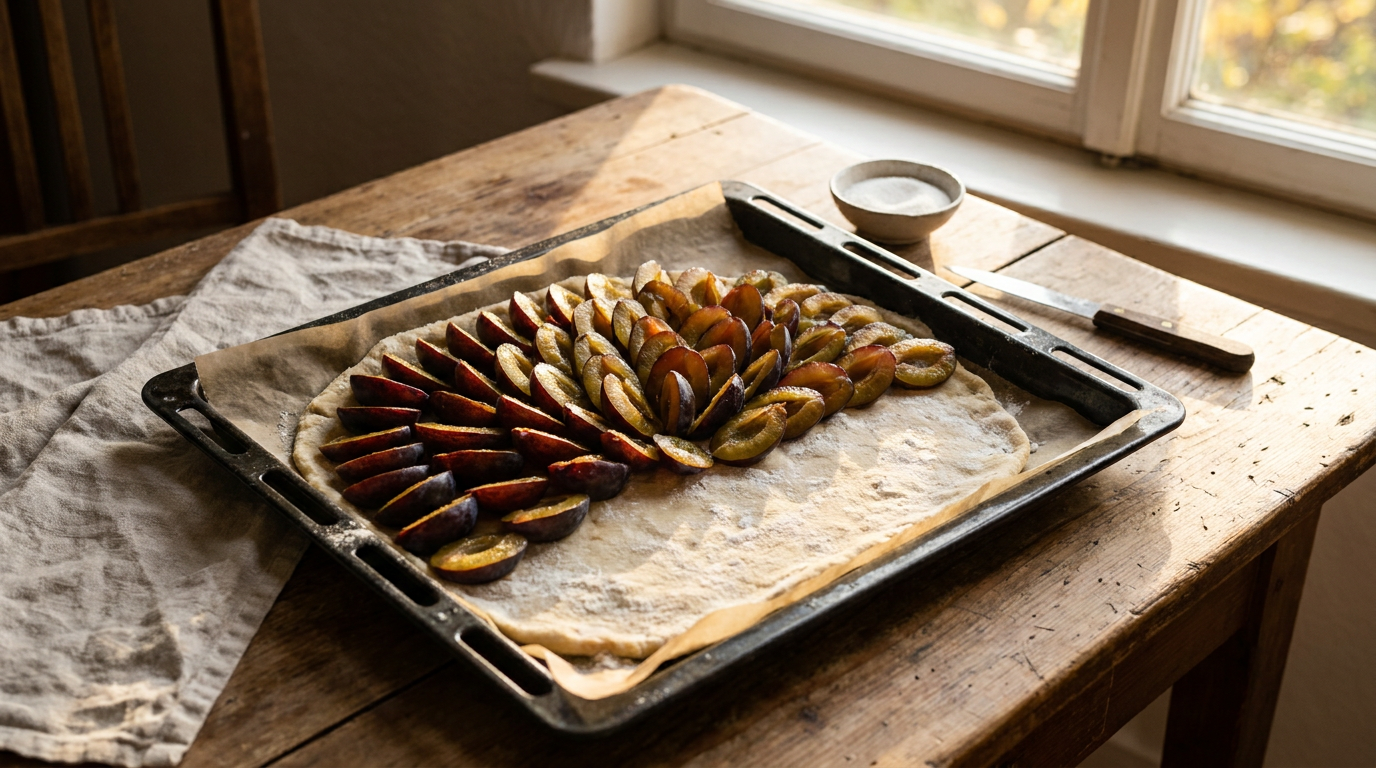
Echte Zwetschgen
Oval geformt mit spitzen Enden, dunkelblauer bis violetter Schale und weißlicher Wachsschicht. Das Fruchtfleisch ist grün-gelblich und fest. Löst sich beim Einschneiden fast von selbst vom Kern und hält den Teigboden wunderbar saftig, ohne ihn zu tränken.
Runde Pflaumen
Kugelförmig mit ausgeprägter Längsfurche. Extrem saftig, süß und weich. Perfekt zum Naschen oder für samtiges Pflaumenmus. Für den Blechkuchen sollten sie nur verwendet werden, wenn sie vorab gut abgetropft und leicht mit Stärke bestäubt werden.
Hefeteig mit Gelinggarantie: Sanft geknetet, goldgelb aufgegangen
Ein echter Pflaumenkuchen verlangt nach einem traditionellen Hefeteig. Er liefert den perfekten Kontrast aus weicher Fluffigkeit, zartem Schmelz und stabiler Tragkraft für die saftigen Früchte. Mit den richtigen Handgriffen verliert die Hefe jeden Schrecken.
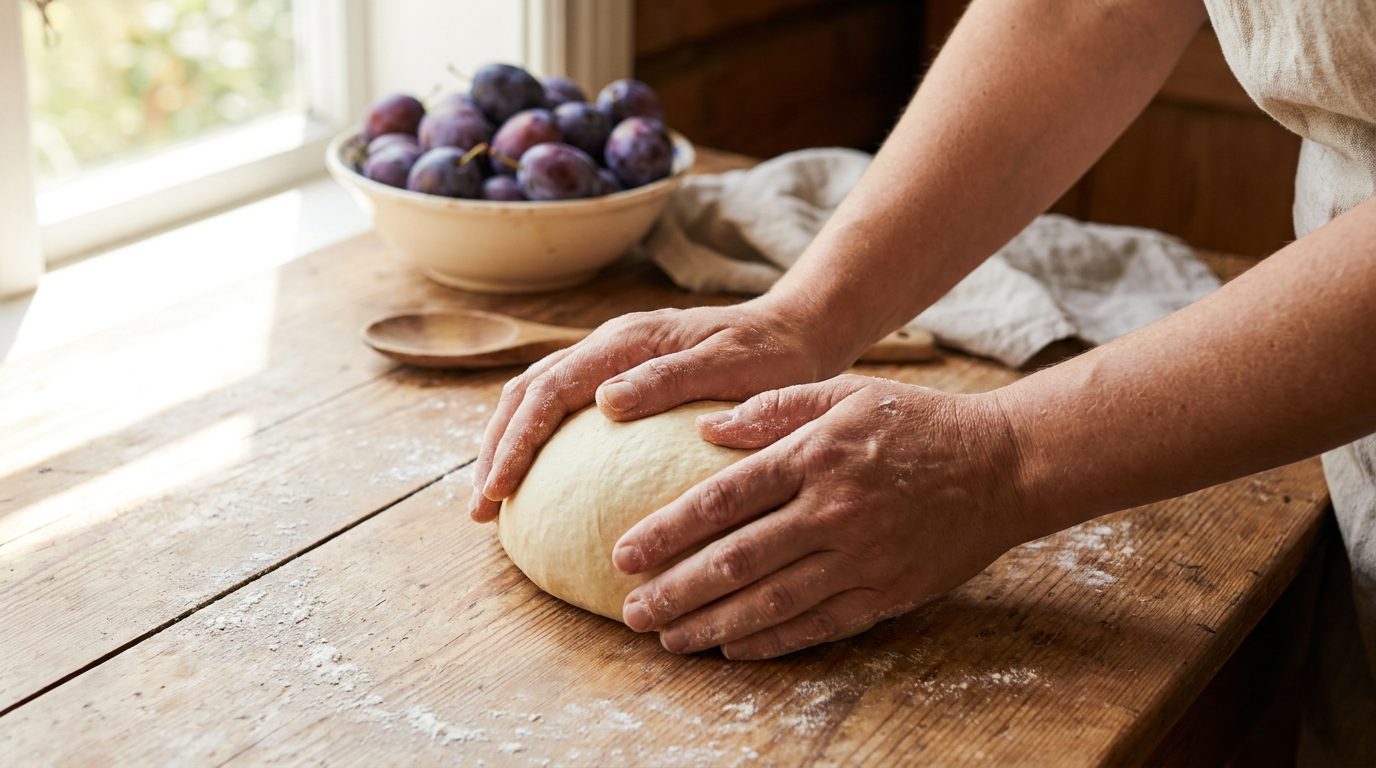
Das Geheimnis eines elastischen Teigs liegt im richtigen Mehl. Während klassisches Type 405 gut funktioniert, sorgt backstarkes Weizenmehl Type 550 mit seinem höheren Kleberanteil für ein stabileres Glutengerüst, das die saftige Fruchtlast mühelos trägt.
Hefe mag es gemütlich: Die Milch darf niemals wärmer als 36 bis 38 Grad sein, da die Hefepilze bei über 40 Grad absterben. Ein Schuss lauwarme Milch, ein Teelöffel Zucker und frische Hefe genügen, um die Gärung sanft in Gang zu setzen.
Vorteig ansetzen (Dampfl)
Bröckle 25 g frische Hefe in 200 ml lauwarme Milch, rühre 1 EL Zucker ein und lasse die Mischung 10 Minuten an einem warmen Ort stehen, bis sich feine Bläschen bilden.
Ausgiebig auskneten
Gib 500 g Mehl, 75 g weiche Butter, 1 Prise Salz und 1 Ei zum Vorteig. Knete den Teig mindestens 8 bis 10 Minuten per Hand oder mit der Küchenmaschine, bis er samtig glatt ist und sich vom Schüsselrand löst.
Entspannte Ruhephase
Decke die Schüssel mit einem leicht feuchten Tuch ab und lasse den Teig an einem zugfreien, warmen Ort für etwa 45 bis 60 Minuten gehen, bis sich sein Volumen verdoppelt hat.
Der Schutzschild gegen Feuchtigkeit
Rolle den Teig auf dem gefetteten Blech aus. Streue nun 2 bis 3 Esslöffel Grieß, Semmelbrösel oder gemahlene Mandeln dünn auf den Teigboden, bevor du das Obst auflegst. Sie saugen überschüssigen Saft auf und garantieren einen knusprigen Boden.
Streusel-Perfektion: Die 3:2:1-Formel für extra dicke Knusperstücke
Ein Pflaumenkuchen ohne Streusel ist wie ein Spätsommer ohne Sonnenschein. Erst der buttrige Knusper macht das Geschmackserlebnis komplett. Doch wie gelingen Streusel, die beim Backen nicht zu einem flachen Fettteig verschmelzen, sondern herrlich stückig und kross bleiben?
Die 3 goldenen Streusel-Gesetze:
1. Eiskalte Butter verwenden: Schneide die Butter direkt aus dem Kühlschrank in kleine Würfel. Warme oder flüssige Butter führt zu zähem Teig, während kalte Butter zarte Schichten und knackige Krümel erzeugt.
2. Nur kurz zwischen den Fingerspitzen reiben: Verknete die Zutaten nicht zu einem Klumpen. Reibe Mehl, Zucker und Butter zügig mit den Händen oder den Knethaken, bis unterschiedlich große Klümpchen entstehen.
3. Kaltstellen vor dem Backen: Stelle die fertigen Streusel für mindestens 15 bis 20 Minuten in den Kühlschrank, während der Hefeteig ruht. Durch den Kälteschock behalten sie im heißen Ofen ihre Form und zerlaufen nicht.