
Produkt aus:
Preussen
559€
Nur noch wenige Stück verfügbar
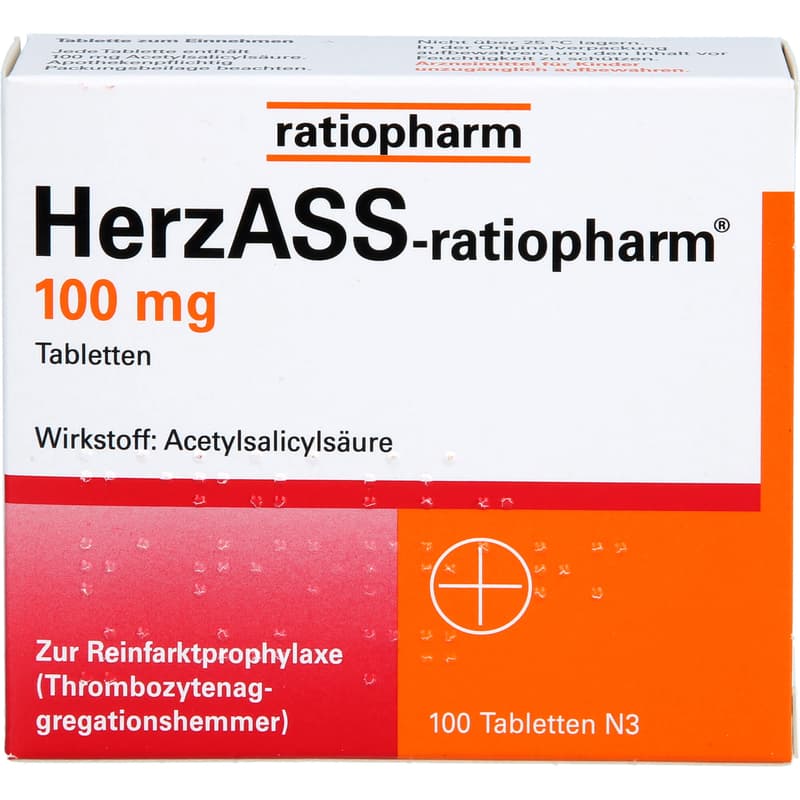
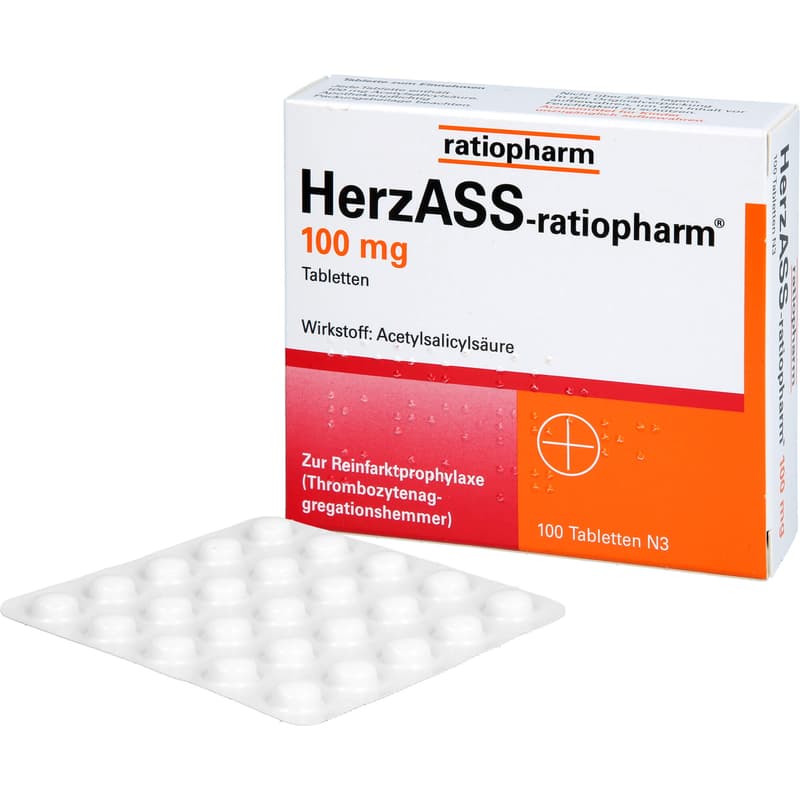
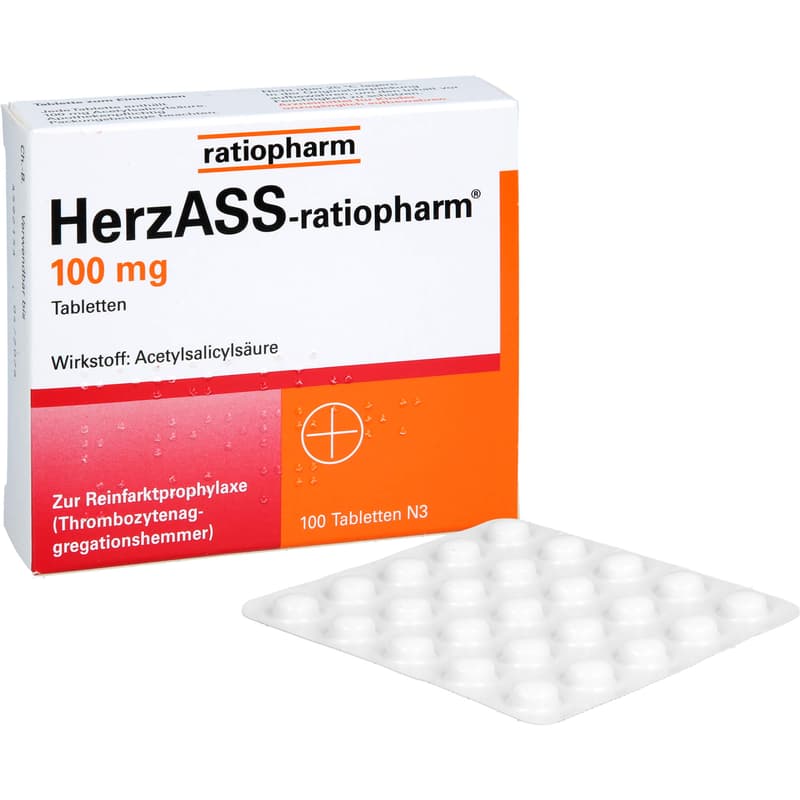
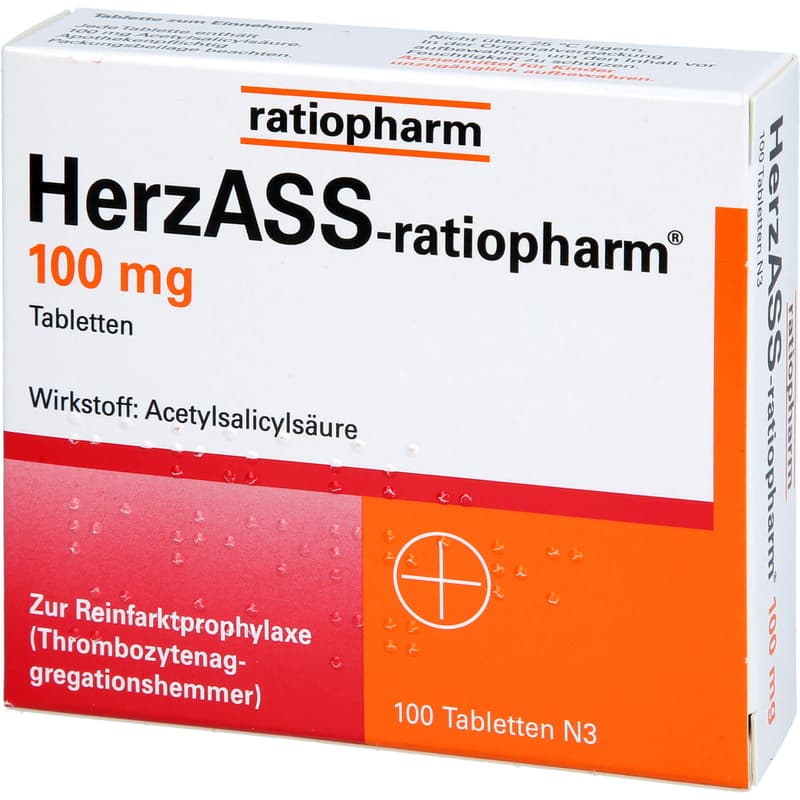
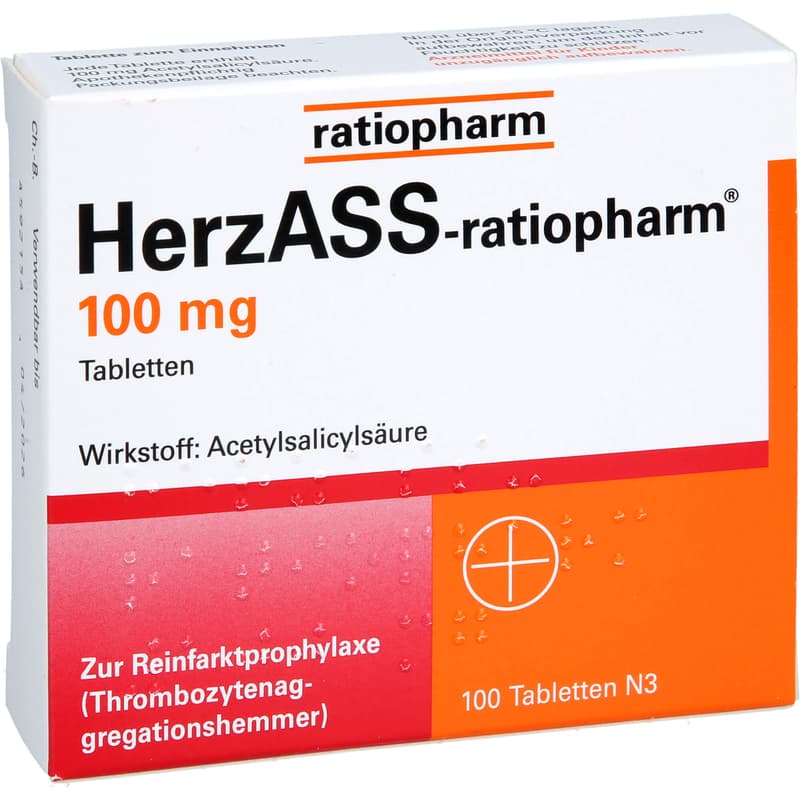
Die HerzASS-ratiopharm 100 mg Tabletten enthalten den bewährten Wirkstoff Acetylsalicylsäure. Sie dienen der Vorbeugung von Blutgerinnseln und unterstützen die Standardtherapie bei akutem Herzinfarkt sowie instabiler Angina pectoris. Die runden, weißen Tabletten mit Kreuzbruchkerbe eignen sich auch zur Reinfarktprophylaxe. Sie erhalten das Arzneimittel in der praktischen Packung mit 100 Stück für Ihre Hausapotheke.
Zu Risiken und Nebenwirkungen lesen Sie die Packungsbeilage und fragen Sie Ihre Ärztin, Ihren Arzt oder in Ihrer Apotheke!




Beschreibung
Wichtige Hinweise (Pflichtangaben)
HerzASS-ratiopharm 100 mg Tabletten. Wirkstoff: Acetylsalicylsäure. Anwendungsgebiete: bei instabiler Angina pectoris (Herzschmerzen aufgrund von Durchblutungsstörungen in den Herzkranzgefäßen) als Teil der Standardtherapie; bei akutem Herzinfarkt - als Teil der Standardtherapie; zur Vorbeugung eines weiteren Herzinfarktes nach erstem Herzinfarkt (zur Reinfarktprophylaxe); nach Operationen oder anderen Eingriffen an arteriellen Blutgefäßen (nach arteriellen gefäßchirurgischen oder interventionellen Eingriffen z.B. nach aortokoronarem Venen-Bypass [ACVB], bei perkutaner transluminaler koronarer Angioplastie [PTCA]); zur Vorbeugung von vorübergehender Mangeldurchblutung im Gehirn (TIA: transitorischen ischämischen Attacken) und Hirninfarkten, nachdem Vorläuferstadien (z.B. vorübergehende Lähmungserscheinungen im Gesicht oder der Armmuskulatur oder vorübergehender Sehverlust) aufgetreten sind.Zu Risiken und Nebenwirkungen lesen Sie die Packungsbeilage und fragen Sie Ihre Ärztin, Ihren Arzt oder in Ihrer Apotheke!
GEBRAUCHSINFORMATION: INFORMATION FÜR DEN ANWENDER
HerzASS-ratiopharm 100 mg Tabletten
Wirkstoff: Acetylsalicylsäure
Lesen Sie die gesamte Packungsbeilage sorgfältig durch, bevor Sie mit der Einnahme dieses Arzneimittels beginnen, denn sie enthält wichtige Informationen. Nehmen Sie dieses Arzneimittel immer genau wie in dieser Packungsbeilage beschrieben bzw. genau nach Anweisung Ihres Arztes oder Apothekers ein.
- Heben Sie die Packungsbeilage auf. Vielleicht möchten Sie diese später nochmals lesen.
- Fragen Sie Ihren Apotheker, wenn Sie weitere Informationen oder einen Rat benötigen.
- Wenn Sie Nebenwirkungen bemerken, wenden Sie sich an Ihren Arzt oder Apotheker. Dies gilt auch für Nebenwirkungen, die nicht in dieser Packungsbeilage angegeben sind. Siehe Abschnitt 4.
- Wenn Sie sich nicht besser oder gar schlechter fühlen, wenden Sie sich an Ihren Arzt.
Was in dieser Packungsbeilage steht
- WAS IST HERZASS–RATIOPHARM 100 MG UND WOFÜR WIRD ES ANGEWENDET?
- WAS SOLLTEN SIE VOR DER EINNAHME VON HERZASS–RATIOPHARM 100 MG BEACHTEN?
- WIE IST HERZASS–RATIOPHARM 100 MG EINZUNEHMEN?
- WELCHE NEBENWIRKUNGEN SIND MÖGLICH?
- WIE IST HERZASS–RATIOPHARM 100 MG AUFZUBEWAHREN?
- INHALT DER PACKUNG UND WEITERE INFORMATIONEN
HerzASS-ratiopharm 100 mg hemmt u.a. das Zusammenhaften und Verklumpen von Blutplättchen (Thrombozyten) und beugt dadurch der Entstehung von Blutgerinnseln (Thromben) vor (Thrombozytenaggregationshemmung).
HerzASS-ratiopharm 100 mg wird angewendet:
- bei instabiler Angina pectoris (Herzschmerzen aufgrund von Durchblutungsstörungen in den Herzkranzgefäßen) als Teil der Standardtherapie.
- bei akutem Herzinfarkt – als Teil der Standardtherapie.
- zur Vorbeugung eines weiteren Herzinfarktes nach erstem Herzinfarkt (zur Reinfarktprophylaxe).
- nach Operationen oder anderen Eingriffen an arteriellen Blutgefäßen (nach arteriellen gefäßchirurgischen oder interventionellen Eingriffen z.B. nach aortokoronarem Venen–Bypass [ACVB], bei perkutaner transluminaler koronarer Angioplastie [PTCA]).
- zur Vorbeugung von vorübergehender Mangeldurchblutung im Gehirn (TIA: transitorischen ischämischen Attacken) und Hirninfarkten, nachdem Vorläuferstadien (z.B. vorübergehende Lähmungserscheinungen im Gesicht oder der Armmuskulatur oder vorübergehender Sehverlust) aufgetreten sind.
Hinweis
HerzASS-ratiopharm 100 mg eignet sich nicht zur Behandlung von Schmerzzuständen.2. WAS SOLLTEN SIE VOR DER EINNAHME VON HERZASS-RATIOPHARM 100 MG BEACHTEN?
HerzASS-ratiopharm 100 mg darf nicht eingenommen werden:
- wenn Sie allergisch gegen Acetylsalicylsäure, andere Salicylate oder einen der in Abschnitt 6. genannten sonstigen Bestandteile dieses Arzneimittels sind.
- wenn Sie in der Vergangenheit auf bestimmte Arzneimittel gegen Schmerzen, Fieber oder Entzündungen (Salicylate oder andere nichtsteroidale Entzündungshemmer) mit Asthmaanfällen oder in anderer Weise allergisch reagiert haben.
- bei akuten Magen– und Darm–Geschwüren.
- bei krankhaft erhöhter Blutungsneigung (hämorrhagische Diathese).
- bei Leber– und Nierenversagen.
- bei schwerer, nicht durch Medikamente eingestellter Herzmuskelschwäche (Herzinsuffizienz).
- wenn Sie gleichzeitig 15 mg oder mehr Methotrexat pro Woche einnehmen.
- in den letzten 3 Monaten der Schwangerschaft in einer Dosierung von mehr als 150 mg Acetylsalicylsäure pro Tag (siehe auch Abschnitt "Schwangerschaft und Stillzeit").
Warnhinweise und Vorsichtsmaßnahmen
Bitte sprechen Sie mit Ihrem Arzt oder Apotheker, bevor Sie HerzASS-ratiopharm 100 mg einnehmen:- bei einer Überempfindlichkeit (Allergie) gegen andere schmerz– und entzündungshemmende Arzneimittel, andere Arzneimittel gegen Rheuma oder gegen andere Allergie auslösende Stoffe.
- bei Bestehen von anderen Allergien (z.B. mit Hautreaktionen, Juckreiz, Nesselfieber).
- bei Asthma bronchiale, Heuschnupfen, Nasenschleimhautschwellungen (Nasenpolypen) oder chronischen Atemwegserkrankungen.
- bei gleichzeitiger Behandlung mit gerinnungshemmenden Arzneimitteln (z.B. Cumarinderivate, Heparin – mit Ausnahme niedrig dosierter HeparinBehandlung).
- bei Magen– und Darm–Geschwüren oder Magen–DarmBlutungen in der Vorgeschichte.
- bei eingeschränkter Leberfunktion.
- bei eingeschränkter Nierenfunktion oder verminderter Herz– und Gefäßdurchblutung (z.B. Gefäßerkrankung der Nieren, Herzmuskelschwäche, Verringerung des Blutvolumens, größere Operationen, Blutvergiftung oder stärkere Blutungen): Acetylsalicylsäure kann das Risiko einer Nierenfunktionsstörung und eines akuten Nierenversagens weiter erhöhen.
- vor Operationen (auch bei kleineren Eingriffen wie z.B. Ziehen eines Zahnes): es kann zu verstärkter Blutungsneigung kommen. Bitte informieren Sie Ihren Arzt oder Zahnarzt, wenn Sie HerzASS–ratiopharm 100 mg eingenommen haben.
- bei Patienten mit schwerem Glukose–6–Phosphat–Dehydrogenasemangel: Acetylsalicylsäure kann einen beschleunigten Abbau bzw. Zerfall der roten Blutkörperchen oder eine bestimmte Form von Blutarmut bewirken. Dieses Risiko kann durch Faktoren wie z.B. hohe Dosierung, Fieber oder akute Infektionen erhöht werden.
Acetylsalicylsäure vermindert in niedriger Dosierung die Harnsäureausscheidung. Bei entsprechend gefährdeten Patienten kann dies unter Umständen einen Gichtanfall auslösen. Wenn Sie sich schneiden oder verletzen, kann es eventuell etwas länger als sonst dauern, bis eine Blutung zum Stillstand kommt. Dies hängt mit der Wirkung von HerzASS-ratiopharm 100 mg zusammen. Kleinere Schnitte und Verletzungen (z.B. beim Rasieren) sind in der Regel ohne Bedeutung. Bei ungewöhnlichen Blutungen (an ungewöhnlicher Stelle oder von ungewöhnlicher Dauer) wenden Sie sich an Ihren Arzt. Acetylsalicylsäure-haltige Arzneimittel sollen längere Zeit oder in höheren Dosen nicht ohne Befragen des Arztes angewendet werden.
Kinder und Jugendliche
HerzASS-ratiopharm 100 mg soll bei Kindern und Jugendlichen mit fieberhaften Erkrankungen nur auf ärztliche Anweisung und nur dann angewendet werden, wenn andere Maßnahmen nicht wirken. Sollte es bei diesen Erkrankungen zu lang anhaltendem Erbrechen kommen, so kann dies ein Zeichen des Reye-Syndroms, einer sehr seltenen, aber lebensbedrohlichen Krankheit sein, die unbedingt sofortiger ärztlicher Behandlung bedarf.Einnahme von HerzASS-ratiopharm 100 mg zusammen mit anderen Arzneimitteln
Informieren Sie Ihren Arzt oder Apotheker, wenn Sie andere Arzneimittel einnehmen/anwenden, kürzlich andere Arzneimittel eingenommen/angewendet haben oder beabsichtigen andere Arzneimittel einzunehmen/anzuwenden. Die Wirkung nachfolgend genannter Arzneistoffe bzw. Präparategruppen kann bei gleichzeitiger Behandlung mit HerzASS-ratiopharm 100 mg beeinflusst werden.Verstärkung der Wirkung bis hin zu erhöhtem Nebenwirkungsrisiko:
- blutgerinnungshemmende (z.B. Cumarin, Heparin) und Blutgerinnsel auflösende Arzneimittel: Acetylsalicylsäure kann das Blutungsrisiko erhöhen, wenn es vor einer Blutgerinnsel auflösenden Behandlung eingenommen wurde. Daher müssen Sie, wenn bei Ihnen eine solche Behandlung durchgeführt werden soll, auf Zeichen äußerer oder innerer Blutungen (z.B. blaue Flecken) aufmerksam achten.
- andere Thrombozytenaggregationshemmer (Arzneimittel, die das Zusammenhaften und Verklumpen von Blutplättchen hemmen, z.B. Ticlopidin, Clopidogrel): erhöhtes Risiko für Blutungen.
- andere schmerz– und entzündungshemmende Arzneimittel (nichtsteroidale Analgetika/ Antiphlogistika) und Arzneimittel gegen Rheuma allgemein: erhöhtes Risiko für Blutungen und Geschwüre im Magen–Darm–Bereich
- Arzneimittel, die Kortison oder kortisonähnliche Substanzen enthalten (mit Ausnahme von Produkten, die auf die Haut aufgetragen werden oder bei der Kortisonersatztherapie bei Morbus Addison): erhöhtes Risiko für Nebenwirkungen im Magen–Darm–Bereich.
- Alkohol: das Risiko für Magen–Darm–Geschwüre und –Blutungen ist erhöht.
- blutzuckersenkende Arzneimittel (Antidiabetika): der Blutzuckerspiegel kann sinken.
- Digoxin (Arzneimittel zur Stärkung der Herzkraft).
- Methotrexat (Arzneimittel zur Behandlung von Krebserkrankungen bzw. von bestimmten rheumatischen Erkrankungen).
- Valproinsäure (Mittel zur Behandlung von Krampfanfällen des Gehirns [Epilepsie]).
- Selektive–Serotonin–Wiederaufnahme–Hemmer (bestimmte Arzneimittel zur Behandlung von Depressionen): das Risiko für Blutungen im MagenDarm–Bereich steigt.
- spezielle Arzneimittel, die eine vermehrte Harnausscheidung bewirken (Diuretika: sogenannte Aldosteronantagonisten wie z.B. Spironolacton und Canrenoat; Schleifendiuretika, z.B. Furosemid).
- bestimmte blutdrucksenkende Arzneimittel (insbesondere ACE–Hemmer).
- Harnsäure ausscheidende Arzneimittel gegen Gicht (z.B. Probenecid, Benzbromaron).
Einnahme von HerzASS-ratiopharm 100 mg zusammen mit Nahrungsmitteln,
Getränken und Alkohol
Bitte beachten Sie, dass Acetylsalicylsäure nicht zusammen mit Alkohol eingenommen werden sollte.Schwangerschaft und
Stillzeit
Wenn Sie schwanger sind oder stillen, oder wenn Sie vermuten, schwanger zu sein oder beabsichtigen, schwanger zu werden, fragen Sie vor der Einnahme dieses Arzneimittels Ihren Arzt oder Apotheker um Rat.Schwangerschaft
Im ersten und zweiten Schwangerschaftsdrittel dürfen Sie HerzASS-ratiopharm 100 mg nur auf Anordnung Ihres Arztes einnehmen. In den letzten drei Monaten der Schwangerschaft dürfen Sie Acetylsalicylsäure, den Wirkstoff von HerzASS-ratiopharm 100 mg wegen eines erhöhten Risikos von Komplikationen für Mutter und Kind vor und während der Geburt nicht in einer Dosierung von mehr als 150 mg pro Tag einnehmen (siehe Abschnitt "HerzASS-ratiopharm 100 mg darf nicht eingenommen werden"). Acetylsalicylsäure bis zu 150 mg pro Tag dürfen Sie im letzten Schwangerschaftsdrittel nur auf Anordnung Ihres Arztes einnehmen.Stillzeit
Der Wirkstoff Acetylsalicylsäure und seine Abbauprodukte gehen in geringen Mengen in die Muttermilch über. Da nachteilige Folgen für den Säugling bisher nicht bekannt geworden sind, wird bei Anwendung einer Tagesdosis von bis zu 150 mg eine Unterbrechung des Stillens in der Regel nicht erforderlich sein. Bei Einnahme höherer Dosen (über 150 mg Tagesdosis) sollte abgestillt werden.Verkehrstüchtigkeit und Fähigkeit zum Bedienen von Maschinen
Es sind keine besonderen Vorsichtsmaßnahmen erforderlich.3. WIE IST HERZASS-RATIOPHARM 100 MG EINZUNEHMEN?
Nehmen Sie dieses Arzneimittel immer genau wie in dieser Packungsbeilage beschrieben bzw. genau nach der mit Ihrem Arzt oder Apotheker getroffenen Absprache ein. Fragen Sie bei Ihrem Arzt oder Apotheker nach, wenn Sie sich nicht sicher sind.
Dosierung - falls vom Arzt nicht anders verordnet, beträgt die empfohlene Dosis:
- Bei instabiler Angina pectoris (Herzschmerzen aufgrund von Durchblutungsstörungen in den Herzkranzgefäßen): Es wird eine Tagesdosis von 1 Tablette HerzASS–ratiopharm 100 mg (entsprechend 100 mg Acetylsalicylsäure pro Tag) empfohlen.
- Bei akutem Herzinfarkt: Es wird eine Tagesdosis von 1 Tablette HerzASS–ratiopharm 100 mg (entsprechend 100 mg Acetylsalicylsäure pro Tag) empfohlen.
- Zur Vorbeugung eines weiteren Herzinfarktes nach erstem Herzinfarkt (Reinfarktprophylaxe): Es wird eine Tagesdosis von 3 Tabletten HerzASS–ratiopharm 100 mg (entsprechend 300 mg Acetylsalicylsäure pro Tag) empfohlen.
- Nach Operationen oder anderen Eingriffen an arteriellen Blutgefäßen (nach arteriellen gefäßchirurgischen oder interventionellen Eingriffen; z.B. nach ACVB; bei PTCA): Es wird eine Tagesdosis von 1 Tablette HerzASS–ratiopharm 100 mg (entsprechend 100 mg Acetylsalicylsäure pro Tag) empfohlen. Der günstigste Zeitpunkt für den Beginn der Behandlung mit HerzASS–ratiopharm 100 mg nach aortokoronarem Venen–Bypass (ACVB) scheint 24 Stunden nach der Operation zu sein.
- Zur Vorbeugung von vorübergehender Mangeldurchblutung im Gehirn (TIA) und Hirninfarkten, nachdem Vorläuferstadien aufgetreten sind: Es wird eine Tagesdosis von 1 Tablette HerzASS–ratiopharm 100 mg (entsprechend 100 mg Acetylsalicylsäure pro Tag) empfohlen.
Art der Anwendung
Nehmen Sie die Tabletten bitte unzerkaut möglichst nach der Mahlzeit mit reichlich Flüssigkeit (z.B. einem Glas Wasser) ein. Nicht auf nüchternen Magen einnehmen! Zur Behandlung bei akutem Herzinfarkt sollte die erste Tablette zerbissen oder zerkaut werden.Dauer der Anwendung
HerzASS-ratiopharm 100 mg ist zur längerfristigen Anwendung vorgesehen. Über die Dauer der Anwendung entscheidet der behandelnde Arzt.Wenn Sie eine größere Menge von HerzASS-ratiopharm 100 mg eingenommen haben,
als Sie sollten
Schwindel und Ohrklingen können, insbesondere bei Kindern und älteren Patienten, Zeichen einer ernsthaften Vergiftung sein. Bei Verdacht auf eine Überdosierung mit HerzASS-ratiopharm 100 mg benachrichtigen Sie bitte sofort Ihren Arzt. Dieser kann entsprechend der Schwere einer Überdosierung/Vergiftung über die gegebenenfalls erforderlichen Maßnahmen entscheiden.Wenn Sie die Einnahme von HerzASS-ratiopharm 100 mg vergessen haben
Wenn Sie zu wenig HerzASS-ratiopharm 100 mg genommen oder eine Dosis vergessen haben, nehmen Sie beim nächsten Mal nicht etwa die doppelte Menge ein, sondern führen Sie die Einnahme, wie in der Dosierungsanleitung beschrieben bzw. vom Arzt verordnet, fort.Wenn Sie die Einnahme von HerzASS-ratiopharm 100 mg abbrechen
Bitte unterbrechen oder beenden Sie die Behandlung mit HerzASS-ratiopharm 100 mg nicht, ohne dies vorher mit Ihrem Arzt abgesprochen zu haben.Wenn Sie weitere Fragen zur Anwendung dieses Arzneimittels haben, wenden Sie sich an Ihren Arzt oder Apotheker.
4. WELCHE NEBENWIRKUNGEN SIND MÖGLICH?
Wie alle Arzneimittel kann auch dieses Arzneimittel Nebenwirkungen haben, die aber nicht bei jedem auftreten müssen.
Erkrankungen des Blutes und des Lymphsystems
Selten (kann bis zu 1 von 1.000 Behandelten betreffen) bis sehr selten (kann bis zu 1 von 10.000 Behandelten betreffen) sind auch schwerwiegende Blutungen wie z.B. Hirnblutungen, besonders bei Patienten mit nicht eingestelltem Bluthochdruck und/oder gleichzeitiger Behandlung mit blutgerinnungshemmenden Arzneimitteln berichtet worden, die in Einzelfällen möglicherweise lebensbedrohlich sein können. Beschleunigter Abbau bzw. Zerfall der roten Blutkörperchen und eine bestimmte Form der Blutarmut bei Patienten mit schwerem Glukose-6-Phosphat-Dehydrogenasemangel. Blutungen wie z.B. Nasenbluten, Zahnfleischbluten, Hautblutungen oder Blutungen der Harn ableitenden Wege und der Geschlechtsorgane mit einer möglichen Verlängerung der Blutungszeit. Diese Wirkung kann über 4 bis 8 Tage nach der Einnahme anhalten.Erkrankungen des Immunsystems
Selten (kann bis zu 1 von 1.000 Behandelten betreffen)
Überempfindlichkeitsreaktionen der Haut, der Atemwege, des Magen-Darm-Bereiches und des Herz-KreislaufSystems, vor allem bei Asthmatikern. Folgende Krankheitsmerkmale können auftreten: z.B. Blutdruckabfall, Anfälle von Atemnot, Entzündungen der Nasenschleimhaut, verstopfte Nase, allergischer Schock, Schwellungen von Gesicht, Zunge und Kehlkopf (Quincke-Ödem).Stoffwechsel- und Ernährungsstörungen
Sehr selten (kann bis zu 1 von 10.000 Behandelten betreffen)
- Verminderung der Blutzuckerwerte (Hypoglykämie).
- Acetylsalicylsäure vermindert in niedriger Dosierung die Harnsäureausscheidung. Bei hierfür gefährdeten Patienten kann dies unter Umständen einen Gichtanfall auslösen.
Erkrankungen des Nervensystems
Kopfschmerzen, Schwindel, gestörtes Hörvermögen oder Ohrensausen (Tinnitus) und Verwirrtheit können Anzeichen einer Überdosierung sein (siehe Abschnitt 3. unter "Wenn Sie eine größere Menge von HerzASS-ratiopharm 100 mg eingenommen haben, als Sie sollten").Erkrankungen des Gastrointestinaltrakts
Häufig (kann bis zu 1 von 10 Behandelten betreffen):- Magen–Darm–Beschwerden wie Sodbrennen, Übelkeit, Erbrechen, Bauchschmerzen und Durchfälle.
- Geringfügige Blutverluste aus dem Magen–Darm–Bereich (Mikroblutungen).
- Magen– oder Darm–Geschwüre, die sehr selten zu einem Durchbruch führen können.
- Magen– oder Darm–Entzündungen.
- Magen– oder Darm–Blutungen.
Nach längerer Anwendung von HerzASS-ratiopharm
100 mg kann eine Blutarmut (Eisenmangelanämie) durch verborgene Blutverluste aus dem Magen- oder Darm-Bereich auftreten. Bei Auftreten von schwarzem Stuhl oder blutigem Erbrechen (Zeichen einer schweren Magenblutung) müssen Sie sofort Ihren Arzt benachrichtigen (siehe "Gegenmaßnahmen").Leber- und Gallenerkrankungen
Sehr selten (kann bis zu 1 von 10.000 Behandelten betreffen)
- Erhöhungen der Leberwerte.
Erkrankungen der Haut und des Unterhautzellgewebes
Gelegentlich (kann bis zu 1 von 100 Behandelten betreffen):- Hautreaktionen (sehr selten bis hin zu schweren, fieberhaft verlaufenden Hautausschlägen mit Schleimhautbeteiligung (Erythema exsudativum multiforme).
Erkrankungen der Nieren und der Harnwege
Sehr selten (kann bis zu 1 von 10.000 Behandelten betreffen)
- Nierenfunktionsstörungen und akutes Nierenversagen. Gegenmaßnahmen
Meldung von Nebenwirkungen
Wenn Sie Nebenwirkungen bemerken, wenden Sie sich an Ihren Arzt oder Apotheker. Dies gilt auch für Nebenwirkungen, die nicht in dieser Packungsbeilage angegeben sind. Sie können Nebenwirkungen auch direkt dem Bundesinstitut für Arzneimittel und Medizinprodukte, Abt. Pharmakovigilanz, Kurt-Georg-Kiesinger Allee 3, D-53175 Bonn, Website: www.bfarm.de anzeigen. Indem Sie Nebenwirkungen melden, können Sie dazu beitragen, dass mehr Informationen über die Sicherheit dieses Arzneimittels zur Verfügung gestellt werden.5. WIE IST HERZASS-RATIOPHARM 100 MG AUFZUBEWAHREN?
Bewahren Sie dieses Arzneimittel für Kinder unzugänglich auf. Sie dürfen dieses Arzneimittel nach dem auf dem Umkarton und den Blisterpackungen nach "Verwendbar bis" angegebenen Verfalldatum nicht mehr verwenden. Das Verfalldatum bezieht sich auf den letzten Tag des angegebenen Monats. Nicht über 25°C lagern. In der Originalverpackung aufbewahren, um den Inhalt vor Feuchtigkeit zu schützen. Entsorgen Sie Arzneimittel nicht im Abwasser. Fragen Sie Ihren Apotheker, wie das Arzneimittel zu entsorgen ist, wenn Sie es nicht mehr verwenden. Sie tragen damit zum Schutz der Umwelt bei.
6. INHALT DER PACKUNG UND WEITERE INFORMATIONEN
Was HerzASS-ratiopharm 100 mg enthält
Der Wirkstoff ist Acetylsalicylsäure. Jede Tablette enthält 100 mg Acetylsalicylsäure. Die sonstigen Bestandteile sind: Maisstärke, Mikrokristalline Cellulose, Cellulosepulver.Wie HerzASS-ratiopharm 100 mg aussieht und Inhalt der Packung
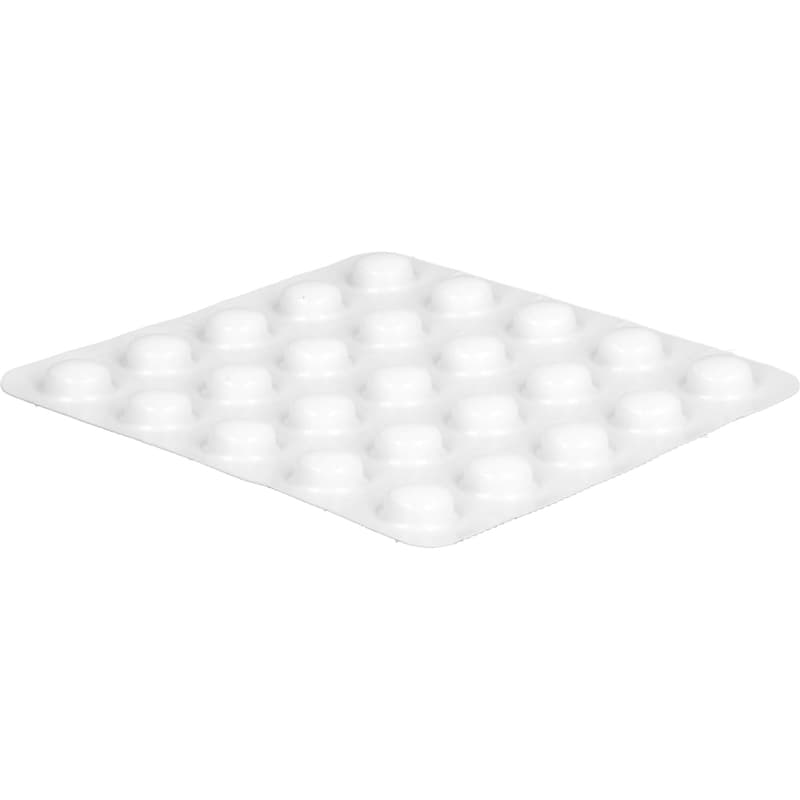
Weiße, runde Tablette mit einseitiger Kreuzbruchkerbe. HerzASS-ratiopharm 100 mg ist in Packungen mit 50 und 100 Tabletten erhältlich. Es werden möglicherweise nicht alle Packungsgrößen in den Verkehr gebracht.Pharmazeutischer Unternehmer
ratiopharm GmbHGraf-Arco-Straße 3
89079 Ulm
Hersteller
Merckle GmbHLudwig-Merckle-Straße 3
89143 Blaubeuren
Diese Gebrauchsinformation wurde zuletzt überarbeitet im November 2019.
Quelle: Angaben der Packungsbeilage
Stand: 07/2020
Wirkstoff: Acetylsalicylsäure. Anwendungsgebiete: bei instabiler Angina pectoris (Herzschmerzen aufgrund von Durchblutungsstörungen in den Herzkranzgefäßen) als Teil der Standardtherapie; bei akutem Herzinfarkt - als Teil der Standardtherapie; zur Vorbeugung eines weiteren Herzinfarktes nach erstem Herzinfarkt (zur Reinfarktprophylaxe); nach Operationen oder anderen Eingriffen an arteriellen Blutgefäßen (nach arteriellen gefäßchirurgischen oder interventionellen Eingriffen z.B. nach aortokoronarem Venen-Bypass [ACVB], bei perkutaner transluminaler koronarer Angioplastie [PTCA]); zur Vorbeugung von vorübergehender Mangeldurchblutung im Gehirn (TIA: transitorischen ischämischen Attacken) und Hirninfarkten, nachdem Vorläuferstadien (z.B. vorübergehende Lähmungserscheinungen im Gesicht oder der Armmuskulatur oder vorübergehender Sehverlust) aufgetreten sind.
Info-Broschüre
Info-Broschüre herunterladenZusammensetzung & Allergene
Zusammensetzung
Wirkstoff: Acetylsalicylsäure