
Nur noch wenige Stück verfügbar
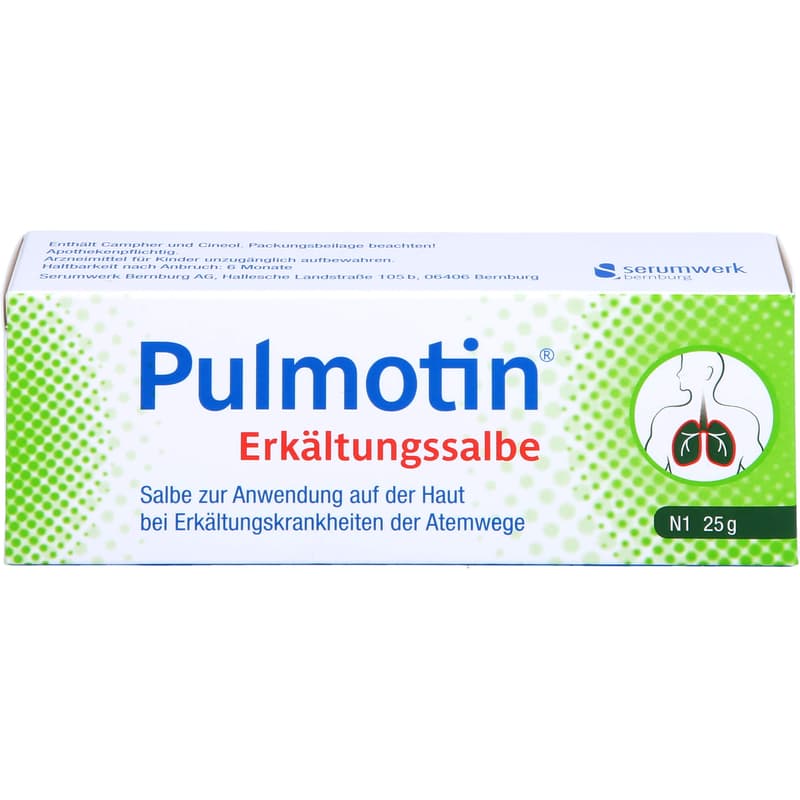
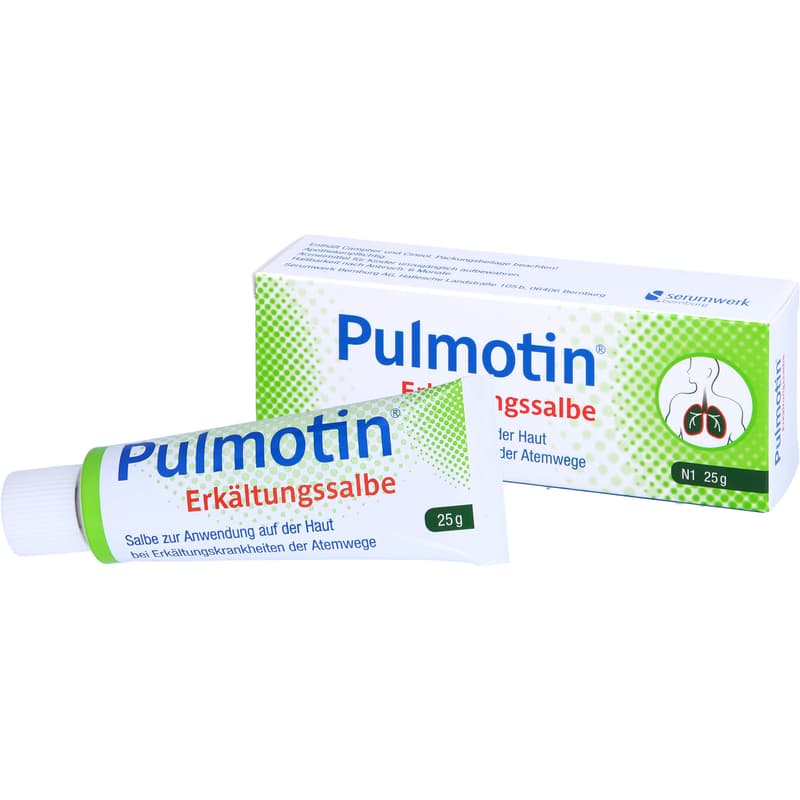
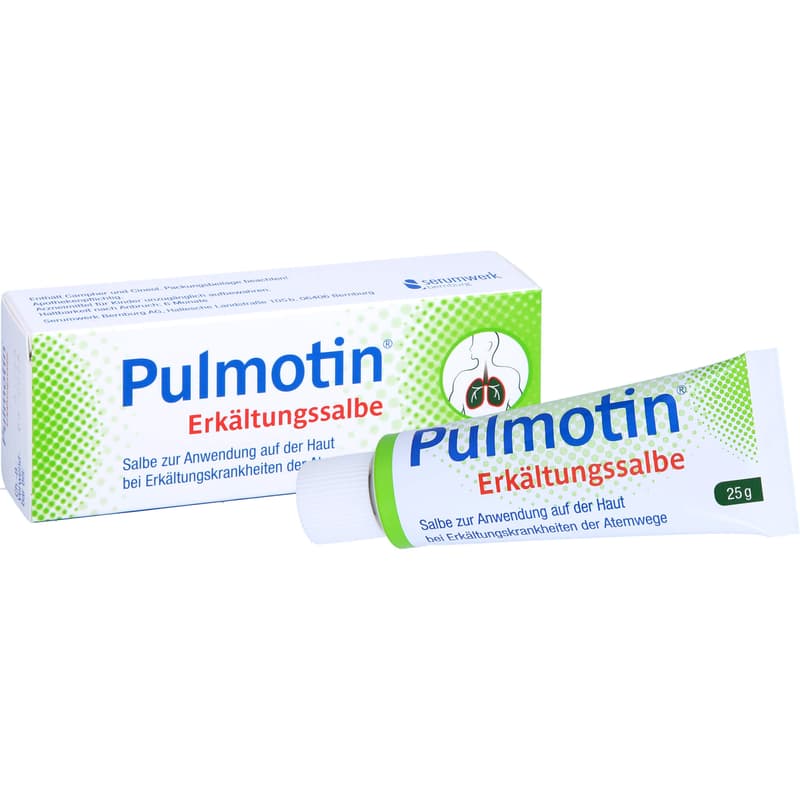
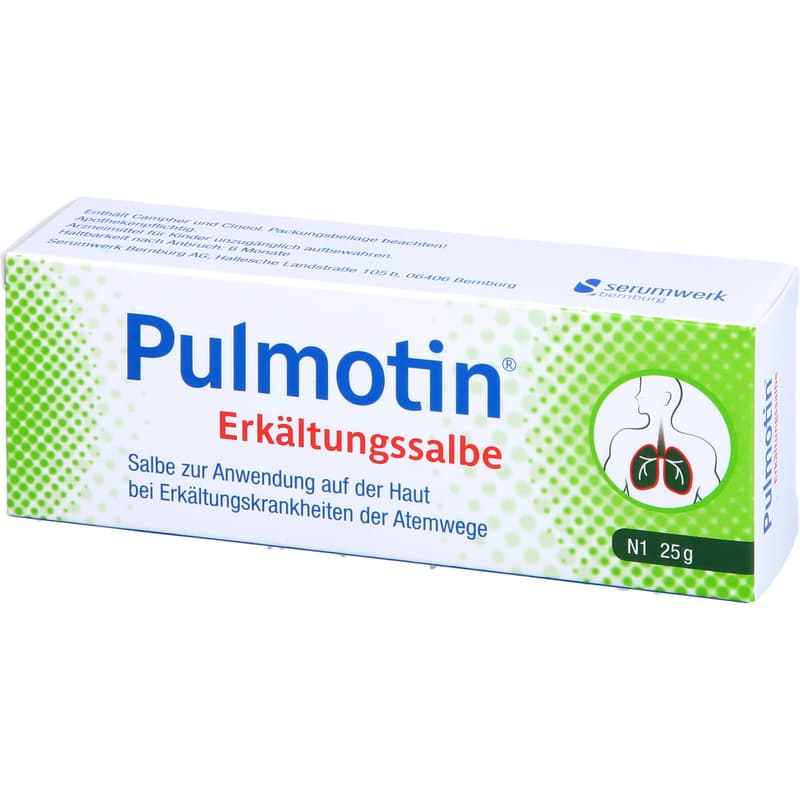
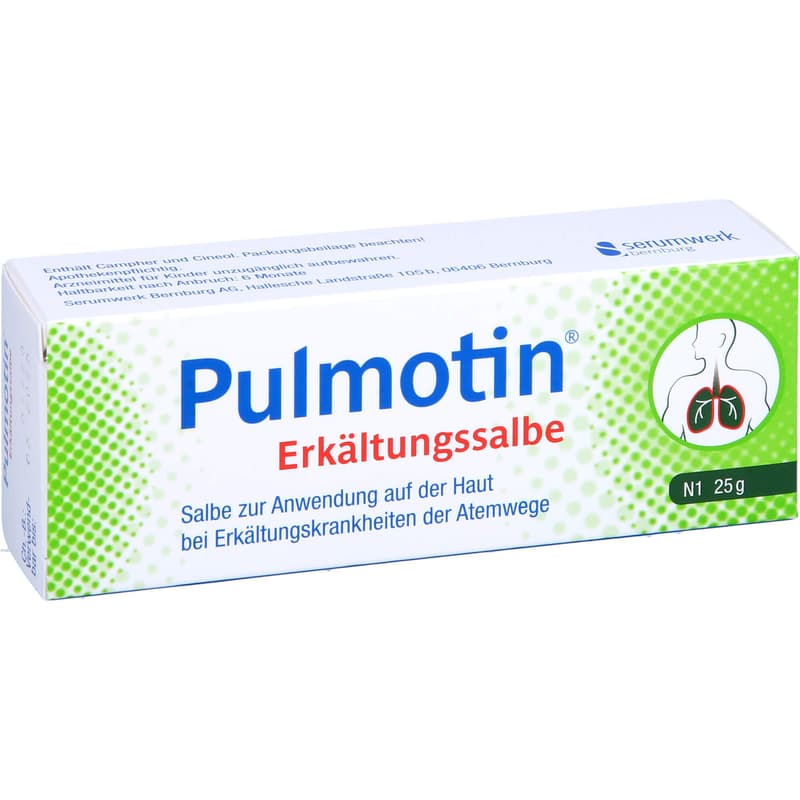
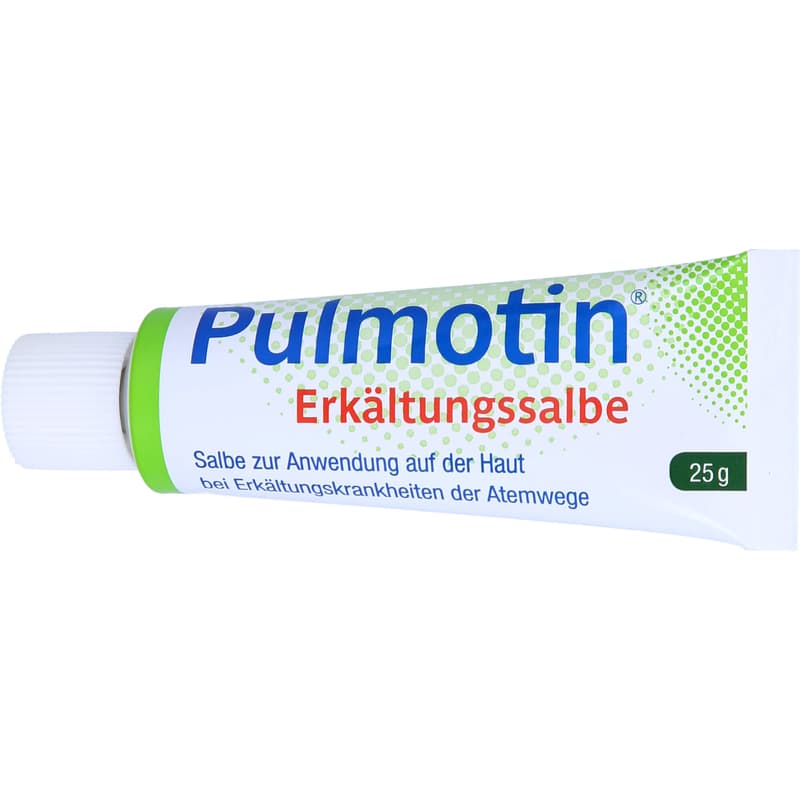
Die PULMOTIN Erkältungssalbe ist ein pflanzliches Arzneimittel zur äußerlichen Anwendung, das das Wohlbefinden bei Erkältungen der Atemwege verbessert. Diese 25g-Salbe hilft bei unkompliziertem Schnupfen, Heiserkeit und Bronchitis. Bitte beachten: Aufgrund der Inhaltsstoffe nicht bei Säuglingen und Kleinkindern unter 30 Monaten anwenden. Lesen Sie stets die Packungsbeilage.
Zu Risiken und Nebenwirkungen lesen Sie die Packungsbeilage und fragen Sie Ihre Ärztin, Ihren Arzt oder in Ihrer Apotheke.




Beschreibung
Wichtige Hinweise (Pflichtangaben)
Pulmotin Erkältungssalbe.. Anwendungsgebiete: äußerlich zur Verbesserung des Befindens bei Erkältungskrankheiten der Luftwege (wie unkomplizierter Schnupfen, Heiserkeit und unkomplizierter Bronchialkatarrh).Zu Risiken und Nebenwirkungen lesen Sie die Packungsbeilage und fragen Sie Ihre Ärztin, Ihren Arzt oder in Ihrer Apotheke.
GEBRAUCHSINFORMATION: INFORMATION FÜR DEN ANWENDER
Pulmotin Erkältungssalbe
Pflanzliches Arzneimittel
Lesen Sie die gesamte Packungsbeilage sorgfältig durch, bevor Sie mit der Anwendung dieses Arzneimittels beginnen, denn sie enthält wichtige Informationen. Wenden Sie dieses Arzneimittel immer genau wie in dieser Packungsbeilage beschrieben bzw. genau nach Anweisung Ihres Arztes oder Apothekers an. Dieses Arzneimittel ist ohne Verschreibung erhältlich.
- Heben Sie die Packungsbeilage auf. Vielleicht möchten Sie diese später nochmals lesen.
- Fragen Sie Ihren Apotheker, wenn Sie weitere Informationen oder einen Rat benötigen.
- Wenn Sie Nebenwirkungen bemerken, wenden Sie sich an Ihren Arzt oder Apotheker. Dies gilt auch für Nebenwirkungen, die nicht in dieser Packungsbeilage angegeben sind. Siehe Abschnitt 4.
- Wenn sich Ihre Symptome verschlimmern oder nach 3-5 Tagen keine Besserung eintritt, wenden Sie sich an Ihren Arzt.
Was in dieser Packungsbeilage steht
- WAS IST PULMOTIN ERKÄLTUNGSSALBE UND WOFÜR WIRD SIE ANGEWENDET?
- WAS SOLLTEN SIE VOR DER ANWENDUNG VON PULMOTIN ERKÄLTUNGSSALBE BEACHTEN?
- WIE IST PULMOTIN ERKÄLTUNGSSALBE ANZUWENDEN?
- WELCHE NEBENWIRKUNGEN SIND MÖGLICH?
- WIE IST PULMOTIN ERKÄLTUNGSSALBE AUFZUBEWAHREN?
- INHALT DER PACKUNG UND WEITERE INFORMATIONEN
Pulmotin Erkältungssalbe ist ein pflanzliches Arzneimittel bei Erkältungskrankheiten der Atemwege. Pulmotin Erkältungssalbe wird äußerlich zur Verbesserung des Befindens bei Erkältungskrankheiten der Luftwege (wie unkomplizierter Schnupfen, Heiserkeit und unkomplizierter Bronchialkatarrh) angewandt.
2. WAS SOLLTEN SIE VOR DER ANWENDUNG VON PULMOTIN ERKÄLTUNGSSALBE BEACHTEN?
Pulmotin Erkältungssalbe darf nicht angewendet werden:
- wenn Sie überempfindlich gegenüber einem der Inhaltsstoffe sind.
- wegen des Gehaltes an Campher und Cineol nicht bei Säuglingen und Kleinkindern unter 30 Monaten anwenden (Gefahr eines Kehlkopfkrampfes).
- bei Asthma bronchiale und Keuchhusten, sowie Pseudokrupp und anderen Atemwegserkrankungen, die mit einer ausgeprägten Überempfindlichkeit der Atemwege einhergehen, kann das Einatmen von Pulmotin Erkältungssalbe zur Verkrampfung der Bronchialmuskulatur führen.
- bei Haut- und Kinderkrankheiten mit Exanthem sowie auf geschädigter oder entzündeter Haut, z.B. bei Verbrennungen oder offenen Wunden,
- bei Kindern mit erhöhtem Risiko des Auftretens von Krampfanfällen.
Warnhinweise und Vorsichtsmaßnahmen
Nicht auf Schleimhäute wie Nase und Mund oder im Bereich der Augen anwenden. Nicht im Gesicht anwenden. Nach der Anwendung die Hände gut waschen. Nur äußerlich verwenden. Nicht schlucken. Zu beachten sind auch die Hinweise unter 3. "Wie ist Pulmotin Erkältungssalbe anzuwenden".Kinder und Jugendliche
Dieses Arzneimittel sollte nicht bei Säuglingen und Kleinkindern unter 30 Monaten anwendet werden.Anwendung von Pulmotin Erkältungssalbe zusammen mit anderen Arzneimitteln
Eukalyptusöl bewirkt eine Anregung des fremdstoffabbauenden Enzymsystems der Leber. Die Wirkung anderer Arzneimittel kann deshalb abgeschwächt und/oder verkürzt werden. Diese Wechselwirkung ist für Aminopyrin (Aminophenazon), Zoxazol(-amid), Amphetamin und Phénobarbital beschrieben worden. Bei Anwendung weiterer Medikamente fragen Sie bitte ihren Arzt oder Apotheker.Schwangerschaft und Stillzeit
Wegen nicht ausreichender Untersuchungen sollte das Arzneimittel in der Schwangerschaft und Stillzeit nicht angewendet werden.Verkehrstüchtigkeit und das Bedienen von Maschinen
Es sind keine besonderen Vorsichtsmaßnahmen erforderlich.3. WIE IST PULMOTIN ERKÄLTUNGSSALBE ANZUWENDEN?
Wenden Sie dieses Arzneimittel immer genau wie in dieser Packungsbeilage beschrieben bzw. genau nach der mit Ihrem Arzt oder Apotheker getroffenen Absprache an. Fragen Sie bei Ihrem Arzt oder Apotheker nach, wenn Sie sich nicht ganz sicher sind. Pulmotin Erkältungssalbe ist eine Salbe zur Anwendung auf der Haut. Reiben Sie Brust und Rücken 3 x täglich mit Pulmotin Erkältungssalbe ein, bis die Salbe gut von der Haut aufgenommen worden ist. Erwachsene nehmen pro Einreibung einen ca. 5 cm-langen Salbenstrang. Bei Kindern sollte nicht mehr als ein ca. 3 cm-langer Salbenstrang pro Behandlung aufgetragen werden. Bitte entfernen Sie täglich die Fettrückstände von der Haut. Zur Vermeidung von Hautreizungen sollte bei Kleinkindern und hautempfindlichen Personen die Behandlung nicht sofort nach dem Waschen erfolgen. Es sollte darauf geachtet werden, dass Kinder mit ihren Händen nicht mit den mit Pulmotin Erkältungssalbe eingeriebenen Hautpartien in Kontakt gelangen können. Die Anwendung von Pulmotin Erkältungssalbe sollte bis zur Besserung der Erkältungsbeschwerden erfolgen. Bei Beschwerden, die länger als 3 - 5 Tage anhalten, bei Atemnot, Kopfschmerzen, Fieber oder eitrigem/blutigem Auswurf oder Nasensekret muss dringend ein Arzt aufgesucht werden.
4. WELCHE NEBENWIRKUNGEN SIND MÖGLICH?
Wie alle Arzneimittel kann auch dieses Arzneimittel Nebenwirkungen haben, die aber nicht bei jedem auftreten müssen. Bei Inhalation (auch äußerer Einreibung) sind Reizerscheinungen an Haut und Schleimhäuten, Hustenreiz und Verstärkung eines Bronchospasmus möglich. Die Inhalation (auch Einatmen der Dämpfe nach äußerer Einreibung) kann selbst Symptome wie pfeifendes Atemgeräusch, Atemnot und Atembeschwerden aufgrund von Einengungen der Bronchien auslösen. Es kann reflektorisch über einen Bronchialkrampf zu asthmaähnlichen Zuständen bis hin zu Atemstillstand kommen. Halluzinationen sind in Einzelfällen berichtet worden. Kontaktekzeme und andere Überempfindlichkeiten der Haut sind möglich. Eine Rötung am behandelten Hautareal ist unbedenklich. Bei äußerer, großflächiger Anwendung kann es zu Vergiftungserscheinungen kommen, wie z.B. Nierenschäden und Schäden des zentralen Nervensystems, z.B. durch Campher.
Gegenmaßnahmen
Sollten Sie eine der oben genannten Nebenwirkungen bei sich beobachten, setzen Sie Pulmotin Erkältungssalbe ab und informieren Sie (sofort) ihren Arzt, damit über den Schweregrad und gegebenenfalls erforderliche Maßnahmen entschieden werden kann. Bei den ersten Anzeichen einer Überempfindlichkeitsreaktion (z.B. Hautausschlag) soll das Arzneimittel nicht weiter angewendet werden.Meldung von Nebenwirkungen
Wenn Sie Nebenwirkungen bemerken, wenden Sie sich an Ihren Arzt oder Apotheker. Dies gilt auch für Nebenwirkungen, die nicht in dieser Packungsbeilage angegeben sind. Sie können Nebenwirkungen auch direkt dem Bundesinstitut für Arzneimittel und Medizinprodukte, Abt. Pharmakovigilanz, Kurt-Georg-Kiesinger Allee 3, D-53175 Bonn, Website: www.bfarm.de anzeigen. Indem Sie Nebenwirkungen melden, können Sie dazu beitragen, dass mehr Informationen über die Sicherheit dieses Arzneimittels zur Verfügung gestellt werden.5. WIE IST PULMOTIN ERKÄLTUNGSSALBE AUFZUBEWAHREN?
Bewahren Sie dieses Arzneimittel für Kinder unzugänglich auf. Sie dürfen das Arzneimittel nach dem auf der Tube und der Faltschachtel angegebenen Verfalldatum nicht mehr verwenden. Das Verfalldatum bezieht sich auf den letzten Tag des angegebenen Monats. Haltbarkeit nach Anbruch: 6 Monate. Aufbewahrungsbedingungen: Keine.
6. INHALT DER PACKUNG UND WEITERE INFORMATIONEN
Was Pulmotin Erkältungssalbe enthält
10g Salbe enthalten: Wirkstoffe: Eukalyptusöl 0,50 g, Racemischer Campher 0,20 g, Sternanisöl 0,15 g, Thymianöl 0,03 g, Thymol 0,03 g, Koniferenöl 50 0,125 g (enthält zu 50% Isobornylacetat und zu 50% eine Mischung aus Limonen, Linalool, Linalylacetat, (+)-alpha-Pinen, beta-Pinen, Cineol und Dodecanol). Die sonstigen Bestandteile sind: Weißes Vaselin, Hartparaffin.Wie Pulmotin Erkältungssalbe aussieht und Inhalt der Packung
Pulmotin Erkältungssalbe ist eine weiße, durchscheinende Salbe und in Packungsgrößen von 25 g und 50 g erhältlich.Pharmazeutischer Unternehmer und Hersteller
Serumwerk Bernburg AGHallesche Landstraße 105 b
06406 Bernburg
Telefon: 03471 8600
Telefax: 03471 860408
Diese Gebrauchsinformation wurde zuletzt überarbeitet im August 2017.
Quelle: Angaben der Packungsbeilage
Stand: 11/2022
Anwendungsgebiete: äußerlich zur Verbesserung des Befindens bei Erkältungskrankheiten der Luftwege (wie unkomplizierter Schnupfen, Heiserkeit und unkomplizierter Bronchialkatarrh).
Info-Broschüre
Info-Broschüre herunterladenZusammensetzung & Allergene
Zusammensetzung
Wirkstoff: Eukalyptusöl 0,50 g, Racemischer Campher 0,20 g, Sternanisöl 0,15 g, Thymianöl 0,03 g, Thymol 0,03 g, Koniferenöl 50 0,125 g (enthält zu 50% Isobornylacetat und zu 50% eine Mischung aus Limonen, Linalool, Linalylacetat, (+)-alpha-Pinen, beta-Pinen, Cineol und Dodecanol)