
Produkt aus:
Preussen
3598€
Nur noch wenige Stück verfügbar
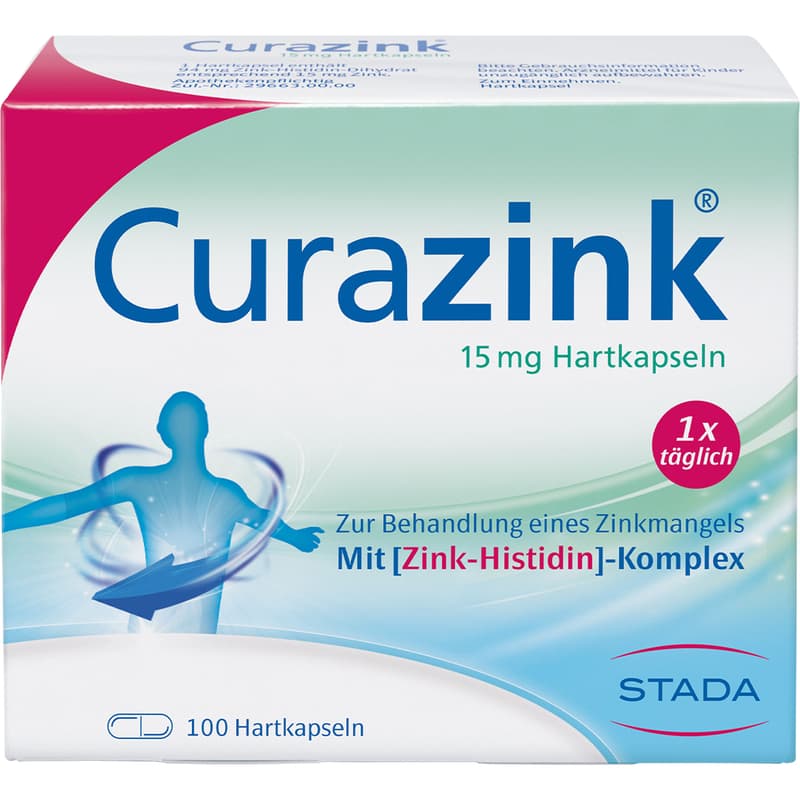
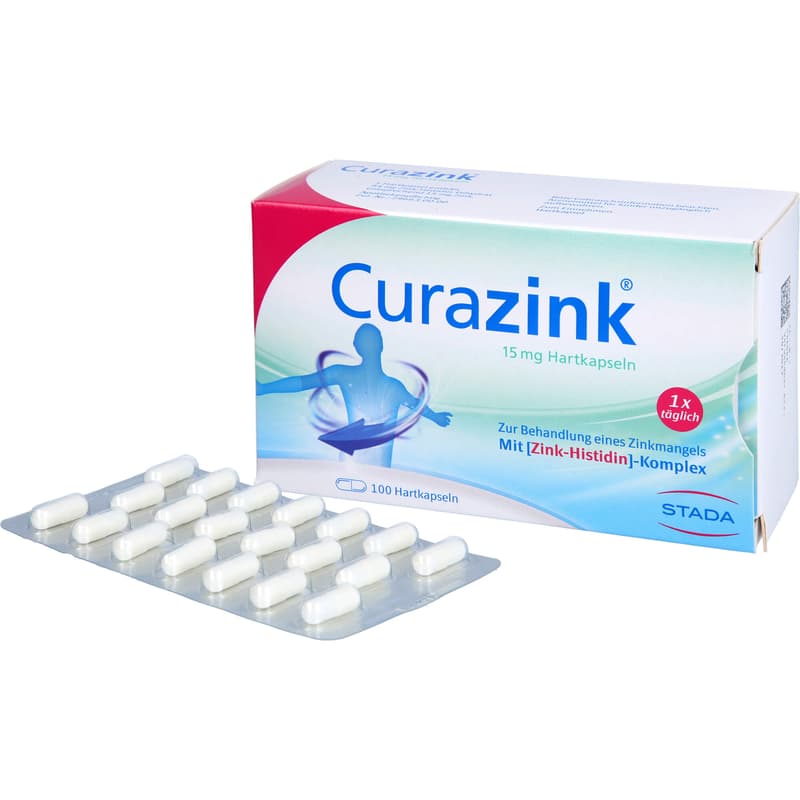
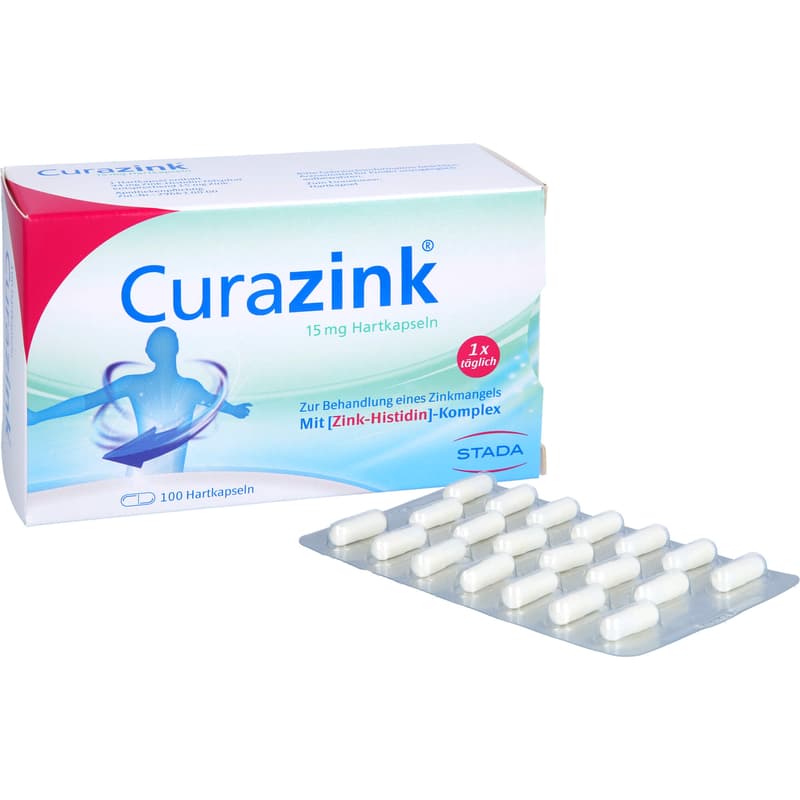
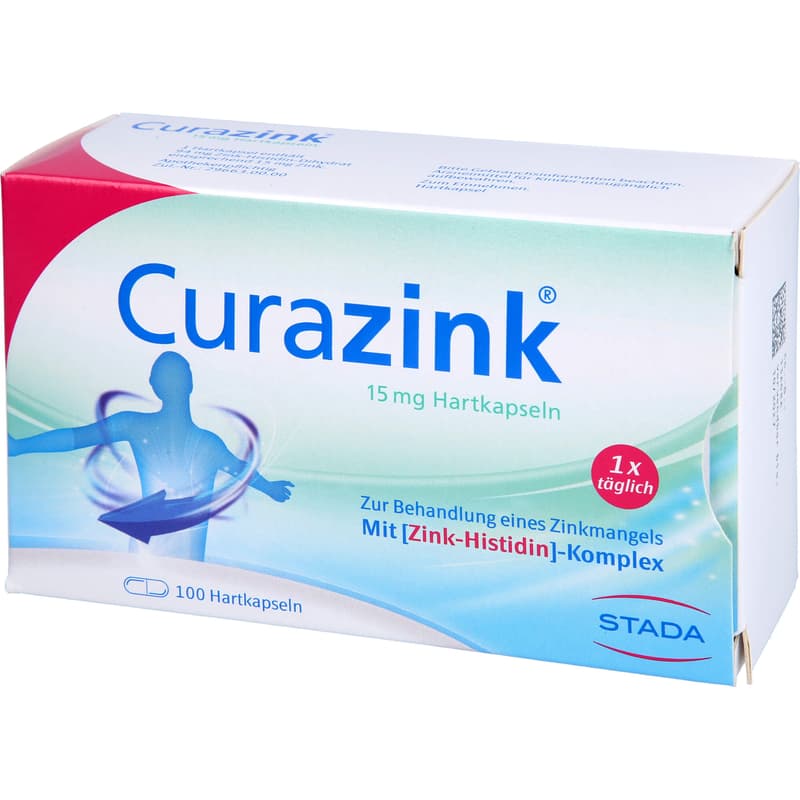
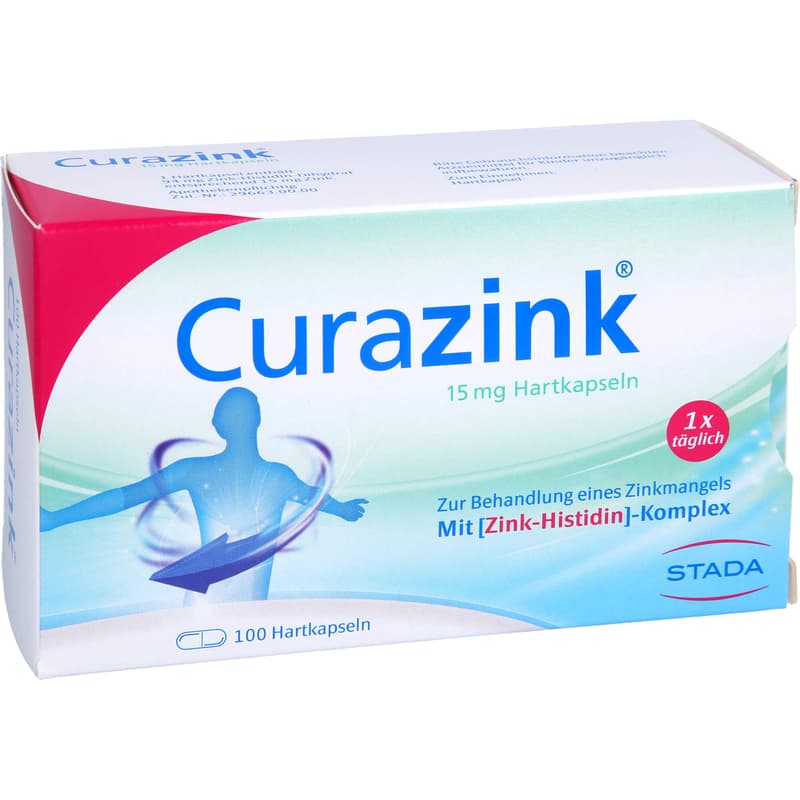
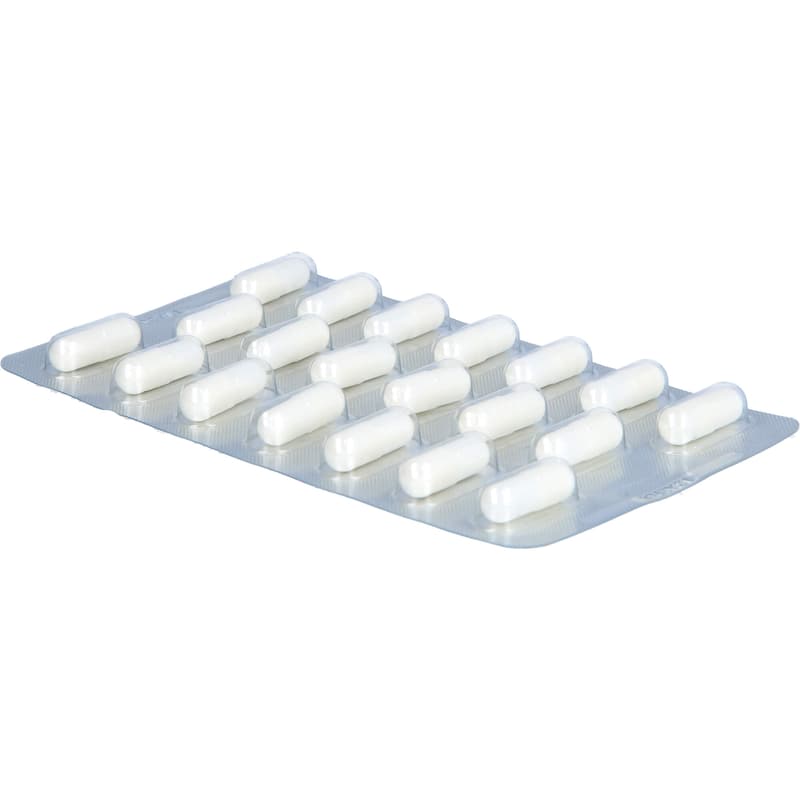
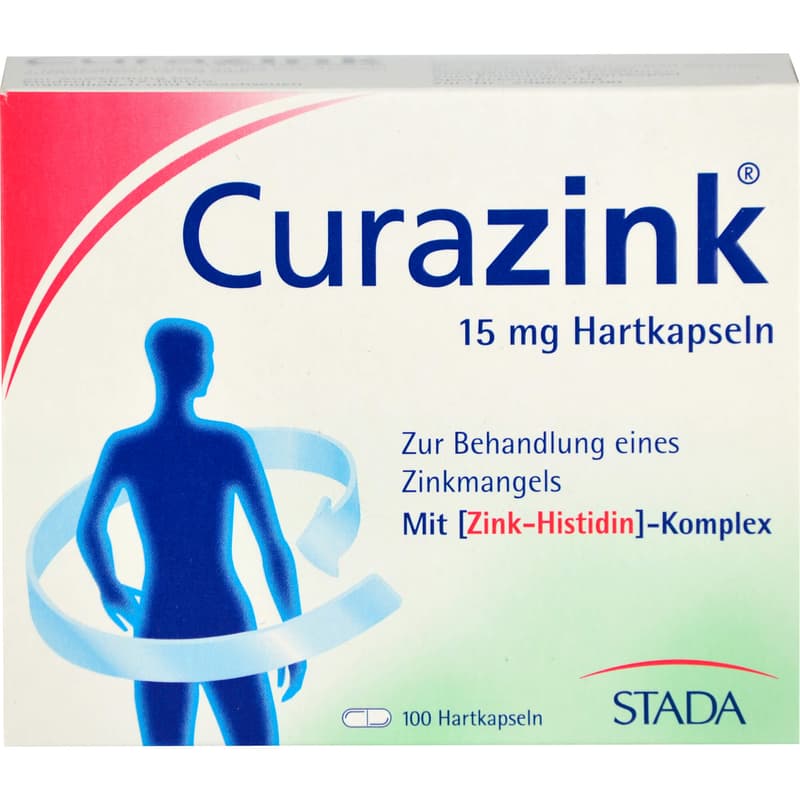
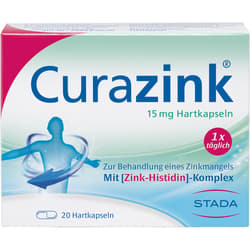
Die CURAZINK Hartkapseln sind ein hochwertiges Zinkpräparat zur gezielten Behandlung von klinisch gesicherten Zinkmangelzuständen, die sich nicht durch eine einfache Ernährungsumstellung beheben lassen. Jede Kapsel liefert wertvolle 15 mg Zink. Die praktischen, weißen Hartkapseln sind für Erwachsene, Jugendliche und Kinder ab 12 Jahren geeignet und lassen sich ganz unkompliziert zu den Mahlzeiten einnehmen.
Zu Risiken und Nebenwirkungen lesen Sie die Packungsbeilage und fragen Sie Ihre Ärztin, Ihren Arzt oder in Ihrer Apotheke!

Beschreibung
Wichtige Hinweise (Pflichtangaben)
Curazink 15 mg Hartkapseln. Wirkstoff: Zink. Anwendungsgebiete: zur Behandlung von klinisch gesicherten Zinkmangelzuständen, sofern sie nicht durch Ernährungsumstellung behoben werden können.Zu Risiken und Nebenwirkungen lesen Sie die Packungsbeilage und fragen Sie Ihre Ärztin, Ihren Arzt oder in Ihrer Apotheke!
GEBRAUCHSINFORMATION: INFORMATION FÜR DEN ANWENDER
Curazink 15 mg Hartkapseln zur Anwendung bei Kindern ab 12 Jahren, Jugendlichen und Erwachsenen
Wirkstoff: Zink
Lesen Sie die gesamte Gebrauchsinformation sorgfältig durch, bevor Sie mit der Anwendung dieses Arzneimittels beginnen, denn sie enthält wichtige Informationen für Sie. Nehmen Sie dieses Arzneimittel immer genau wie in dieser Gebrauchsinformation beschrieben bzw. genau nach Anweisung Ihres Arztes oder Apothekers ein.
- Heben Sie die Gebrauchsinformation auf. Vielleicht möchten Sie diese später nochmals lesen.
- Fragen Sie Ihren Apotheker, wenn Sie weitere Informationen oder einen Rat benötigen.
- Wenn Sie Nebenwirkungen bemerken, wenden Sie sich an Ihren Arzt oder Apotheker. Dies gilt auch für Nebenwirkungen, die nicht in dieser Gebrauchsinformation angegeben sind. Siehe Abschnitt 4.
- Wenn Sie sich nicht besser oder gar schlechter fühlen, wenden Sie sich an Ihren Arzt.
Was in dieser Gebrauchsinformation steht
- WAS IST CURAZINK UND WOFÜR WIRD ES ANGEWENDET?
- WAS SOLLTEN SIE VOR DER EINNAHME VON CURAZINK BEACHTEN?
- WIE IST CURAZINK EINZUNEHMEN?
- WELCHE NEBENWIRKUNGEN SIND MÖGLICH?
- WIE IST CURAZINK AUFZUBEWAHREN?
- INHALT DER PACKUNG UND WEITERE INFORMATIONEN
Curazink ist ein Zinkpräparat zur Behandlung von Zinkmangelzuständen. Curazink wird angewendet zur Behandlung von klinisch gesicherten Zinkmangelzuständen, sofern sie nicht durch Ernährungsumstellung behoben werden können.
2. WAS SOLLTEN SIE VOR DER EINNAHME VON CURAZINK BEACHTEN?
Curazink darf nicht eingenommen werden, wenn Sie allergisch gegen Zink oder einen der in Abschnitt 6 genannten sonstigen Bestandteile dieses Arzneimittels sind.
Warnhinweise und Vorsichtsmaßnahmen
Bitte sprechen Sie mit Ihrem Arzt oder Apotheker, bevor Sie Curazink einnehmen:- wenn Sie an Magengeschwüren (peptische Magengeschwüre) leiden.
- wenn bei Ihnen ein akutes Nierenversagen oder schwere Nierengewebsschäden (Nierenparenchymschäden) bestehen.
- bei längerfristiger Einnahme von Zink. Hierbei sollten sowohl die Kupfer– als auch Zinkspiegel im Blut überwacht werden.
Anwendung von Curazink zusammen mit anderen Arzneimitteln
Informieren Sie Ihren Arzt oder Apotheker, wenn Sie andere Arzneimittel anwenden, kürzlich andere Arzneimittel angewendet haben oder beabsichtigen andere Arzneimittel anzuwenden. Die Wirkungen mancher Arzneimittel können durch gleichzeitige Anwendung anderer Mittel beeinflusst werden. Fragen Sie daher Ihren Arzt, wenn Sie andere Mittel ständig anwenden, bis vor kurzem angewendet haben oder gleichzeitig mit dem hier vorliegenden Arzneimittel anwenden wollen. Ihr Arzt kann Ihnen sagen, ob unter diesen Umständen mit Unverträglichkeiten zu rechnen ist, oder ob besondere Maßnahmen, wie z.B. eine neue Dosisfestsetzung erforderlich sind, wenn Sie dieses Arzneimittel anwenden.Insbesondere sollten Sie dann mit Ihrem Arzt oder Apotheker sprechen, wenn Sie folgende Arzneimittel oder Substanzen anwenden bzw. erhalten:
- Antibiotika wie Tetracycline, Ofloxacin oder andere Chinolone (Ciprofloxacin, Norfloxacin). Zink reduziert die Aufnahme dieser Antibiotika. Aus diesem Grund sollte zwischen der Einnahme von Zink und den genannten Medikamenten ein zeitlicher Abstand von mindestens 3 Stunden eingehalten werden.
- Substanzen wie D–Penicillamin, Dimercaptopropansulfonsäure (DMPS), Dimercaptobernsteinsäure (DMSA) oder Ethylendiamintetraessigsäure (EDTA). Solche Substanzen (so genannte Komplexbildner; z.B. bei der Behandlung von Schwermetallvergiftungen) können die Zinkaufnahme in den Blutkreislauf reduzieren oder die Ausscheidung steigern.
- Phosphate, Eisen–, Kupfer– und Calciumsalze. Bei gleichzeitiger Gabe mit Zink kann die Aufnahme von Zink in den Körper vermindert sein.
- Zink kann die Verfügbarkeit von Kupfer beeinträchtigen sowie die Aufnahme und Speicherung von Eisen reduzieren.
Einnahme von Curazink zusammen mit Nahrungsmitteln und Getränken
Nahrungsmittel mit hohem Gehalt an Phytinen (z.B. Getreideprodukte, Hülsenfrüchte, Nüsse) reduzieren die Zinkaufnahme in den Blutkreislauf. Es gibt Anhaltspunkte, dass Kaffee die Zinkresorption beeinträchtigt.Schwangerschaft und Stillzeit
Wenn Sie schwanger sind oder stillen, oder wenn Sie vermuten, schwanger zu sein oder beabsichtigen, schwanger zu werden, fragen Sie vor der Anwendung dieses Arzneimittels Ihren Arzt oder Apotheker um Rat. Wenn Ihr behandelnder Arzt einen Zinkmangel bestätigt, der nicht durch Ernährungsumstellung behoben werden kann, können Sie unter ärztlicher Aufsicht während der Schwangerschaft und Stillzeit Curazink in therapeutischen Dosen einnehmen.Verkehrstüchtigkeit und Fähigkeit zum Bedienen von Maschinen
Auswirkungen auf die Verkehrstüchtigkeit und das Bedienen von Maschinen sind bisher nicht bekannt geworden.3. WIE IST CURAZINK EINZUNEHMEN?
Nehmen Sie dieses Arzneimittel immer genau wie in dieser Gebrauchsinformation beschrieben bzw. genau nach der mit Ihrem Arzt oder Apotheker getroffenen Absprache ein. Fragen Sie bei Ihrem Arzt oder Apotheker nach, wenn Sie sich nicht sicher sind.
Falls vom Arzt nicht anders verordnet, ist die übliche Dosis für Kinder ab 12 Jahren,
Jugendliche und Erwachsene
Täglich 1 Kapsel Curazink (entsprechend 15 mg Zink).Art der Anwendung
Bitte nehmen Sie die Kapseln zu den Mahlzeiten ein. Bei Einnahmeproblemen der Kapsel kann deren Inhalt in Flüssigkeit (z.B. Wasser, Fruchtsäfte) eingerührt werden.Dauer der Anwendung
Die Dauer der Anwendung bestimmt der behandelnde Arzt.Bitte sprechen Sie mit Ihrem Arzt, wenn Sie den Eindruck haben, dass die Wirkung von Curazink zu stark oder zu schwach ist.
Wenn Sie eine größere Menge von Curazink eingenommen haben,
als Sie sollten
Wenn Sie eine größere Menge Curazink eingenommen haben, können die unter Punkt 4 (Welche Nebenwirkungen sind möglich?) angegebenen Nebenwirkungen verstärkt auftreten. Anzeichen einer Überdosierung sind z.B.:- Metallgeschmack auf der Zunge.
- Kopfschmerzen, Müdigkeit.
- Blutdruckabfall, unregelmäßiger Herzschlag.
- blutiger Durchfall, Übelkeit und Erbrechen, Magenschmerzen und –krämpfe.
- Teilnahmslosigkeit, taumelnder Gang.
Wenn Sie die Einnahme von Curazink vergessen haben
Nehmen Sie die nächste Dosis zum gewohnten Zeitpunkt ein. Nehmen Sie nicht die doppelte Dosis ein, wenn Sie die vorherige Einnahme vergessen haben.Wenn Sie die Einnahme von Curazink abbrechen
Ändern Sie nicht von sich aus die in der Gebrauchsinformation aufgeführte oder Ihnen verschriebene Dosis. Wenn es Ihnen scheint, dass das Medikament zu schwach oder zu stark wirkt, sprechen Sie mit Ihrem Arzt oder Apotheker. Sie sollten die Behandlung mit Curazink nicht eigenmächtig unterbrechen oder vorzeitig beenden.Wenn Sie weitere Fragen zur Anwendung des Arzneimittels haben, wenden Sie sich an Ihren Arzt und Apotheker.
4. WELCHE NEBENWIRKUNGEN SIND MÖGLICH?
Wie alle Arzneimittel kann auch dieses Arzneimittel Nebenwirkungen haben, die aber nicht bei jedem auftreten müssen.
| Bei der Bewertung von Nebenwirkungen werden folgende Häufigkeitsangaben zu Grunde gelegt: | |
| Sehr häufig: | mehr als 1 Behandelter von 10 |
| Häufig: | 1 bis 10 Behandelte von 100 |
| Gelegentlich: | 1 bis 10 Behandelte von 1 000 |
| Selten: | 1 bis 10 Behandelte von 10 000 |
| Sehr selten: | weniger als 1 Behandelter von 10 000 |
| Nicht bekannt: | Häufigkeit auf Grundlage der verfügbaren Daten nicht abschätzbar. |
Erkrankungen des Magen-Darm-Trakts
Sehr selten: Magen-Darm-Beschwerden (z.B. Übelkeit, Erbrechen, Durchfall).Erkrankungen der Haut und des Unterhautzellgewebes
Sehr selten: Hautreaktionen (z.B. Hautausschlag, Juckreiz).Stoffwechsel- und Ernährungsstörungen
Nicht bekannt: Kann bei langfristiger Einnahme Kupfermangel verursachen.Meldung von Nebenwirkungen
Wenn Sie Nebenwirkungen bemerken, wenden Sie sich an Ihren Arzt oder Apotheker. Dies gilt auch für Nebenwirkungen, die nicht in dieser Packungsbeilage angegeben sind. Sie können Nebenwirkungen auch direkt dem Bundesinstitut für Arzneimittel und Medizinprodukte, Abt. Pharmakovigilanz, Kurt-Georg-Kiesinger Allee 3, D-53175 Bonn, Website: www.bfarm.de anzeigen. Indem Sie Nebenwirkungen melden, können Sie dazu beitragen, dass mehr Informationen über die Sicherheit dieses Arzneimittels zur Verfügung gestellt werden.5. WIE IST CURAZINK AUFZUBEWAHREN?
Bewahren Sie dieses Arzneimittel für Kinder unzugänglich auf. Sie dürfen dieses Arzneimittel nach dem auf dem Umkarton und der Blisterpackung angegebenen Verfallsdatum nicht mehr verwenden. Das Verfallsdatum bezieht sich auf den letzten Tag des angegebenen Monats. Für dieses Arzneimittel sind keine besonderen Lagerungsbedingungen erforderlich. Entsorgen Sie Arzneimittel nicht im Abwasser oder Haushaltsabfall. Fragen Sie Ihren Apotheker, wie das Arzneimittel zu entsorgen ist, wenn Sie es nicht mehr verwenden. Sie tragen damit zum Schutz der Umwelt bei.
6. INHALT DER PACKUNG UND WEITERE INFORMATIONEN
Was Curazink 15 mg Hartkapseln enthält
Der Wirkstoff ist Zink. 1 Hartkapsel enthält 94 mg Zink-Histidin-Dihydrat entsprechend 15 mg Zink. Die sonstigen Bestandteile sind Gelatine, Magnesiumstearat (Ph.Eur.) [pflanzlich], Maisstärke, Natriumdodecylsulfat, Titandioxid (E 171), Gereinigtes Wasser.Wie Curazink 15 mg Hartkapseln aussieht und Inhalt der Packung
Weiße, opake Hartkapsel. Curazink 15 mg Hartkapseln ist in Packungen mit 20, 50 und 100 Hartkapseln erhältlich.Pharmazeutischer Unternehmer
Stada Consumer Health Deutschland GmbHStadastraße 2 - 18
61118 Bad Vilbel
Telefon: 06101 603-0
Telefax: 06101 603-259
Internet: www.stada.de
Hersteller
Stada Arzneimittel AGStadastraße 2 - 18
61118 Bad Vilbel
Diese Gebrauchsinformation wurde zuletzt überarbeitet im September 2019.
Quelle: Angaben der Packungsbeilage
Stand: 08/2020
Wirkstoff: Zink. Anwendungsgebiete: zur Behandlung von klinisch gesicherten Zinkmangelzuständen, sofern sie nicht durch Ernährungsumstellung behoben werden können.
Info-Broschüre
Info-Broschüre herunterladenZusammensetzung & Allergene
Zusammensetzung
Wirkstoff: Zink