
Produkt aus:
Preussen
3891€
Nur noch wenige Stück verfügbar
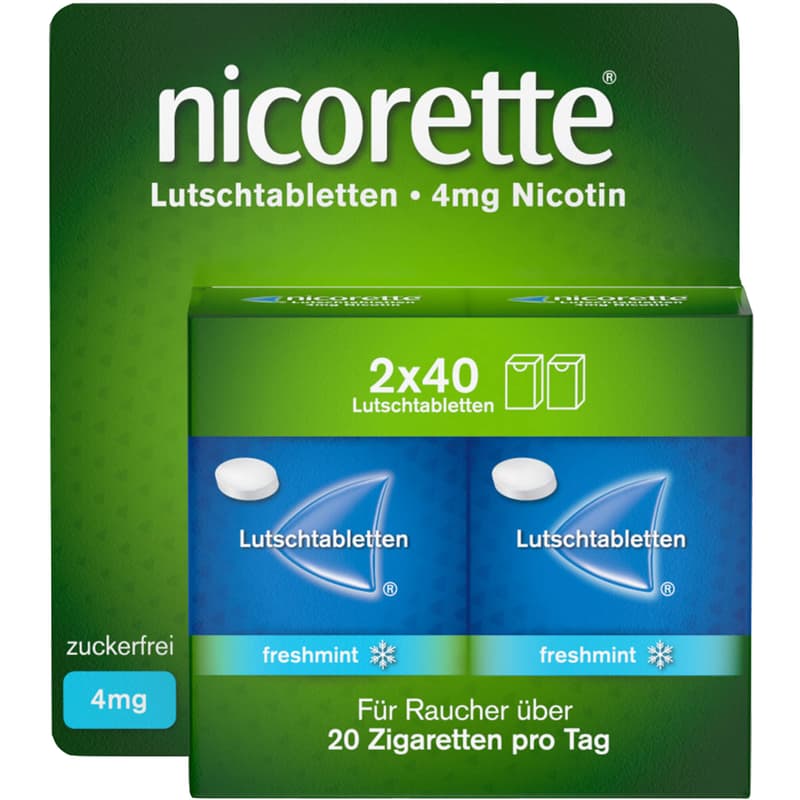
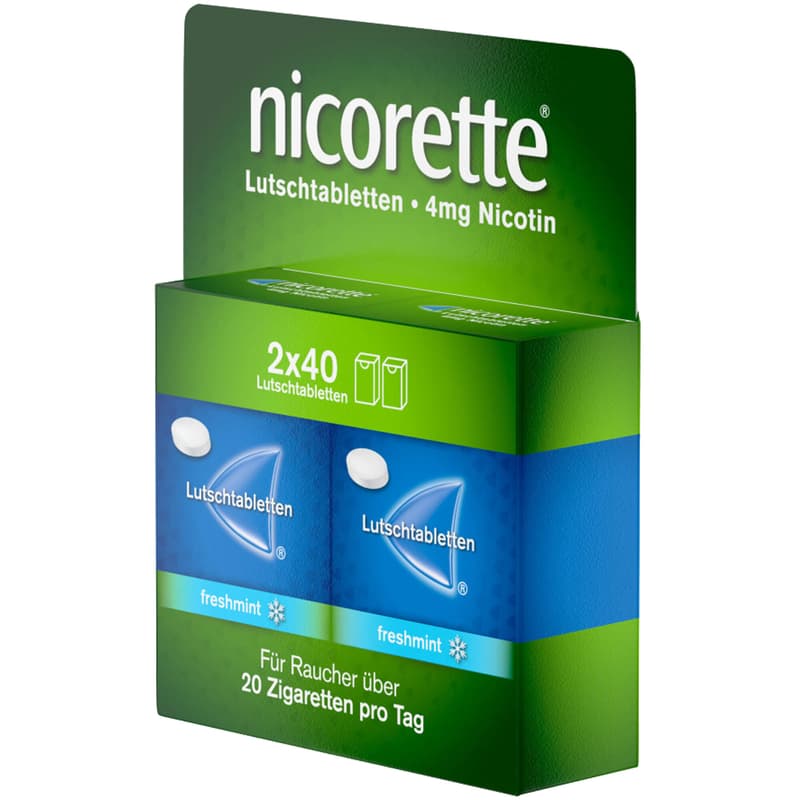
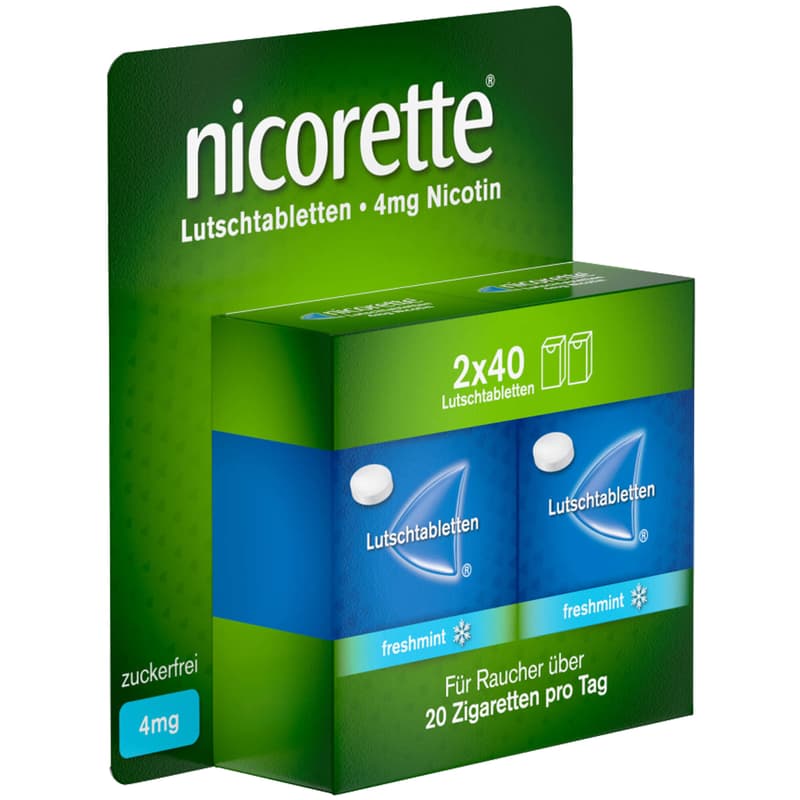
Die zuckerfreien NICORETTE freshmint 4 mg Lutschtabletten unterstützen Sie auf Ihrem Weg zum Rauchstopp. Diese gepressten Lutschtabletten mit frischem Minzgeschmack lindern das Rauchverlangen sowie Entzugserscheinungen bei starker Tabakabhängigkeit. Sie eignen sich für den sofortigen Rauchstopp oder zur schrittweisen Reduktion ab 18 Jahren. Sie erhalten 80 Stück der ovalen, weißen Tabletten für Ihre Unterstützung.
Zu Risiken und Nebenwirkungen lesen Sie die Packungsbeilage und fragen Sie Ihre Ärztin, Ihren Arzt oder in Ihrer Apotheke.
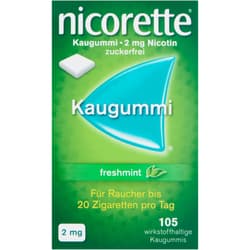
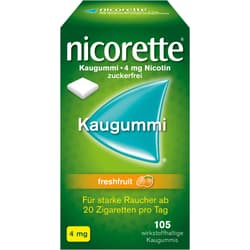
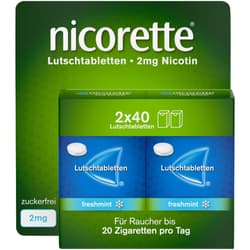
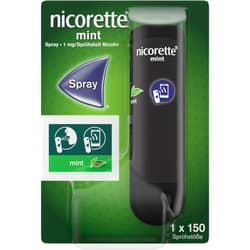
Beschreibung
Wichtige Hinweise (Pflichtangaben)
Nicorette freshmint 4 mg Lutschtabletten, gepresst. Wirkstoff: Nicotin. Anwendungsgebiete: Behandlung der Tabakabhängigkeit durch Linderung der Nicotinentzugserscheinungen und Verringerung des Nikotinverlangens für Raucher mit starker Tabakabhängigkeit ab 18 Jahren. Zum sofortigen Rauchstopp sowie zur Verringerung des Zigarettenkonsums (Rauchreduktion), um auf diesem Wege schrittweise den Rauchausstieg zu erreichen.Warnhinweis: Nicorette Lutschtabletten enthalten Polysorbat.Zu Risiken und Nebenwirkungen lesen Sie die Packungsbeilage und fragen Sie Ihre Ärztin, Ihren Arzt oder in Ihrer Apotheke.
GEBRAUCHSINFORMATION: INFORMATION FÜR DEN ANWENDER
Nicorette freshmint 4 mg Lutschtabletten gepresst, zur Linderung von Entzugserscheinungen und Verringerung des Verlangens nach Nicotin, zur Anwendung bei Erwachsenen
Wirkstoff: Nicotin
Lesen Sie die gesamte Packungsbeilage sorgfältig durch, bevor Sie mit der Anwendung dieses Arzneimittels beginnen, denn sie enthält wichtige Informationen. Wenden Sie dieses Arzneimittel immer genau wie in dieser Packungsbeilage beschrieben bzw. genau nach Anweisung Ihres Arztes oder Apothekers an.
- Heben Sie die Packungsbeilage auf. Vielleicht möchten Sie diese später nochmals lesen.
- Fragen Sie Ihren Apotheker, wenn Sie weitere Informationen oder einen Rat benötigen.
- Wenn Sie Nebenwirkungen bemerken, wenden Sie sich an Ihren Arzt oder Apotheker. Dies gilt auch für Nebenwirkungen, die nicht in dieser Packungsbeilage angegeben sind. Siehe Abschnitt 4.
- Es wird Ihnen empfohlen, mit einem Arzt oder Apotheker zu sprechen, wenn Sie nach 9 Monaten immer noch Schwierigkeiten haben, ohne Unterstützung durch Nicorette Lutschtabletten das Rauchen aufzugeben.
Was in dieser Packungsbeilage steht
- WAS SIND NICORETTE LUTSCHTABLETTEN UND WOFÜR WERDEN SIE ANGEWENDET?
- WAS SOLLTEN SIE VOR DER ANWENDUNG VON NICORETTE LUTSCHTABLETTEN BEACHTEN?
- WIE SIND NICORETTE LUTSCHTABLETTEN ANZUWENDEN?
- WELCHE NEBENWIRKUNGEN SIND MÖGLICH?
- WIE SIND NICORETTE LUTSCHTABLETTEN AUFZUBEWAHREN?
- INHALT DER PACKUNG UND WEITERE INFORMATIONEN.
Dieses Arzneimittel wird zur Linderung von Entzugserscheinungen und Verringerung des Verlangens nach Nicotin angewendet. Beides kann bei Ihnen auftreten, wenn Sie versuchen, das Rauchen gleich ganz aufzugeben oder zunächst versuchen, die Anzahl der von Ihnen gerauchten Zigaretten zu verringern. Die Behandlung ist für erwachsene Raucher ab 18 Jahren bestimmt.
Nicorette 4 mg Lutschtabletten sind für Raucher mit einer starken Tabakabhängigkeit geeignet, z. B. Raucher, die ihre erste Zigarette innerhalb von 30 Minuten nach dem Aufwachen rauchen oder über 20 Zigaretten pro Tag rauchen.
Dieses Arzneimittel kann Sie dabei unterstützen, das Rauchen sofort völlig aufzugeben oder zunächst weniger zu rauchen, bevor Sie ganz mit dem Rauchen aufhören. Wenn Sie glauben, dass Sie gleich ganz mit dem Rauchen aufhören können, sollten Sie dies tun. Wenn Sie jedoch meinen, dass das ein zu großer Schritt ist, möchten Sie vielleicht als ersten Schritt zunächst die Anzahl der von Ihnen gerauchten Zigaretten verringern, bevor Sie mit dem Rauchen ganz aufhören. Für weitere Einzelheiten siehe Abschnitt 3 "Wie sind Nicorette Lutschtabletten anzuwenden?".
Nicorette Lutschtabletten lindern die Nicotinentzugserscheinungen einschließlich des Rauchverlangens, d. h. die Beschwerden, die beim Einstellen des Rauchens auftreten. Wenn Ihr Körper plötzlich kein Nicotin mehr aus dem Tabak erhält, können bei Ihnen unangenehme Empfindungen auftreten, die als Entzugserscheinungen bezeichnet werden. Dazu gehören Reizbarkeit, Zorn, gedrückte Stimmung, Angst, Ruhelosigkeit, Konzentrationsstörungen, gesteigerter Appetit oder Gewichtszunahme, Rauchverlangen, nächtliches Erwachen oder Schlafstörungen. Das Nicotin in Nicorette Lutschtabletten kann dazu beitragen, diese unangenehmen Empfindungen und das Rauchverlangen zu lindern oder ganz zu verhindern.
Um Ihre Chancen der Raucherentwöhnung zu erhöhen, sollten Sie zusätzlich Rat und Unterstützung einholen.
2. WAS SOLLTEN SIE VOR DER ANWENDUNG VON NICORETTE LUTSCHTABLETTEN BEACHTEN?
Nicorette Lutschtabletten dürfen nicht angewendet werden:
- wenn Sie allergisch gegen Nicotin oder einen der in Abschnitt 6. genannten sonstigen Bestandteile dieses Arzneimittels sind.
- wenn Sie unter 12 Jahre alt sind.
- wenn Sie nie geraucht haben.
Warnhinweise und Vorsichtsmaßnahmen
Bitte sprechen Sie mit Ihrem Arzt, wenn Sie an einer der folgenden Erkrankungen leiden. Möglicherweise können Sie Nicorette Lutschtabletten anwenden, müssen aber vorher mit Ihrem Arzt Rücksprache halten:- wenn Sie vor kurzem einen Herzinfarkt oder einen Schlaganfall erlitten haben.
- wenn Sie Schmerzen im Brustkorb (instabile Angina pectoris) oder Angina pectoris in Ruhe haben.
- wenn Sie eine Herzerkrankung haben, die die Geschwindigkeit Ihres Herzschlags oder Ihren Herzrhythmus beeinflusst (Arrhythmie).
- wenn Sie an Bluthochdruck leiden, der durch Arzneimittel nicht ausreichend eingestellt ist.
- wenn Sie jemals allergische Reaktionen hatten mit Schwellungen von Lippen, Gesicht und Rachen (Angioödem) oder juckendem Hautausschlag (Urtikaria). Die Anwendung von Nicotinersatzmitteln kann manchmal derartige Reaktionen auslösen.
- wenn Sie eine schwere oder mittelschwere Lebererkrankung haben
- wenn Sie an einer schweren Nierenerkrankung leiden
- wenn Sie eine Zuckerkrankheit (Diabetes) haben
- wenn Ihre Schilddrüse überaktiv ist
- wenn Sie einen Tumor der Nebennieren (Phäochromozytom) haben
- wenn Sie ein Magen- oder Zwölffingerdarmgeschwür haben
- wenn Sie an einer Entzündung der Speiseröhre (Ösophagitis) leiden
- wenn bei Ihnen in der Vergangenheit Epilepsie oder Krampfanfälle aufgetreten sind.
Lutschtabletten können eine Erstickungsgefahr darstellen. Vorsicht ist geboten, wenn Sie Schwierigkeiten beim Schlucken haben oder Sie nach bzw. während des Schluckens häufig husten müssen.
Kinder
Nicotindosen, die von erwachsenen Rauchern toleriert werden, können bei Kindern schwere Vergiftungserscheinungen hervorrufen, die tödlich verlaufen können. Deshalb müssen Nicorette Lutschtabletten jederzeit für Kinder unerreichbar aufbewahrt werden.Anwendung von Nicorette Lutschtabletten zusammen mit anderen Arzneimitteln Informieren Sie Ihren Arzt oder Apotheker, wenn Sie andere Arzneimittel einnehmen/anwenden, kürzlich andere Arzneimittel eingenommen/angewendet haben oder beabsichtigen, andere Arzneimittel einzunehmen/anzuwenden.
Dies ist besonders wichtig, wenn Sie Arzneimittel einnehmen, die einen der folgenden Wirkstoffe enthalten:
- Theophyllin zur Behandlung von Asthma
- Tacrin gegen Alzheimer
- Clozapin gegen Schizophrenie
- Ropinirol zur Behandlung der Parkinson-Krankheit
Anwendung von Nicorette Lutschtabletten zusammen mit Nahrungsmitteln und Getränken
Während der Anwendung der Lutschtabletten dürfen Sie nicht essen oder trinken.Schwangerschaft und Stillzeit
Es ist sehr wichtig, während der Schwangerschaft mit dem Rauchen aufzuhören, da Rauchen zu einem geringen Wachstum Ihres Babys führen kann. Es kann außerdem zu Frühgeburten oder zu Totgeburten führen. Am besten ist es, wenn Sie das Rauchen ohne Anwendung nicotinhaltiger Arzneimittel einstellen können. Falls Ihnen das nicht gelingt, sollten Nicorette Lutschtabletten nur angewendet werden nach Rücksprache mit dem medizinischen Fachpersonal, das Ihre Schwangerschaft begleitet, mit Ihrem Hausarzt oder mit einem Arzt in einem Zentrum das darauf spezialisiert ist, Menschen zu helfen das Rauchen aufzugeben.Die Anwendung von Nicorette Lutschtabletten sollte während der Stillzeit vermieden werden, da Nicotin in die Muttermilch übergeht und Ihr Kind beeinträchtigen kann. Wenn Ihnen Ihr Arzt die Anwendung von Nicorette Lutschtabletten empfohlen hat, sollten Sie die Lutschtablette unmittelbar nach dem Stillen und nicht in den letzten zwei Stunden vor dem Stillen anwenden.
Rauchen erhöht bei Frauen und Männern das Risiko für Unfruchtbarkeit. Es ist nicht bekannt, welche Auswirkungen dabei Nicotin auf die Fruchtbarkeit hat.
Verkehrstüchtigkeit und Fähigkeit zum Bedienen von Maschinen
Es wurden keine Auswirkungen auf die Verkehrstüchtigkeit und das Bedienen von Maschinen beobachtet.Nicorette Lutschtabletten enthalten weniger als 1 mmol Natrium (23 mg) pro Lutschtablette, d. h. sie sind nahezu "natriumfrei".
Nicorette Lutschtabletten enthalten Polysorbat, was allergische Reaktionen hervorrufen kann.
3. WIE SIND NICORETTE LUTSCHTABLETTEN ANZUWENDEN?
Wenden Sie dieses Arzneimittel immer genau wie in dieser Packungsbeilage beschrieben bzw. genau nach der mit Ihrem Arzt oder Apotheker getroffenen Absprache an. Fragen Sie bei Ihrem Arzt oder Apotheker nach, wenn Sie sich nicht sicher sind.
Die Hinweise zur Anwendung von Nicorette Lutschtabletten richten sich danach, ob Sie:
- das Rauchen sofort einstellen
- das Rauchen allmählich einstellen
- Beginnen Sie mit der Anwendung von 8 bis 12 Lutschtabletten pro Tag. Wann immer Sie Drang zum Rauchen verspüren, sollten Sie eine Lutschtablette in den Mund legen und sich auflösen lassen.
- Wenden Sie die Lutschtabletten so bis zu 6 Wochen an und verringern Sie dann allmählich die Anzahl der Lutschtabletten, die Sie pro Tag anwenden.
- Sobald Sie nur noch 1 oder 2 Lutschtabletten pro Tag benötigen, sollten Sie die Anwendung ganz beenden. Danach können Sie gelegentlich noch ein heftiges Verlangen nach einer Zigarette verspüren. Falls dies geschieht, können Sie wieder eine Lutschtablette anwenden.
- Lasche mit der Aufschrift "hier drücken" sanft drücken
- Gleichzeitig die Oberseite der Faltschachtel kräftig nach oben ziehen
- befürchten, dass Sie wieder anfangen könnten zu rauchen.
- Schwierigkeiten haben, die Anwendung der Lutschtabletten vollständig aufzugeben.
- Reizbarkeit, Aggression, Ungeduld oder Frustration
- Ängstlichkeit, Ruhelosigkeit oder Konzentrationsstörungen
- Nächtliches Erwachen oder Schlafstörungen
- Gesteigerter Appetit oder Gewichtszunahme
- Gedrückte Stimmung
- Starkes Rauchverlangen
- Langsamer Herzschlag
- Zahnfleischbluten oder Mundgeschwüre
- Schwindel oder Benommenheit
- Husten, Halsentzündung, verstopfte oder laufende Nase
- Verstopfung
- Nesselausschlag (ein Hautzustand, der durch juckende, erhabene oder rote Flecken gekennzeichnet ist)
- Schwellung von Gesicht, Zunge oder Rachen
- Atembeschwerden
- Schluckbeschwerden
- Husten
- Kopfschmerzen
- Schluckauf
- Übelkeit
- Reizungen von Rachen, Mund oder Zunge
- Lokale Effekte wie Brennen, Entzündung im Mund, Geschmacksstörungen
- Kältegefühl, Wärmegefühl, Kribbeln der Haut
- Mundtrockenheit oder vermehrter Speichelfluss
- Verdauungsbeschwerden
- Schmerzen oder Missempfindungen im Bauch
- Erbrechen, Blähungen, Durchfall
- Sodbrennen
- Erschöpfung
- Überempfindlichkeit (Allergie)
- Auswirkungen auf die Nase wie Verstopfung und Niesen
- Keuchen (Bronchospasmus), Atemnot (Dyspnoe), Engegefühl im Hals
- Hautrötungen (Flush) oder übermäßige Schweißproduktion
- Wirkungen im Mund wie Kribbeln im Mund, Entzündungen der Zunge, Mundgeschwüre, Abschilferung der Mundschleimhaut oder Stimmstörung, Schmerzen im Mund und Rachen, Aufstoßen
- Herzklopfen, Herzrasen, Bluthochdruck
- schnelle und unregelmäßige Herzschlagfolge, die mit entsprechenden Arzneimitteln behandelt werden kann
- Hautausschlag und/oder Juckreiz
- Abnorme Träume
- Beschwerden und Schmerzen im Brustbereich
- Schwäche, Unwohlsein
- Schluckstörung, verminderte Empfindlichkeit im Mund
- Würgen
- Verschwommenes Sehen, vermehrte Tränensekretion,
- Trockenheit im Rachen, Magen-Darm-Beschwerden, schmerzende Lippen
- Hautrötung
- Krampfanfälle
Erwachsene ab 18 Jahren
a.)Raucherentwöhnung mit sofortigem Rauchstopp
Ziel ist es, das Rauchen sofort aufzugeben und die Lutschtablette zu verwenden, um das Rauchverlangen zu verringern.) Rauchreduktion mit anschließendem Rauchstopp
Ziel ist es, allmählich einige Ihrer Zigaretten durch eine Lutschtablette zu ersetzen. Wenn dies gelungen ist, können Sie dann mit Hilfe der Lutschtabletten ganz auf Ihre Zigaretten verzichten. Schließlich geben Sie auch die Anwendung der Lutschtabletten auf.Wenn Sie ein starkes Rauchverlangen verspüren, wenden Sie statt einer Zigarette eine Nicorette Lutschtablette an, um Ihr Verlangen zu stillen. Verringern Sie die Anzahl der Zigaretten, die Sie pro Tag rauchen, so weit wie möglich. Wenn Sie nach 6 Wochen die Anzahl der von Ihnen pro Tag gerauchten Zigaretten nicht verringern konnten, sprechen Sie mit Ihrem Arzt oder Apotheker.
Sobald Sie sich dazu in der Lage fühlen, sollten Sie das Rauchen ganz einstellen. Befolgen Sie dabei die oben genannten Hinweise für den sofortigen Rauchstopp. Tun Sie dies sobald wie möglich. Falls Ihr Versuch, das Rauchen vollständig aufzugeben, innerhalb von 6 Monaten nach Beginn der Anwendung dieses Arzneimittels nicht erfolgreich war, sprechen Sie mit Ihrem Arzt oder Apotheker.
Überschreiten Sie nicht die angegebene Dosis. Befolgen Sie die Anweisungen sorgfältig und wenden Sie nicht mehr als 15 Lutschtabletten an einem Tag (24 Stunden) an.
Wenn Sie das Gefühl haben, dieses Arzneimittel insgesamt länger als 9 Monate zu benötigen, sollten Sie einen Arzt oder Apotheker um Rat fragen.
Kinder und Jugendliche
Jugendliche ab 12 bis 17 Jahren
Nicorette Lutschtabletten dürfen nur auf ärztliche Verordnung angewendet werden.Kinder unter 12 Jahren
Kinder unter 12 Jahren dürfen dieses Arzneimittel nicht anwenden.Hinweise für den Gebrauch Kunststoffbehältnis oder Faltschachtel
Öffnen
Die Oberseite der Faltschachtel drücken.
Dieses Arzneimittel ist zur Anwendung in der Mundhöhle bestimmt. Es wird in den Mund gelegt, wo es sich auflöst und dabei Nicotin abgibt, das über die Mundschleimhaut vom Körper aufgenommen wird.
Legen Sie eine Lutschtablette in Ihren Mund und schieben Sie sie von Zeit zu Zeit von einer Seite der Mundhöhle zur anderen, bis sie sich vollständig aufgelöst hat. Das dauert im Allgemeinen weniger als 20 Minuten. Sie dürfen die Lutschtablette nicht zerkauen oder im Ganzen schlucken.
Wenn Sie eine Lutschtablette im Mund haben, sollten Sie nicht essen oder trinken.
Wenn Sie in Versuchung kommen, wieder mit dem Rauchen zu beginnen Sprechen Sie mit Ihrem Arzt oder Apotheker, wenn Sie:
Wenn Sie eine größere Menge Nicorette Lutschtabletten angewendet haben,
als Sie sollten
Zu einer Überdosierung von Nicotin kann es kommen, wenn Sie gleichzeitig rauchen und Nicorette Lutschtabletten anwenden.Wenn ein Kind Nicorette Lutschtabletten angewendet hat oder wenn Sie mehr Nicorette Lutschtabletten angewendet haben als Sie sollten, setzen Sie sich umgehend mit Ihrem Arzt in Verbindung oder suchen Sie das nächstgelegene Krankenhaus auf.
Nicotindosen, die von erwachsenen Rauchern vertragen werden, können bei Kindern schwere Vergiftungserscheinungen hervorrufen, die tödlich verlaufen können.
Die Anzeichen einer Überdosierung sind Übelkeit, Erbrechen, vermehrter Speichelfluss, Bauchschmerzen, Durchfall, Schweißausbrüche, Kopfschmerzen, Schwindel, Hörstörungen und ausgeprägtes Schwächegefühl. Bei hohen Dosen kann es in der Folge zu Blutdruckabfall, schwachem und unregelmäßigem Puls, Atembeschwerden, sehr starker Müdigkeit, Kreislaufkollaps und Krampfanfällen kommen.
Wenn Sie weitere Fragen zur Anwendung des Arzneimittels haben, wenden Sie sich an Ihren Arzt oder Apotheker.
4. WELCHE NEBENWIRKUNGEN SIND MÖGLICH?
Wie alle Arzneimittel kann auch dieses Arzneimittel Nebenwirkungen haben, die aber nicht bei jedem auftreten müssen.
Wirkungen, die mit der Raucherentwöhnung in Zusammenhang stehen (Nicotinentzug) Einige der unerwünschten Wirkungen, die bei Ihnen auftreten können, wenn Sie mit dem Rauchen aufhören, können Entzugserscheinungen sein aufgrund der Abnahme der Nicotinzufuhr.
Zu diesen unerwünschten Wirkungen zählen:
Andere mögliche Nebenwirkungen
Sehr häufig (kann mehr als 1 von 10 Behandelten betreffen):Meldung von Nebenwirkungen
Wenn Sie Nebenwirkungen bemerken, wenden Sie sich an Ihren Arzt oder Apotheker. Dies gilt auch für Nebenwirkungen, die nicht in dieser Packungsbeilage angegeben sind. Sie können Nebenwirkungen auch direkt dem Bundesinstitut für Arzneimittel und Medizinprodukte, Abt. Pharmakovigilanz, Kurt-Georg-Kiesinger-Allee 3, D-53175 Bonn, Website: www.bfarm.de anzeigen. Indem Sie Nebenwirkungen melden, können Sie dazu beitragen, dass mehr Informationen über die Sicherheit dieses Arzneimittels zur Verfügung gestellt werden.5. WIE SIND NICORETTE LUTSCHTABLETTEN AUFZUBEWAHREN?
Bewahren Sie dieses Arzneimittel für Kinder unzugänglich auf.
Sie dürfen dieses Arzneimittel nach dem auf dem Behältnis und dem Umkarton angegebenen Verfallsdatum nicht mehr anwenden. Das Verfallsdatum bezieht sich auf den letzten Tag des Monats.
Kunststoffbehältnis:
Im Originalkunststoffbehältnis aufbewahren, um den Inhalt vor Feuchtigkeit zu schützen.
Faltschachtel:
In der Originalfaltschachtel aufbewahren, um den Inhalt vor Feuchtigkeit zu schützen. Innerhalb von 3 Monaten nach Anbruch der Faltschachtel verwenden. Das Behältnis nicht für andere Zwecke verwenden, da es möglicherweise Rückstände von Tablettenstaub enthält, der sich als feiner Film auf den Gegenständen in dem Behältnis ablagern kann.
Entsorgen Sie Arzneimittel niemals über das Abwasser (z. B. nicht über die Toilette oder das Waschbecken) oder den Haushaltsabfall. Fragen Sie in Ihrer Apotheke, wie das Arzneimittel zu entsorgen ist, wenn Sie es nicht mehr verwenden. Sie tragen damit zum Schutz der Umwelt bei. Weitere Informationen finden sie unter: www.bfarm.de/arzneimittelentsorgung.
6. INHALT DER PACKUNG UND WEITERE INFORMATIONEN.
Was Nicorette Lutschtabletten enthalten
Der Wirkstoff ist Nicotin. Jede Lutschtablette enthält 4 mg Nicotin (als Nicotinresinat).Die sonstigen Bestandteile sind
Tablettenkern: Mannitol (E421), Xanthangummi, Pfefferminz-Aroma (enthält Gummi Arabicum (E414), Pfefferminz-, Menthol- und Eukalyptus-Aroma), Natriumcarbonat (E500)(i), Sucralose (E955), Acesulfam-Kalium (E950), Magnesiumstearat (E470b) [pflanzlich], Filmüberzug: Hypromellose (E464), Pfefferminz-Aroma (enthält Pfefferminz-, Menthol- und Eukalyptus-Aroma), Titandioxid (E171), Sucralose (E955), Acesulfam-Kalium (E950), Polysorbat 80 (E433), mikrokristalline Cellulose (E460), Muscovit (E555), beschichtet mit Titandioxid (E171).Nicorette Lutschtabletten sind zuckerfrei.
Wie Nicorette Lutschtabletten aussehen und Inhalt der Packung
Ovale, weiße bis fast weiße Lutschtablette mit der Prägung "n" auf der einen und "4" auf der anderen Seite. Die Lutschtablette hat die Maße 14 x 9 x 7 mm.Packungsgrößen
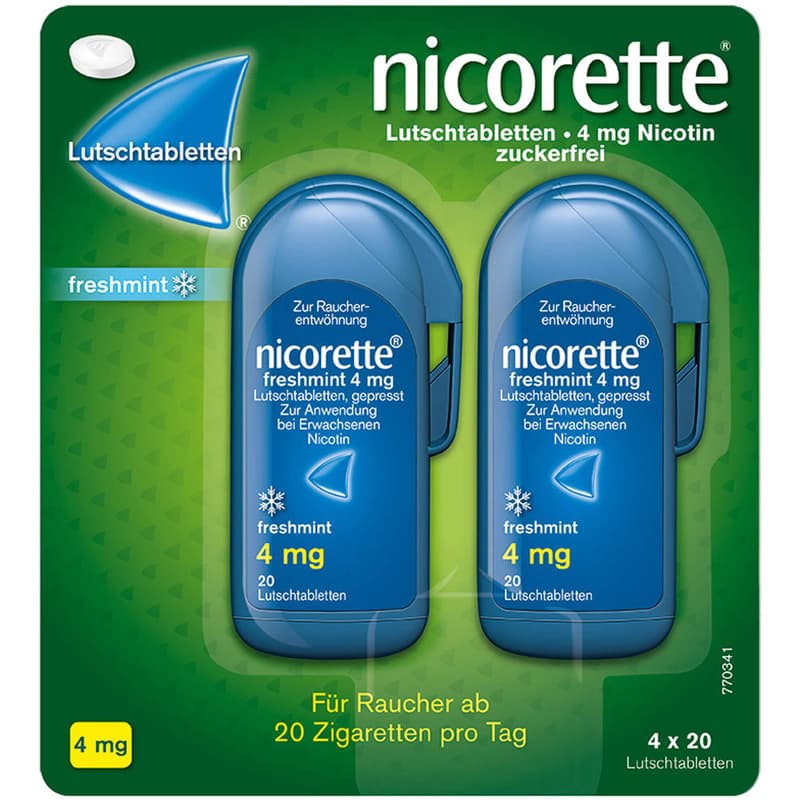
Jedes Kunststoffbehältnis enthält 20 Lutschtabletten. Die Packungen können ein oder vier Kunststoffbehältnisse enthalten.Jede Faltschachtel enthält 40 Lutschtabletten. Die Packungen können ein, zwei oder vier Faltschachteln enthalten.
Es werden möglicherweise nicht alle Packungsgrößen in den Verkehr gebracht.
Pharmazeutischer Unternehmer und Hersteller
Johnson & Johnson GmbHJohnson & Johnson Platz 2
41470 Neuss
Deutschland
Telefon: 00800 260 260 00 (kostenfrei)
www.jjconsumer-contact.eu
Hersteller
McNeil AB
Norrbroplatsen 2
25109 Helsingborg
Schweden
Diese Gebrauchsinformation wurde zuletzt überarbeitet im Oktober 2024.
Quelle: Angaben der Packungsbeilage
Stand: 04/2025
Wirkstoff: Nicotin. Anwendungsgebiete: Behandlung der Tabakabhängigkeit durch Linderung der Nicotinentzugserscheinungen und Verringerung des Nikotinverlangens für Raucher mit starker Tabakabhängigkeit ab 18 Jahren. Zum sofortigen Rauchstopp sowie zur Verringerung des Zigarettenkonsums (Rauchreduktion), um auf diesem Wege schrittweise den Rauchausstieg zu erreichen.Warnhinweis: Nicorette Lutschtabletten enthalten Polysorbat.
Info-Broschüre
Info-Broschüre herunterladenZusammensetzung & Allergene
Zusammensetzung
Wirkstoff: Nicotin