

Max. 3 Stk.
Produkt aus:
Preussen
1050€
Nur noch 12 Stück verfügbar
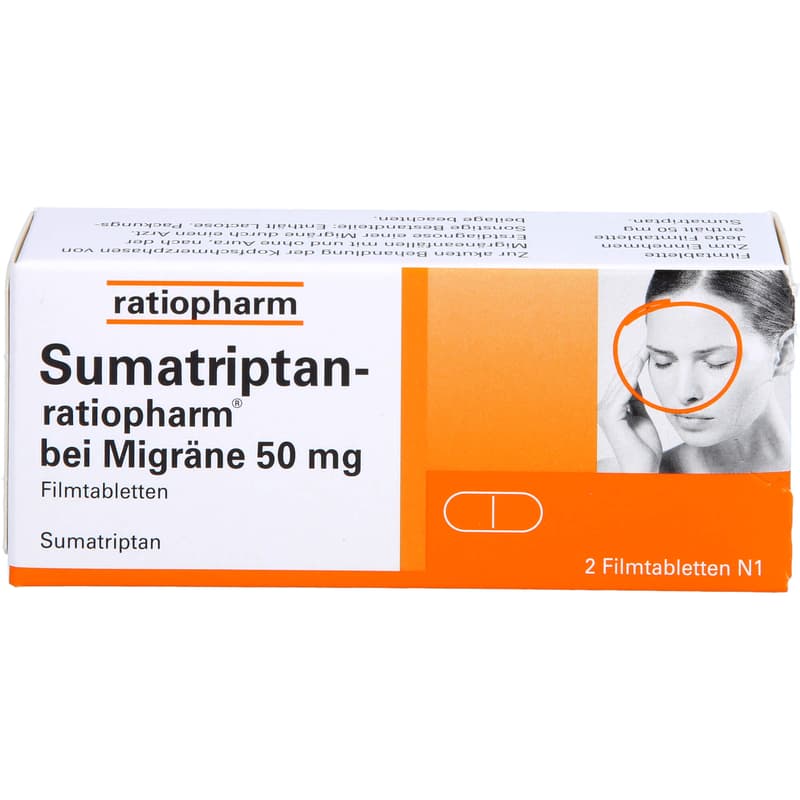
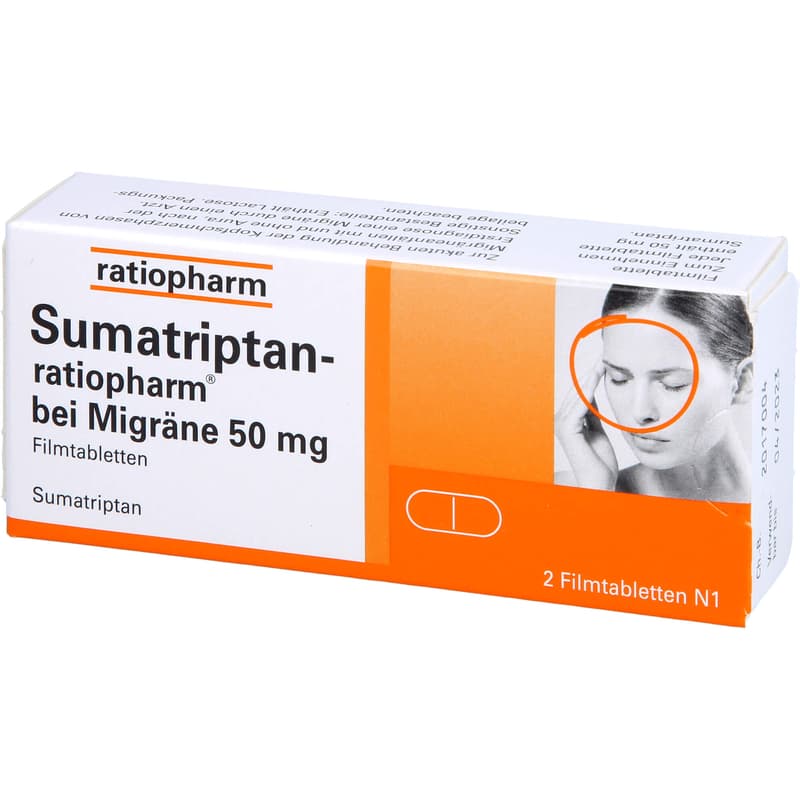
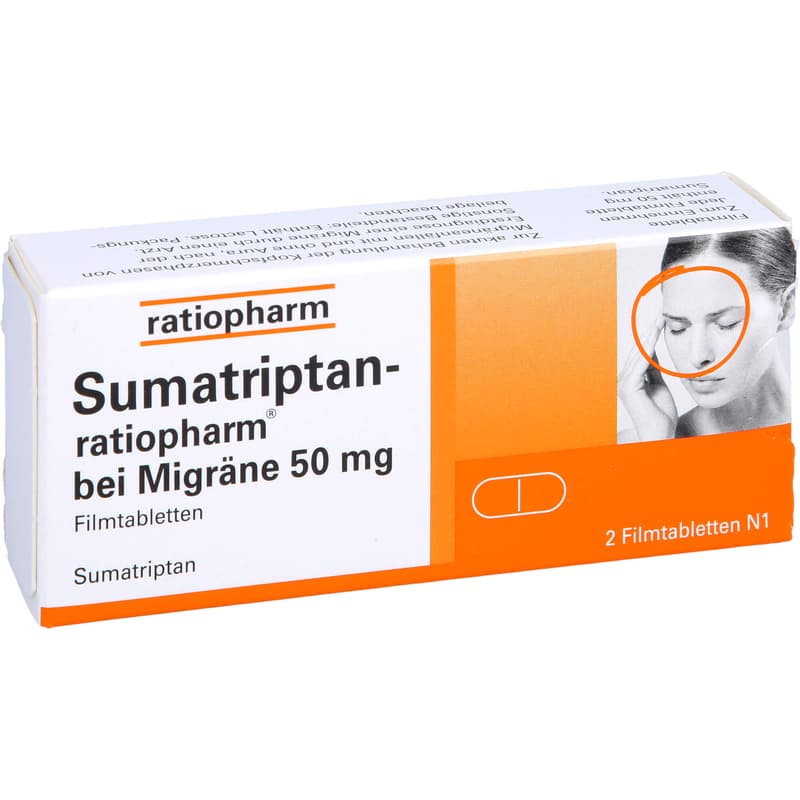
Suchen Sie schnelle Hilfe bei Migräne? Die SUMATRIPTAN-ratiopharm 50 mg Filmtabletten sind speziell für die akute Behandlung der Kopfschmerzphase bei Migräneanfällen mit oder ohne Aura entwickelt. Jede der pfirsichfarbenen, länglichen Tabletten enthält den Wirkstoff Sumatriptan, der die erweiterten Blutgefäße im Kopf verengt. Sie erhalten 2 Stück, die unzerkaut mit etwas Wasser eingenommen werden. Bitte beachten Sie vor der ersten Anwendung die ärztliche Erstdiagnose.
Zu Risiken und Nebenwirkungen lesen Sie die Packungsbeilage und fragen Sie Ihre Ärztin, Ihren Arzt oder in Ihrer Apotheke!




Beschreibung
Wichtige Hinweise (Pflichtangaben)
Sumatriptan-ratiopharm bei Migräne 50 mg Filmtabletten. Anwendungsgebiete: zur akuten Behandlung der Kopfschmerzphase bei Migräneanfällen mit und ohne Aura, nach der Erstdiagnose einer Migräne durch einen Arzt.Zu Risiken und Nebenwirkungen lesen Sie die Packungsbeilage und fragen Sie Ihre Ärztin, Ihren Arzt oder in Ihrer Apotheke!
GEBRAUCHSINFORMATION: INFORMATION FÜR DEN ANWENDER
Sumatriptan-ratiopharm bei Migräne 50 mg Filmtabletten
Wirkstoff: Sumatriptan
Lesen Sie die gesamte Packungsbeilage sorgfältig durch, bevor Sie mit der Einnahme dieses Arzneimittels beginnen, denn sie enthält wichtige Informationen. Nehmen Sie dieses Arzneimittel immer genau wie in dieser Packungsbeilage beschrieben bzw. genau nach Anweisung Ihres Arztes oder Apothekers ein.
- Heben Sie die Packungsbeilage auf. Vielleicht möchten Sie diese später nochmals lesen.
- Fragen Sie Ihren Apotheker, wenn Sie weitere Informationen oder einen Rat benötigen.
- Wenn Sie Nebenwirkungen bemerken, wenden Sie sich an Ihren Arzt oder Apotheker. Dies gilt auch für Nebenwirkungen, die nicht in dieser Packungsbeilage angegeben sind. Siehe Abschnitt 4.
- Wenn Sie sich nicht besser oder gar schlechter fühlen, wenden Sie sich an Ihren Arzt.
Was in dieser Packungsbeilage steht
- WAS IST SUMATRIPTAN–RATIOPHARM BEI MIGRÄNE UND WOFÜR WIRD ES ANGEWENDET?
- WAS SOLLTEN SIE VOR DER EINNAHME VON SUMATRIPTAN–RATIOPHARM BEI MIGRÄNE BEACHTEN?
- WIE IST SUMATRIPTAN–RATIOPHARM BEI MIGRÄNE EINZUNEHMEN?
- WELCHE NEBENWIRKUNGEN SIND MÖGLICH?
- WIE IST SUMATRIPTAN–RATIOPHARM BEI MIGRÄNE AUFZUBEWAHREN?
- INHALT DER PACKUNG UND WEITERE INFORMATIONEN
Was ist Sumatriptan-ratiopharm bei Migräne?
Sumatriptan-ratiopharm bei Migräne wird oral eingenommen und enthält Sumatriptan, das zur Arzneimittelgruppe der so genannten Triptane gehört (ebenfalls bekannt als 5-HT1-Rezeptor-Agonisten). Sumatriptan-ratiopharm bei Migräne wird angewendet zur akuten Behandlung der Kopfschmerzphase bei Migräneanfällen mit und ohne Aura, nach der Erstdiagnose einer Migräne durch einen Arzt. Migränesymptome können durch die vorübergehende Erweiterung der Blutgefäße im Kopf verursacht werden. Man nimmt an, dass Sumatriptan ratiopharm bei Migräne diese Erweiterung der Blutgefäße vermindert. Das hilft dabei, dass die Kopfschmerzen vergehen und andere Symptome des Migräneanfalls gelindert werden, wie z.B. Übelkeit oder Erbrechen sowie Licht- und Lärmempfindlichkeit.
2. WAS SOLLTEN SIE VOR DER EINNAHME VON SUMATRIPTAN RATIOPHARM BEI MIGRÄNE BEACHTEN?
Sumatriptan-ratiopharm bei Migräne darf nicht eingenommen werden:
- wenn Sie allergisch gegen Sumatriptan oder einen der in Abschnitt 6. genannten sonstigen Bestandteile dieses Arzneimittels sind.
- wenn Sie Probleme mit dem Herz haben, wie z.B. Verengung der Herzkranzgefäße (ischämische Herzkrankheit) oder Brustschmerzen (Angina pectoris), oder wenn Sie bereits einen Herzinfarkt hatten.
- wenn Sie Durchblutungsstörungen in Ihren Beinen haben, die krampfartige Schmerzen beim Gehen verursachen (periphere Gefäßerkrankung).
- wenn Sie einen Schlaganfall hatten oder vorübergehende Zustände von Minderdurchblutung im Gehirn (auch vorübergehende ischämische Attacke genannt).
- wenn Sie hohen Bluthochdruck haben. Sie können Sumatriptan ratiopharm bei Migräne möglicherweise einnehmen, wenn Ihr Blutdruck leicht erhöht und gut eingestellt ist.
- wenn Sie eine schwere Lebererkrankung haben.
- zusammen mit anderen Migräne–Medikamenten, einschließlich solcher, die Ergotamin enthalten, oder vergleichbarer Medikamente wie Methysergid oder einem anderen Triptan/5–HT1–Rezeptor–Agonisten (Medikamente, die ebenfalls zur Behandlung von Migräne verwendet werden).
- wenn Sie bestimmte Antidepressiva, so genannte MAO–Hemmer (Monoaminoxidase–Hemmer) einnehmen oder bis vor zwei Wochen eingenommen haben.
Warnhinweise und Vorsichtsmaßnahmen
Bevor Sie Sumatriptan-ratiopharm bei Migräne einnehmen, muss ein Arzt festgestellt haben, dass Ihre Kopfschmerzen durch Migräne und nicht durch andere Erkrankungen verursacht werden. Bitte sprechen Sie mit Ihrem Arzt oder Apotheker, bevor Sie Sumatriptan ratiopharm bei Migräne einnehmen, wenn Sie bestimmte Risikofaktoren haben:- Wenn Sie ein starker Raucher sind oder wenn Sie sich einer Nikotinersatztherapie unterziehen, und besonders
- wenn Sie ein Mann über 40 Jahre sind, oder
- wenn Sie eine Frau in oder nach den Wechseljahren (Menopause) sind.
Wenn Sie Sumatriptan-ratiopharm bei Migräne häufig einnehmen
Eine zu häufige Einnahme von Sumatriptan-ratiopharm bei Migräne kann Ihre Kopfschmerzen verschlimmern. Informieren Sie Ihren Arzt, wenn dies auf Sie zutrifft. Er wird Ihnen möglicherweise das Absetzen von Sumatriptan-ratiopharm bei Migräne empfehlen.Wenn Sie nach der Einnahme von Sumatriptan-ratiopharm bei Migräne Schmerzen oder Engegefühl im Brustkorb fühlen, können diese Effekte intensiv sein, gehen aber üblicherweise schnell vorüber. Falls sie nicht schnell vorübergehen oder falls sie schlimmer werden, suchen Sie umgehend einen Arzt auf. In Abschnitt 4 dieser Packungsbeilage finden Sie mehr Informationen zu diesen möglichen Nebenwirkungen.
Einnahme von Sumatriptan-ratiopharm bei Migräne zusammen mit anderen Arzneimitteln
Informieren Sie Ihren Arzt oder Apotheker, wenn Sie andere Arzneimittel einnehmen/anwenden, kürzlich andere Arzneimittel eingenommen/angewendet haben oder beabsichtigen andere Arzneimittel einzunehmen/anzuwenden. Manche Arzneimittel dürfen nicht zusammen mit Sumatriptan-ratiopharm bei Migräne eingenommen werden und andere können unerwünschte Wirkungen verursachen, wenn sie zusammen mit Sumatriptan-ratiopharm bei Migräne eingenommen werden. Sie müssen mit Ihrem Arzt sprechen, wenn Sie folgende Arzneimittel einnehmen:- Ergotamin, das ebenfalls zur Migränebehandlung eingesetzt wird, oder ähnliche Arzneimittel, wie z.B. Methysergid (siehe 2. unter "Sumatriptan ratiopharm bei Migräne darf nicht eingenommen werden"). Wenden Sie Sumatriptan–ratiopharm bei Migräne nicht gleichzeitig mit diesen Arzneimitteln an. Beenden Sie die Einnahme dieser Arzneimittel mindestens 24 Stunden vor der Einnahme von Sumatriptan–ratiopharm bei Migräne. Nehmen Sie nach der Einnahme von Sumatriptan–ratiopharm bei Migräne mindestens innerhalb der nächsten 6 Stunden keine Arzneimittel, die Ergotamin oder mit Ergotamin verwandte Substanzen enthalten, ein.
- Andere Triptane/5–HT1–Rezeptor–Agonisten (wie z.B. Naratriptan, Rizatriptan, Zolmitriptan), die auch zur Behandlung der Migräne eingenommen werden (siehe 2. unter "Sumatriptan–ratiopharm bei Migräne darf nicht eingenommen werden"). Wenden Sie Sumatriptan–ratiopharm bei Migräne nicht gleichzeitig mit diesen Arzneimitteln an. Beenden Sie die Einnahme dieser Arzneimittel mindestens 24 Stunden vor der Einnahme von Sumatriptan–ratiopharm bei Migräne. Nehmen Sie nach der Einnahme von Sumatriptan–ratiopharm bei Migräne mindestens innerhalb der nächsten 24 Stunden keine anderen Triptane/ 5–HT1–Rezeptor–Agonisten ein.
- SSRIs (selektive Serotonin–Wiederaufnahme–Hemmer) oder SNRIs (Serotonin–Noradrenalin–Wiederaufnahme–Hemmer) zur Behandlung von Depressionen. Die gleichzeitige Einnahme von Sumatriptan–ratiopharm bei Migräne mit diesen Arzneimitteln kann ein so genanntes SerotoninSyndrom verursachen (Symptome können Unruhe, Verwirrtheit, Schwitzen, Halluzinationen, gesteigerte Reflexe, Muskelkrämpfe, Zittern/Frösteln, erhöhten Herzschlag und Schütteln beinhalten). Informieren Sie sofort Ihren Arzt, wenn sie auf diese Weise beeinträchtigt sind.
- MAO–Hemmer (Monoaminoxidase–Hemmer) zur Behandlung von Depressionen. Wenden Sie Sumatriptan–ratiopharm bei Migräne nicht an, wenn Sie ein derartiges Arzneimittel innerhalb der letzten beiden Wochen eingenommen haben.
- Johanniskraut (Hypericum perforatum). Bei gemeinsamer Einnahme von Sumatriptan–ratiopharm bei Migräne und pflanzlichen Zubereitungen, die Johanniskraut enthalten, können möglicherweise eher Nebenwirkungen auftreten.
Stillzeit
Wenn Sie schwanger sind oder stillen, oder wenn Sie vermuten, schwanger zu sein oder beabsichtigen, schwanger zu werden, fragen Sie vor der Einnahme dieses Arzneimittels Ihren Arzt oder Apotheker um Rat.Schwangerschaft
Es gibt bisher nur begrenzte Informationen zur Sicherheit von Sumatriptan bei schwangeren Frauen, auch wenn es bisher keinen Anhalt für ein erhöhtes Fehlbildungsrisiko gibt. Ihr Arzt wird mit Ihnen besprechen, ob Sie Sumatriptan ratiopharm bei Migräne während der Schwangerschaft einnehmen sollten oder nicht.Stillzeit
Stillen Sie Ihren Säugling bis 12 Stunden nach der Einnahme von Sumatriptan-ratiopharm bei Migräne nicht. Wenn Sie während dieser Zeit Milch abpumpen, verwerfen Sie diese und geben Sie sie nicht Ihrem Säugling.Verkehrstüchtigkeit und Fähigkeit zum Bedienen von Maschinen
Sowohl durch den Migräneanfall als auch durch die Einnahme von Sumatriptan ratiopharm bei Migräne kann Müdigkeit hervorgerufen werden. Wenn Sie hiervon betroffen sind, fahren Sie nicht Auto und bedienen Sie keine Maschinen.Sumatriptan-ratiopharm bei Migräne enthält Lactose und Natrium
Bitte nehmen Sie Sumatriptan-ratiopharm bei Migräne erst nach Rücksprache mit Ihrem Arzt ein, wenn Ihnen bekannt ist, dass Sie unter einer Unverträglichkeit gegenüber bestimmten Zuckern leiden. Dieses Arzneimittel enthält weniger als 1 mmol (23 mg) Natrium pro Filmtablette, d.h., es ist nahezu "natriumfrei".3. WIE IST SUMATRIPTAN-RATIOPHARM BEI MIGRÄNE EINZUNEHMEN?
Nehmen Sie dieses Arzneimittel immer genau wie in dieser Packungsbeilage beschrieben bzw. genau nach Anweisung Ihres Arztes oder Apothekers ein. Fragen Sie bei Ihrem Arzt oder Apotheker nach, wenn Sie sich nicht sicher sind. Nehmen Sie Sumatriptan-ratiopharm bei Migräne erst dann ein, wenn der Migränekopfschmerz begonnen hat. Nehmen Sie Sumatriptan-ratiopharm bei Migräne nicht ein, um einer Migräneattacke vorzubeugen.
Welche Menge sollten Sie einnehmen?
Die übliche Dosis für Erwachsene zwischen 18 und 65 Jahren ist eine Sumatriptan-ratiopharm bei Migräne 50 mg Filmtablette. Einige Patienten können 100 mg Sumatriptan benötigen (entspricht 2 Sumatriptan ratiopharm bei Migräne 50 mg Filmtabletten). Bei Einnahme höherer Dosen als 100 mg Sumatriptan ist keine Wirkungsverbesserung zu erwarten. Nehmen Sie nicht mehr als 300 mg Sumatriptan (entspricht 6 Sumatriptan ratiopharm bei Migräne 50 mg Filmtabletten) innerhalb von 24 Stunden ein. Die Tablette kann in gleiche Dosen geteilt werden.
Wann sollten Sie Sumatriptan einnehmen?
Am besten wenden Sie Sumatriptan-ratiopharm bei Migräne an, sobald Sie bemerken, dass der Migränekopfschmerz beginnt. Die Einnahme kann aber auch zu einem beliebigen späteren Zeitpunkt während einer Migräneattacke erfolgen.
Wenn Ihre Symptome wiederkehren
Wenn bereits abgeklungene Beschwerden wieder auftreten, können Sie weitere Sumatriptan-ratiopharm bei Migräne 50 mg Filmtabletten innerhalb der nächsten 24 Stunden einnehmen, jedoch im Abstand von mindestens 2 Stunden. Nehmen Sie nicht mehr als 300 mg Sumatriptan (entspricht 6 Sumatriptan-ratiopharm bei Migräne 50 mg Filmtabletten) innerhalb von 24 Stunden ein.Wie ist Sumatriptan-ratiopharm bei Migräne einzunehmen?
Sumatriptan-ratiopharm bei Migräne wird unzerkaut mit Wasser eingenommen.
Wenn die erste Filmtablette keine Wirkung zeigt
Wenden Sie keine zweite Filmtablette und auch keine andere Darreichungsform von Sumatriptan für dieselbe Migräneattacke an. Wenn Ihnen Sumatriptan-ratiopharm bei Migräne keinerlei Linderung verschafft, fragen Sie Ihren Arzt oder Apotheker um Rat.Anwendung bei Kindern,
Jugendlichen und älteren Patienten
Die Einnahme von Sumatriptan-ratiopharm bei Migräne wird bei Kindern, Jugendlichen und älteren Patienten (über 65 Jahre) nicht empfohlen.Wenn Sie eine größere Menge von Sumatriptan eingenommen haben,
als Sie sollten
Die Einnahme von zu viel Sumatriptan-ratiopharm bei Migräne kann Sie krank machen. Wenn Sie mehr als 6 Sumatriptan-ratiopharm bei Migräne 50 mg Filmtabletten innerhalb von 24 Stunden eingenommen haben, fragen Sie Ihren Arzt um Rat.Wenn Sie weitere Fragen zur Einnahme dieses Arzneimittels haben, wenden Sie sich an Ihren Arzt oder Apotheker.
4. WELCHE NEBENWIRKUNGEN SIND MÖGLICH?
Wie alle Arzneimittel kann auch dieses Arzneimittel Nebenwirkungen haben, die aber nicht bei jedem auftreten müssen. Einige Symptome können durch die Migräne selbst verursacht sein. Allergische Reaktionen: Suchen Sie umgehend einen Arzt auf.
Die folgenden Nebenwirkungen sind aufgetreten, aber die genaue Häufigkeit ihres Auftretens ist nicht bekannt. Zeichen einer Allergie können sein: Hautausschlag, Nesselsucht (juckender Ausschlag); pfeifende Atemgeräusche; geschwollene Augenlider, Gesicht oder Lippen; Kreislaufzusammenbruch. Wenn Sie eines dieser Symptome kurz nach der Einnahme von Sumatriptan ratiopharm bei Migräne bemerken, nehmen Sie Sumatriptan-ratiopharm bei Migräne nicht mehr ein. Suchen Sie umgehend einen Arzt auf.
Häufig (kann bis zu 1 von 10 Behandelten betreffen)
Schmerzen, Schweregefühl, Druckgefühl, Enge oder Schmerzen in der Brust, im Hals oder in anderen Körperteilen, ungewöhnliche Empfindungen oder Sinneseindrücke wie Taubheitsgefühl, Kribbeln, Hitze- oder Kältegefühl. Diese Symptome können intensiv sein, gehen aber im Allgemeinen schnell vorüber. Wenn diese Symptome andauern oder schlimmer werden (besonders die Brustschmerzen), suchen Sie umgehend einen Arzt auf. Bei sehr wenigen Patienten können diese Symptome durch einen Herzinfarkt verursacht sein.Weitere häufige Nebenwirkungen:
- Übelkeit oder Erbrechen, dies kann jedoch durch die Migräneattacke selbst ausgelöst werden.
- Müdigkeit oder Benommenheit.
- Schwindel, sich schwach fühlen, Hitzewallungen/Gesichtsrötung.
- Vorübergehender Blutdruckanstieg.
- Kurzatmigkeit.
- Schmerzende Muskeln.
000 Behandelten betreffen)
Veränderungen der Leberfunktion. Wenn bei Ihnen die Leberwerte im Blut überprüft werden, informieren Sie Ihren Arzt oder die Arzthelferin, dass Sie Sumatriptan-ratiopharm bei Migräne einnehmen.Einige Patienten können die folgenden Nebenwirkungen haben, aber es ist nicht bekannt, in welcher Häufigkeit sie auftreten (Häufigkeit auf Grundlage der verfügbaren Daten nicht abschätzbar):
- Krampfanfälle (epileptische Anfälle), Zittern, Muskelkrämpfe, Steifheit des Nackens.
- Gesichtsfeldausfälle, Augenzittern.
- Sehstörungen, wie Augenflimmern, Verminderung der Sehschärfe, Doppeltsehen, Sehverlust und in einigen Fällen auch bleibender Sehverlust (diese Symptome können auch durch die Migräneattacke selbst ausgelöst werden).
- Herzbeschwerden, bei denen der Herzschlag sich beschleunigen, verlangsamen oder den Rhythmus ändern kann, Schmerzen in der Brust (Angina pectoris) oder Herzinfarkt.
- Blasse, blau getönte Haut und/oder Schmerzen in den Fingern, Zehen, Ohren, in der Nase oder im Kiefer als Reaktion auf Kälte oder Stress (Raynaud–Syndrom).
- Ohnmachtsgefühl (der Blutdruck kann absinken).
- Schmerzen im linken Unterbauch und blutiger Durchfall (ischämische Kolitis).
- Durchfall
- Gelenkschmerzen
- Angst/Unruhe
- Übermäßiges Schwitzen
- Schluckbeschwerden
- Wenn Sie vor kurzem eine Verletzung hatten oder wenn Sie eine Entzündung haben (wie Rheuma oder eine Entzündung des Dickdarms), kann es sein, dass Sie an der Stelle der Verletzung oder der Entzündung Schmerzen verspüren, oder dass sich die Schmerzen verschlimmern.
Meldung von Nebenwirkungen
Wenn Sie Nebenwirkungen bemerken, wenden Sie sich an Ihren Arzt oder Apotheker. Dies gilt auch für Nebenwirkungen, die nicht in dieser Packungsbeilage angegeben sind. Sie können Nebenwirkungen auch direkt dem Bundesinstitut für Arzneimittel und Medizinprodukte, Abt. Pharmakovigilanz, Kurt-Georg-Kiesinger-Allee 3, D-53175 Bonn, Website: www.bfarm.de anzeigen. Indem Sie Nebenwirkungen melden, können Sie dazu beitragen, dass mehr Informationen über die Sicherheit dieses Arzneimittels zur Verfügung gestellt werden.5. WIE IST SUMATRIPTAN-RATIOPHARM BEI MIGRÄNE AUFZUBEWAHREN?
Bewahren Sie dieses Arzneimittel für Kinder unzugänglich auf. Sie dürfen dieses Arzneimittel nach dem auf dem Umkarton und den Blisterpackungen nach "Verwendbar bis"/"Verw. bis" angegebenen Verfalldatum nicht mehr verwenden. Das Verfalldatum bezieht sich auf den letzten Tag des angegebenen Monats. Für dieses Arzneimittel sind keine besonderen Lagerungsbedingungen erforderlich. Entsorgen Sie Arzneimittel niemals über das Abwasser (z.B. nicht über die Toilette oder das Waschbecken). Fragen Sie in Ihrer Apotheke, wie das Arzneimittel zu entsorgen ist, wenn Sie es nicht mehr verwenden. Sie tragen damit zum Schutz der Umwelt bei. Weitere Informationen finden Sie unter www.bfarm.de/arzneimittelentsorgung.
6. INHALT DER PACKUNG UND WEITERE INFORMATIONEN
Was Sumatriptan-ratiopharm bei Migräne 50 mg Filmtabletten enthält
Der Wirkstoff ist Sumatriptan. Jede Sumatriptan-ratiopharm bei Migräne 50 mg Filmtablette enthält 70 mg Sumatriptansuccinat (entspricht 50 mg Sumatriptan). Die sonstigen Bestandteile sind: Lactose-Monohydrat, Croscarmellose-Natrium, Mikrokristalline Cellulose, Hochdisperses Siliciumdioxid, Magnesiumstearat (Ph.Eur.) [pflanzlich], Hypromellose, Titandioxid, Macrogol 3000, Triacetin, Eisen(III)-oxid, Eisen(III)-hydroxid-oxid, Eisen(II,III)-oxid.Wie Sumatriptan-ratiopharm bei Migräne 50 mg Filmtabletten aussehen und Inhalt der Packung
Pfirsichfarbene, längliche Filmtabletten mit der Prägung "5" und "0" auf einer Seite und Bruchkerbe auf beiden Seiten. Sumatriptan-ratiopharm bei Migräne 50 mg Filmtabletten ist in Packungen mit 2 Filmtabletten erhältlich.Pharmazeutischer Unternehmer
ratiopharm GmbHGraf-Arco-Straße 3
89079 Ulm
Hersteller
Merckle GmbHLudwig-Merckle-Straße 3
89143 Blaubeuren
oder
TEVA Pharmaceutical Works Private Limited Company
Teva Gyögyszergyar Zrt.
Pallagi üt 13
4042 Debrecen
Ungarn
Diese Gebrauchsinformation wurde zuletzt überarbeitet im Mai 2021.
Quelle: Angaben der Packungsbeilage
Stand: 07/2022
Anwendungsgebiete: zur akuten Behandlung der Kopfschmerzphase bei Migräneanfällen mit und ohne Aura, nach der Erstdiagnose einer Migräne durch einen Arzt.
Info-Broschüre
Info-Broschüre herunterladenZusammensetzung & Allergene
Zusammensetzung
Wirkstoff: Sumatriptan