

Produkt aus:
Preussen
2871€
Nur noch wenige Stück verfügbar
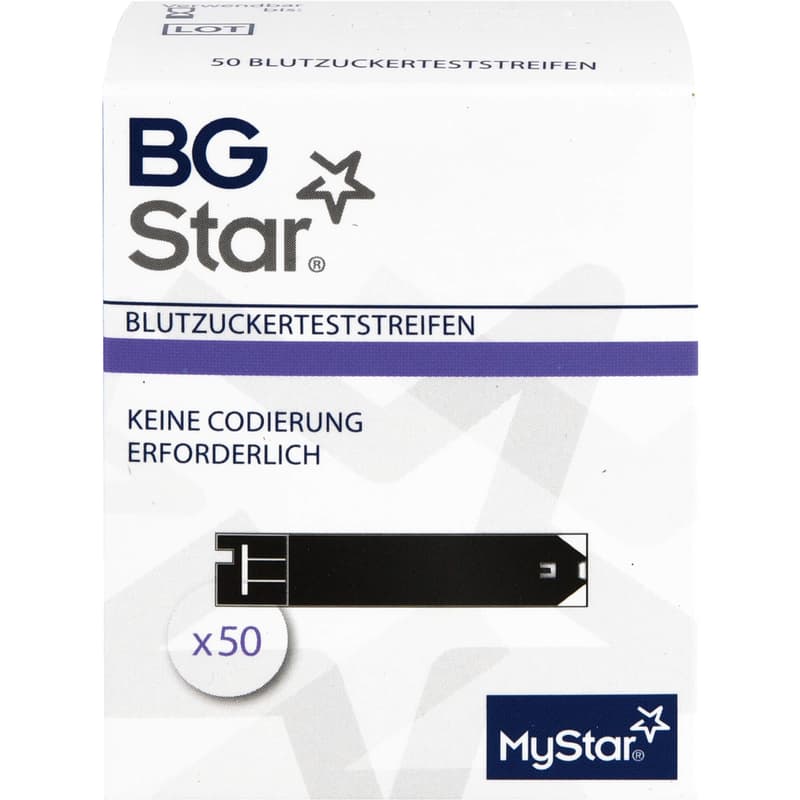
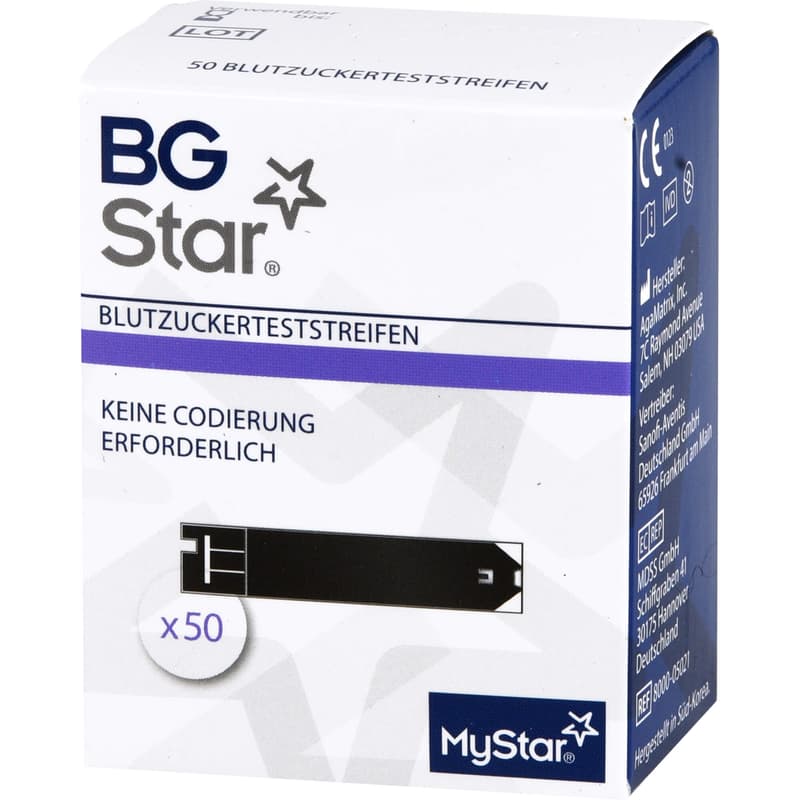
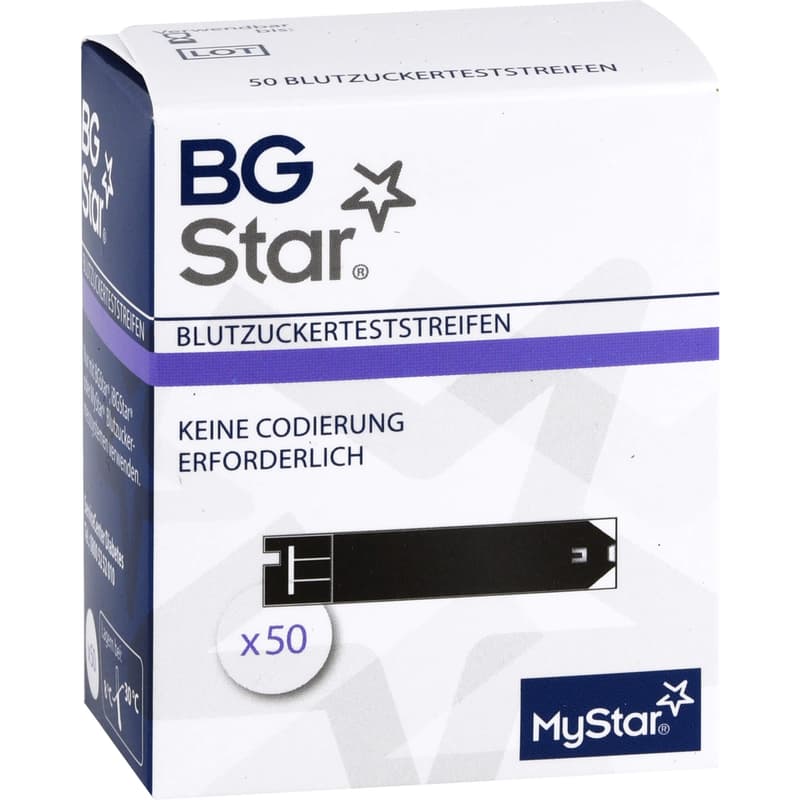
Die BGSTAR Blutzuckerteststreifen sind die ideale Wahl für Ihre tägliche Gesundheitspflege. Sie wurden speziell für die präzise quantitative Messung von Blutzuckerwerten in frischen kapillaren Vollblutproben entwickelt. Diese Teststreifen sind perfekt auf die BGStar und MyStar Messsysteme abgestimmt. Die Packung enthält 50 Stück, sodass Sie für Ihre regelmäßigen Messungen bestens ausgestattet sind.







Beschreibung
Produkteigenschaften
BGStar Blutzuckerteststreifen
Wichtig: Bitte lesen Sie diese Informationen und die Bedienungsanleitung Ihrer BGStar oder MyStar Messgeräte, bevor Sie die BGStar Teststreifen verwenden. Verwenden Sie ausschließlich BGStar Teststreifen mit den BGStar und MyStar Messsystemen. BGStar Teststreifen sind für die Verwendung mit BGStar oder MyStar Messgeräten bestimmt.
Wichtige Sicherheitsinformationen:
- Das Blutzuckermessgerät und die Stechhilfe sind nur für Ihren persönlichen Gebrauch. Teilen Sie sie nicht mit anderen Personen oder Familienmitgliedern! Nicht mit mehreren Patienten gemeinsam benutzen.
- Alle Bestandteile des Messgeräte-Kits können infektiös sein und potentiell ansteckende Krankheiten übertragen, auch wenn Sie desinfiziert haben.
Verwendungszweck
Die BGStar Teststreifen sind für die BGStar und MyStar Messsysteme zur quantitativen Messung von Blutzuckerwerten in frischen kapillaren Vollblutproben zu verwenden. Den gesamten Umfang der Systemfunktionen finden Sie in der Bedienungsanleitung Ihres Messgeräts. Die BGStar oder MyStar Messsysteme sind nicht geeignet für:- Die Diagnose von Diabetes.
- Die Blutzuckermessung bei Neugeborenen (Kinder unter 4 Wochen).
- Die Bestimmung des Blutzuckers aus arteriellem oder venösem Blut.
Testprinzip
Der BGStar Teststreifen enthält das Enzym Glukoseoxidase (GOx) zusammen mit einem chemischen Mediator, wodurch ein elektrochemisches Signal proportional zur Glukosekonzentration der Blutprobe erzeugt wird. Das Messgerät misst das Signal und korrigiert dabei mithilfe der dynamischen Elektrochemie allgemeine analytische Störungen, wie z.B. solche durch Hämatokrit.Überprüfung der Funktion des Messgerätes und der Teststreifen mit der BGStar Kontrolllösung
Die BGStar Kontrolllösung enthält eine definierte Menge Glukose, die mit einem BGStar Teststreifen in den BGStar oder MyStar Messgeräten reagiert. Auf diese Weise wird sichergestellt, dass beide in Kombination einwandfrei funktionieren. Kontrolllösungstests sollten durchgeführt werden:- Wenn Sie Ihr neues Messgerät erhalten haben und damit erste Übungen durchführen wollen.
- Wenn Sie vermuten, dass Ihr Messgerät oder die Teststreifen nicht richtig funktionieren.
- Wenn Sie glauben, dass Ihre Testergebnisse nicht richtig sind.
- Wenn Sie Ihr Messgerät fallen gelassen oder beschädigt haben oder es mit Flüssigkeiten in Berührung gekommen ist.
- Wenn Ihr Arzt oder medizinisches Fachpersonal Sie dazu aufgefordert hat.
Ergebnisse außerhalb des Zielbereichs können auf einen oder mehrere der folgenden Faktoren zurückzuführen sein:
- Kontrolllösung abgelaufen oder fehlerhaft.
- Teststreifen abgelaufen oder fehlerhaft.
- Fehler bei der Testdurchführung.
- Verwässerte Kontrolllösung.
- Funktionsstörung des Messgeräts.
- Kontrolllösungstest bei einer Temperatur außerhalb des zulässigen Betriebstemperaturbereichs von 10°C bis 40°C durchgeführt.
- Kontrolllösungsfläschchen vor der Verwendung nicht gut durchgeschüttelt.
- Der erste Tropfen wurde nicht verworfen und die Spitze der Flasche wurde nicht gesäubert.
Testverfahren
- Damit die Ergebnisse nicht verfälscht werden, waschen Sie sich die Hände mit Wasser und Seife. Stellen Sie sicher, dass sich kein Fett, Öl und keine Lotion an der Teststelle befinden. Trocknen Sie Ihre Hände gründlich ab.
- Entfernen Sie die Kappe von der Stechhilfe, setzen Sie eine neue Lanzette ein und drehen Sie die Lanzettenkappe ab. Bringen Sie die Kappe der Stechhilfe wieder an, stellen Sie die Stichtiefe ein und spannen Sie den Griff.
- Führen Sie einen neuen Teststreifen in das Messgerät ein.
- Führen Sie den Einstich mit der Stechhilfe an einer Fingerbeere durch.
- Sobald das Blutstropfensymbol auf dem Messgerät angezeigt wird, halten Sie die Blutprobe an die Spitze des BGStar Teststreifens.
- Wenn das Ergebnis der Blutzuckermessung mit Angabe von Uhrzeit und Datum auf dem Display angezeigt wird, ist der Test abgeschlossen und das Ergebnis gespeichert.
- Den benutzten BGStar Teststreifen aus dem Messgerät entfernen und sicher entsorgen. Das Messgerät wird automatisch ausgeschaltet.
- Waschen Sie sich die Hände gründlich mit Wasser und Seife nach Verwendung des Messgeräts, der Stechhilfe und der Teststreifen.
Deutung ihrer Testergebnisse
Ergebnisse unter 20 mg/dl (1,1 mmol/l)
Wenn das Testergebnis unter 20 mg/dl (1,1 mmol/l) liegt, erscheint auf dem Display eine Meldung, die eine Hypoglykämie (zu niedriger Blutzucker) anzeigt. Details finden Sie in der Bedienungsanleitung. Sie sollten unverzüglich eine weitere Messung durchführen. Wenn das Ergebnis erneut unter 20 mg/dl (1,1 mmol/l) liegt, folgen Sie dem von Ihrem medizinischen Fachpersonal empfohlenen Behandlungsplan oder wenden Sie sich sofort an Ihren Arzt.Ergebnisse über 600 mg/dl (33,3 mmol/
l)
Wenn das Testergebnis über 600 mg/dl (33,3 mmol/l) liegt, erscheint auf dem Display eine Meldung, die eine Hyperglykämie (zu hoher Blutzucker) anzeigt. Details finden Sie in der Bedienungsanleitung. Sie sollten unverzüglich eine weitere Messung durchführen. Wenn das Ergebnis erneut über 600 mg/dl (33,3 mmol/l) liegt, befolgen Sie die Anweisungen Ihres medizinischen Fachpersonals zur Behandlung von Hyperglykämie (zu hohem Blutzucker). Die Überprüfung des Ketonwerts ist eventuell ratsam.Der normale Blutzuckerwert liegt bei Personen ohne Diabetes nüchtern im Bereich von 70 bis 99 mg/dl (3,9 bis 5,5 mmol/l). Fragen Sie unbedingt Ihr medizinisches Fachpersonal nach den für Sie empfohlenen Zielbereichen.
Wichtige Hinweise zum
Testverfahren
- Bei Personen mit sehr niedrigem Blutdruck oder Patienten im Schockzustand können die Ergebnisse ungenau sein. Zu falsch niedrigen Ergebnissen kann es bei Personen kommen, die sich in einem hyperglykämisch-hyperosmolaren Zustand mit oder ohne Ketose befinden. Schwer kranke Patienten sollten nicht mit Blutzuckermessgeräten getestet werden.
- Eine starke Dehydratation und übermäßiger Wasserverlust können zu ungenauen Ergebnissen führen. Wenn Sie vermuten, stark dehydriert zu sein, konsultieren Sie unverzüglich Ihr medizinisches Fachpersonal.
- Bei Patienten, die sich einer Sauerstofftherapie unterziehen, können die Ergebnisse ungenau sein.
- Ergebnisse unter 70 mg/dl (3,9 mmol/l) können auf Unterzuckerung (Hypoglykämie) hindeuten.
- Ergebnisse über 240 mg/dl (13,3 mmol/l) können auf Überzuckerung (Hyperglykämie) hindeuten. Die Überprüfung des Ketonwerts ist eventuell ratsam.
- Wenn Sie Ergebnisse unter 70 mg/dl (3,9 mmol/l) oder über 240 mg/dl (13,3 mmol/l) erhalten, aber keine Symptome von Unterzuckerung oder Überzuckerung haben, wiederholen Sie den Test. Wenn Sie Symptome haben oder die Ergebnisse erneut unter 70 mg/dl (3,9 mmol/l) oder über 240 mg/dl (13,3 mmol/l) liegen, folgen Sie dem von Ihrem medizinischen Fachpersonal empfohlenen Behandlungsplan oder wenden Sie sich sofort an Ihren Arzt.
- Wenn bei Ihnen Symptome auftreten, die nicht mit Ihrem gemessenen Blutzuckerwert übereinstimmen, und Sie alle Anweisungen in der Bedienungsanleitung Ihres BGStar oder MyStar Messgeräts befolgt haben, gehen Sie nach den Empfehlungen des medizinischen Fachpersonals vor, bei dem Sie in Behandlung sind.
- Verwenden Sie keine Teststreifen, die abgelaufen sind oder beschädigt scheinen, da sie zu fehlerhaften Ergebnissen führen können.
- Befolgen Sie stets die Empfehlungen des medizinischen Fachpersonals, bei dem Sie in Behandlung sind.
- Das medizinische Fachpersonal sollte die in seinen Einrichtungen geltenden Vorschriften zur Vermeidung von Infektionsrisiken einhalten.
- Bewahren Sie die BGStar Teststreifen an einem kühlen, trockenen Ort bei 8°C bis 30°C auf.
- Verwenden Sie BGStar Teststreifen nur innerhalb des Betriebstemperaturbereichs von 10°C bis 40°C.
- Vor direkter Sonneneinstrahlung und Hitze schützen.
- Bewahren Sie die BGStar Teststreifen stets in ihrer Originaldose auf. Verwenden Sie zur Aufbewahrung unter keinen Umständen eine andere Dose oder einen anderen Behälter und lassen Sie die Teststreifen nicht außerhalb der Dose liegen.
- Verschließen Sie die Dose nach der Entnahme eines BGStar Teststreifens sofort wieder fest.
- Handhaben Sie die BGStar Teststreifen bei der Entnahme aus der Dose und dem Einsetzen in das Messgerät behutsam und mit sauberen, trockenen Händen.
- Verwenden Sie BGStar Teststreifen nicht mehr nach Ablauf des Haltbarkeitsdatums oder 180 Tage nach dem ersten Öffnen der Dose. Ungenaue Ergebnisse könnten sonst die Folge sein. Notieren Sie das Datum, an dem die Teststreifen zu entsorgen sind (Tag des ersten Öffnens + 180 Tage) auf der Teststreifendose.
- Biegen, schneiden oder verändern Sie die BGStar Teststreifen nicht.
- Geben Sie nur frisches Kapillarblut bzw. Kontrolllösung auf den Probenbereich des BGStar Teststreifens.
- Teststreifen und Teststreifendose außerhalb der Reichweite von Kindern aufbewahren. Beim Verschlucken der Teststreifen besteht Erstickungsgefahr. Die Dose enthält Trockenmittel, die beim Einatmen oder Verschlucken gesundheitsschädlich sein können. Zudem können sie die Haut und die Augen reizen.
- Die Teststreifen sind für den Einmalgebrauch bestimmt. Nicht wiederverwenden. Benutzte Teststreifen ordnungsgemäß entsorgen.
- Wenn ein Teststreifen die Blutprobe nicht aufsaugt, wenden Sie sich an das ServiceCenter Diabetes der Sanofi-Aventis Deutschland GmbH unter der Rufnummer 0800 52 52 010. Diabetes-Care line der sanofi-aventis (schweiz) ag unter der folgenden Gratis-Nummer: 0800 87 0800.
- Messbereich des Systems: 20 bis 600 mg/dl (1,1 bis 33,3 mmol/l)
- Hämatokritbereich: 20 % bis 60 %
- Maximale Höhe: 3.048 Meter
- Probe: Kapillares Vollblut
- Kalibrierung: Plasmaäquivalent
- Blutprobengröße: 0,5 Mikroliter
- Durchschnittliche Zeitdauer für die Blutzuckermessung: 5 Sekunden
Systemgenauigkeit
Die Genauigkeit des Systems wurde durch Vergleich von Blutzuckermesswerten aus Vollblutproben ermittelt. Das System ist so eingestellt, dass die Messwerte den Glukosekonzentrationen im Plasma entsprechen. Die mit dem Messgerät ermittelten Glukosewerte in Vollblut wurden mit den Glukosewerten im Plasma verglichen, die mit dem Analysesystem YSI 2300 gemessen wurden. Im Folgenden finden Sie die Ergebnisse zur Systemgenauigkeit.Die Ergebnisse waren wie folgt:
- Steigung: 1,058
- Y-Achsenabschnitt: -7,5 mg/dl (-0,42 mmol/l)
- Korrelationskoeffizient (r): 0,994 N = 600
- Referenzwertebereich: 35,7 bis 489,2 mg/dl (1,98 bis 27,18 mmol/l)
l)
| Innerhalb von ± 5 mg/dl (Innerhalb von ± 0,28 mmol/l) | Innerhalb von ± 10 mg/dl (Innerhalb von ± 0,56 mmol/l) | Innerhalb von ± 15 mg/dl (Innerhalb von ± 0,83 mmol/l) |
| 120/174 (69%) | 170/174 (98%) | 173/174 (99%) |
Ergebnisse zur Systemgenauigkeit bei Glukosekonzentrationen > 100 mg/dl (> 5,55 mmol/
l)
| Innerhalb von ± 5% | Innerhalb von ± 10% | Innerhalb von ± 15% |
| 256/426 (60%) | 387/426 (91%) | 421/426 (99%) |
Zusammenfassung der Gesamtzahl der akzeptablen Ergebnisse gemäß ISO 15197:2013
| Gesamt (Prozent) | Akzeptanzkriterium von 95 % innerhalb von ± 15 mg/dl (± 0,83 mmol/l) und innerhalb von ±15 % |
| 594/600 (99 %) | Kriterium erfüllt |
Genauigkeit für den Anwender
Eine Bewertungsstudie mit Blutzuckermessungen aus kapillarem Vollblut der Fingerbeere von 121 Studienteilnehmern zeigte die folgenden Ergebnisse: 100 % innerhalb ± 0,83 mmol/l (± 15 mg/dl) der medizinischen Laborwerte bei Konzentrationen < 5,55 mmol/l (100 mg/dl) und 94 % innerhalb ± 15 % der medizinischen Laborwerte bei Blutzuckerkonzentrationen >5,55 mmol/l (100 mg/dl).Präzision
Die Wiederholbarkeit der Ergebnisse mit den Teststreifen wurde mit Blutproben und Kontrolllösungen im Labor bewertet
Wiederholbarkeit innerhalb eines Durchgangs
| Blut | Level 1 | Level 2 | Level 3 | Level 4 | Level 5 |
| Durchschnitt, mg/dl (mmol/l) | 41 (2,3) | 92 (5,1) | 132 (7,3) | 231 (12,8) | 379 (21,0) |
| Anzahl (n) | 360 | 360 | 360 | 360 | 360 |
| SD, mg/dl (mmol/l) | 2,3 (0,13) | 3,2 (0,18) | 3,6 (0,20) | 5,8 (0,32) | 11,2 (0,63) |
| CV, % | entfällt | entfällt | 2,8 | 2,6 | 2,9 |
Intermediäre Präzision (von Tag zu Tag)
| Kontrolle | Level 1 | Level 2 | Level 4 |
| Durchschnitt, mg/dl (mmol/l) | 54,9 (3,05) | 129,0 (7,16) | 317,6 (17,63) |
| Anzahl (n) | 360 | 360 | 360 |
| SD, mg/dl (mmol/l) | 2,0 (0,11) | 4,3 (0,24) | 13,0 (0,72) |
| CV, % | entfällt | 3,3 | 4,1 |
(SD = Standardabweichung, CV = Variationskoeffizient)
Chemische Zusammensetzung:
Jeder BGStar Teststreifen enthält:
- Glukoseoxidase (Aspergillus niger) (2,7 IE)
- Hexaminruthenium(III)chlorid (45,7 µg)
Einschränkungen
Beeinflussung durch andere Substanzen
Substanzen, die natürlich im Körper Vorkommen (z.B. Harnsäure bis zu 23,5 mg/dl [1,4 mmol/l], Bilirubin) oder aufgrund einer Medikamentenbehandlung enthalten sind (z.B. Acetaminophen), sollten die Testergebnisse nicht signifikant beeinflussen.Messergebnisse könnten zu hoch eingeschätzt werden beim Vorliegen abnormal hoher Ascorbinsäurekonzentrationen (Vitamin C) > 2 mg/dl (0,11 mmol/l).
Hersteller
AgaMatrix, Inc.7C Raymond Avenue Salem
NH 03079
USA
MDSS GmbH
Schiffgraben 41
30175 Hannover
Deutschland
Vertreiber
Sanofi-Aventis Deutschland GmbH65926 Frankfurt am Main
sanofi-aventis (suisse) sa
1214 Vernier/GE
Diese Gebrauchsinformation wurde zuletzt überarbeitet im Dezember 2016.
Quelle: Angaben der Packungsbeilage
Stand: 08/2018