

Produkt aus:
Preussen
590€
Nur noch wenige Stück verfügbar
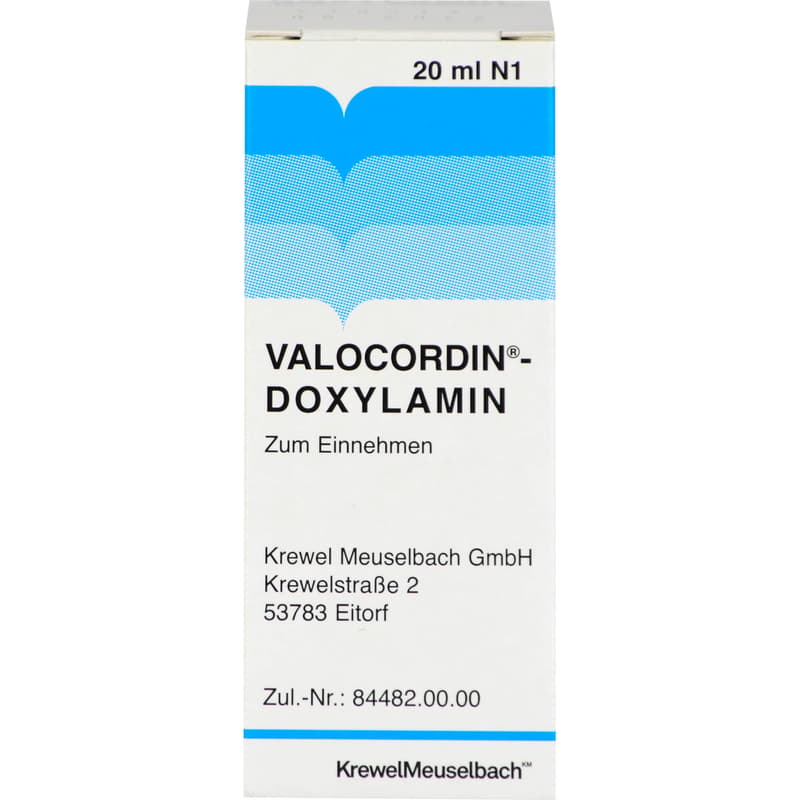
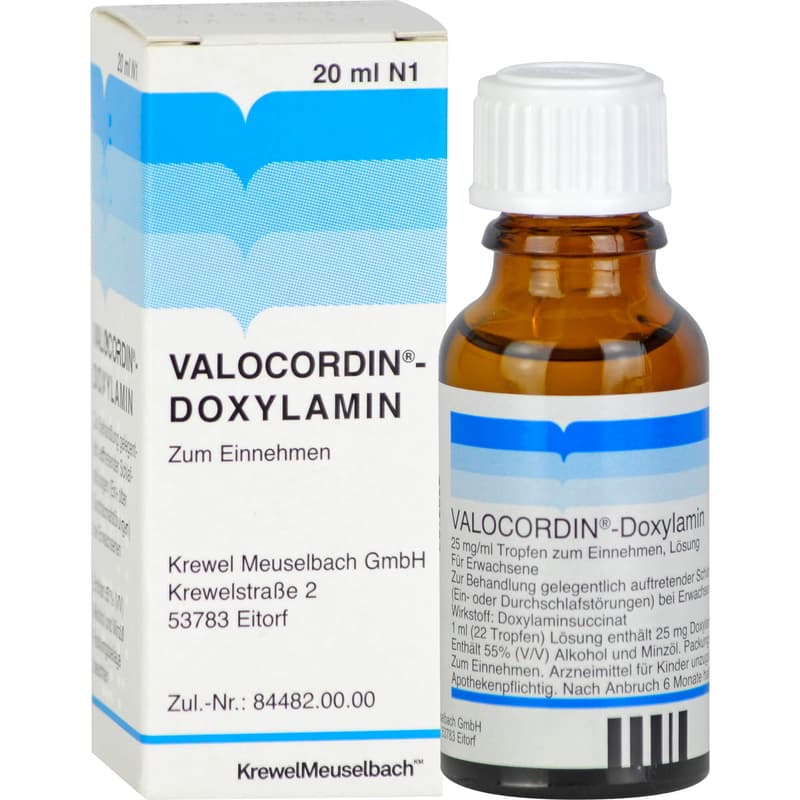
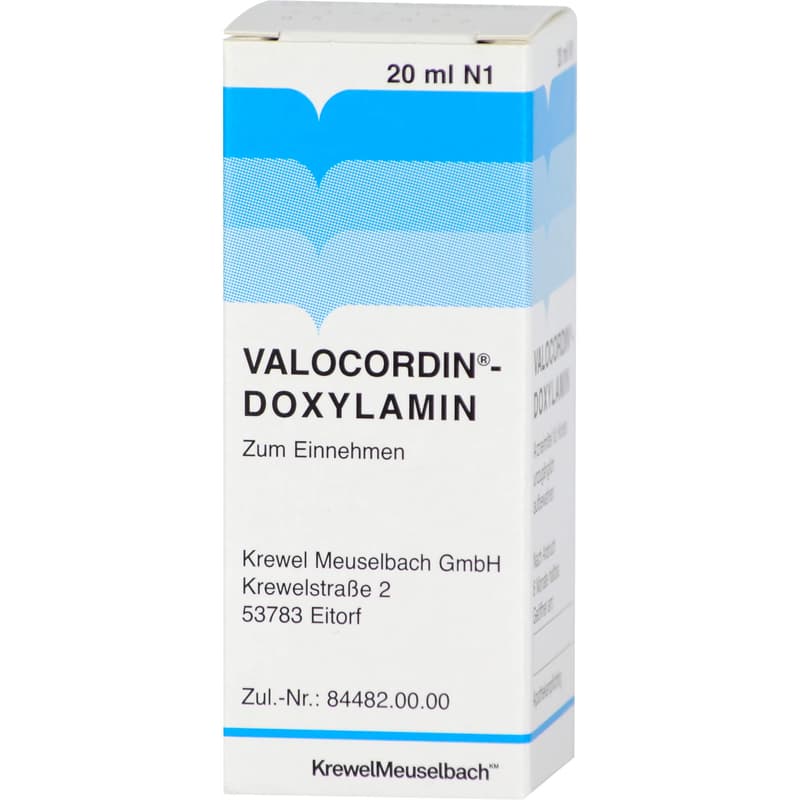
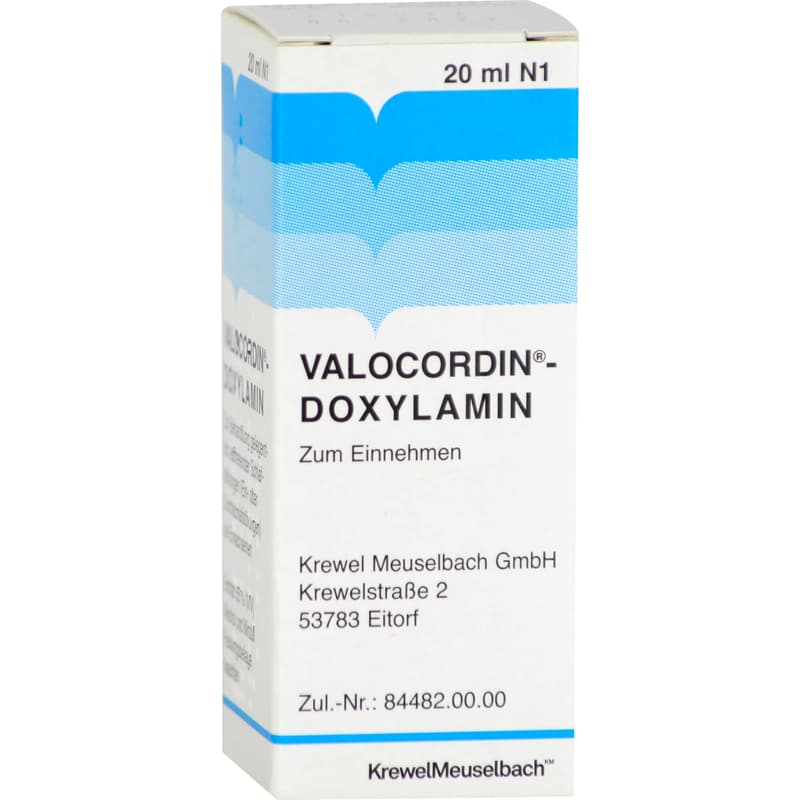
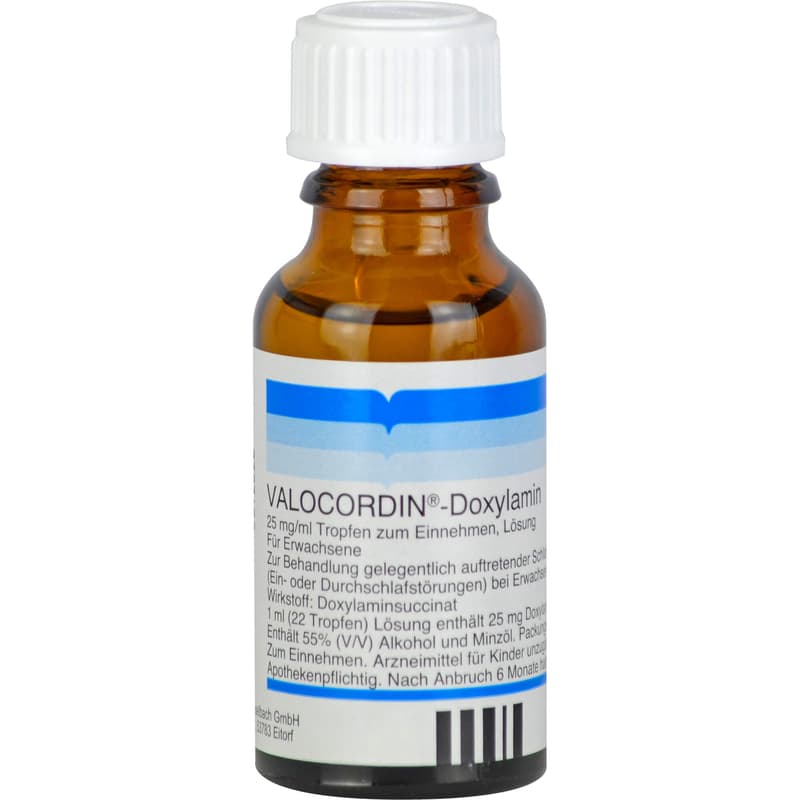
Die VALOCORDIN-D Doxylamin Tropfen sind ein bewährtes Arzneimittel zur praktischen Kurzzeitbehandlung von gelegentlichen Ein- und Durchschlafstörungen bei Erwachsenen. Die flüssige Lösung mit dem Wirkstoff Doxylaminsuccinat lässt sich dank der Tropfenform ganz einfach individuell dosieren. Das Produkt enthält erfrischendes Minzöl sowie 55 Vol.-% Alkohol und ist nach dem ersten Anbrechen noch 6 Monate haltbar.
Zu Risiken und Nebenwirkungen lesen Sie die Packungsbeilage und fragen Sie Ihre Ärztin, Ihren Arzt oder in Ihrer Apotheke.




Beschreibung
Wichtige Hinweise (Pflichtangaben)
Valocordin-Doxylamin, Tropfen zum Einnehmen. Wirkstoff: Doxylaminsuccinat. Anwendungsgebiete: zur Behandlung gelegentlich auftretender Schlafstörungen (Ein- oder Durchschlafstörungen) bei Erwachsenen. Warnhinweis: Enthält 55 Vol.-% Alkohol!Zu Risiken und Nebenwirkungen lesen Sie die Packungsbeilage und fragen Sie Ihre Ärztin, Ihren Arzt oder in Ihrer Apotheke.
GEBRAUCHSINFORMATION: INFORMATION FÜR DEN ANWENDER
Valocordin-Doxylamin 25 mg/ml Tropfen zum Einnehmen, Lösung für Erwachsene
Wirkstoff: Doxylaminsuccinat
Lesen Sie die gesamte Packungsbeilage sorgfältig durch, bevor Sie mit der Einnahme dieses Arzneimittels beginnen, denn sie enthält wichtige Informationen. Nehmen Sie dieses Arzneimittel immer genau wie in dieser Packungsbeilage beschrieben bzw. genau nach Anweisung Ihres Arztes oder Apothekers ein.
- Heben Sie die Packungsbeilage auf. Vielleicht möchten Sie diese später nochmals lesen.
- Fragen Sie Ihren Apotheker, wenn Sie weitere Informationen oder einen Rat benötigen.
- Wenn Sie Nebenwirkungen bemerken, wenden Sie sich an Ihren Arzt oder Apotheker. Dies gilt auch für Nebenwirkungen, die nicht in dieser Packungsbeilage angegeben sind. Siehe Abschnitt 4.
- Wenn Sie sich nicht besser oder gar schlechter fühlen, wenden Sie sich an Ihren Arzt.
- WAS IST VALOCORDIN-DOXYLAMIN UND WOFÜR WIRD ES ANGEWENDET?
- WAS SOLLTEN SIE VOR DER EINNAHME VON VALOCORDIN- DOXYLAMIN BEACHTEN?
- WIE IST VALOCORDIN-DOXYLAMIN EINZUNEHMEN?
- WELCHE NEBENWIRKUNGEN SIND MÖGLICH?
- WIE IST VALOCORDIN-DOXYLAMIN AUFZUBEWAHREN?
- INHALT DER PACKUNG UND WEITERE INFORMATIONEN
Valocordin-Doxylamin, ein Antihistaminikum, wird zur Kurzzeitbehandlung von Schlafstörungen eingesetzt. Valocordin-Doxylamin wird angewendet zur Behandlung gelegentlich auftretender Schlafstörungen (Ein- oder Durchschlafstörungen) bei Erwachsenen. Hinweis: Nicht alle Schlafstörungen bedürfen einer medikamentösen Therapie. Oftmals sind sie Ausdruck körperlicher oder seelischer Erkrankungen und können durch andere Maßnahmen oder eine Therapie der Grundkrankheit beeinflusst werden. Deshalb sollte bei länger anhaltenden Schlafstörungen keine Dauerbehandlung mit Valocordin-Doxylamin erfolgen, sondern der behandelnde Arzt aufgesucht werden.
2. WAS SOLLTEN SIE VOR DER EINNAHME VON VALOCORDIN- DOXYLAMIN BEACHTEN?
Valocordin-Doxylamin darf nicht eingenommen werden:
- wenn Sie allergisch gegen Doxylaminsuccinat oder einen der in Abschnitt 6. genannten sonstigen Bestandteile dieses Arzneimittels sind,
- wenn Sie überempfindlich gegen andere Antihistaminika sind,
- bei akutem Asthma-Anfall,
- bei Engwinkel-Glaukom (erhöhter Augeninnendruck),
- bei angeborenem langen QT-Syndrom,
- bei Nebennieren-Tumor (Phäochromozytom),
- bei Vergrößerung der Vorsteherdrüse (Prostata-Hypertrophie) mit Restharnbildung,
- bei akuter Vergiftung durch Alkohol, Schlaf- oder Schmerzmittel sowie Psychopharmaka (Neuroleptika, Tranquilizer, Antidepressiva, Lithium),
- bei Epilepsie,
- bei gleichzeitiger Behandlung mit Hemmstoffen der Monoaminoxidase.
Warnhinweise und Vorsichtsmaßnahmen
Bitte sprechen Sie mit Ihrem Arzt oder Apotheker, bevor Sie Valocordin-Doxylamin einnehmen. Besondere Vorsicht bei der Einnahme von Valocordin-Doxylamin ist erforderlich:- bei eingeschränkter Leberfunktion,
- bei Herzinsuffizienz und Bluthochdruck,
- bei chronischen Atembeschwerden und Asthma,
- bei gastrooesophagealem Reflux (Rückfluss von Magenflüssigkeit in die Speiseröhre),
- bei bestimmten Magen- und Darmfunktionsstörungen (Pylorusstenose oder Kardiaachalasie).
Kinder und Jugendliche
Aus klinischen Studien liegen nur begrenzte Erfahrungen bei Kindern und Jugendlichen unter 18 Jahren vor. Besondere Vorsicht bei der Anwendung von Valocordin-Doxylamin ist geboten bei Patienten mit neurologisch erkennbaren Hirnschäden in der Großhirnrinde und Krampfanfällen in der Vorgeschichte, da bereits durch die Gabe von kleinen Dosen des Arzneimittels große epileptische Krampfanfälle ausgelöst werden können.Einnahme von Valocordin-Doxylamin zusammen mit anderen Arzneimitteln
Informieren Sie Ihren Arzt oder Apotheker, wenn Sie andere Arzneimittel einnehmen/anwenden, kürzlich andere Arzneimittel eingenommen/angewendet haben oder beabsichtigen andere Arzneimittel einzunehmen/anzuwenden.- Bei gleichzeitiger Anwendung anderer zentral wirksamer Arzneimittel (wie Psychopharmaka, Schlafmittel, Schmerzmittel, Narkosemittel, Antiepileptika) mit Valocordin-Doxylamin kann es zu einer wechselseitigen Verstärkung der Wirkung kommen.
- die Kombination mit Procarbazin und anderen Antihistaminika kann zu einer gegenseitigen Verstärkung der zentraldämpfenden Wirkung führen und sollte daher mit Vorsicht erfolgen.
- Während der Behandlung mit Doxylaminsuccinat darf kein Alkohol getrunken werden, da hierdurch die Wirkung von Doxylaminsuccinat in nicht vorhersehbarer Weise verändert und verstärkt wird.
- Ergebnisse einer Untersuchung an Mäusen zeigten eine Zunahme der Enzymaktivität in der Leber (Cytochrom P450-Enzyme, CYP2B, CYP3A, CYP2A), die an der Verstoffwechselung des Arzneimittels beteiligt sind. Die Induktion dieser Enzyme kann bei Anwendung mit
- Die anticholinerge Wirkung von Doxylaminsuccinat kann durch die gleichzeitige Gabe von anderen Substanzen mit anticholinergen Wirkungen (z.B. Biperiden, einem Arzneimittel zur Behandlung der Parkinsonschen Krankheit; trizyklischen Antidepressiva) in nic
- Die Anwendung von Arzneimitteln gegen hohen Blutdruck (wie Guanabenz, Clonidin, Alpha-Methyldopa) zusammen mit Valocordin-Doxylamin kann zu verstärkter Müdigkeit und Mattigkeit führen.
- Die gleichzeitige Anwendung ohrenschädigender Arzneimittel (z.B. Aminoglykosid-Antibiotika, Salicylate, einige harntreibende Arzneimittel) mit Antihistaminika kann die Symptome einer Schädigung des Ohres, wie Tinnitus, Schwindel, Schwindelgefühl überdec
- Das Ergebnis von Hauttests kann unter einer Therapie mit Doxylamin verfälscht sein (falsch negativ).
- Epinephrin sollte nicht zusammen mit Valocordin-Doxylamin verabreicht werden (Gefäßerweiterung, Blutdruckabfall, beschleunigte Herzfrequenz).
- Bei gleichzeitiger Behandlung mit anderen Arzneimitteln, die photosensibilisierend wirken, ist eine Verstärkung phototoxischer Wirkungen möglich.
Getränken und Alkohol
Während der Anwendung von Valocordin-Doxylamin sollte Alkoholgenuss vermieden werden.Schwangerschaft und
Stillzeit
Wenn Sie schwanger sind oder stillen, oder wenn Sie vermuten, schwanger zu sein oder beabsichtigen, schwanger zu werden, fragen Sie vor der Einnahme dieses Arzneimittels Ihren Arzt oder Apotheker um Rat.Schwangerschaft
Valocordin-Doxylamin soll während der Schwangerschaft nur auf ausdrückliche Anweisung des Arztes eingenommen werden.Stillzeit
Da der Wirkstoff in die Muttermilch übergeht, soll das Stillen für die Dauer der Behandlung unterbrochen werden.Verkehrstüchtigkeit und Fähigkeit zum Bedienen von Maschinen
Dieses Arzneimittel kann auch bei bestimmungsgemäßem Gebrauch das Reaktionsvermögen soweit verändern, dass die Fähigkeit zur aktiven Teilnahme am Straßenverkehr oder zum Bedienen von Maschinen beeinträchtigt wird. Dies gilt in verstärktem Maße im Zusammenwirken mit Alkohol. Sie können dann auf unerwartete und plötzliche Ereignisse nicht mehr schnell und gezielt genug reagieren. Fahren Sie nicht Auto oder andere Fahrzeuge! Bedienen Sie keine elektrischen Werkzeuge oder Maschinen! Arbeiten Sie nicht ohne sicheren Halt! Beachten Sie besonders, dass Alkohol Ihre Verkehrstüchtigkeit noch weiter verschlechtert!Valocordin-Doxylamin enthält Ethanol (Alkohol)
Dieses Arzneimittel enthält 55 Vol.-% Ethanol (Alkohol). Das sind bis zu 900 mg pro Dosis, entsprechend 21,87 ml Bier oder 9,11 ml Wein. Ein gesundheitliches Risiko besteht u.a. bei Leberkranken, Alkoholkranken, Epileptikern, Patienten mit organischen Erkrankungen des Gehirns, Schwangeren, Stillenden und Kindern.3. WIE IST VALOCORDIN-DOXYLAMIN EINZUNEHMEN?
Nehmen Sie dieses Arzneimittel immer genau wie in dieser Packungsbeilage beschrieben bzw. genau nach der mit Ihrem Arzt oder Apotheker getroffenen Absprache ein. Fragen Sie bei Ihrem Arzt oder Apotheker nach, wenn Sie sich nicht sicher sind. Falls vom Arzt nicht anders verordnet, ist die empfohlene Dosis: Soweit nicht anders verordnet, nehmen Erwachsene 22 Tropfen Valocordin-Doxylamin (entsprechend 25 mg Doxylaminsuccinat) ein. Bei stärkeren Schlafstörungen können als Höchstdosis bis zu 44 Tropfen Valocordin-Doxylamin (entsprechend 50 mg Doxylaminsuccinat) eingenommen werden. Die maximale tägliche Dosis sollte nicht überschritten werden. Zur Festlegung der individuellen Valocordin-Doxylamin-Dosis sollten Patienten mit eingeschränkter Leber- oder Nierenfunktion, ältere oder geschwächte Patienten, die besonders empfindlich auf Doxylamin reagieren, einen Arzt aufsuchen.
Art der Anwendung
Zum Einnehmen. Die Tropfen werden mit ausreichend Flüssigkeit (Wasser) ca. 1/2 bis 1 Stunde vor dem Schlafengehen eingenommen. Es ist darauf zu achten, dass nach der Einnahme von Valocordin-Doxylamin für eine ausreichende Schlafdauer gesorgt wird, um eine Beeinträchtigung des Reaktionsvermögens am folgenden Morgen zu vermeiden.Dauer der Anwendung
Die Dauer der Behandlung mit Valocordin-Doxylamin sollte im Allgemeinen nur wenige Tage betragen und 2 Wochen nicht überschreiten. Bei akuten Schlafstörungen ist die Behandlung möglichst auf Einzelgaben zu beschränken. Bei Einnahme von Valocordin-Doxylamin über einen längeren Zeitraum sollte die Dosis spätestens 14 Tage nach der erstmaligen Anwendung schrittweise reduziert werden, um die Notwendigkeit der Behandlung erneut zu bewerten. Bitte sprechen Sie mit Ihrem Arzt oder Apotheker, wenn Sie den Eindruck haben, dass die Wirkung von Valocordin-Doxylamin zu stark oder zu schwach ist.Wenn Sie eine größere Menge von Valocordin-Doxylamin eingenommen haben,
als Sie sollten
Eine Überdosierung ist daran zu erkennen, dass es zunächst zu zentralbedingten Symptomen wie Unruhe, gesteigerten Muskelreflexen, Bewusstlosigkeit, Depression der Atmung sowie Herz-Kreislaufstillstandkommen kann. Weitere Zeichen einer Überdosierung sind Pupillenerweiterung, beschleunigte Herztätigkeit (Tachykardie), Fieber, heiße, rote Haut und trockene Schleimhäute. Treten diese Symptome auf, ist unverzüglich ein Arzt zu verständigen. Auch Rhabdomyolysen (schwere Muskelschädigungen) sind beobachtet worden. Bei Überdosierung werden als Sofortmaßnahmen Magenspülungen mit Aktivkohle empfohlen. Beim Auftreten von Magen-Darm-Beschwerden, zentralnervösen Störungen, Mundtrockenheit, Entleerungsstörungen der Blase (Miktionsbeschwerden) sowie Sehstörungen sind je nach Erscheinungsbild die entsprechenden Maßnahmen zu ergreifen.
Wenn Sie die Einnahme von Valocordin-Doxylamin vergessen haben
Nehmen Sie nicht die doppelte Menge ein, wenn Sie die vorherige Einnahme vergessen haben, sondern fahren Sie mit der Einnahme, wie von Ihrem Arzt verordnet oder in der Dosierungsanleitung beschrieben, fort.Wenn Sie die Einnahme von Valocordin-Doxylamin abbrechen
Es sind keine Besonderheiten zu beachten.Wenn Sie weitere Fragen zur Einnahme dieses Arzneimittels haben, wenden Sie sich an Ihren Arzt oder Apotheker.
4. WELCHE NEBENWIRKUNGEN SIND MÖGLICH?
Wie alle Arzneimittel kann auch dieses Arzneimittel Nebenwirkungen haben, die aber nicht bei jedem auftreten müssen.
Bei den Häufigkeitsangaben zu Nebenwirkungen werden folgende Kategorien zugrunde gelegt
| Bei den Häufigkeitsangaben zu Nebenwirkungen Werden folgende Kategorien zugrunde gelegt: | |
| Sehr häufig: | mehr als 1 Behandelter von 10 |
| Häufig: | 1 bis 10 Behandelte von 100 |
| Gelegentlich: | 1 bis 10 Behandelte von 1 000 |
| Selten: | 1 bis 10 Behandelte von 10 000 |
| Sehr selten: | weniger als 1 Behandelter von 10 000 |
| Nicht bekannt: | Häufigkeit auf Grundlage der verfügbaren Daten nicht abschätzbar. |
Mögliche Nebenwirkungen
In Abhängigkeit von der Empfindlichkeit des einzelnen Patienten und der eingenommenen Dosis können folgende Nebenwirkungen auftreten
Erkrankungen des Blutes und des Lymphsystems
Blutzellschäden können in sehr seltenen Fällen vorkommen.Endekrine Erkrankungen
Bei Patienten mit Nebennieren-Tumor (Phäochromozytom) kann es durch die Gabe von Antihistaminika zu einer verstärkten Freisetzung von Katecholaminen kommen, die eine sehr starke Wirkung auf das Herz-Kreislauf-System haben.
Psychiatrische Erkrankungen
Verlängerte Reaktionszeit, Konzentrationsstörungen, Depressionen, Müdigkeit, Schläfrigkeit. Außerdem besteht die Möglichkeit des Auftretens sogenannter "paradoxer" Reaktionen wie Unruhe, Erregung, Spannung, Schlaflosigkeit, Alpträume, Verwirrtheit, Halluzinationen, Zittern. In seltenen Fällen können Krampfanfälle des Gehirns auftreten. Nach längerfristiger täglicher Anwendung können durch plötzliches Absetzen der Therapie Schlafstörungen wieder verstärkt auftreten.Abhängigkeit
Wie auch bei anderen Hypnotika kann die Einnahme von Doxylaminsuccinat zur Entwicklung von physischer und psychischer Abhängigkeit führen. Das Risiko einer Abhängigkeit steigt mit der Dosis und der Dauer der Behandlung und ist bei Patienten mit Alkohol-, Arzneimittel- oder Drogenabhängigkeit in der Vorgeschichte zusätzlich erhöht.Rebound-Schlaflosigkeit
Auch bei Beenden einer kürzeren Behandlung mit Doxylaminsuccinat können durch plötzliches Absetzen Schlafstörungen vorübergehend wieder auftreten. Deshalb wird empfohlen, die Behandlung ggf. durch schrittweise Reduktion der Dosis zu beenden.Anterograde Amnesie
Auch in therapeutischen Dosen können Hypnotika anterograde Amnesien verursachen, insbesondere während der ersten Stunden nach der Einnahme. Dieses Risiko erhöht sich mit steigenden Dosen, kann aber durch eine ausreichend lange und ununterbrochene Schlafdauer (7-8 Stunden) verringert werden.Erkrankungen des Nervensystems
Schwindelgefühl, Benommenheit, Kopfschmerzen. In seltenen Fällen können Krampfanfälle des Gehirns auftreten.Augenerkrankungen
Akkommodationsstörungen, Erhöhung des Augeninnendruckes.Erkrankungen des Ohrs und des Labyrinths
Tinnitus.Herzerkrankungen
Beschleunigung des Herzschlages, Unregelmäßigkeit des Herzschlages, Abfall oder Anstieg des Blutdruckes und Zunahme einer bestehenden Herzleistungsschwäche können auftreten. EKG-Veränderungen wurden beobachtet.Erkrankungen der Atemwege,
des Brustraums und Mittelteils
Zu einer Beeinträchtigung der Atemfunktion kann es durch Eindickung von Schleim und durch Verlegung oder Engstellung von Bronchien kommen.Erkrankungen des Magen-Darm-Trakts
Begleitwirkungen am vegetativen Nervensystem wie Mundtrockenheit, Verstopfung, Übelkeit, Erbrechen, Durchfall, Appetitlosigkeit oder Appetitzunahme, Schmerzen im Bereich des Magens können auftreten. Sehr selten kann es zu einer lebensbedrohlichen Darmlähmung kommen.Leber- und Gallenerkrankungen
Über Leberfunktionsstörungen (cholestatischer Ikterus) unter der Therapie mit Antihistaminika ist berichtet worden.Erkrankungen der Haut und des Unterhautzellgewebes
Über allergische Hautreaktionen und Lichtempfindlichkeit der Haut unter der Therapie mit Antihistaminika ist berichtet worden, ferner über Störungen der Körpertemperaturregulierung.Skelettmuskulatur-,
Bindegewebs- und Knochenerkrankungen
Muskelschwäche.Erkrankungen der Nieren und Harnwege
Störungen beim Wasserlassen.Allgemeine Erkrankungen und Beschwerden am Verabreichungsort
Gefühl der verstopften Nase, Müdigkeit, Mattigkeit.Toleranzentwicklung
Nach wiederholter Einnahme von Sedativa/Hypnotika kann es zu einem Verlust an Wirksamkeit (Toleranz) kommen.Hinweise
Durch sorgfältige und individuelle Einstellung der Tagesdosen lassen sich Häufigkeit und Ausmaß von Nebenwirkungen reduzieren. Die Gefahr des Auftretens von Nebenwirkungen ist bei älteren Patienten größer, bei diesem Personenkreis kann sich dadurch auch die Sturzgefahr erhöhen.Meldung von Nebenwirkungen
Wenn Sie Nebenwirkungen bemerken, wenden Sie sich an Ihren Arzt oder Apotheker. Dies gilt auch für Nebenwirkungen, die nicht in dieser Packungsbeilage angegeben sind. Sie können Nebenwirkungen auch direkt dem Bundesinstitut für Arzneimittel und Medizinprodukte Abt. Pharmakovigilanz Kurt-Georg-Kiesinger Allee 3 D-53175 Bonn Website: www.bfarm.de anzeigen. Indem Sie Nebenwirkungen melden, können Sie dazu beitragen, dass mehr Informationen über die Sicherheit dieses Arzneimittels zur Verfügung gestellt werden.5. WIE IST VALOCORDIN-DOXYLAMIN AUFZUBEWAHREN?
Bewahren Sie dieses Arzneimittel für Kinder unzugänglich auf. Sie dürfen dieses Arzneimittel nach dem auf der Faltschachtel und dem Etikett nach "Verwendbar bis:" angegebenen Verfalldatum nicht mehr verwenden. Das Verfallsdatum bezieht sich auf den letzten Tag des angegebenen Monats.
Aufbewahrungsbedingungen
Für dieses Arzneimittel sind keine besonderen Lagerungsbedingungen erforderlich.Entsorgen Sie Arzneimittel nicht im Abwasser oder Haushaltsabfall. Fragen Sie Ihren Apotheker, wie das Arzneimittel zu entsorgen ist, wenn Sie es nicht mehr verwenden. Sie tragen damit zum Schutz der Umwelt bei.
Hinweis auf Haltbarkeit nach Anbruch
Valocordin-Doxylamin ist nach Anbruch 6 Monate haltbar.6. INHALT DER PACKUNG UND WEITERE INFORMATIONEN
Was Valocordin-Doxylamin enthält
Der Wirkstoff ist: Doxylaminsuccinat. 1 ml (22 Tropfen) enthält 25 mg Doxylaminsuccinat. Die sonstigen Bestandteile sind: Ethanol 96 % (VA/), gereinigtes Wasser, Minzöl.Wie Valocordin-Doxylamin aussieht und Inhalt der Packung
Tropfen zum Einnehmen, Lösung. Valocordin-Doxylamin ist eine klare, farblose Flüssigkeit. Valocordin-Doxylamin ist in Packungen mit 20 ml (N1) und 50 ml (N2) erhältlich.Pharmazeutischer Unternehmer und Hersteller
Krewel Meuselbach GmbH
Krewelstr. 2
53783 Eitorf
Telefon: 02243 / 87-0
Telefax: 02243 / 87-175
E-Mail: lnfo@krewel-meuselbach.de
Diese Gebrauchsinformation wurde zuletzt überarbeitet im November 2013.
Quelle: Angaben der Packungsbeilage
Stand: 02/2018
Wirkstoff: Doxylaminsuccinat. Anwendungsgebiete: zur Behandlung gelegentlich auftretender Schlafstörungen (Ein- oder Durchschlafstörungen) bei Erwachsenen. Warnhinweis: Enthält 55 Vol.-% Alkohol!
Info-Broschüre
Info-Broschüre herunterladenZusammensetzung & Allergene
Zusammensetzung
Wirkstoff: Doxylaminsuccinat