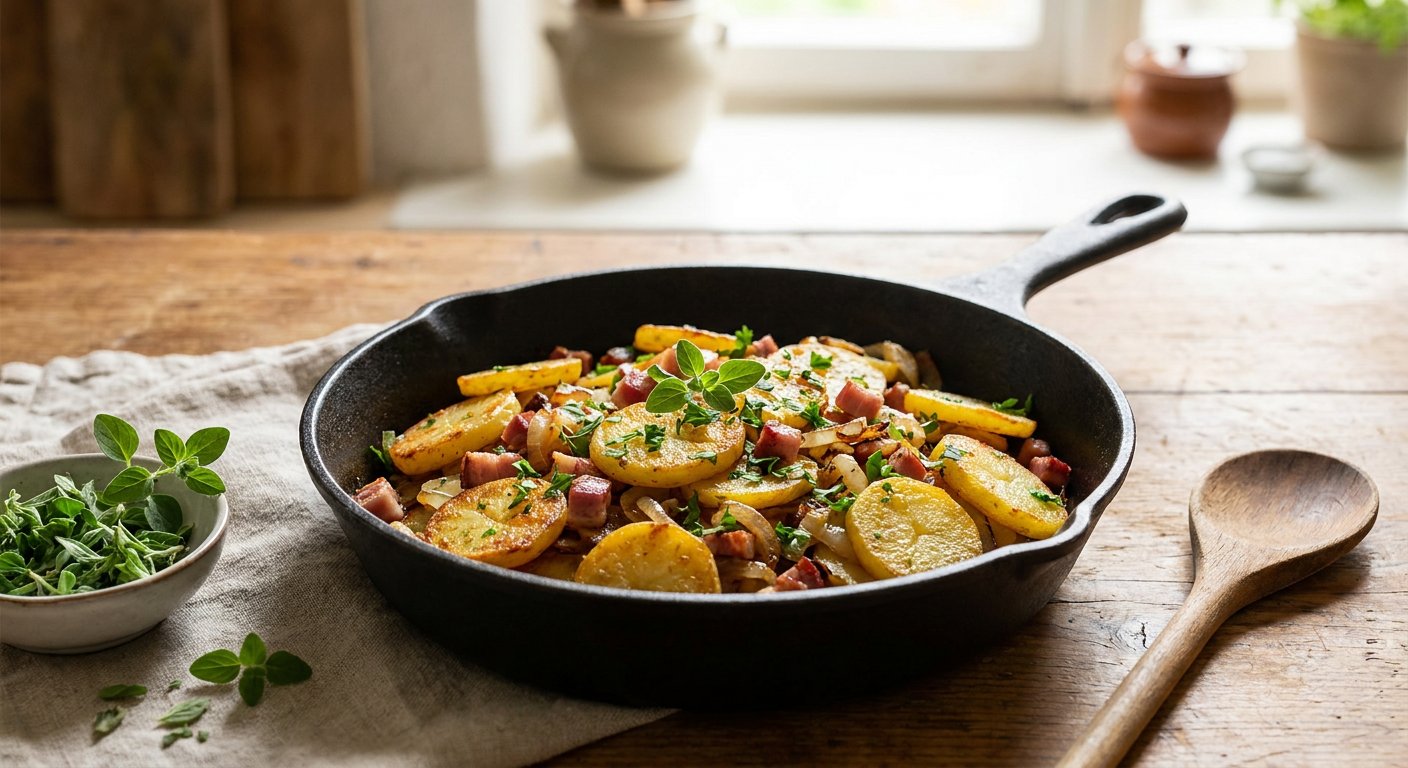
How to make pan-fried potatoes right
A golden-brown, outrageously crispy crust on the outside and a wonderfully juicy, buttery core on the inside: perfect fried potatoes are the crowning glory of honest everyday cooking. Yet in many pans, the dream of crispy potato bliss all too often turns into a sad mixture of soft, broken slices, burnt onion pieces, or grease-soaked cubes.
The secret to truly masterful fried potatoes lies neither in chance nor in insanely expensive kitchen equipment. It relies on simple kitchen physics and chemistry: the right potato variety, choosing the optimal frying fat, consistent heat control, and the golden patience to simply let the pan do its work undisturbed. We will show you step-by-step how your fried potatoes turn out perfect every single time, which tricks professional chefs use, and why the two-pan principle for onions and bacon is a real game-changer. Discover the best tubers directly in our potato selection at Knuspr and start your crispy kitchen adventure.
The Anatomy of the Right Tuber: Why Waxy Potatoes Are Unbeatable
Every great dish begins with the right ingredient. Anyone standing in front of the vegetable shelf grabbing a bag at random risks failure right from the start. Potatoes differ fundamentally in their starch content and cell structure. This exact factor determines whether your slices stay firm in the hot pan or disintegrate into mush.
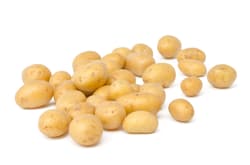
For perfect fried potatoes, there is only one undisputed winner: the waxy potato. Varieties like Linda, Sieglinde, Annabelle, or Nicola have a comparatively low starch content of around 11 to 13 percent. Their starch granules swell only moderately when heated, keeping the cell tissue dense, firm, and resilient. Even when flipped vigorously, the slices retain their firm shape.
Waxy (fk)
Low starch content, fine cell structure, extremely shape-retaining. The slices stay juicy on the inside and form an even, paper-thin crispy layer on the outside. Ideal for our waxy potatoes in a 2.5 kg bag.
Mostly waxy (vfk)
Medium starch content (approx. 14 to 16 percent). Can work if fried carefully, but edges tend to break off more easily when flipping. Results in a slightly softer, floury texture.
Floury (mk)
High starch content above 16 percent. The cell walls burst during cooking. In the frying pan, this inevitably leads to fried mush instead of crispy slices. Perfect for mashed potatoes or dumplings, never for fried potatoes.
Freshness tip from the Knuspr kitchen: When shopping, look for firm tubers without green spots or sprouts. At Knuspr, we source our potatoes directly from selected growers, ensuring they arrive fresh, dry, and full of fine flavor at your doorstep. As a Knuspr Xtra member, you also save permanently on our entire organic range.

 Potatoes waxy, in net
Boiled or raw: The secret of retrograded starch
Among passionate cooks, a virtually religious debate has raged for decades: Are the best fried potatoes made from raw or pre-boiled potatoes? Both methods have their merits, but if you are looking for the perfect balance between a crispy shell and a buttery-soft core, there is a clear biochemical favorite.
The ultimate method: Day-old jacket potatoes
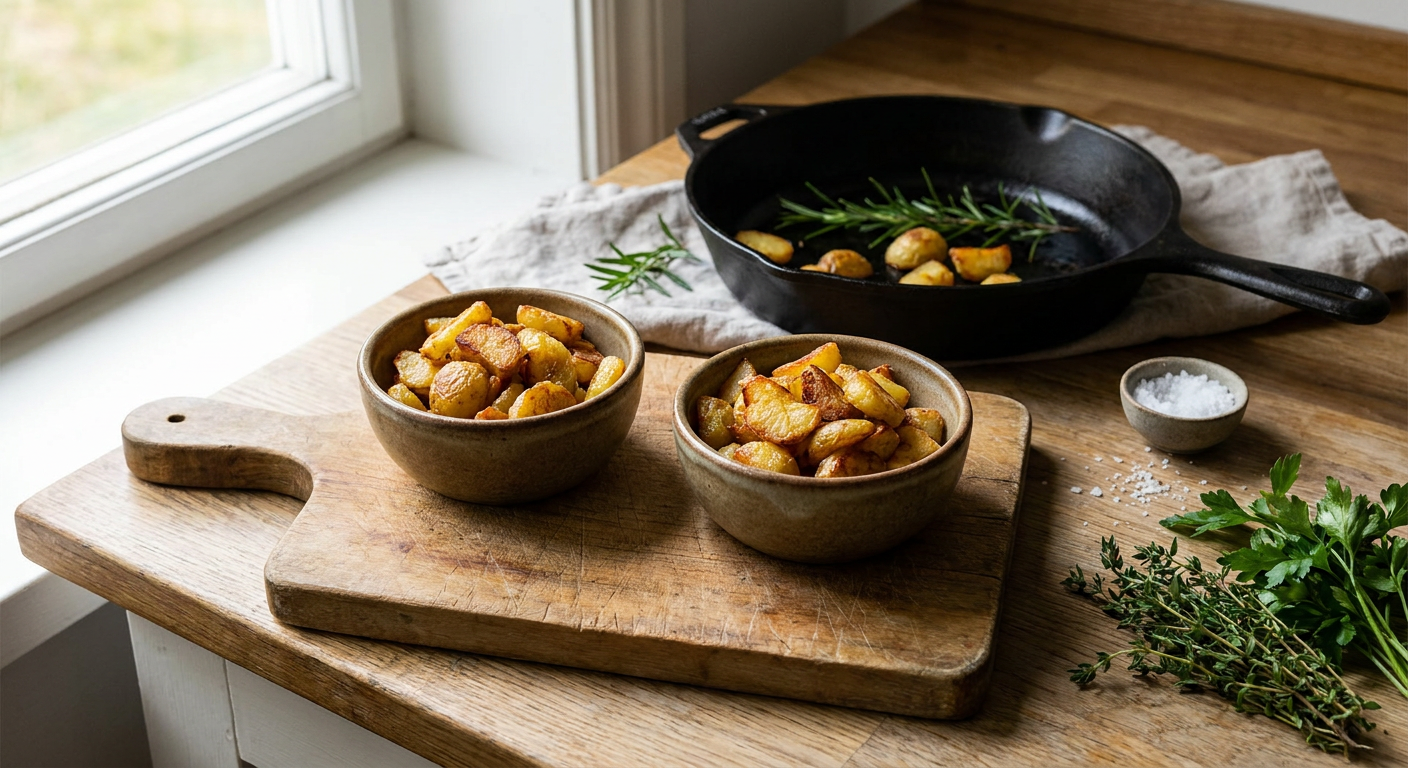
If you cook waxy potatoes in their skins the day before and let them cool completely in the refrigerator overnight, something magical happens: the starch retrogrades. This means that the gelatinized starch transforms back into crystalline structures. The potato loses excess surface moisture, contracts, and forms an incomparably crispy crust in record time during subsequent frying, without soaking up fat like a sponge.
Raw potatoes, on the other hand, contain a lot of free water and starch on the cut surface. If you fry them directly in the pan, water escapes at first. This leads to the slices steaming rather than frying. Browning only occurs after a longer cooking time at moderate heat. The result tastes flavorful and is reminiscent of French Pommes Sarladaises, but requires much more time, constant turning over low heat, and carries the risk of the slices turning dark on the outside before they are cooked on the inside.
Pre-boil as jacket potatoes
Boil the unpeeled tubers in well-salted water until just done (knife test). Do not overcook, otherwise they will become soft.
Allow to cool completely
Let the potatoes rest in the fridge for at least a few hours, ideally overnight. Warm potatoes cannot be cut cleanly and crumble in the pan.
Cut into even slices
Peel the cold tubers and slice them with a sharp knife into approx. 4 to 5 mm thick slices. Slices that are too thin burn quickly, while those that are too thick take too long.
Heat, Iron, and Golden Fat: The Physics of the Perfect Crust
Have you ever wondered why fried potatoes in a traditional inn often taste far better than at home? The secret lies in two seemingly simple things: the right cookware and the right fat.
The right cookware: Cast iron or wrought iron
A heavy iron or cast iron skillet retains heat extremely well. When you add cold potato slices, the temperature does not drop abruptly. In thin coated non-stick pans, the bottom of the pan cools down immediately: the potatoes start boiling in their own juice instead of searing properly. A well-seasoned iron pan adds an incomparable roasted aroma thanks to its natural patina.
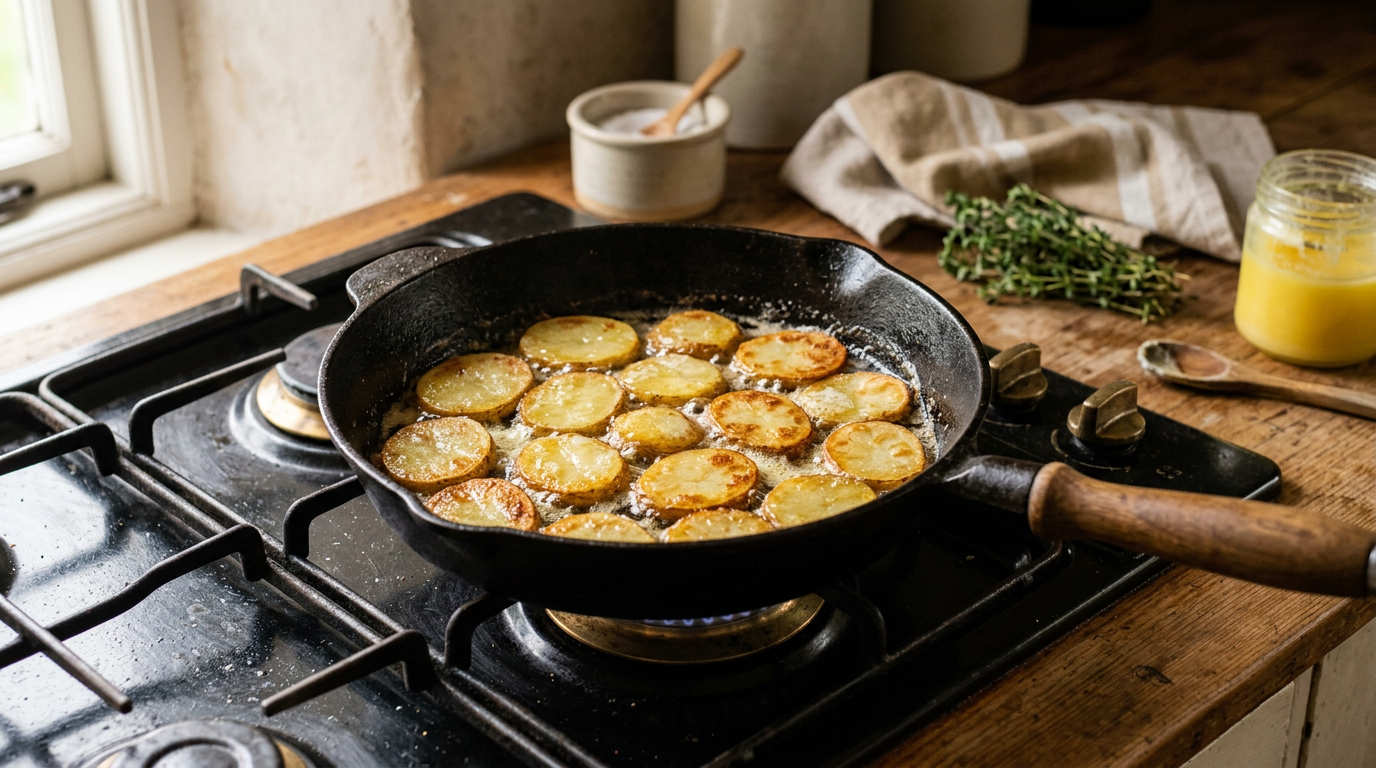
When it comes to fat, the smoke point also determines success or failure. Regular butter contains water and milk protein: at temperatures above 175 degrees, the milk protein burns and turns bitter and black. Vegetable margarine, on the other hand, contains too much water. For high-heat searing, you need fats with a smoke point of over 200 degrees.
| Cooking fat | Smoke point | Taste & Suitability |
|---|---|---|
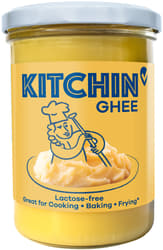
| Clarified butter / Ghee | approx. 205 °C | The absolute winner: Wonderfully buttery aroma without burning milk protein. Our favorite is Kitchin Ghee from our Knuspr own brand. As a Knuspr Xtra member, you get a permanent 10% discount on all Kitchin products. |
| Refined rapeseed oil | approx. 220 °C | Neutral in flavor, can be heated extremely high, and ideal for vegan preparation. Tip: For extra flavor, stir in a knob of cold butter at the end. |
| Lard | approx. 200 °C | Quaint, hearty, and rustic. Especially in traditional inns, the guarantee for a savory taste. |
| Regular butter | approx. 175 °C | Not suitable for high-heat searing! But perfect as a flavor boost in the last 60 seconds of cooking time. |


The Two-Pan Principle for Onions and Bacon
This is where the most common and fatal mistake in German kitchens happens: throwing potatoes, diced bacon, and finely chopped onions into the hot pan all at once. The result is predictable: potatoes need a good 15 to 20 minutes to become golden brown and crispy all over. Onions, on the other hand, burn after just 5 minutes over high heat, turning bitter and pitch-black. At the same time, the released onion juice releases moisture, making the potatoes soggy.
The solution: Fry separately, serve united
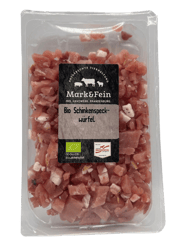
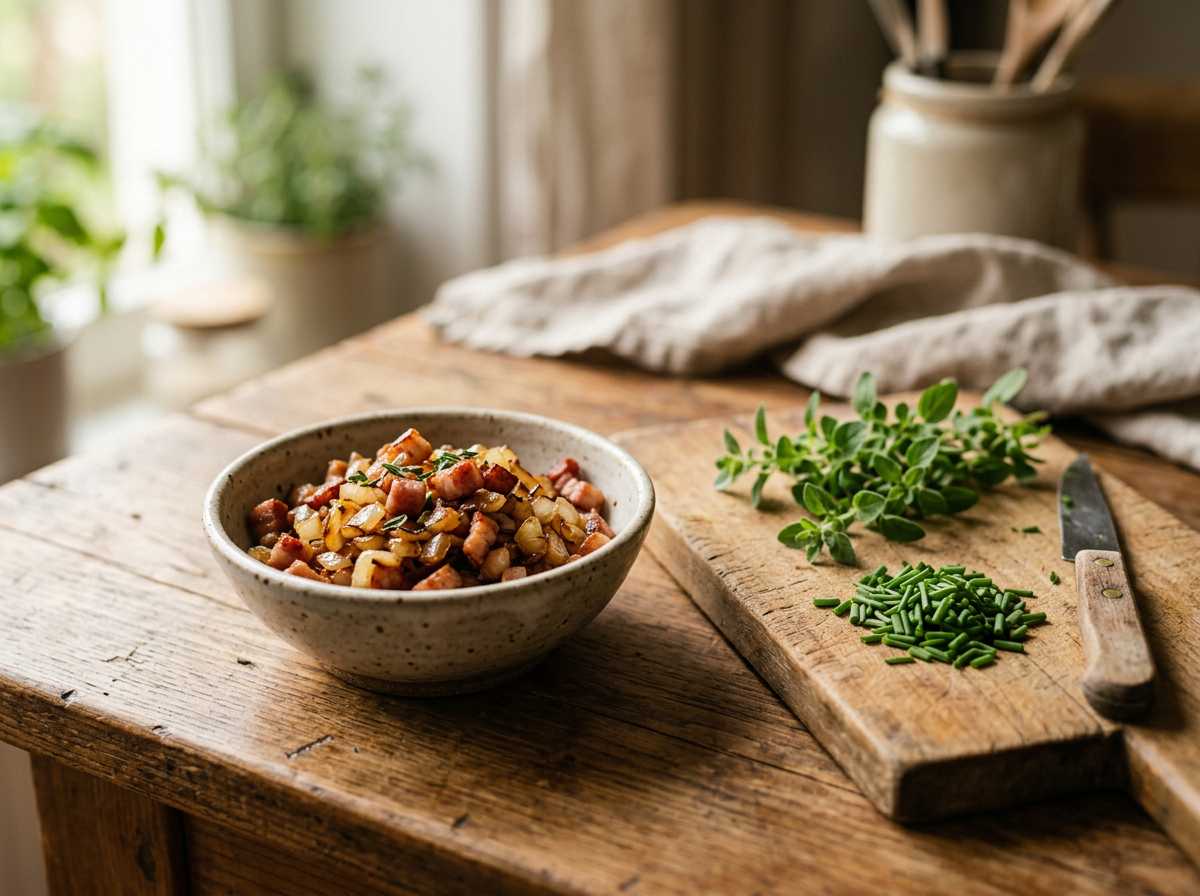
Professional chefs swear by the simple two-pan principle: gently sauté your bacon—such as the flavorful Dacello bacon from our Knuspr own brand (on which Knuspr Xtra members also save 10%)—and finely chopped onions in a separate small skillet over medium heat until the bacon is crispy and the onions are translucent and golden yellow.
You can then pour the rendered bacon fat through a small strainer into the large potato pan: it gives the fried potatoes an incomparably savory smoky aroma. Set the bacon and onions themselves aside and fold them into the cooked potato slices only during the last two minutes. This keeps the bacon crispy and the onions wonderfully sweet.