Make your own Cordon Bleu: Juicy, crispy & perfectly filled
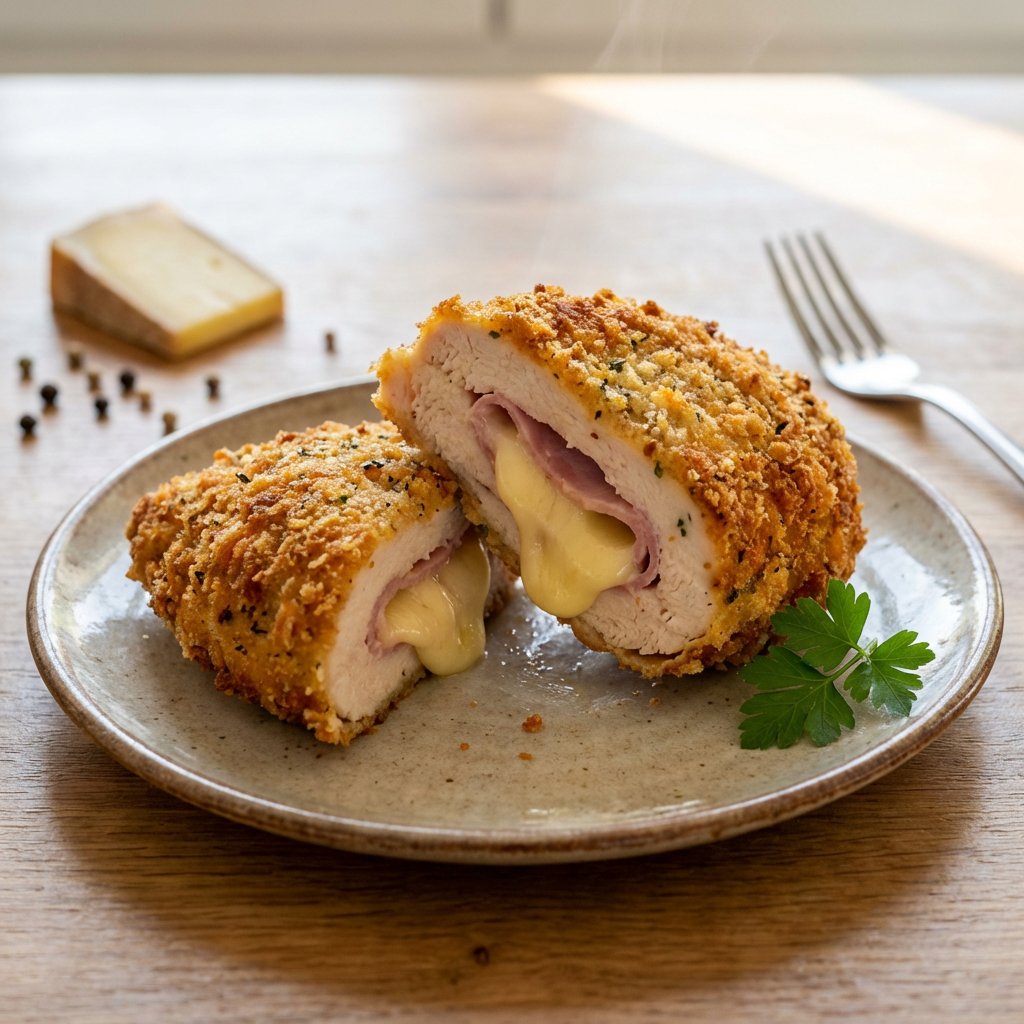
On the outside, a golden-brown, aromatic crust that crunches audibly with the very first bite. Inside, tender meat, juicy ham, and a rich center of melted cheese that flows hot across the plate when sliced open. A perfectly prepared cordon bleu is the epitome of pure comfort food.
Yet in the home kitchen, the culinary experience often stumbles over small pitfalls: the cheese leaks out prematurely into the hot fat, leaving behind a hollow schnitzel, the breading turns unappealingly soggy, or the meat dries out before the cheese center has even melted. With the right cut, the matching Swiss cheese, and a simple professional trick for sealing, your cordon bleu is guaranteed to turn out masterfully.
1. The Foundation: Which Meat Ensures the Juiciest Bite?
Every great cordon bleu stands or falls with the quality and cut of the meat. It needs to be tender enough to cook through quickly, yet firm enough to securely hold the rich, melted cheese filling.
Veal (topside or knuckle)
The traditional gold standard: Veal has exceptionally tender muscle fibres and a delicate, elegant natural flavour. It cooks through quickly, stays melt-in-your-mouth tender, and pairs perfectly with fine mountain cheese and mild ham.
Pork (topside or loin)
The uncomplicated all-rounder: Pork schnitzel from the topside offers wonderful juiciness and easily forgives an extra minute in the pan. The loin is somewhat leaner and can be sliced with great precision.
Many recipes recommend cutting a pocket into a thick piece of meat. In practice, however, this often leads to frustration: the pocket is difficult to fill evenly with cheese and ham, and the edges of the meat are tricky to seal. Much more reliable is the butterfly cut: make a horizontal cut into a slice of meat about 2 to 2.5 cm thick from the long side, stopping about one centimetre before the edge. Open the meat like a book. This gives you an evenly thick, wide surface.


 Chicken inner fillet
2. The Heart of It: Which Cheese Melts Creamily Without Separating?
The cheese center is the soul of Cordon Bleu. But not every cheese behaves the same way under the breading. The wrong choice of cheese separates into greasy fat and watery whey at pan temperature or remains frustratingly solid.
Gruyère AOP (Greyezer)
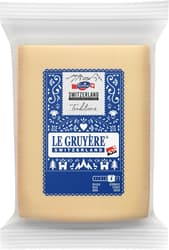
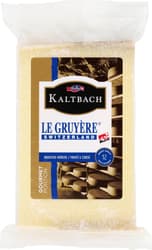
The undisputed number one: This Swiss mountain cheese melts smoothly, forms wonderfully stretchy strings, and brings a rich, nutty, savory flavor that pairs perfectly with meat.
Mild Emmental
The popular classic: With its delicate nutty notes and gentle character, it is ideal for children and food lovers who prefer a milder, harmonious cheese flavor.
Raclette or Gouda
The creamy alternative: Swiss raclette cheese is naturally made to melt into a velvety texture. Medium-aged Gouda offers a wonderfully rich melt for any day of the week.


3. The Ham Wrap: The Protective Shield Against Leaking
This is where the fate of your dish is decided: if you simply place cheese on the schnitzel and fold it over, you risk it breaking through the edge of the meat during the very first flip. Ham is not just a flavour carrier, but your most crucial protective seal.
Fold the ham parcel
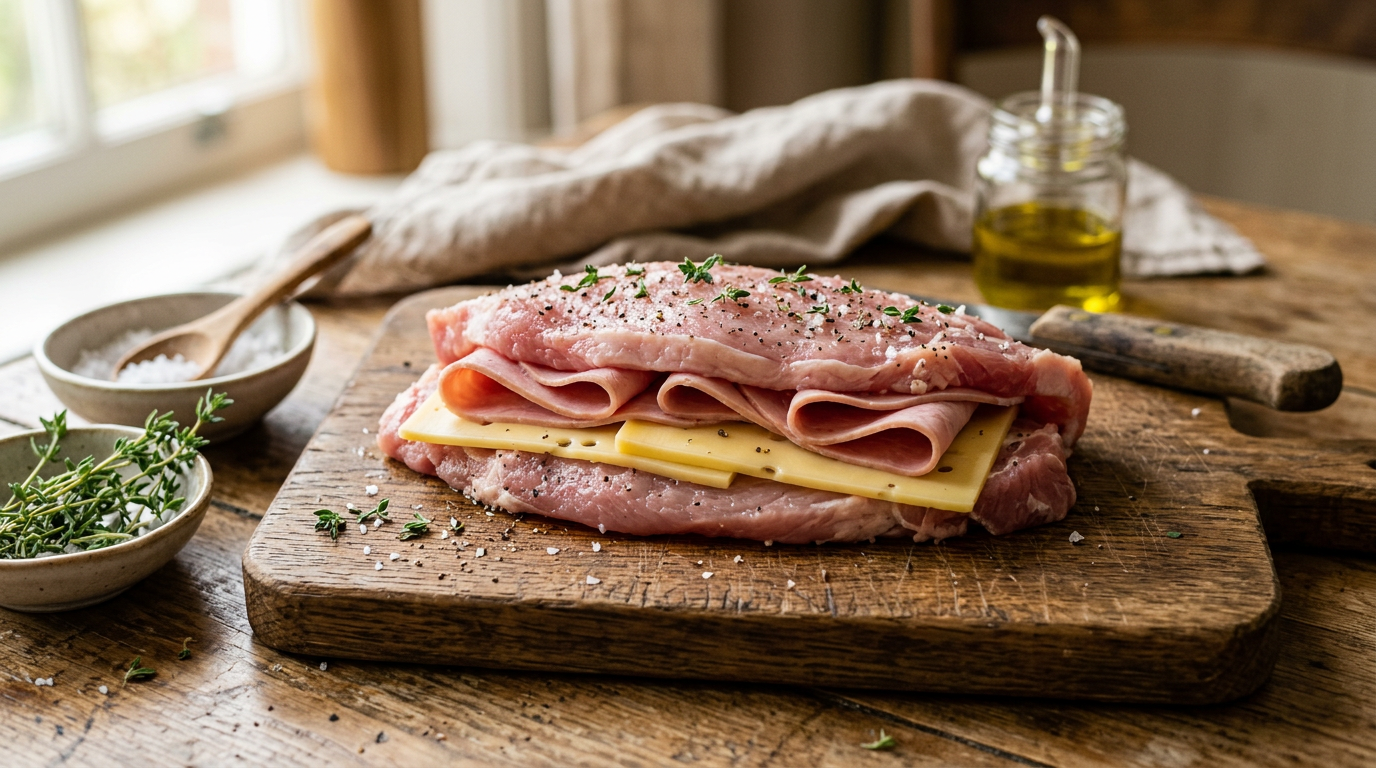
Spread a slice of juicy cooked ham flat on your cutting board. Place the trimmed cheese slices in the centre. Now tightly fold the edges of the ham over the cheese from all four sides like an envelope, so that the cheese is completely enclosed all around.
Leave the meat border clear
Place the assembled ham parcel onto one half of the pounded schnitzel. Take meticulous care that a clear border of at least 1.5 to 2 centimetres of bare meat remains all around. If the ham is too close to the edge, the meat will not stick together.
Seal and let rest
Fold the second half of the meat over and firmly press the edges together with your thumb and index finger. The meat protein naturally bonds during this process. If you want to be completely safe, secure the seam with two wooden toothpicks, which should be removed before serving.