Bakery-Style Onion Tart: Juicy Autumn Recipe
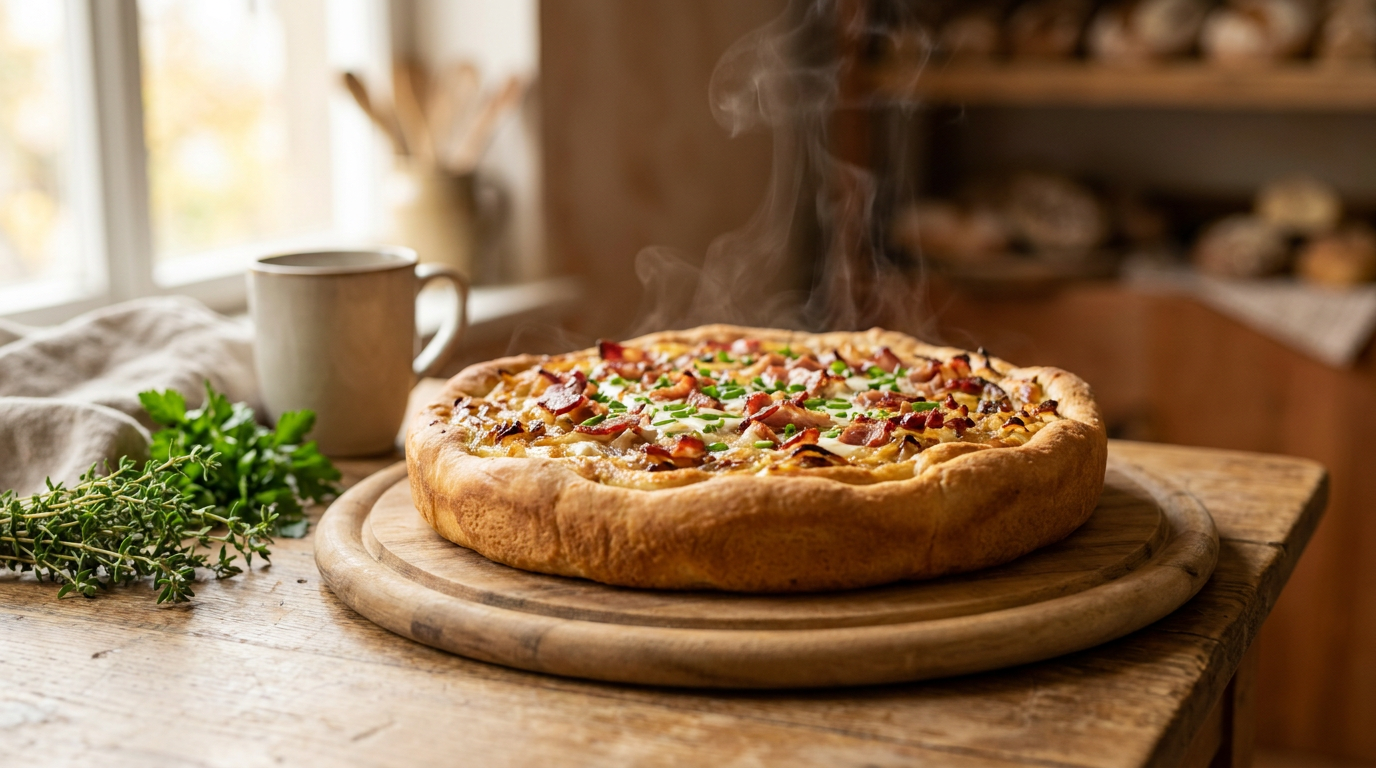
When the leaves turn golden and the region's wine festivals call, there is a scent that promises cosiness: freshly baked onion cake with tender, melt-in-your-mouth onions, creamy sour cream and savory bacon.
The King of Autumn Baking: Why authentic bakery onion cake delights
A perfect onion cake is more than just a savory traybake: it is pure tradition and culinary craft. Whether in Baden, Franconia, the Palatinate or Swabia: when the grape harvest begins in September and October, traditional bakeries fill with the aroma of sweetly sautéed onions, smoked ham and freshly ground caraway seeds.
But what distinguishes a conventional recipe from the juicy masterpiece you get at an artisan bakery or rustic wine tavern? The secret lies in three fundamental pillars: the right dough base with a perfect crust, the gentle, patient sautéing of fresh Onions & Garlic, and the exact balance in the Sour Cream & Schmand-egg topping, which allows the filling to set creamily without becoming watery.
The three golden bakery rules for onion cake:
1. Gentle heat for the onions: Onions must never be seared or browned. They must be slowly sautéed until translucent so that their natural fruit sugar is released.
2. Control moisture: Onions lose a lot of water when sautéed. Before mixing with the sour cream topping, the vegetables must cool slightly and any excess liquid must be drained.
3. The caraway effect: Whole or gently crushed caraway seeds not only provide the unmistakable traditional flavor, but also make the rich dish particularly digestible.
Yeast dough vs. shortcrust pastry: The duel for the perfect base
In the world of onion tart, opinions are divided on one key question: does the savory topping belong on an airy, soft yeast dough or a buttery, crumbly shortcrust base? Both versions have proud regional roots and offer their own unique mouthfeel.
The classic yeast dough is the undisputed number one at German wine festivals. A fine dough made from high-quality flour, a bit of butter or milk, and fresh yeast rises wonderfully in the oven, gently absorbs the savory onion juices, and forms a golden-brown, fluffy crust at the edges.
Shortcrust pastry, on the other hand, as known from Alsatian tart cuisine or Switzerland, provides a crispy, buttery contrast to the creamy filling. It is quick to prepare with no proofing time needed and holds its shape firmly in your hand even after slicing.
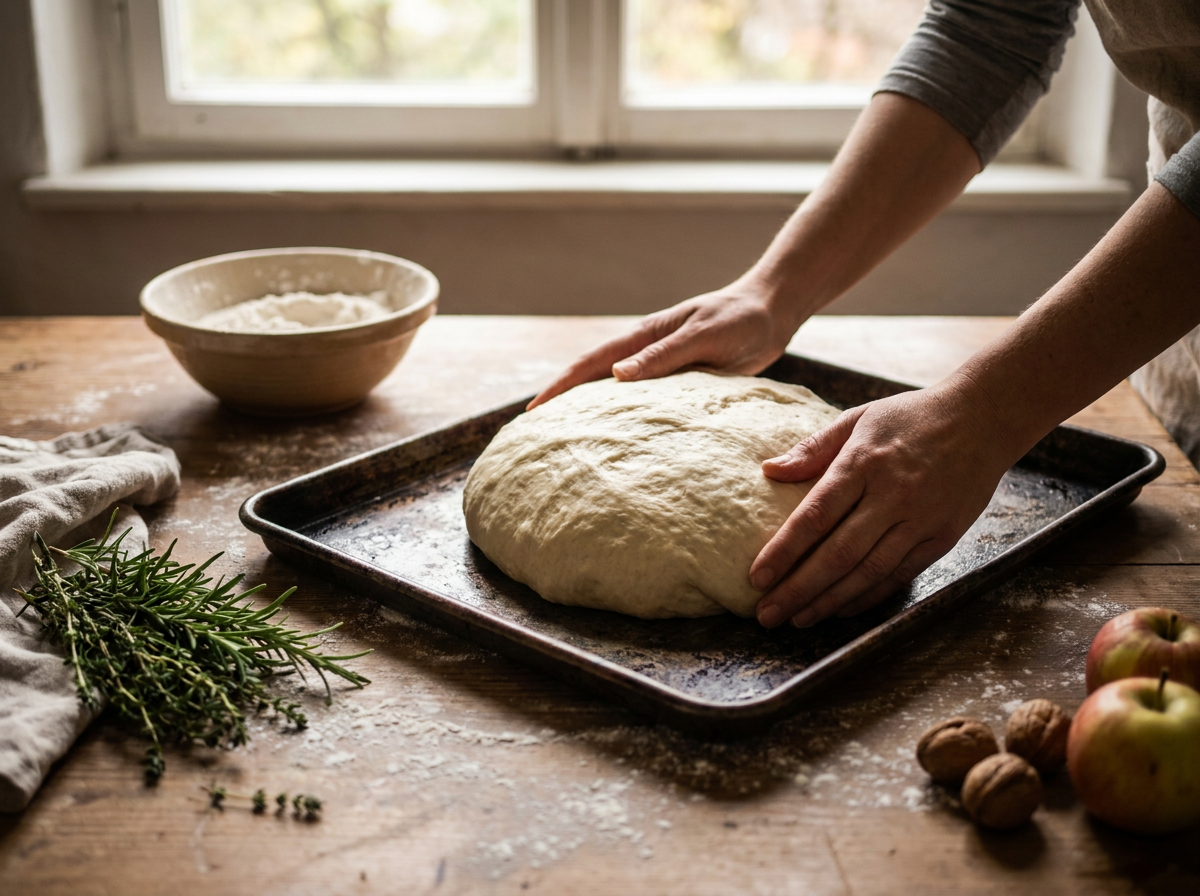
The classic yeast dough
- Texture: Fluffy, soft, deliciously absorbent
- Ideal for: Large baking sheets, social gatherings, pairing with wine
- Baker's secret: After rolling out the dough on the baking sheet, let it rest for another 15 minutes before spreading the topping over it.
- Flour tip: Wheat flour type 550 or light spelt flour type 630 for optimal gluten structure.
The buttery shortcrust pastry
- Texture: Crumbly, crispy, flaky-firm
- Ideal for: Springform pans, quiche variations, elegant finger food
- Baker's secret: Quickly work in ice-cold butter and chill the dough for 30 minutes before baking.
- Baking tip: Prick the pastry base several times with a fork before adding the topping so it bakes evenly.


 MIIL sweet cream butter
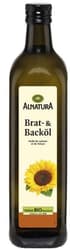
The Art of Onions: Gentle Sautéing for Maximum Sweetness
The onion is the absolute star of this recipe. For a genuine sheet-pan tart, a good kilogram of fresh yellow onions goes into the pan. How this pungent bulb turns into a velvety, naturally sweet delight is decided during preparation on the stove.
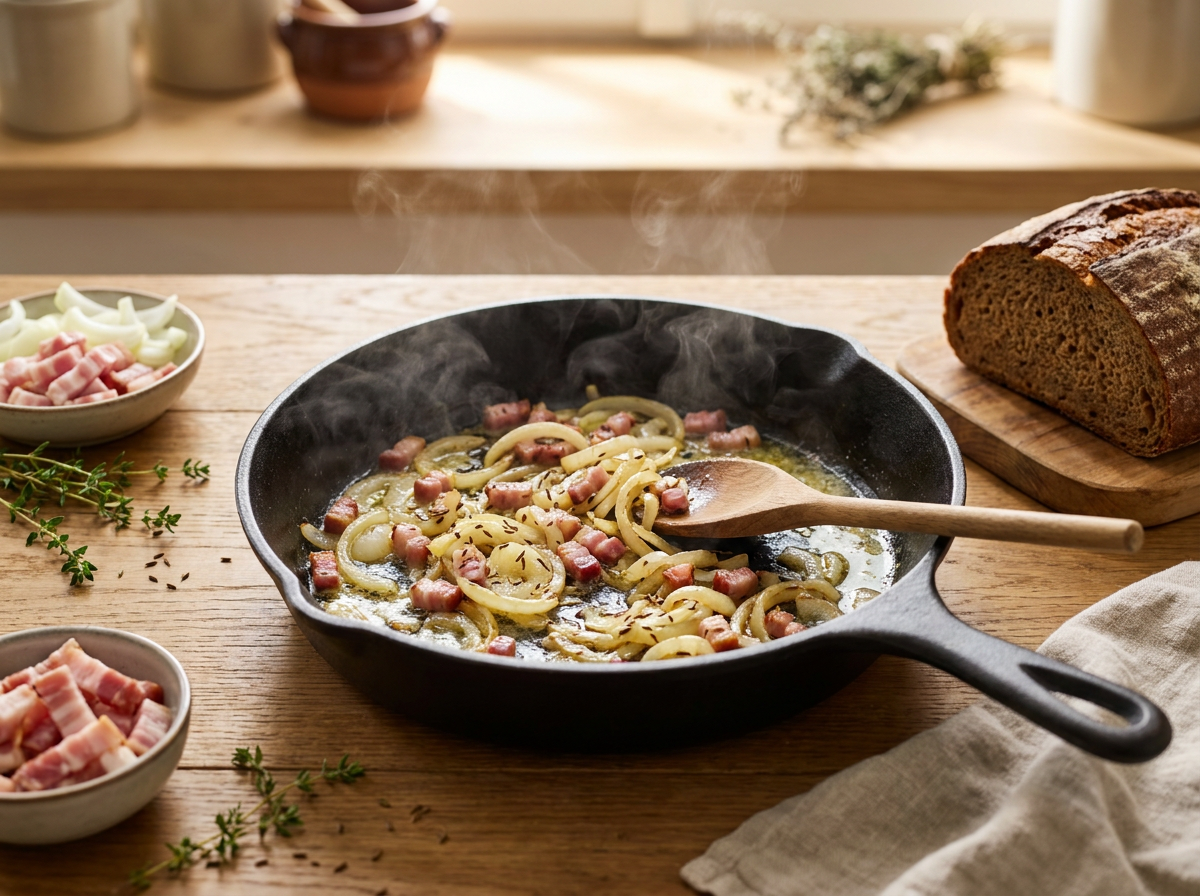
Onions contain plenty of natural sugars. If fried at too high a heat, the sugar burns, leaving an unpleasantly bitter note. By gently sweating them over medium heat, however, the slices caramelize very slowly, lose their sharpness, and develop a velvety umami flavor.
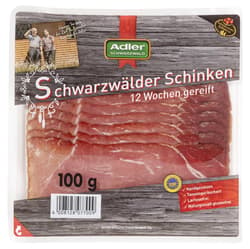
Savory ham goes perfectly with this: finely diced Cured Ham & Bacon is gently rendered first, so the released fat gives the onions a deep, smoky base flavor. If you prefer a vegetarian version, opt for diced smoked tofu or sautéed wild mushrooms.
The right cut: Half-rings instead of cubes
Halve the peeled onions and slice them crosswise into roughly 3–4 mm thin half-rings. Thin slices retain a slight bite during cooking and blend perfectly with the egg cream mixture.
Rendering the bacon
Fry the bacon cubes without added fat over medium heat until they release their subtle smoky aroma and are slightly crispy. Then briefly remove them from the pan.
Patience while sweating (15 to 20 minutes)
Add a little butter to the pan drippings and sweat the onions, stirring regularly over low to medium heat, until translucent and soft. Stir in the caraway seeds at the end and let the mixture cool.


The Sour Cream and Egg Topping: The Golden Formula for Juicy Binding
What would onion cake be without its wonderfully juicy, creamy topping? It ensures that the onion layers are held together during baking and that every bite melts on the tongue. Traditional bakeries don't skimp on fat or spices.
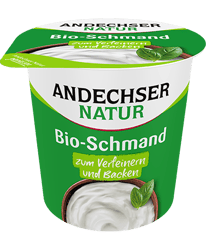
The base for the perfect topping is sour cream (Schmand) with 24% fat content or firm crème fraîche. Pure sour cream with only 10% fat contains too much water and can easily make the cake base soggy. Combined with fresh eggs, it creates a silky royale that gently sets during baking.
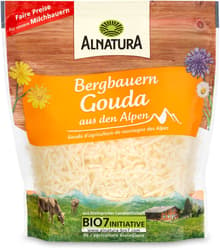
A hint of freshly grated nutmeg, freshly ground black pepper, and a pinch of sea salt round off the topping. For a particularly golden-brown crust, many bakers also mix in a little finely grated Bergkäse or Gouda.
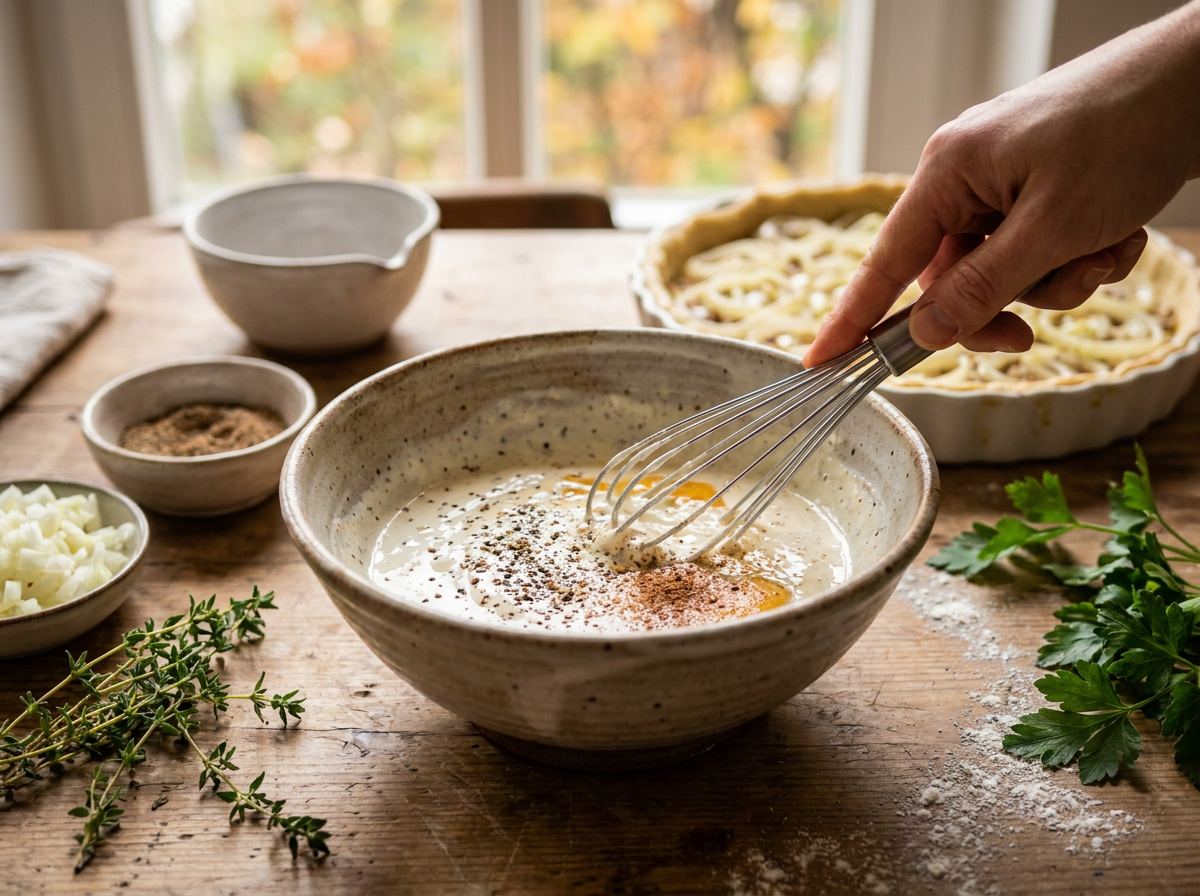
The perfect ratio for 1 baking tray of onion cake:
• 1,000 g onions (peeled and sautéed)
• 300 g to 400 g sour cream (Schmand, 24% fat)
• 3 to 4 fresh eggs (size M)
• 1 tsp caraway seeds (whole or lightly crushed)
• 1 tsp salt, fresh pepper & plenty of freshly grated nutmeg
• Optional: Stir 1 tbsp cornstarch or flour into the topping to reliably bind additional moisture.