

Max. 3 Stk.
Produkt aus:
Preussen
997€
Nur noch wenige Stück verfügbar
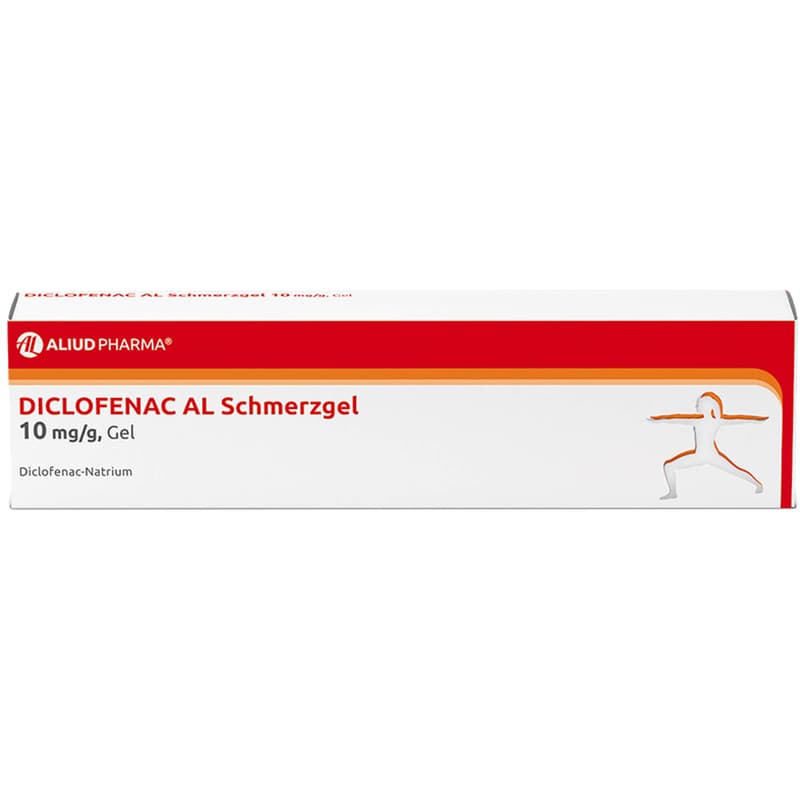
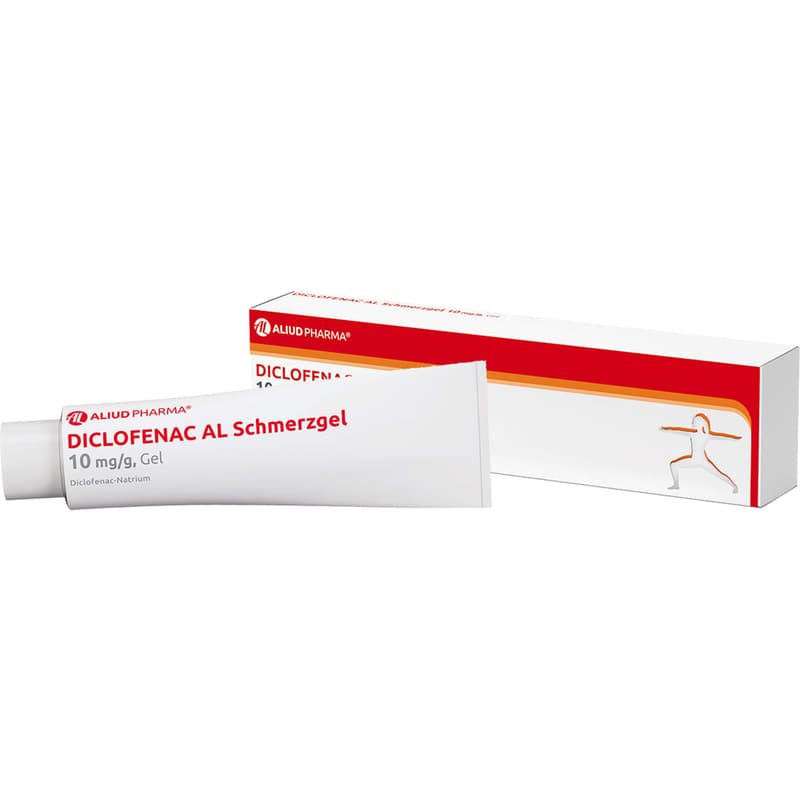
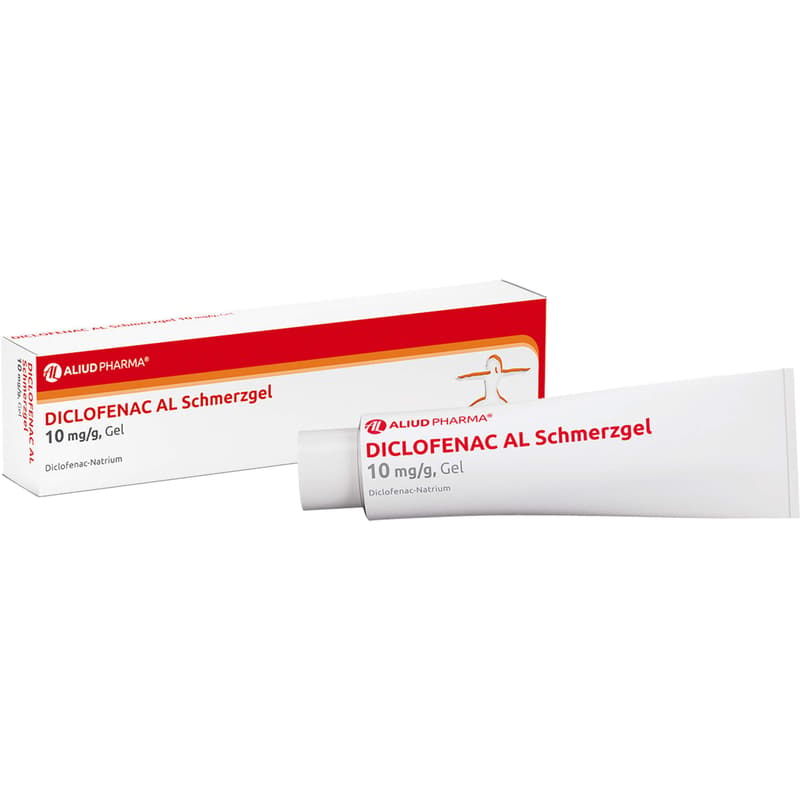
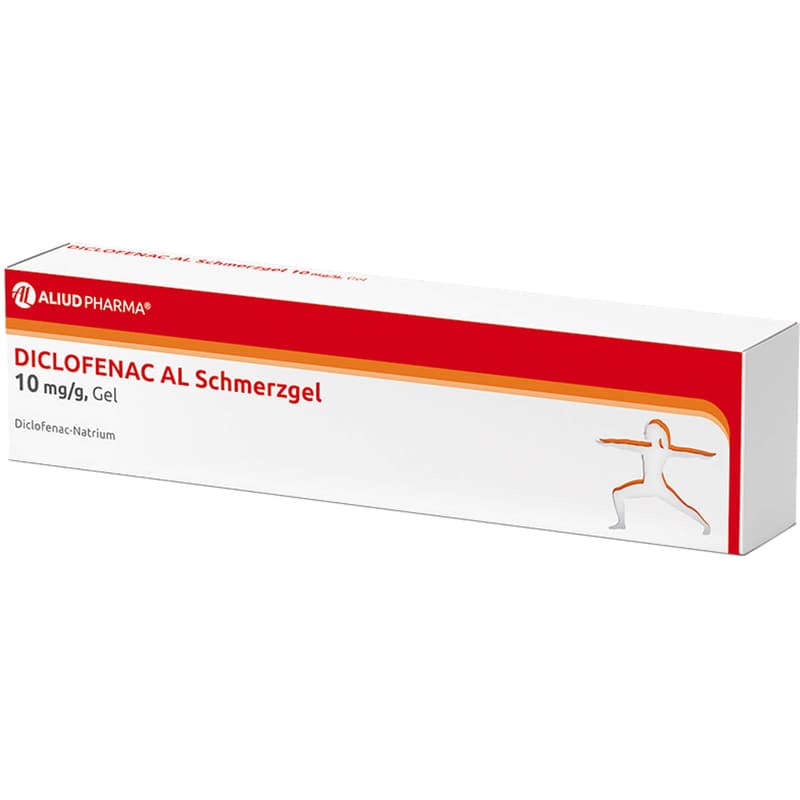
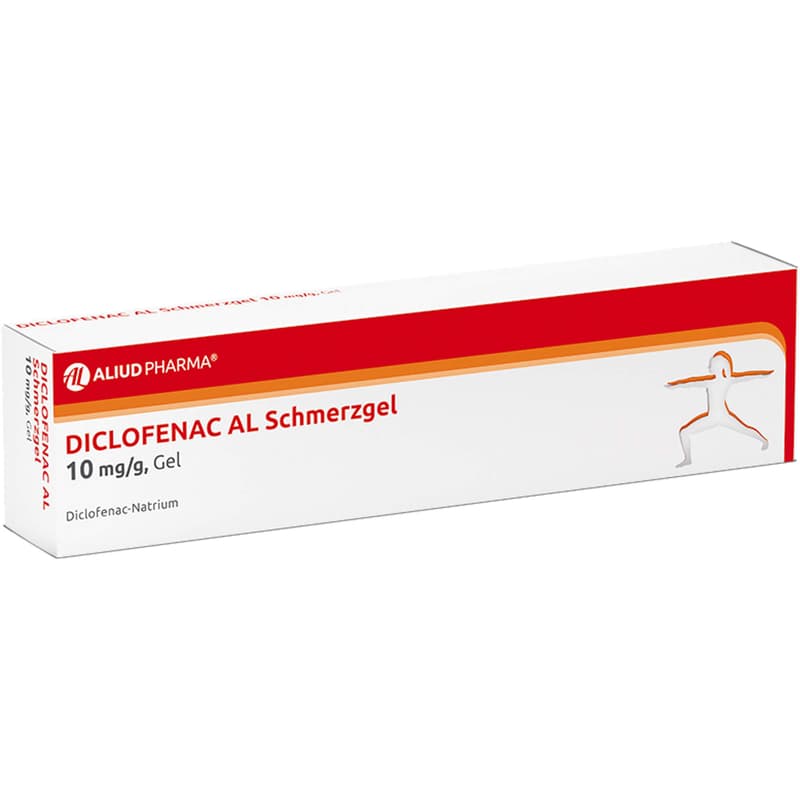
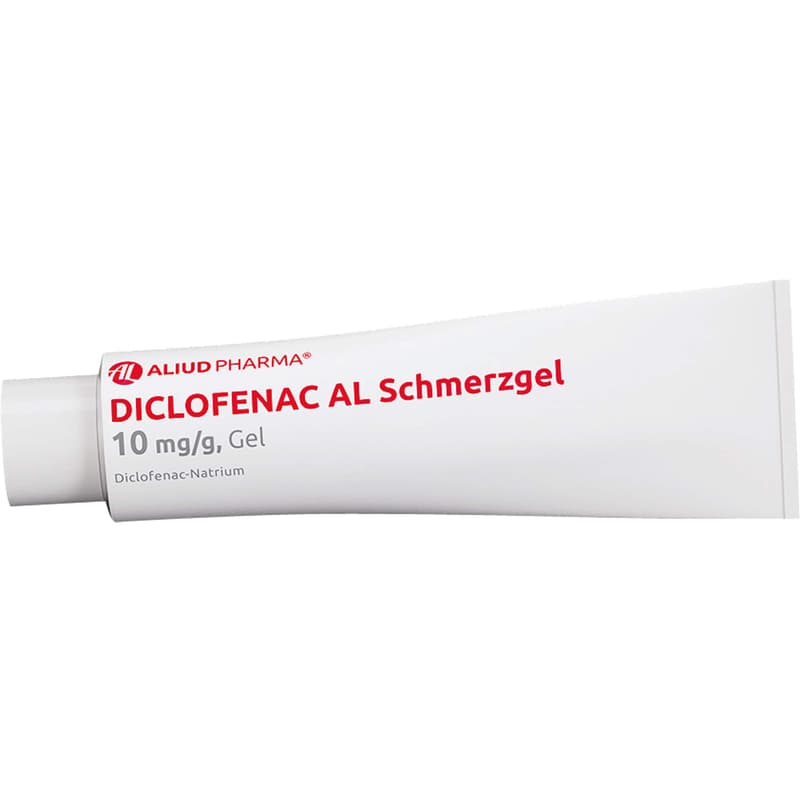
Das DICLOFENAC AL Schmerzgel 10 mg/g ist ein schmerzlinderndes und entzündungshemmendes Gel zur äußerlichen Anwendung. Es eignet sich ideal für Erwachsene und Jugendliche ab 14 Jahren zur Behandlung von akuten Muskelschmerzen, Verstauchungen oder Prellungen. Das weiße, weiche Gel lässt sich leicht einreiben und wirkt direkt an der betroffenen Stelle. Nach dem ersten Öffnen ist die Tube noch bis zu 6 Monate haltbar.
Zu Risiken und Nebenwirkungen lesen Sie die Packungsbeilage und fragen Sie Ihre Ärztin, Ihren Arzt oder in Ihrer Apotheke.



Beschreibung
Wichtige Hinweise (Pflichtangaben)
Diclofenac AL Schmerzgel 10 mg/g. Wirkstoff: Diclofenac-Natrium. Anwendungsgebiete: bei Erwachsenen zur lokalen, symptomatischen Behandlung von leichten bis mäßig starken, akuten Muskelschmerzen, Schmerzen bei akuten Verstauchungen, Zerrungen oder Prellungen infolge eines stumpfen Traumas und bei Jugendlichen ab 14 Jahren zur lokalen, symptomatischen Behandlung von Schmerzen bei akuten Verstauchungen, Zerrungen oder Prellungen infolge eines stumpfen Traumas.Zu Risiken und Nebenwirkungen lesen Sie die Packungsbeilage und fragen Sie Ihre Ärztin, Ihren Arzt oder in Ihrer Apotheke.
GEBRAUCHSINFORMATION: INFORMATION FÜR DEN ANWENDER
Diclofenac AL Schmerzgel 10 mg/g, Gel zur Anwendung bei Erwachsenen und Jugendlichen ab 14 Jahren
Wirkstoff: Diclofenac-Natrium
Lesen Sie die gesamte Packungsbeilage sorgfältig durch, bevor Sie mit der Anwendung dieses Arzneimittels beginnen, denn sie enthält wichtige Informationen. Wenden Sie dieses Arzneimittel immer genau wie in dieser Packungsbeilage beschrieben bzw. genau nach Anweisung Ihres Arztes oder Apothekers an.
- Heben Sie die Packungsbeilage auf. Vielleicht möchten Sie diese später nochmals lesen.
- Fragen Sie Ihren Apotheker, wenn Sie weitere Informationen oder einen Rat benötigen.
- Wenn Sie Nebenwirkungen bemerken, wenden Sie sich an Ihren Arzt oder Apotheker. Dies gilt auch für Nebenwirkungen, die nicht in dieser Packungsbeilage angegeben sind. Siehe Abschnitt 4.
- Wenn Sie sich nach 3–5 Tagen nicht besser oder gar schlechter fühlen, wenden Sie sich an Ihren Arzt.
Was in dieser Packungsbeilage steht
- WAS IST DICLOFENAC AL UND WOFÜR WIRD ES ANGEWENDET?
- WAS SOLLTEN SIE VOR DER ANWENDUNG VON DICLOFENAC AL BEACHTEN?
- WIE IST DICLOFENAC AL ANZUWENDEN?
- WELCHE NEBENWIRKUNGEN SIND MÖGLICH?
- WIE IST DICLOFENAC AL AUFZUBEWAHREN?
- INHALT DER PACKUNG UND WEITERE INFORMATIONEN
Diclofenac AL enthält den Wirkstoff Diclofenac, der zur Gruppe der nichtsteroidalen Antiphlogistika (NSAIDs) gehört und schmerzstillend und entzündungshemmend wirkt. Er lindert Schmerzen und vermindert Entzündungen und Schwellungen bei schmerzhaften Beschwerden von Gelenken und Muskeln. Es ist zur äußerlichen Anwendung bestimmt (d.h. es wird auf die Haut der betroffenen Körperregion aufgetragen). Diclofenac AL wird angewendet bei Erwachsenen zur lokalen, symptomatischen Behandlung von leichten bis mäßig starken, akuten Muskelschmerzen, Schmerzen bei akuten Verstauchungen, Zerrungen oder Prellungen infolge eines stumpfen Traumas. Diclofenac AL wird angewendet zur Kurzzeitbehandlung von Jugendlichen ab 14 Jahren zur lokalen, symptomatischen Behandlung von Schmerzen bei akuten Verstauchungen, Zerrungen oder Prellungen infolge eines stumpfen Traumas.
2. WAS SOLLTEN SIE VOR DER ANWENDUNG VON DICLOFENAC AL BEACHTEN?
Diclofenac AL darf NICHT angewendet werden:
- wenn Sie allergisch gegen Diclofenac, Propyl–4–hydroxybenzoat, Methyl–4–hydroxybenzoat oder einen der in Abschnitt 6. genannten sonstigen Bestandteile dieses Arzneimittels sind.
- wenn Sie in der Vergangenheit eine allergische Reaktion (z.B. Asthma, Bronchospasmus, Urtikaria, laufende Nase oder Angioödem) nach der Einnahme/Anwendung von Acetylsalicylsäure oder anderen NSAIDs (nichtsteroidale entzündungshemmende Arzneimittel) hatten.
- im letzten Drittel der Schwangerschaft.
- von Kindern und Jugendlichen unter 14 Jahren.
Warnhinweise und Vorsichtsmaßnahmen
Wenn Sie Diclofenac AL großflächig auf die Haut auftragen und über einen längeren Zeitraum anwenden, ist das Auftreten von systemischen Nebenwirkungen nicht auszuschließen. Wenn Sie an Asthma, Heuschnupfen, Nasenschleimhautschwellungen (sog. Nasenpolypen), chronischen bronchienverengenden (obstruktiven) Atemwegserkrankungen, chronischen Atemwegsinfektionen (insbesondere verbunden mit heuschnupfenartigen Symptomen) oder an Überempfindlichkeit gegen andere Schmerz- und Rheumamittel leiden, sind Sie bei der Anwendung von Diclofenac AL durch Asthmaanfälle (sog. Analgetika-Intoleranz/Analgetika-Asthma), örtliche Haut- oder Schleimhautschwellung (sog. Quincke-Ödem) oder Nesselsucht eher gefährdet als andere Patienten. Wenn Sie unter solchen Beschwerden leiden, dürfen Sie Diclofenac AL nur unter bestimmten Vorsichtsmaßnahmen (Notfallbereitschaft) und direkter ärztlicher Kontrolle anwenden. Das gleiche gilt, wenn Sie auch gegen andere Stoffe allergisch reagieren, wie z.B. mit Hautreaktionen, Juckreiz oder Nesselfieber. Diclofenac AL ist ein Arzneimittel zur äußerlichen Anwendung auf der Haut. Diclofenac AL darf nur auf gesunde Haut aufgetragen werden (nicht auf offene Hautwunden oder offene Verletzungen). Schleimhäute (z.B. im Mund) oder Augen dürfen nicht mit Diclofenac AL in Berührung kommen. Es darf nicht eingenommen werden. Brechen Sie die Behandlung ab, wenn nach der Anwendung von Diclofenac AL ein Hautausschlag auftritt. Mit Diclofenac AL behandelte Hautpartien sollten nicht dem Sonnenlicht ausgesetzt werden. Bei Anwendung von Diclofenac AL auf der Haut können Sie einen durchlässigen (nicht-okklusiven) Verband benutzen. Verwenden Sie keinen luftdichten Okklusivverband.Kinder
Es sollten Vorsichtsmaßnahmen getroffen werden, um zu verhindern, dass Kinder eingeriebene Hautpartien berühren.Anwendung von Diclofenac AL zusammen mit anderen Arzneimitteln
Informieren Sie Ihren Arzt oder Apotheker, wenn Sie andere Arzneimittel einnehmen/anwenden, kürzlich andere Arzneimittel eingenommen/angewendet haben oder beabsichtigen andere Arzneimittel einzunehmen/anzuwenden. Da die systemische Aufnahme von Diclofenac bei topischer Anwendung sehr gering ist, sind Wechselwirkungen sehr unwahrscheinlich.Schwangerschaft und
Stillzeit
Wenn Sie schwanger sind oder stillen, oder wenn Sie vermuten, schwanger zu sein oder beabsichtigen, schwanger zu werden, fragen Sie vor der Anwendung dieses Arzneimittels Ihren Arzt oder Apotheker um Rat.Schwangerschaft
Im letzten Schwangerschaftsdrittel dürfen Sie Diclofenac AL nicht anwenden, da es das ungeborene Kind schädigen oder zu Komplikationen bei der Geburt führen könnte. In den ersten 6 Monaten der Schwangerschaft sollte Diclofenac AL nur nach Rücksprache mit dem Arzt angewendet werden und die Dosis sollte so niedrig und die Behandlungsdauer so kurz wie möglich gehalten werden.Stillzeit
Diclofenac geht in geringen Mengen in die Muttermilch über. Diclofenac AL sollte während der Stillzeit nur nach Rücksprache mit dem Arzt angewendet werden. Hierbei sollte das Arzneimittel nicht auf die Brust stillender Mütter und nicht auf andere große Hautbereiche oder über einen längeren Zeitraum aufgetragen werden.Verkehrstüchtigkeit und Fähigkeit zum Bedienen von Maschinen
Diclofenac AL hat keinen oder einen zu vernachlässigenden Einfluss auf die Verkehrstüchtigkeit und die Fähigkeit zum Bedienen von Maschinen.Diclofenac AL enthält Propyl-4-hydroxybenzoat,
Methyl-4-hydroxybenzoat und Propylenglycol
Propyl-4-hydroxybenzoat und Methyl-4-hydroxybenzoat können Überempfindlichkeitsreaktionen, auch mit zeitlicher Verzögerung, hervorrufen. Propylenglycol kann Hautreizungen hervorrufen.3. WIE IST DICLOFENAC AL ANZUWENDEN?
Wenden Sie dieses Arzneimittel immer genau wie in dieser Packungsbeilage beschrieben bzw. genau nach der mit Ihrem Arzt oder Apotheker getroffenen Absprache an. Fragen Sie bei Ihrem Arzt oder Apotheker nach, wenn Sie sich nicht sicher sind.
Erwachsene und Jugendliche ab 14 Jahren
Tragen Sie Diclofenac AL je nach Bedarf 3- bis 4-mal täglich dünn auf die betroffenen Körperpartien auf und reiben es leicht ein. Je nach Größe der zu behandelnden Stelle ist eine kirsch- bis walnussgroße Menge, entsprechend 2 - 4 g Gel (20 - 40 mg Diclofenac-Natrium) erforderlich. Die maximale Tagesgesamtdosis beträgt 16 g Gel entsprechend 160 mg Diclofenac-Natrium. Waschen Sie nach der Anwendung die Hände, es sei denn, diese sind die zu behandelnde Stelle. Die Dauer der Anwendung ist abhängig vom Anwendungsgebiet und dem Ansprechen auf die Behandlung. Es wird empfohlen, dass der Behandlungsverlauf 7 Tage nach Beginn überprüft wird. Wenn sich die Beschwerden nach 3 - 5 Tagen nicht gebessert haben oder sich verschlechtern, sollte ein Arzt aufgesucht werden. Falls dieses Arzneimittel länger als 7 Tage zur Schmerzbehandlung benötigt wird oder sich die Symptome verschlechtern, suchen Sie einen Arzt auf.Kinder und Jugendliche unter 14 Jahren
Diclofenac AL darf nicht bei Kindern und Jugendlichen unter 14 Jahren angewendet werden, da keine ausreichenden Daten zur Sicherheit und Wirksamkeit bei dieser Patientengruppe vorliegen (siehe Abschnitt 2, "Diclofenac AL darf nicht angewendet werden").Ältere Menschen
Es ist keine spezielle Dosisanpassung erforderlich. Wenn Sie über 65 Jahre alt sind, sollten Sie bei der Anwendung besonders auf Nebenwirkungen achten und gegebenenfalls mit einem Arzt oder einem Apotheker Rücksprache halten.Patienten mit eingeschränkter Leber- oder Nierenfunktion
Es ist keine Dosisanpassung erforderlich.Im Fall eines versehentlichen Kontakts mit Diclofenac AL
Wenden Sie Diclofenac AL nicht auf verletzter oder infizierter Haut an. Falls Augen, Schleimhäute (z.B. im Mund) oder verletze Hautpartien versehentlich mit dem Arzneimittel in Berührung kommen, spülen Sie den betroffenen Bereich mit fließendem Wasser ab.Im Fall einer versehentlichen oder absichtlichen Einnahme von Diclofenac AL
Wenn Sie oder Ihr Kind versehentlich Diclofenac AL verschluckt haben, wenden Sie sich umgehend an Ihren Arzt oder Apotheker oder suchen Sie ein Krankenhaus auf. Nehmen Sie die Verpackung und die Tube mit.Wenn Sie eine größere Menge von Diclofenac AL angewendet haben,
als Sie sollten
Aufgrund der geringen Aufnahme von Diclofenac in den Blutkreislauf bei begrenzter topischer Anwendung ist eine Überdosierung unwahrscheinlich.Wenn Sie die Anwendung von Diclofenac AL vergessen haben
Wenden Sie nicht die doppelte Menge an, wenn Sie die vorherige Anwendung vergessen haben.Wenn Sie weitere Fragen zur Anwendung dieses Arzneimittels haben, wenden Sie sich an Ihren Arzt oder Apotheker.
4. WELCHE NEBENWIRKUNGEN SIND MÖGLICH?
Wie alle Arzneimittel kann auch dieses Arzneimittel Nebenwirkungen haben, die aber nicht bei jedem auftreten müssen.
Brechen Sie sofort die Anwendung von Diclofenac AL ab und suchen Sie umgehend Ihren Arzt auf, wenn eine der folgenden Nebenwirkungen bei Ihnen auftritt (kann bis zu 1 von 10.000 Behandelten betreffen):
- Überempfindlichkeit, eine Art allergische Reaktion, einhergehend mit Hautausschlag (Hautausschlag mit Rötung), Kurzatmigkeit und Schluckbeschwerden.
- pfeifender Atem, Kurzatmigkeit oder Engegefühl in der Brust (Asthma).
- Schwellung insbesondere von Gesicht, Lippen und Rachen (Angioödem).
Häufig (kann bis zu 1 von 10 Behandelten betreffen):
- Hautausschlag.
- Hauterkrankung (Ekzem).
- Hautrötung (Erythem).
- Entzündung der behandelten Hautpartien, die sich in Ausschlag, Schwellung oder Knötchenbildung äußert (Dermatitis, Kontaktdermatitis).
- Juckreiz (Pruritus).
- umfangreiche Veränderung der Haut einhergehend mit Rötung, Schuppenbildung und Bildung großer Blasen (bullöse Dermatitis).
- Hautausschlag mit eitrigen Bläschen (pustelartiger Hautausschlag).
- erhöhte Empfindlichkeit der Haut gegenüber Sonnenlicht (Photosensibilisierung).
- Brennen an der Anwendungsstelle, trockene Haut.
Meldung von Nebenwirkungen
Wenn Sie Nebenwirkungen bemerken, wenden Sie sich an Ihren Arzt oder Apotheker. Dies gilt auch für Nebenwirkungen, die nicht in dieser Packungsbeilage angegeben sind. Sie können Nebenwirkungen auch direkt dem Bundesinstitut für Arzneimittel und Medizinprodukte, Abt. Pharmakovigilanz, Kurt-Georg-Kiesinger-Allee 3, D-53175 Bonn, Website: www.bfarm.de anzeigen. Indem Sie Nebenwirkungen melden, können Sie dazu beitragen, dass mehr Informationen über die Sicherheit dieses Arzneimittels zur Verfügung gestellt werden.5. WIE IST DICLOFENAC AL AUFZUBEWAHREN?
Bewahren Sie dieses Arzneimittel für Kinder unzugänglich auf. Sie dürfen dieses Arzneimittel nach dem auf dem Umkarton und der Tube nach "verwendbar bis" oder "verw. bis" angegebenen Verfallsdatum nicht mehr verwenden. Das Verfallsdatum bezieht sich auf den letzten Tag des angegebenen Monats. Nicht über 25°C lagern. Nicht im Kühlschrank lagern oder einfrieren. Nach Anbruch nicht länger als 6 Monate verwenden. Verwenden Sie dieses Arzneimittel nicht, wenn Sie sichtbare Anzeichen des Verderbens feststellen. Entsorgen Sie Arzneimittel niemals über das Abwasser (z.B. nicht über die Toilette oder das Waschbecken). Fragen Sie in Ihrer Apotheke, wie das Arzneimittel zu entsorgen ist, wenn Sie es nicht mehr verwenden. Sie tragen damit zum Schutz der Umwelt bei. Weitere Informationen finden sie unter www.bfarm.de/ arzneimittelentsorgung.
6. INHALT DER PACKUNG UND WEITERE INFORMATIONEN
Was Diclofenac AL Schmerzgel 10 mg/g,
Gel enthält
Der Wirkstoff ist: Diclofenac-Natrium. 1 g Gel enthält 10 mg Diclofenac-Natrium. Die sonstigen Bestandteile sind: Propylenglycol, mittelkettige Triglyceride, Carbomer 980, Hyetellose, Propyl-4-hydroxybenzoat (Ph.Eur.) (E 216), Methyl-4-hydroxybenzoat (Ph.Eur.) (E 218), Natriumhydroxid (zur Einstellung des pH-Werts), gereinigtes Wasser.Wie Diclofenac AL Schmerzgel 10 mg/g,
Gel aussieht und Inhalt der Packung
Weißes, weiches, homogenes Gel, mit leicht charakteristischem Geruch. Diclofenac AL Schmerzgel 10 mg/g, Gel ist verpackt in einer Aluminium-Tube mit Epoxy-Phenol Innenlack und verschlossen mit einer Aluminiummembran mit einem PE-Schraubverschluss bei 50 g Gel und mit einem HDPE-Schraubverschluss bei 100 g,120 g und 150 g Gel. Diclofenac AL Schmerzgel 10 mg/g, Gel ist in Packungen mit 50 g, 100 g, 120 g und 150 g Gel erhältlich.Pharmazeutischer Unternehmer
Aliud Pharma GmbHGottlieb-Daimler-Str. 19
89150 Laichingen
info@aliud.de
Hersteller
Laboratories Basi - Industria Farmaceutica, S.A.Parque Industrial Manuel Lourenco Ferreira, lotes 8, 15 e 16
3450-232 Mortagua
Portugal
Diese Gebrauchsinformation wurde zuletzt überarbeitet im November 2020.
Quelle: Angaben der Packungsbeilage
Stand: 10/2021
Wirkstoff: Diclofenac-Natrium. Anwendungsgebiete: bei Erwachsenen zur lokalen, symptomatischen Behandlung von leichten bis mäßig starken, akuten Muskelschmerzen, Schmerzen bei akuten Verstauchungen, Zerrungen oder Prellungen infolge eines stumpfen Traumas und bei Jugendlichen ab 14 Jahren zur lokalen, symptomatischen Behandlung von Schmerzen bei akuten Verstauchungen, Zerrungen oder Prellungen infolge eines stumpfen Traumas.
Info-Broschüre
Info-Broschüre herunterladenZusammensetzung & Allergene
Zusammensetzung
Wirkstoff: Diclofenac-Natrium