Preparing chanterelles: Cleaning, frying & storing
They glow golden-yellow in the moss, exude a delicate scent of sun-ripened apricots, and bring an incomparably savoury forest aroma to the plate: chanterelles are among the most sought-after edible mushrooms of late summer and autumn. Yet hardly any mushroom causes as much uncertainty in the home kitchen. How do you clean these delicate chanterelles without them turning tough? How do you sear them over high heat so they stay wonderfully crisp and do not release water? In this guide, you will learn step-by-step how to make fresh chanterelles turn out flawlessly, from perfect prep to serving.
The Golden Rule: Why Chanterelles Should Never Take a Bath
Anyone looking to prepare fresh wild mushrooms will inevitably encounter the most important rule among top chefs: mushrooms must never be soaked in standing water or drowned under running water. Chanterelles are naturally made up of more than 90 percent water and have a finely ridged gill structure on the underside of the cap. These crevices act like tiny sponges. As soon as they come into contact with water, they soak it up within seconds. The result in the frying pan is disappointing: instead of browning appetizingly, the mushrooms boil in their own juices and turn into rubbery bites lacking bite and flavor.
When your delivery of fresh mushrooms arrives, it is best to take them out of the delivery box right away. With the following three steps, you can gently and thoroughly remove forest debris, sand, and fine pine needles.
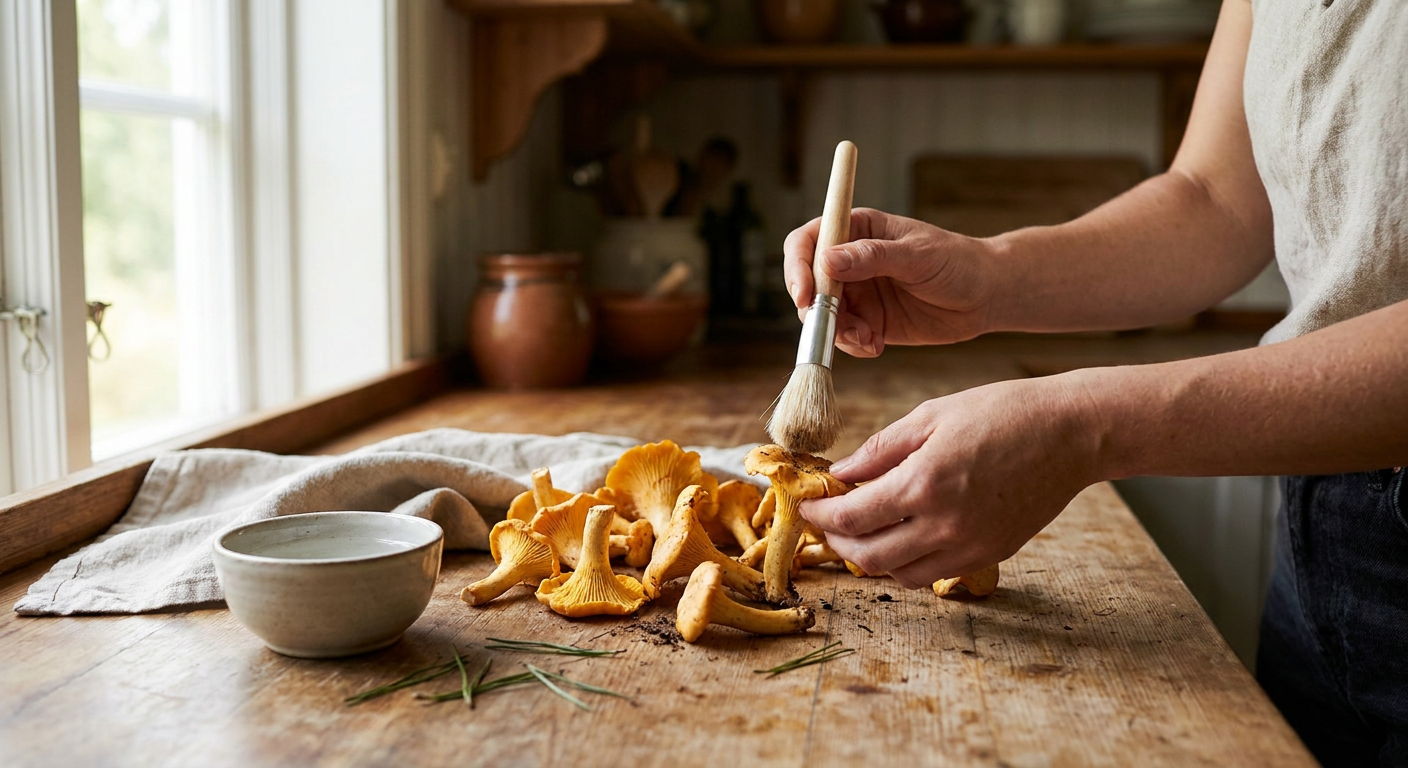
Dry brushing
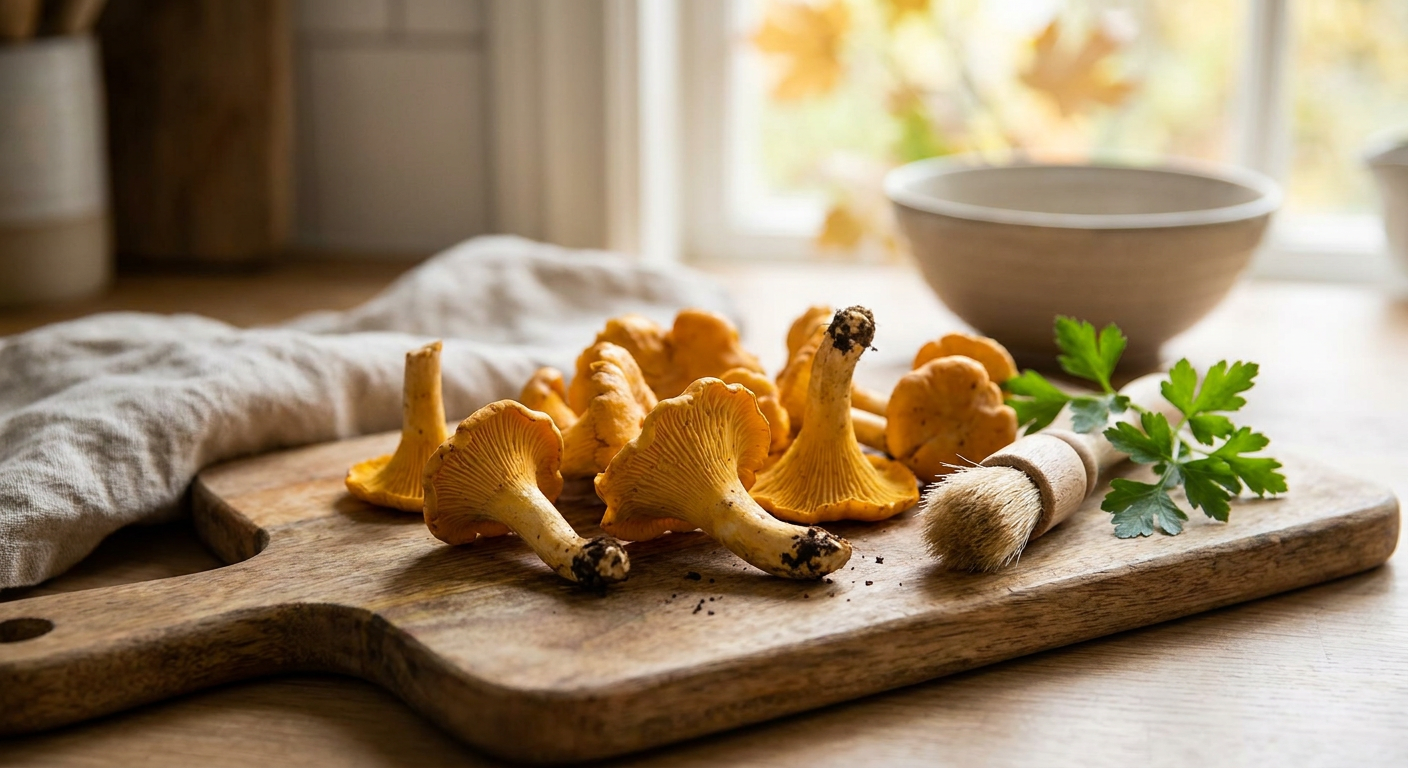
Use a soft mushroom brush or a slightly dampened sheet of paper towel. Gently brush each mushroom from top to bottom. This easily removes adhering pine needles, moss remnants, and dried soil without damaging the tender flesh.
Trim the stem base
Using a small, sharp paring knife, slice off the very end of the stem as thinly as possible. This part was in direct contact with the forest floor and often tastes woody or gritty. Also generously trim away any damaged or soft spots.
The flour bath trick
For particularly gritty mushrooms, there is an ingenious pro trick: dust the chanterelles in a bowl with two tablespoons of flour. Add cold water, swirl the mushrooms around for at most five seconds, and immediately lift them out with a slotted spoon. The flour binds the sand like a magnet. Afterwards, immediately pat them dry thoroughly on paper towels.

 BIO Mushrooms Crème Brown, in the shell

Pan-Frying Chanterelles: Heat, Patience, and the Secret to Roasted Flavours
Once the chanterelles are clean and dry, the pan decides culinary success. The most common mistake when frying wild mushrooms is using too little heat and an overcrowded pan. If too many moist mushrooms end up in the pan all at once, the temperature drops abruptly. Instead of browning appetisingly, cell sap escapes, the mushrooms swim in their own liquid, and they lose their crisp texture.
To achieve the perfect balance of crispy edges and a juicy core, you need a heavy cast-iron or stainless steel pan, the right cooking fat, and precise timing when seasoning.
Preheat the pan & choose a high-heat cooking fat
Let the pan get properly hot over medium to high heat. Add clarified butter or ghee as the cooking fat. Pure clarified butter can easily be heated to high temperatures without burning and adds a wonderful buttery note right from the start.
Fry in batches & do not stir
Add the mushrooms to the pan in batches so that the bottom is loosely covered. Large mushrooms can be halved lengthwise beforehand, while small chanterelles can remain whole. Leave the mushrooms to fry completely undisturbed for the first two minutes so they develop their first golden roasted flavours.
Add onions, garlic, and butter at the very end
Diced shallots and finely chopped garlic burn quickly over high heat and turn bitter. Only add them after about 4 to 5 minutes of cooking, once any released liquid has completely evaporated. Turn the heat down slightly and melt a generous piece of fresh butter in the pan.
Salt and pepper as the finishing touch
Salt immediately draws moisture out of food through osmosis. If you season chanterelles at the start, the salt will leach their juices out. Therefore, only season your chanterelles with salt and pepper right at the very end, immediately before serving or deglazing.
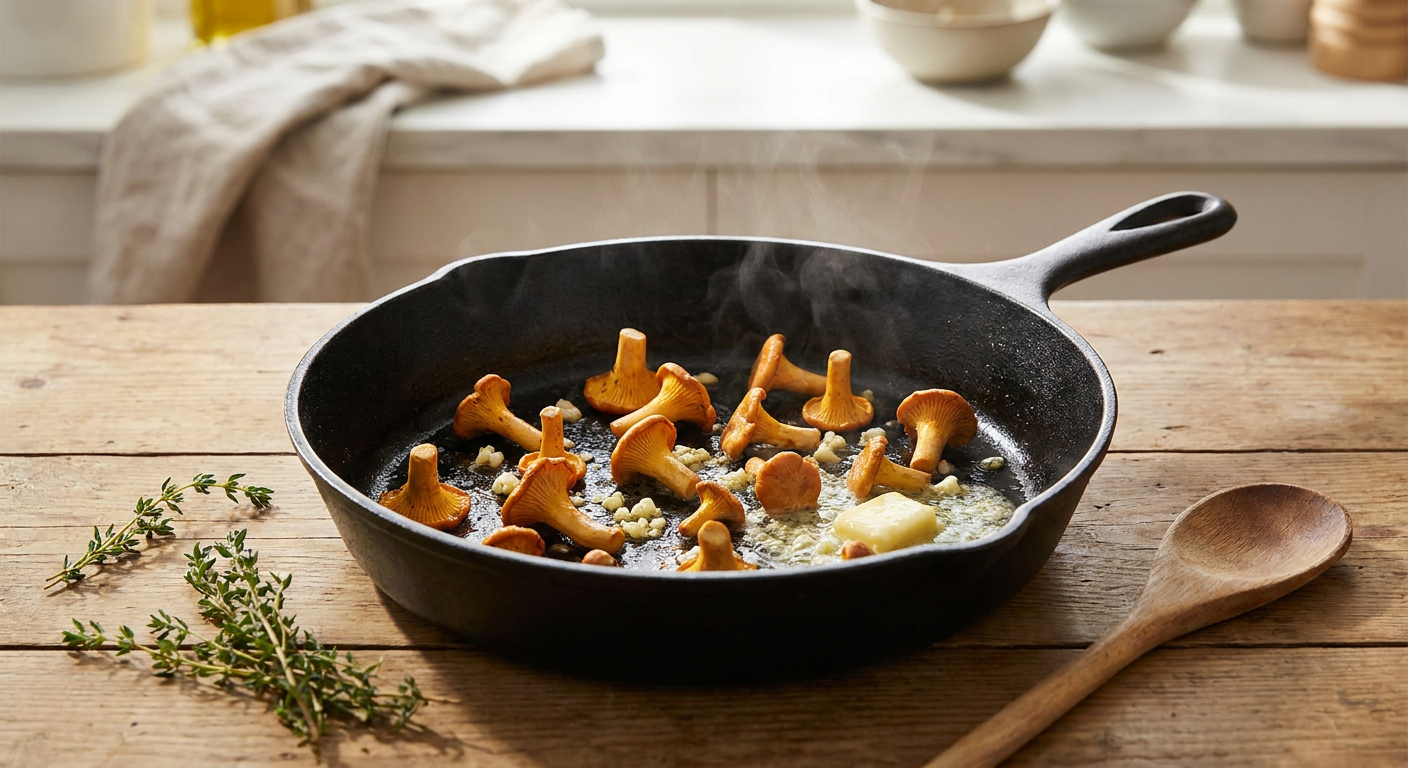
Rule of thumb for cooking time: Fresh chanterelles need only about 5 to 7 minutes in total over high heat. If left in the pan for too long, they shrink significantly and lose their characteristic juiciness.


Fine Companions: Creamy Sauce, Fresh Herbs, and a Hearty Bite
Simply tossed in butter and served with a slice of toasted sourdough bread, chanterelles are already a delight. But it is only in harmonious combination with creamy sauces, smoky accents, and fresh forest herbs that they unfold their full autumnal potential. Their subtly peppery aroma calls for ingredients that complement the flavor without overpowering the delicate forest note.
Creamy Whipping Cream & Crème Fraîche
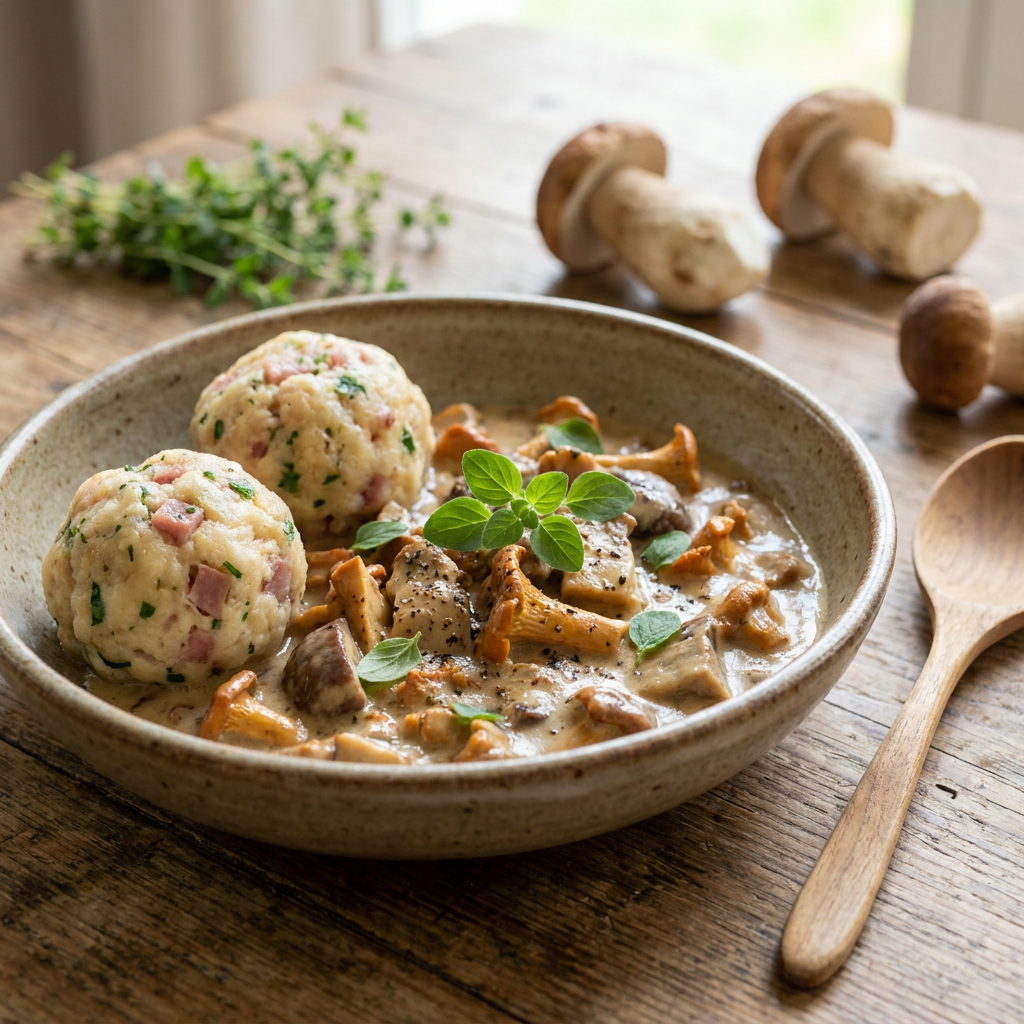
For a classic creamy chanterelle sauce, deglaze the sautéed mushrooms with a splash of dry white wine or vegetable stock and stir in fresh whipping cream or a spoonful of sour cream. Let the sauce simmer gently for a short time until it develops a velvety sheen and coats the mushrooms.
Fresh Flat-Leaf Parsley & Thyme
Flat-leaf parsley is the indispensable herbal partner for chanterelles. Finely chop the leaves and sprinkle them over the finished dish only at the very end. The fresh, aromatic note provides the perfect contrast to the rich, buttery mushroom sauce.
Savory Bacon & Speck
If you prefer a heartier dish, fry thin strips of cured bacon or speck until crispy before cooking the mushrooms, then remove them from the pan. Toss the chanterelles in the flavorful rendered fat, and add the crispy bacon back in just before serving.
Egg Spätzle, Dumplings & Ribbon Noodles
To soak up the velvety cream sauce perfectly, ready-to-pan egg spätzle, fresh ribbon noodles, or fluffy bread dumplings make the ideal accompaniment. They turn the mushroom sauté into a complete feast.