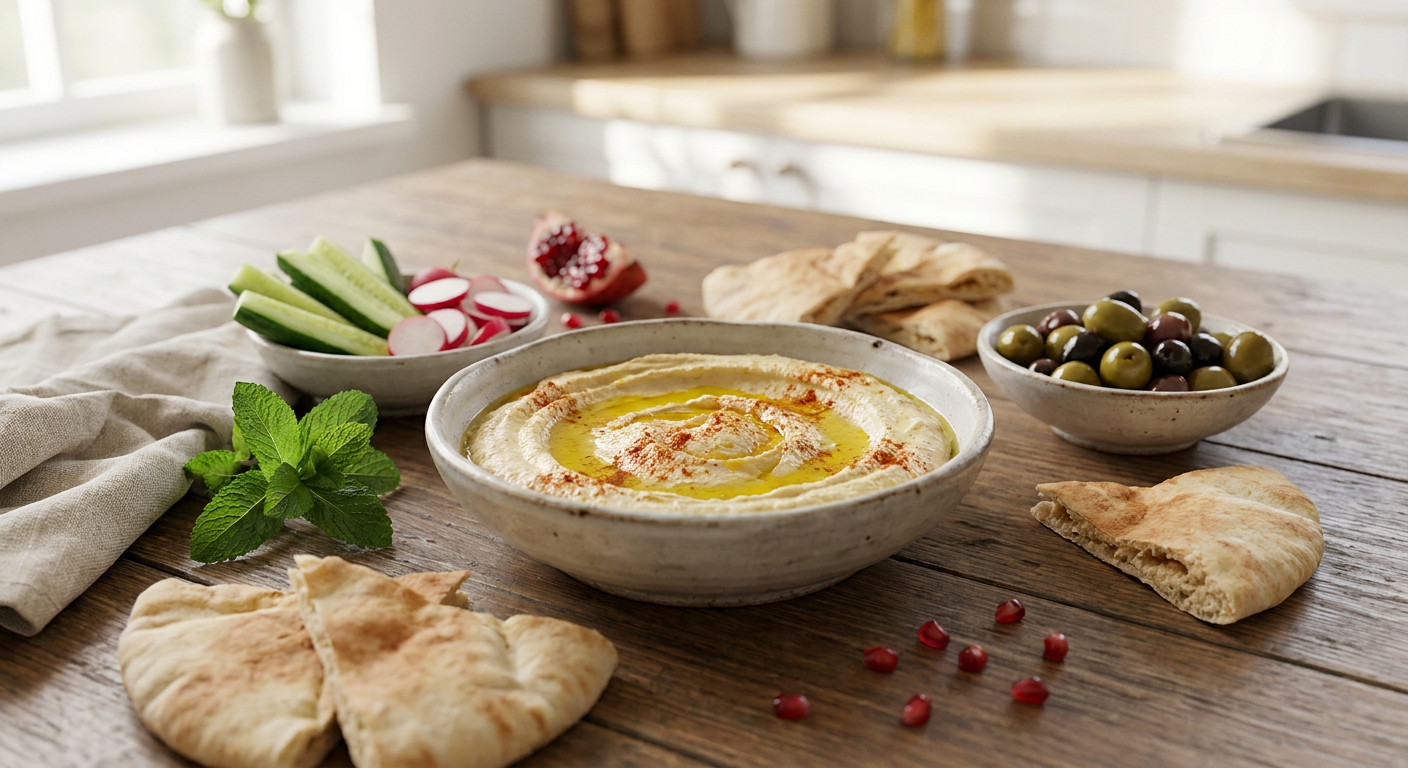
Cremigen Hummus selber machen: Das schnelle Grundrezept
Vergiss zähe Supermarkt-Pasten. Wenn du cremigen Hummus selber machst, verwandeln sich einfache Kichererbsen in Samt und Seide auf deinem Teller. Hier erfährst du das schnelle Grundrezept mit Kichererbsen und Tahini sowie die besten Geheimtipps für ultimative Samtigkeit.
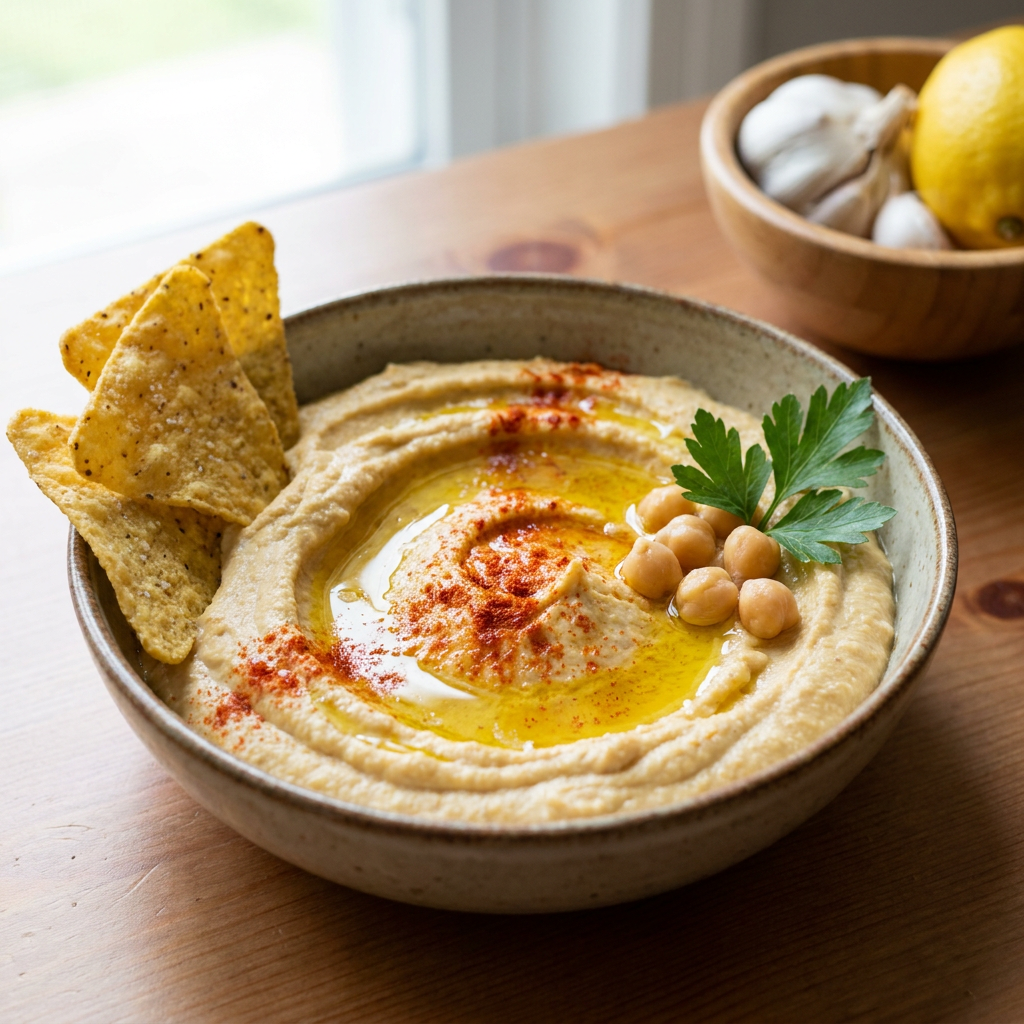
Luftig, samtig, perfekt: Das Geheimnis samtiger Cremigkeit
Wer schon einmal versucht hat, Hummus einfach durch Pürieren von Kichererbsen herzustellen, kennt das Ergebnis: Eine recht feste, oft bröselige Paste. In den traditionellen Hummus-Bars des Nahen Ostens hingegen ist die Konsistenz so federleicht und cremig wie eine feine Mousse. Das liegt nicht etwa an unerreichbaren Profi-Geräten, sondern an drei einfachen biochemischen Kniffen, die du zu Hause sofort umsetzen kannst.
Tahini-Emulsion zuerst
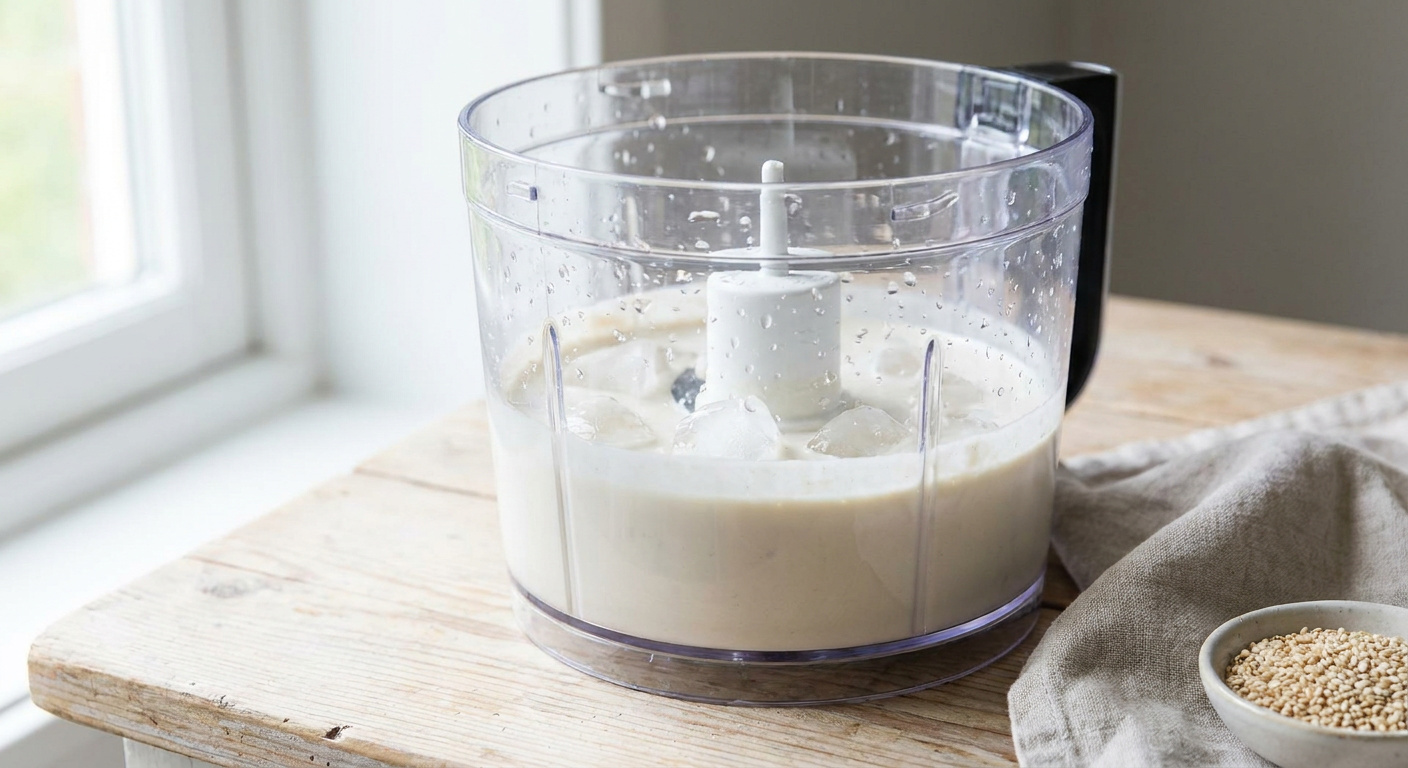
Püriere das Tahini (Sesammus) zuerst für mindestens 1 bis 2 Minuten nur zusammen mit frisch gepresstem Zitronensaft und etwas Salz. Es entsteht eine hellgelbe, cremig aufgeschlagene Basis, bevor überhaupt eine Kichererbse im Mixbecher landet.
Eiskaltes Wasser & Eiswürfel
Gib beim anschließenden Pürieren schluckweise eiskaltes Wasser oder sogar zwei kleine Eiswürfel hinzu. Der thermische Kälteschock reagiert mit den Fetten der Sesam-Paste und schlägt Luft in die Masse. So entsteht die unnachahmliche Fluffigkeit.
Kichererbsen warm weichkochen
Ob vorgekochte Kichererbsen aus dem Glas oder selbst eingeweichte Hülsenfrüchte: Erwärme sie kurz in kochendem Wasser mit einer Prise Natron. Natron bricht die Zellstruktur der feinen Häutchen auf und lässt sie schmelzen.
Welche Küchengeräte eignen sich am besten?
Der Schlüssel zur Seidenweichheit liegt in der Wahl des richtigen Werkzeugs. Ein Food Processor mit breiten S-Messer-Klingen zerkleinert die Hülsenfrüchte gleichmäßig ohne Überhitzung. Ein Hochleistungsmixer erzeugt durch extrem hohe Drehzahl eine fast flüssige, moussige Textur. Wer nur einen Stabmixer besitzt, kann ebenfalls fantastische Ergebnisse erzielen. Wichtig ist dabei, in einem hohen, engen Gefäß zu arbeiten und das Eiswasser schrittweise einzumixung.
Purismus auf dem Löffel: Qualität macht den Unterschied
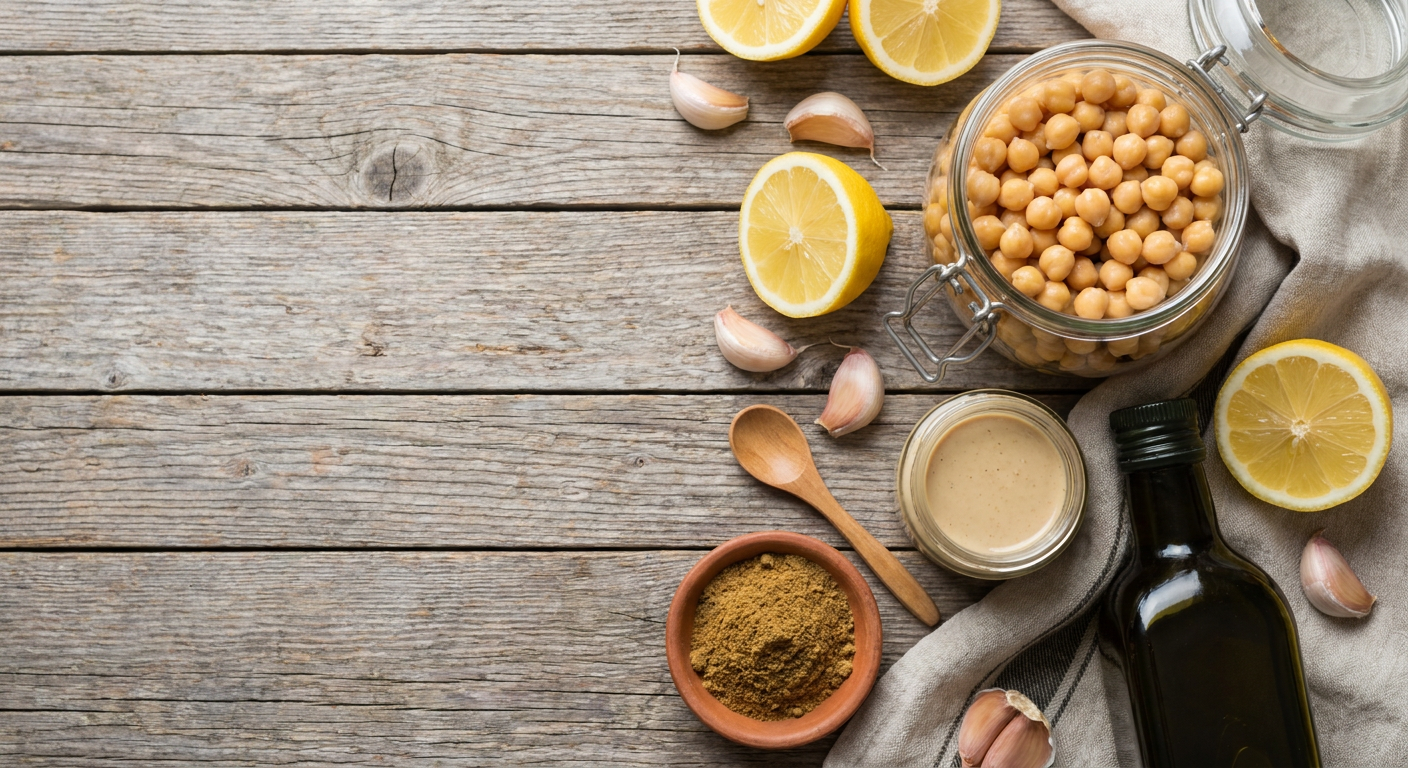
Der orientalische Dip Klassiker benötigt überraschend wenige Zutaten. Da jede einzelne Komponente geschmacklich voll zur Geltung kommt, entscheidet die Frische der Produkte über das Endergebnis. Hier ist die feine Feinkost-Auswahl für dein Rezept:
Dosen-Kichererbsen vs. Getrocknete Kichererbsen
Getrocknete Kichererbsen bieten ein besonders tiefes, nussiges Eigenaroma. Sie müssen 12 Stunden in reichlich kaltem Wasser mit einem Teelöffel Natron eingeweicht und anschließend ca. 50 Minuten weich gekocht werden. Wenn es im Alltag schnell gehen muss, bieten vorgekochte Kichererbsen aus der Dose eine hervorragende Abkürzung. Durch das kurze Erwärmen in kochendem Wasser mit Natron werden auch Dosen-Kichererbsen extrem zart und stehen der traditionellen Variante in nichts nach.
Schritt für Schritt: In 10 Minuten zur orientalischen Feinkost
Mit diesem einfachen Schritt-für-Schritt Grundrezept gelingt dir der perfekteste Hummus auf Anhieb. Vorbereitungszeit: 10 Minuten. Ausbeute: ca. 4 reichliche Portionen.
Bunt und vielseitig: So wandelst du dein Grundrezept ab
Sobald du das Grundrezept beherrschst, steht dir die Welt der orientalischen Dips offen. Durch das Hinzufügen von geröstetem Gemüse, frischen Sommerkräutern oder pikanten Gewürzen kreierst du aufregende Farb- und Geschmacksvarianten für deinen Meze-Tisch:
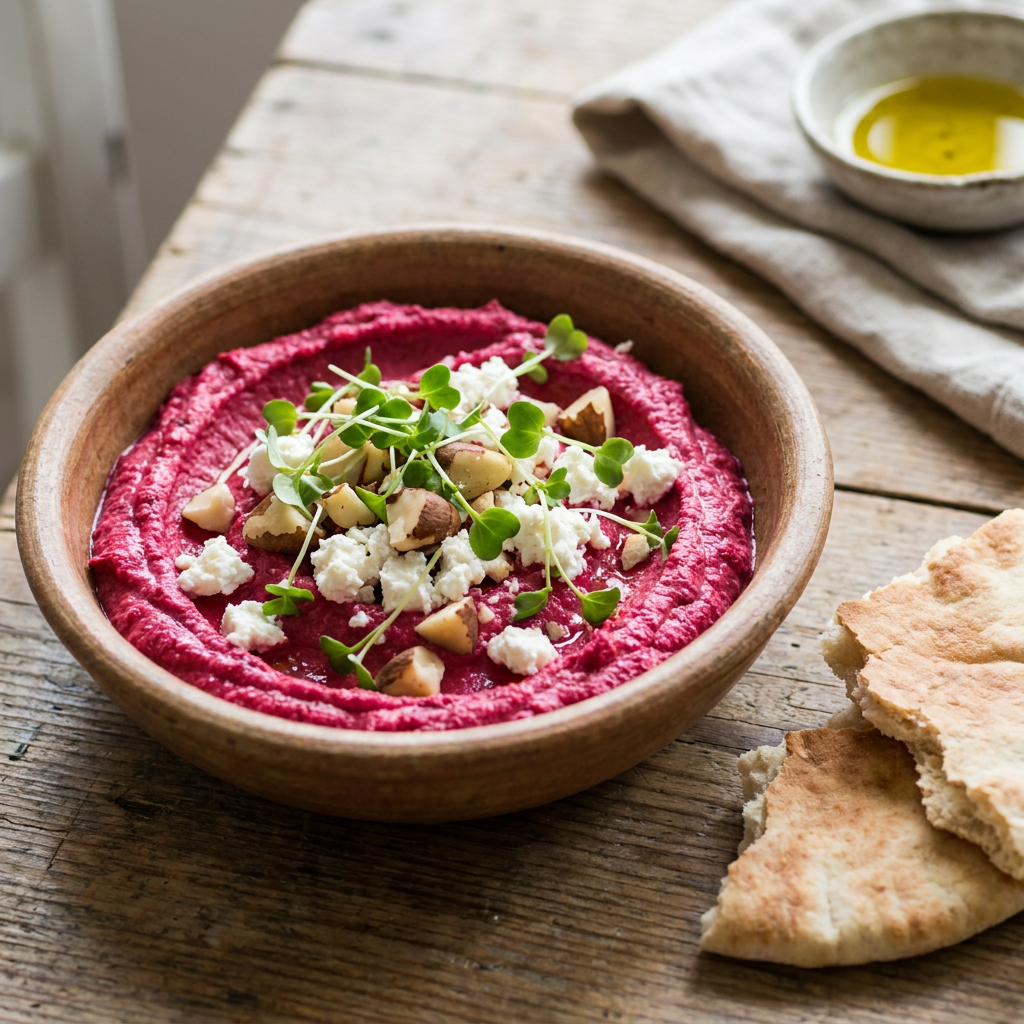
🌸 Rote Bete Hummus
Gib ca. 100 g vorgekochte Rote Bete zum Grundrezept. Das Ergebnis ist eine leuchtend pinke Farbe mit erdig-süßlicher Note. Perfekt kombiniert mit etwas zerbröckeltem Feta und Walnüssen.
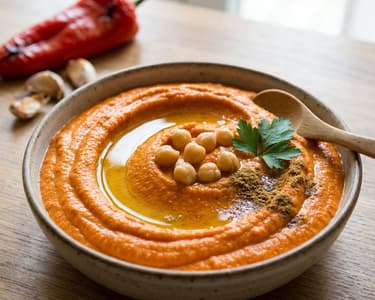
🌶️ Gerösteter Paprika Hummus
Mixe 2 eingelegte, im Ofen geröstete rote Spitzpaprika mit hinein. Dies verleiht eine rauchige Süße und feine Würze. Entdecke auch unser Spezialrezept für Hummus mit gerösteter Paprika.
🥑 Avocado-Limetten-Hummus
Ersetze 1 EL Tahini durch eine reife, weiche Avocado und füge frischen Limettensaft sowie ein paar Blätter Koriander hinzu. Die Avocado verleiht eine extrem samtene Samtigkeit und frische grüne Farbe.
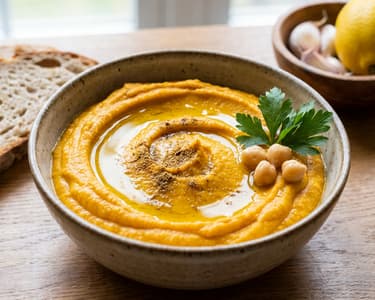
🎃 Kürbis- & Zucchini Hummus
Ob cremiges Kürbispüree im Herbst oder geröstete Zucchini im Sommer: Probiere unser beliebtes Rezept für Kürbis-Hummus für samtigen saisonalen Genuss.
 10 min
 Unter einer Stunde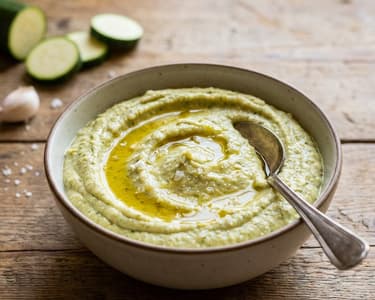
Das perfekte Meze-Erlebnis: Knuspriges Brot und frisches Gemüse
Hummus schmeckt am besten in geselliger Runde als Teil einer bunten Vorspeisen-Platte (Meze). Das orientalische Fladenbrot dient dabei traditionell direkt als essbares Besteck zum Dippen:
Die Kunst des Garnierens: Authentische Levantinische Toppings